Ocean kayaking can be safe for beginners if you pick protected waters, wear a high‑back PFD, and use a stable sit‑on‑top kayak with a spray skirt and deck lines. Check NOAA tide tables for slack tide, verify wind stays under 10 mph and swell under six feet, and avoid cold‑water or strong‑current days. Carry a spare paddle, a wetsuit or drysuit, and never paddle alone—use a buddy system or a guided group. By mastering basic bracing, rescue, and weather reading, you’ll build confidence, and the next sections will show you how to plan your first trip.
TLDR
- Choose calm, protected bays with low wind and minimal current for first ocean kayak trips.
- Wear a high‑back PFD at all times and never paddle alone; use a buddy system or guided instruction.
- Use a sit‑on‑top kayak sized for your body, equipped with a spray skirt, deck lines, and a spare paddle.
- Check NOAA tide tables, wind forecasts, and marine advisories before launch; aim for slack tide and wind under 10 mph.
- Start with short (3‑4 mi) routes, practice launching and landing in easy‑exit areas, and consider certified instruction for bracing and rescue skills.
Is Ocean Kayaking Safe for Beginners?
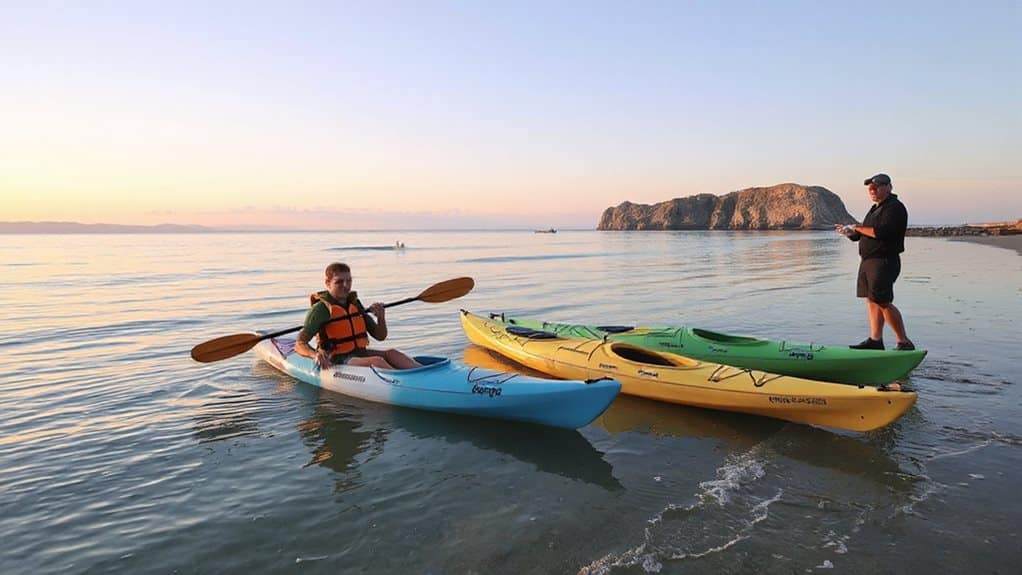
A beginner’s first question about ocean kayaking is usually whether it’s safe, and the answer hinges on a few key factors. You’ll want calm, warm waters, low wind, and minimal current—reef‑protected bays or inland canals are perfect. Consider starting in smaller waters with lessons to build confidence and skills.
Wear a PFD at all times, choose a sit‑on‑top kayak for stability, and never paddle alone; always plan routes, check weather, and share a float plan.
Swimming ability is essential, and a mentor’s presence dramatically reduces risk. Check weather conditions ahead of time before launching.
Beginner Ocean Kayaking Gear Checklist
When you’ve decided that calm, warm waters and a solid safety plan make ocean kayaking feel within reach, the next step is gathering the right gear to keep you comfortable and protected.
Choose a sea‑kayak that fits your size, a PFD with a high back, a spare paddle, a spray skirt, and deck lines.
Pack a wetsuit or drysuit, dry bags, water, sunscreen, a whistle, VHF radio, a compass, a bilge pump, a paddle float, a rescue knife, and a basic first‑aid kit.
Also, beginners should practice basic strokes and recovery techniques in calm conditions to build confidence and safety, especially learning capsize recovery and re‑entry methods.
Why Sit‑On‑Top Kayaks Are Best for First‑Timers
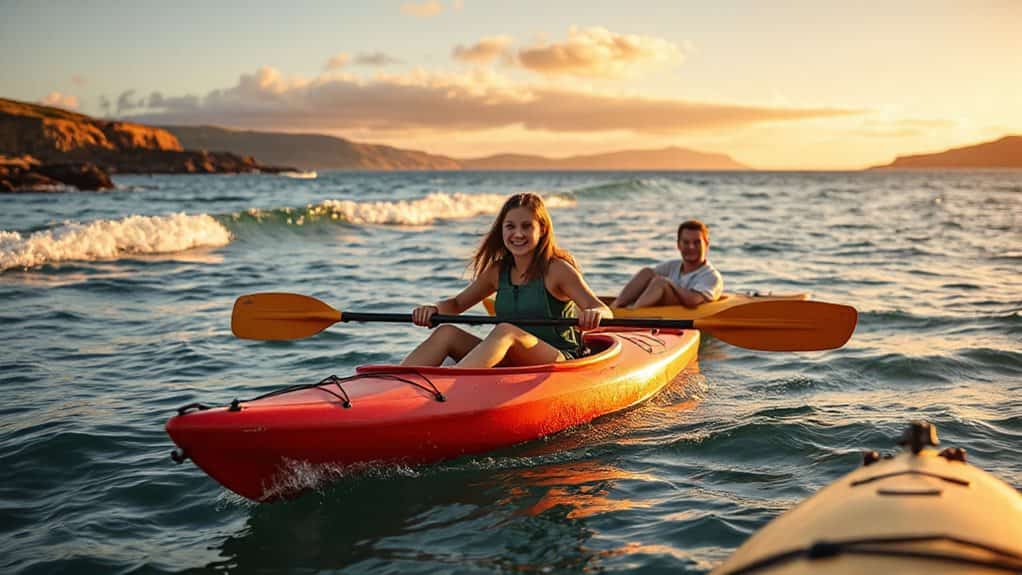
If you’re stepping into the ocean for the first time, a sit‑on‑top kayak removes many of the challenges that trip up beginners. Its open deck lets you hop in and out quickly, so a tip isn’t a panic‑inducing trap.
Wider hulls increase stability, self‑draining scuppers whisk water away, and adjustable seats keep you comfortable while you learn balance, making every splash feel like a confident journey. Many sit‑on‑top models are made from high‑density polyethylene, which helps keep them nearly unsinkable.
How to Read Tides, Currents, and Weather Before Launch
Sit‑on‑top kayaks give you the confidence to hop in and out, but the next step is mastering the environment you’ll be paddling in.
Check NOAA tide tables, note high/low times and MLLW datum, and aim for slack tide when currents calm.
Apply the Rule of Thirds to estimate flow strength, watch charts for narrows, and verify wind forecasts and marine advisories before launch.
Store gear clean, dry, and breathable when not in use to prevent mold and material damage; consider using silica gel or ventilated bins to control moisture.
Ideal Ocean Conditions for a First Paddle
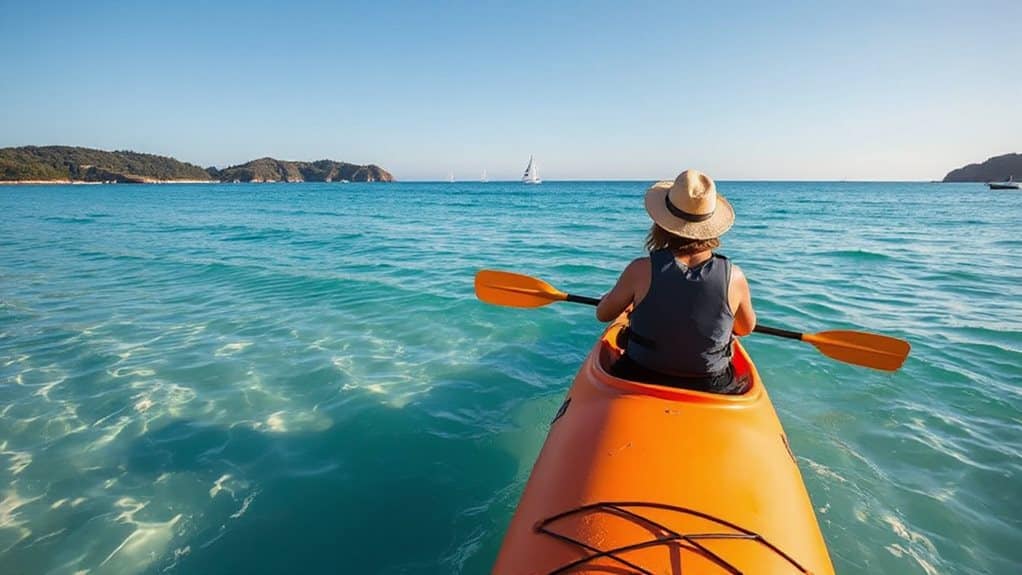
You’ll feel most confident when you launch into calm water with light wind, ideally inside a protected bay that limits chop and currents.
Choose a spot where the shoreline is gradual and the exit is easy, so you can reach shore quickly if the kayak becomes unstable.
Keeping the wind under 10 mph and the swell low—under six feet—helps you stay in control while you get used to paddling.
Consider starting on rivers like the Kennebec that offer light rapids and multiple boat landings to practice transitioning from calm to moving water.
Calm Water, Light Wind
What makes a first ocean paddle enjoyable is water water and light wind—conditions that let you focus on learning technique instead of battling the elements.
Aim for winds under 10 mph and swells no higher than six feet, preferably with long periods that spread energy out.
Check forecasts, monitor chop, and stay within these limits to preserve freedom and confidence on your debut outing.
Protected Bay, Easy Exit
In a protected bay, the wind and waves are naturally tamed, giving you a calm, forgiving environment for your first ocean paddle.
You’ll find sand‑only launch zones that let you step in and out without rocks, gentle shorelines that cushion entry and exit, and low surf that won’t toss you sideways.
Easy, direct routes back to shore keep fatigue manageable, while nearby lifeguards add quick assistance if needed.
This setting lets you discover freely, building confidence before tackling open‑water challenges.
Common Mistakes That Turn Fun Into Hazard
A handful of simple missteps can quickly turn a pleasant paddle into a hazardous ordeal, especially for beginners who are still learning how to read the water and manage their gear.
Pick a stable recreational kayak, wear a snug PFD, and keep your weight centered.
Avoid leaning too far, use torso rotation instead of arm‑only strokes, and check weather and gear before launch.
These habits preserve freedom and safety.
Launch and Land Without Capsizing: Step‑by‑Step Tips
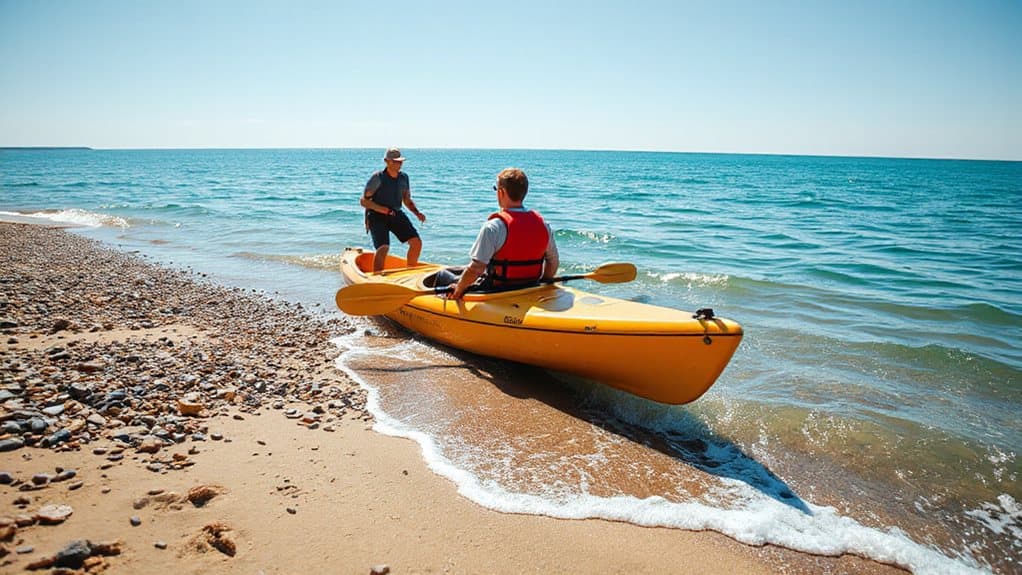
After fixing the common mistakes that can turn a fun paddle into a hazard, the next step is learning how to get in and out of the water without capsizing.
Position the kayak perpendicular to shore, bow away, paddle blade as an outrigger, stand over the cockpit, then sit, secure your foot pegs, and paddle immediately.
When exiting, remove the spray skirt, plant one foot, transfer weight, and step out confidently.
Core Paddling Skills to Master on Calm Water
Mastering core paddling skills on calm water starts with a solid foundation: a smooth, efficient forward stroke that lets you glide without wasted effort.
Catch the blade near your toes, rotate your torso, exit at hip level, and recover opposite side.
Engage core, keep a straight back, bend legs, and practice backward, sweep, and draw strokes.
Consistent repetition builds confidence and effortless control.
Plan Your First Ocean Kayak Trip: Route, Distance, Buddy System
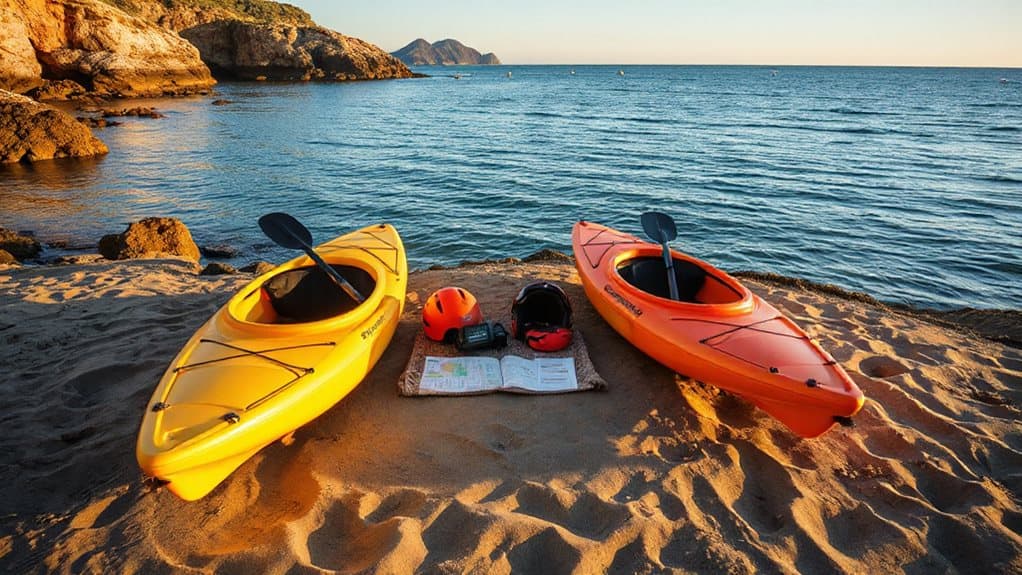
Pick a protected, low‑risk waterway like a reef‑sheltered bay and map out a short, manageable distance—typically 3‑4 miles for your first outing.
Keep the route simple, avoid exposed shoreline sections, and plan for easy turn‑around points so you can turn back if conditions shift.
Bring a buddy or join a guided group, establish a clear communication plan before you launch, and never paddle solo on your initial ocean trip.
Choose Simple Route
Start by picking a sheltered beginner route—protected waters like a bay, cove, or lagoon cut down on wind, swell, and current, letting you focus on paddling rather than fighting the elements.
Choose a short, looped path with clear landmarks, keep launch and landing points easy, and bring a buddy for safety and wayfinding.
Check morning forecasts, stay within a manageable distance, and have a flotation device, whistle, and a shared float plan ready.
Measure Travel Distance
After picking a sheltered route, the next step is figuring out how far you’ll actually go. Estimate speed at about two miles per hour, then multiply by your planned paddling time—three hours yields roughly five to six miles round‑trip.
In calm seas, two to three hours can stretch to three to six miles, while wind or chop may cut that to one to three miles.
Keep the distance within a swimmable return range, typically half a mile to three miles offshore, to guarantee safety and confidence.
Use Buddy System
Even if you’ve mapped out a perfect route and calculated a safe distance, the real safety net comes from paddling with a buddy; never paddle alone because a companion can instantly alert authorities, provide aid, and keep panic at bay.
Choose calm, low‑traffic waters together, share a detailed float plan with a shore contact, discuss skill levels, hand signals, and emergency procedures, and keep communication devices handy for swift rescue if needed.
When to Get Professional Guidance for Beginner Ocean Kayaking
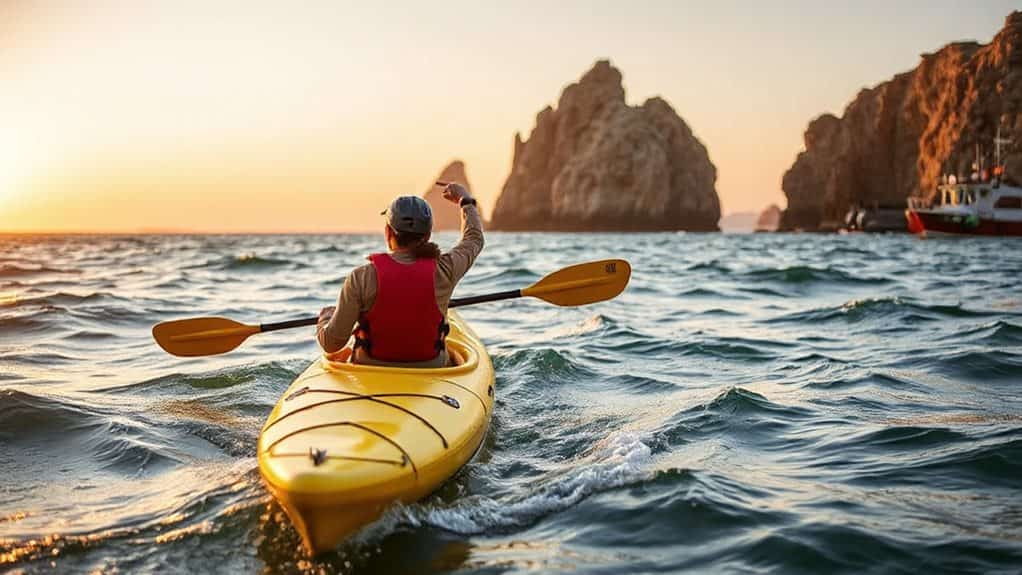
Recognize when your skill gaps could put you at risk and seek professional guidance before you head offshore. If you’re unsure about launching, landing, or reading tides, a certified instructor can teach bracing, rescue, and weather reading.
Calm bays are fine for solo practice, but wind, swell, or cold water demand a guide.
Group classes, local clubs, or lifeguarded beaches give structured safety and confidence before you venture farther.
And Finally
You’ve learned that ocean kayaking can be safe for beginners when you respect the environment, choose the right gear, and learn basic skills. Start with a sit‑on‑top kayak, check tides, currents, and weather, and paddle in calm conditions with a buddy. Follow the step‑by‑step launch and landing tips, and don’t hesitate to seek professional instruction if you feel uncertain. By preparing thoroughly and staying within your limits, you’ll enjoy confident, rewarding paddles on the water.