
Pick a level, well‑drained campsite with shade, stay at least 200 feet from trails and water, and check for nearby restrooms or fire pits. Set a realistic budget by listing fees, food, gear, and travel, then look for free or off‑peak sites and consider borrowing or renting equipment. Pack a three‑season tent, sleeping bag, pad, headlamp, map, stove, cookware, layered clothing, first‑aid kit, and a reliable water source or filter. Store food in bear‑proof containers, keep a safe distance from wildlife, and share a concise itinerary with a trusted contact; the next sections will guide you through gear testing, travel logistics, and final checklist preparation.
TLDR
- Choose a level, well‑drained campsite with shade, 200 ft from trails/water, and check amenities and hookups via maps/reviews.
- Set a realistic budget: list fees, food, gear, travel; use free/low‑cost sites, off‑peak bookings, and a daily spending limit.
- Pack essential gear: three‑season tent, sleeping bag/pad, headlamp, stove, cookware, layered clothing, first‑aid kit, and power bank.
- Plan simple meals: one‑pot dishes, reusable ingredients, lightweight fuel, and bring enough water plus filtration or purification method.
- Prepare safety documentation: digital and printed itinerary, emergency contacts, bear‑proof food storage, and distance guidelines for wildlife.
Choose the Right Campsite for Beginners
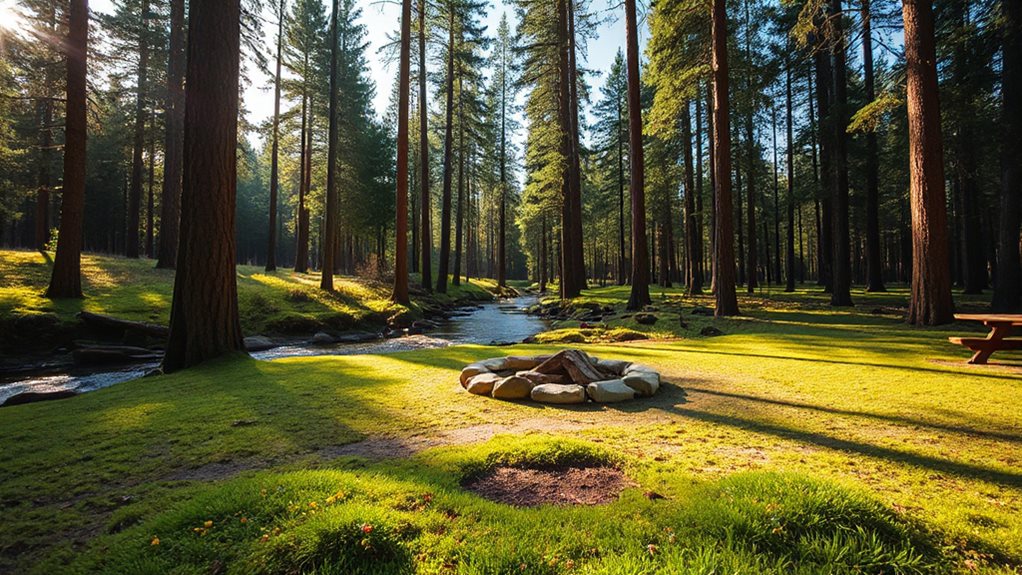
Choosing the right campsite is the first step toward a smooth, enjoyable camping experience, especially for beginners. You’ll want a level, well‑drained spot with firm soil, shade from trees, and no dead limbs overhead, while staying at least 200 feet from trails and water. Proximity to restrooms, showers, and fire pits adds convenience, but keep a natural barrier for privacy and quieter nights. Use online maps and reviews to confirm amenities, vehicle limits, and scenery before you book. Ensure the site has full hookups if you plan to use an RV or need easy access to water and electricity. For added comfort, consider bringing a portable power option for charging devices and running small appliances.
Map Out a Realistic Budget and the Must‑Have Costs
Where do you start when you need to keep a camping trip from blowing your bank account? List every expense—campsite fees, food, gear, travel—and set a daily limit. Research free or low‑cost sites, book off‑peak, and consider boondocking. Borrow or rent pricey gear, buy used, and create a sinking fund. Pack simple meals, share groceries, and split gas with friends. Track spending daily to stay on budget. Inspect poles regularly to catch dents, cracks, or rust before they lead to costly replacements and keep your gear reliable by storing it dry and clean, especially paying attention to tent pole condition.
Create a Camping Checklist for Beginners: Essential Gear
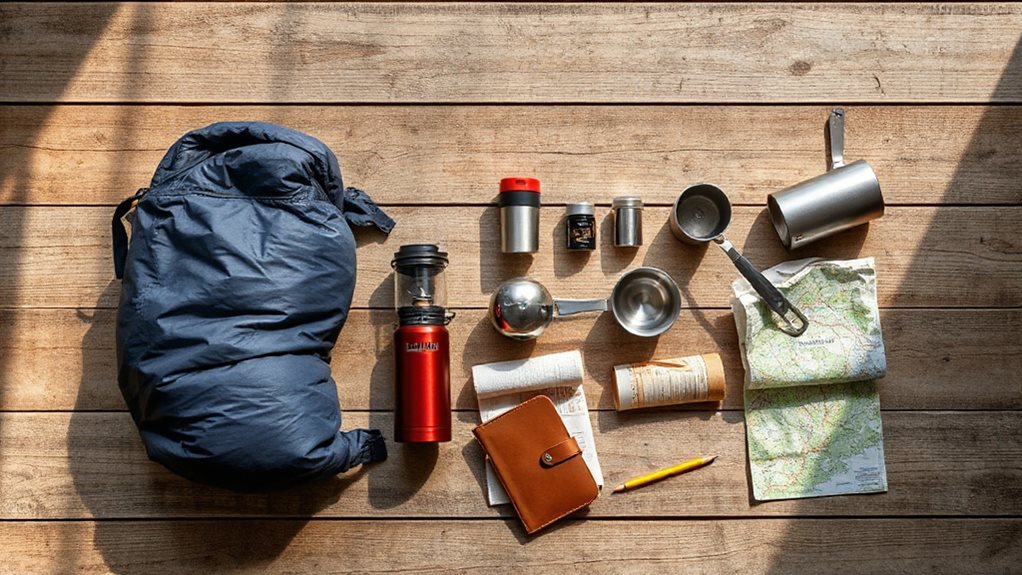
A solid camping checklist starts with the basics: a reliable shelter and sleep system, because without a dry, comfortable place to rest the whole trip can fall apart. Pack a three‑season tent, ground tarp, stakes, mallet, sleeping bag, pad, and pillow.
Add headlamp, lantern, spare batteries, map, compass, GPS, power bank, stove, cookware, utensils, plates, cooler, layered clothing, rain gear, boots, sun protection, first‑aid kit, repellent, multi‑tool, toiletries, and an emergency communication device. Plan your route thoroughly and share your itinerary with a trusted contact to stay accountable and safe, using offline maps or a satellite communicator if needed.
What Meals, Fuel, and Water Should I Bring?
You’ll want a balanced mix of one‑pot meals, foil packs, and no‑cook options so breakfast, lunch, and dinner stay simple yet nutritious, while using the same veggies and proteins across dishes to cut waste.
Choose efficient fuel like a camp stove or grill, bring a little olive oil or butter, and pack double‑layered foil for quick ember cooking, which keeps your fire time short and your meals tasty.
Finally, load up plenty of drinking water, reusable bottles, and electrolyte‑rich snacks, and consider a lightweight filter or purification tablets if you’ll be refilling from natural sources. Consider bringing a compact portable shower or privacy tent for longer trips to stay fresh and maintain campsite privacy, and learn about water capacity options when choosing a shower or jug.
Balanced Meal Planning
What meals, fuel, and water should you pack for a successful camping trip? Choose quick breakfasts like yogurt with granola, oatmeal packets, or breakfast burritos; pack portable lunches—pita with hummus, cheese‑crackers, peanut‑butter wraps, hard‑boiled eggs; bring hearty dinners—ground‑beef tacos, chicken kabobs, one‑pot pasta, foil‑packet sausage. Include snacks—dried fruit, nuts, protein bars, chocolate‑covered nuts. Carry one gallon of water per person daily, plus purification tablets and electrolyte packets.
Efficient Fuel Choices
Where should you turn for reliable heat when the morning chill hits the campsite? Choose an 80% isobutane/20% propane canister for quick boils—500 ml in under three minutes—and steady performance above 40 °F. For high altitude or winter, a propane‑rich blend or liquid white‑gas stove offers consistent flame, though it needs priming and maintenance. Alcohol stoves stay light and cheap, but they lag in cold or windy weather.
Hydration and Purification
How much water should you actually pack for a multi‑day trek where sources are scarce? Aim for 3‑4 litres per person daily, plus a 1‑litre buffer for heat or delays, weighing about 2.2 lb per litre.
Carry a Sawyer Squeeze or Katadyn BeFree filter, bring chlorine‑dioxide tablets, and keep a bandanna for debris. Boil if you lack equipment; combine filtration and chemicals for heavily contaminated water.
How to Stay Safe and Wildlife‑Friendly at the Site
You should keep all food, trash, and scented items stored in bear‑proof containers or locked vehicles, because strong odors draw wildlife and increase the risk of encounters.
Maintain a safe distance—at least 25 feet—from any animal you spot, and never feed or approach them, as habituation can lead to dangerous behavior.
Regular outdoor activity like cycling can improve cardiovascular health and reduce long‑term disease risk, so consider planning active days while camping to support overall wellness and stamina during your trip; learn more about cardiovascular health as it relates to outdoor exercise.
Food Food Food AwaySafe
Ever wondered how to keep your campsite safe for both you and the wildlife while handling food? Pack raw meat in sealed bags, keep it away from ready‑to‑eat items, and use separate cutting boards.
Keep cold foods below 41°F with ice‑filled coolers, hot foods above 140°F, and discard perishables if ice runs out.
Wash hands, utensils, and dishes with soap, avoid stream water, and treat any natural water before use.
Use a thermometer to confirm internal temperatures, and store clean water separately.
Maintain Wildlife Distance
Keeping food safe is only half the battle; keeping a respectful distance from wildlife is the other. Stay at least 100 yards from bears or bison, 25 yards from deer and birds, and use binoculars or a zoom lens to watch without approaching. Learn local species, check park alerts, make noise while hiking, and keep pets leashed. Respect trails, avoid feeding, and minimize lights and noise.
Arrange Travel and Parking for a Smooth Campsite Setup
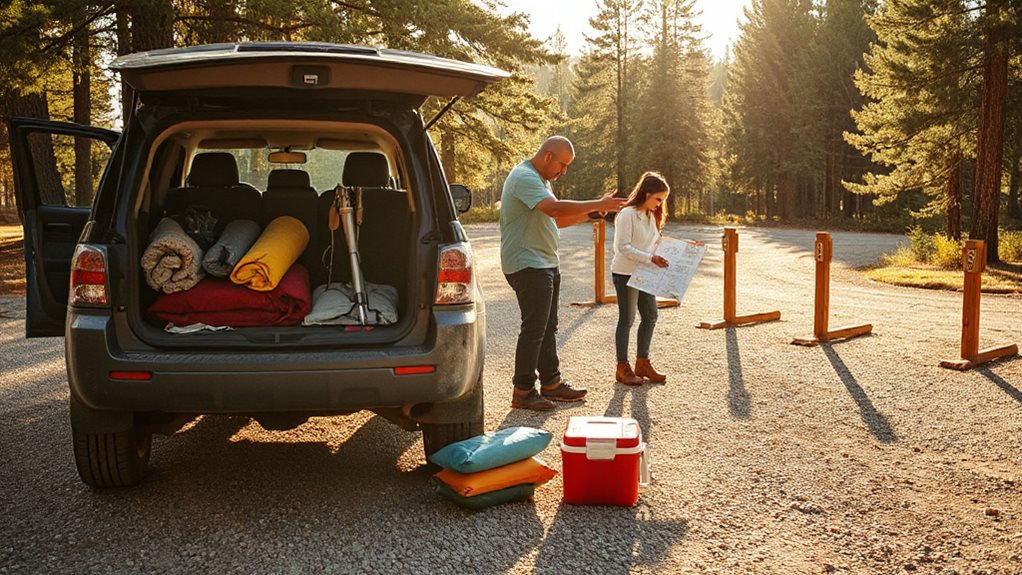
How can you streamline the journey so the whole group arrives ready to set up without a hitch? Carpool to cut gas and parking needs, assign drivers based on distance and vehicle capacity, and share departure times in a group chat.
Reserve adjacent sites, verify parking limits, and pick a lead vehicle for direction. Build a buffer for traffic, fuel stops, and unloading, then park efficiently to leave space for tents and gear.
Test and Practice Your Gear Before You Hit the Trail
Where are you, to set up your campsite, you’ll want to ensure every piece of gear works flawlessly before you hit the trail. Pitch the tent at home, check stakes, guylines, and footprint; test the stove, boil water, and verify fuel. Inflate the pad, sleep on the bag and pillow overnight, and run headlamp, multi‑tool, and whistle checks. This ensure confidence and freedom on the trail.
Review the Final Itinerary and Share It With a Trusted Contact
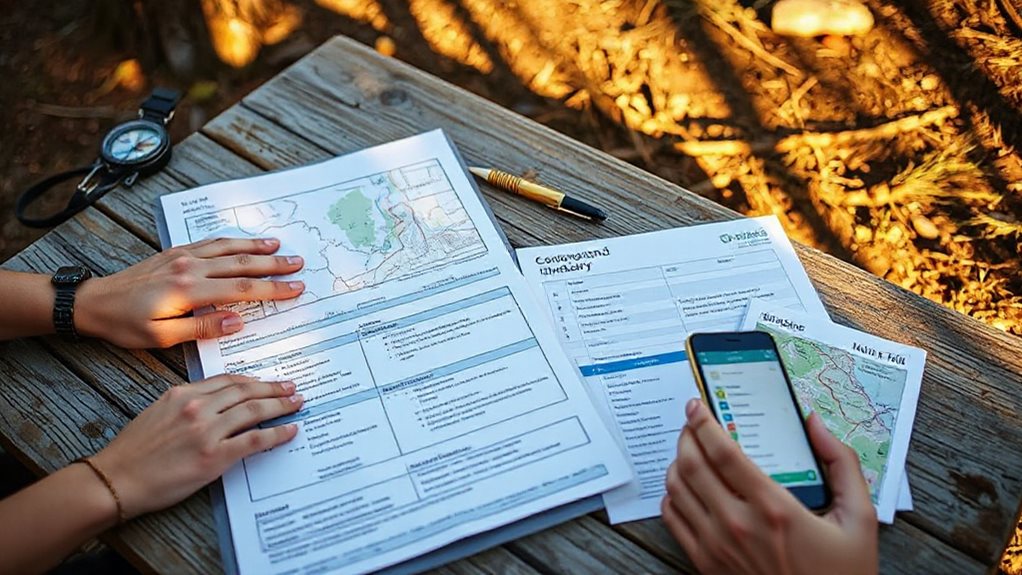
Ever wondered how a simple checklist can turn a vague plan into a safety net? Review every campsite, trail segment, and timing, then jot down departure, arrival, and emergency routes.
Email the concise itinerary to a trusted friend or family member, include contact numbers, and ask for confirmation.
Keep a digital copy on your phone and a printed version in your pack, ensuring help arrives fast if needed.
Final Note
By following these steps, you’ll feel confident setting up your first campsite, staying within budget, and packing the right gear. You’ll know what food, fuel, and water to bring, how to protect yourself and wildlife, and how to arrange travel and parking for a smooth setup. Testing your equipment beforehand and sharing your itinerary with a trusted contact add extra safety. With this solid plan, you can enjoy a hassle‑free journey and focus on the outdoors.


