
Visit Arches in March or November for moderate 52‑61°F daytime highs, comfortable 25°F night lows, and thin crowds, letting you explore the park’s iconic arches and enjoy spring wildflowers or crisp fall light without the oppressive summer heat. These months also offer longer daylight, easier parking, and fewer reservations, while winter’s short days and icy trails, and summer’s 100°F+ afternoons and monsoon storms can limit access. Early starts keep you under 85°F, and ranger programs add insight—continue for deeper details.
TLDR
- March and November offer mild temperatures (52‑61 °F) and fewer crowds, ideal for comfortable hiking and wildlife viewing.
- Spring (March) brings desert wildflowers like primrose and lupine, while fall provides warm daytime highs (60‑80 °F) and reduced visitor density.
- Summer requires early‑morning starts (5‑8 AM) and ample water (2‑4 L per person) to avoid extreme heat and monsoon thunderstorms.
- Winter offers quiet trails and reservation‑free access, but short daylight, icy conditions, and possible snow demand proper gear and headlamps.
- Weekday visits in March, April, September, and October minimize crowds; reserve timed entry during peak summer months.
Why March & November Are the Best Times to Visit Arches
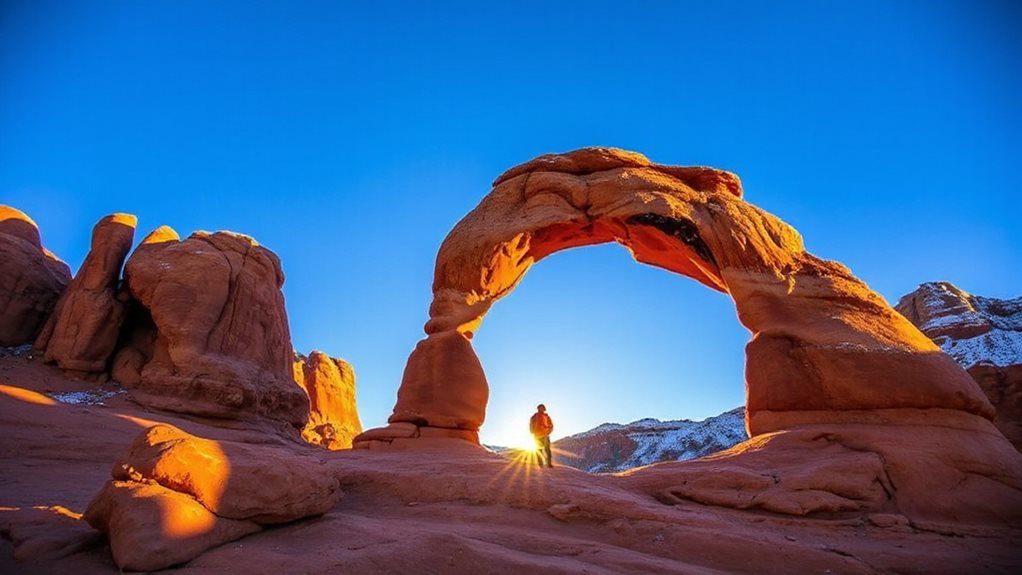
Why consider March or November for your Arches excursion? You’ll enjoy moderate daytime highs of 52‑61°F, crisp mornings, and manageable night lows around 25°F, so you can hike comfortably without heat stress. Minimal rain, clear skies, and golden light enhance photography, while fewer crowds give you solitude and longer daylight for multiple trail adventures, all without summer storms. Average humidity hovers around 51% in November, making the air comfortably cool. Many visitors also choose these months to avoid peak crowds and seasonal closures.
Spring Wildflowers: Why March Is a Top Time to Visit Arches
Ever wondered when the red cliffs first start to wear a splash of color? In March, winter rains awaken desert annuals, and you’ll see primrose and lupine peeking near Tower of Babel, yellow biscuitroot and sweetroot scattering bright patches across lower washes. Stay on trails to protect fragile soil crust, use the Flower Guide for identification, and relish early spring’s vivid contrast before April’s peak. Remember to pack your essentials in a carry-on and measure your bag to avoid surprises at the gate.
Fall Light and Thin Crowds: A Prime Time to Visit Arches
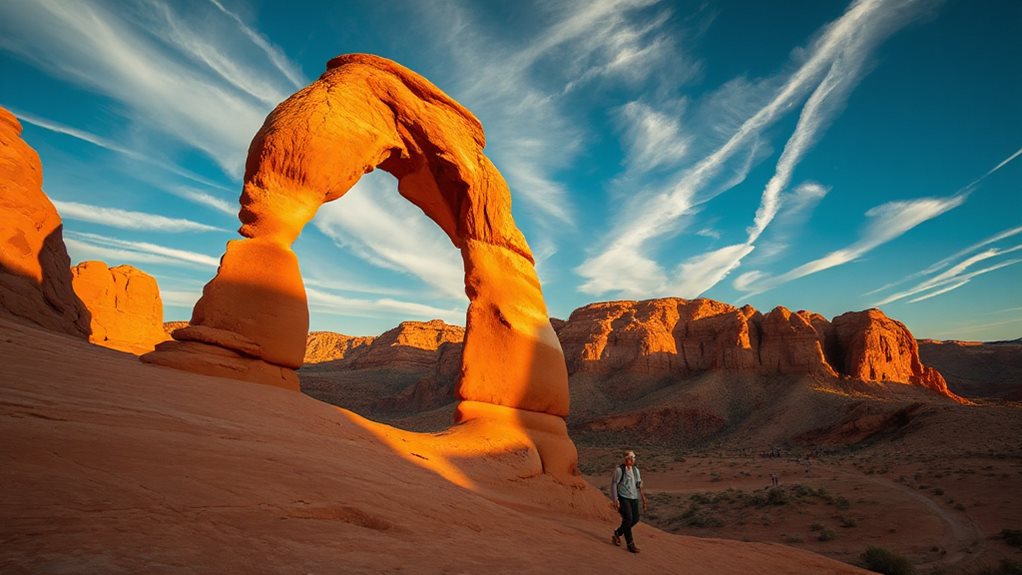
After the burst of spring wildflowers fades, the park settles into a quieter rhythm that makes fall one of the best times to investigate Arches. Daytime highs linger between 60‑80°F, while nights dip to 30‑50°F, offering crisp, invigorating air. Visitor numbers plummet—crowding drops 40‑46%—so you wander freely among 2,000 arches, soaking golden light and clear vistas without reservations or crowds. Pack a basic emergency kit with water purification supplies and other essentials in case services are limited.
Summer Heat, Required Reservations, and Monsoon Risks
You’ll find that the intense summer heat can quickly limit outdoor activities, especially when temperatures soar above 100°F in the afternoons, so planning early‑morning or late‑evening hikes is essential.
Because reservations are mandatory from April through October, you’ll need to book your timed entry well in advance to avoid sell‑outs during the peak June‑August months.
Keep an eye on the monsoon season that starts in July, as brief but violent thunderstorms can trigger flash floods and close roads, making it crucial to check weather alerts before heading out.
Choose footwear with proper fit—including a snug heel and roomy toebox—to protect your joints and stay comfortable on uneven trails.
Heat Limits Outdoor Activities
How does the summer heat reshape your Arches National Park expedition? You’ll need to start hikes at 5–8 AM, avoid the 11 AM‑5 PM window, and carry 2–4 L water per person. Early mornings keep temperatures below 85°F, while late‑day or sunrise treks stay safe. Reservations from 7 AM‑4 PM manage crowds, so book months ahead to secure entry.
Monsoon Timing Hazards
While early‑morning hikes let you beat the summer heat, the monsoon season adds a new layer of risk that you can’t ignore.
Expect sudden afternoon thunderstorms from July to August, flash‑flood danger in narrow canyons, and rapidly changing visibility.
Check forecasts, carry ample water, and postpone canyon trips if warnings appear.
Early departures and flexible plans keep you safe and free.
Winter Quiet and No Reservations: Safe Trail Tips
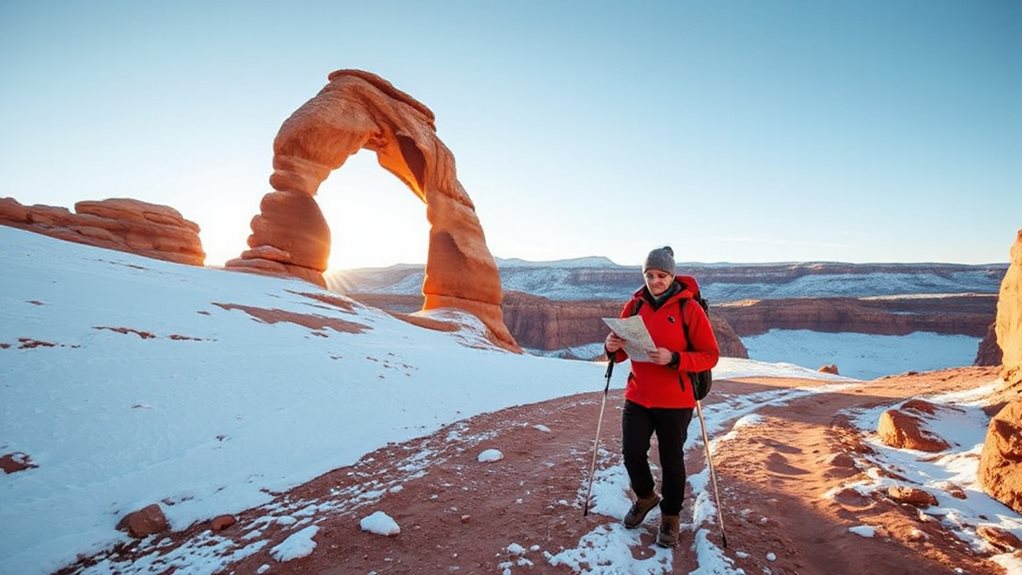
You’ll want to layer your clothing—thermal base, insulating mid‑layer, and waterproof outer shell—so you stay warm while the daylight fades quickly in winter.
Before you head out, check the visitor center for recent snow‑free trail reports, because icy patches can appear suddenly on even the most popular routes.
With a good pair of microspikes, trekking poles, and a clear sense of timing, you’ll maneuver the short daylight hours safely and enjoy the park’s quiet beauty.
Carry essential survival gear like a first aid kit and fire-starting tool, and make sure you know basic cold-weather first aid and shelter-building before heading into remote areas.
Layered Clothing Essentials
Ever wonder why a single heavy coat won’t keep you comfortable on a winter hike through Arches? Start with a snug, moisture‑wicking synthetic or wool base layer that pulls sweat away, then add a fleece or wool mid‑layer for warm air pockets you can peel off when you’re moving.
Top it with a waterproof, wind‑resistant parkas that lets you swing your arms freely.
Finish with insulated boots, waterproof gloves, a warm hat, and sunglasses for UV glare.
Short Daylight Navigation
When winter shortens daylight in Arches, planning your hike around the early sunrise becomes essential, because the park’s stunning vistas disappear into darkness faster than you might expect.
Pack a headlamp, spare batteries, and a physical map; GPS helps, but signal drops are common.
Carry a compass, microspikes or snowshoes, and stay on marked cairns.
Start early, watch temperature shifts, and enjoy quiet, reservation‑free trails before dusk.
Snow‑Free Trail Checks
Where can you find a truly snow‑free trail in winter’s quiet Arches? Check the Visitor Center before heading out, ask rangers about current conditions, and target south‑facing routes that melt quickly.
Pack microspikes, waterproof boots, and trekking poles; layer clothing for temperature swings.
Avoid north‑facing canyons, stay alert for hidden ice, and keep a slow, steady pace for safety.
Temperature Ranges and What They Mean for Your Visit
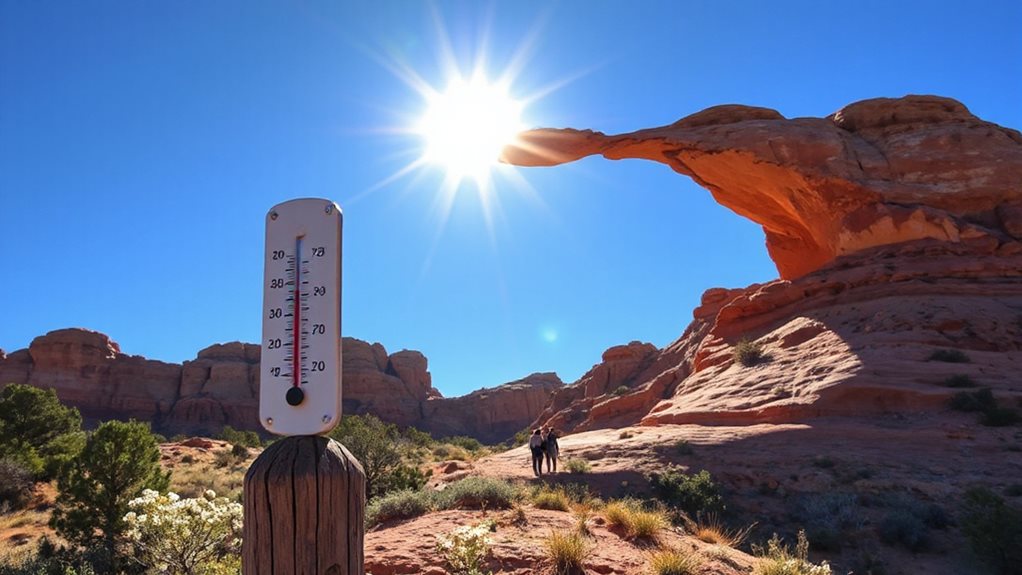
How do the temperature ranges shape your experience at Arches National Park? In spring, expect 60‑84°F days and cool 30‑45°F nights, perfect for hiking yet chilly after dark.
Summer brings 90‑100°F peaks, with 20‑30°F cooler mornings, but afternoon heat and monsoon floods can limit strenuous activity.
Fall offers 60‑80°F highs and comfortable nights, while winter’s 20‑50°F range brings snow and icy roads, restricting access.
Ranger Programs That Enhance the Best Time to Visit Arches
The temperature ranges you just read shape when and how you’ll enjoy Arches, but the park’s ranger‑led programs add another layer of value to those seasonal windows. You can join 10‑minute patio talks at the visitor center, stroll on ranger‑guided nature walks, or attend evening campfire talks on rock art and wildlife.
Summer evenings feature 30‑45‑minute programs at Devils Garden, while spring and fall offer free, family‑friendly activities that deepen your exploration.
Managing Crowds, Parking, and Daylight for a Smooth Visit
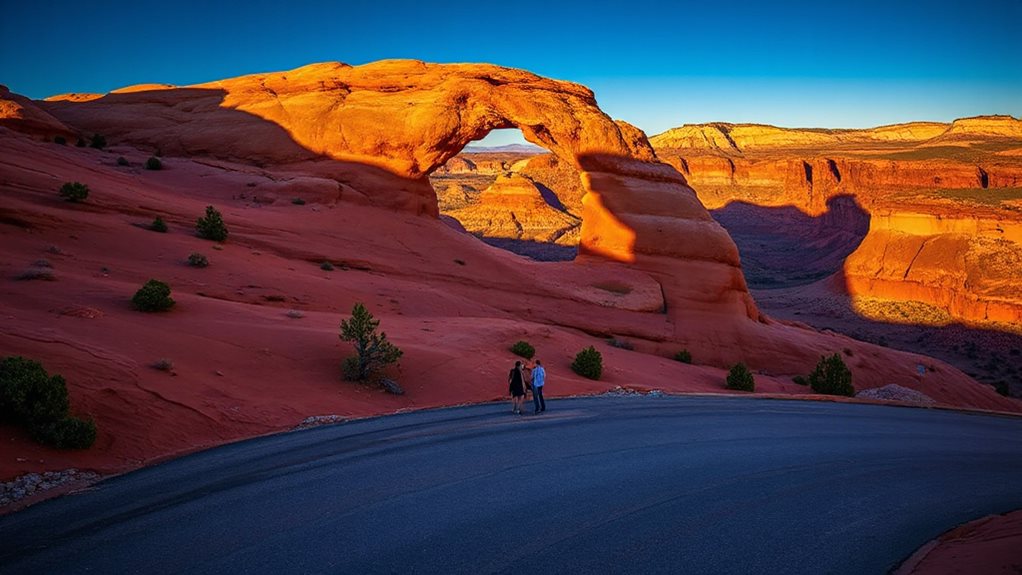
When you plan a trip to Arches, timing your arrival around crowds, parking, and daylight can make the difference between a rushed scramble and a relaxed journey.
Reserve timed entry in spring and fall, aim for weekdays in March, April, September, or October, and drive early to snag parking.
Use long summer days for full‑day hikes, but winter’s short light means shorter routes and flexible plans.
Final Note
Choose March for blooming wildflowers and mild temps, or November for crisp light, thin crowds, and longer days; both months let you explore Arches comfortably without the heat, reservations, or monsoon risks of summer. Winter offers quiet trails but limited services, while summer demands early starts and booked permits. By matching your preferred weather, crowd level, and activity schedule to these seasonal insights, you’ll maximize enjoyment and safety during your visit.


