
You’re most likely to die from a deer collision—over 2 million crashes and $10 billion in damages each year—making vehicle‑road encounters the deadliest wildlife threat in North America. Bears, especially grizzlies and black bears, cause dozens of fatal attacks, often when food is poorly stored or people startle them. Venomous snakes like the western diamondback claim the most bite deaths, while mountain lions, wolves, and coyotes add to the risk, especially in California, the Rockies, and the Northwest. Seasonal spikes follow fall time changes, spring migrations, and summer breeding periods, and geographic hotspots include Yellowstone, Glacier, and the Great Plains. If you keep a safe distance, travel in groups, and carry bear spray, you’ll lower your odds dramatically, and the next sections will show you exactly how.
TLDR
- Deer collisions cause ~2.1 million accidents annually in North America, resulting in $10 billion in damage and over 200 deaths, especially at dusk and high speeds.
- Grizzly and black bears are responsible for roughly 150 deaths since the 1970s; proper food storage, bear‑spray, and avoiding startled encounters reduce risk.
- Venomous snakes—rattlesnakes, copperheads, cottonmouths, and coral snakes—cause most pit‑viper fatalities; prompt pressure‑bandage care and antivenom (e.g., CroFab) are critical.
- Mountain lion attacks are increasing in the western U.S.; hiking in groups, making noise, and keeping pets leashed are effective preventative measures.
- Bison, wolves, and coyotes pose seasonal threats; maintain at least 25 yards from bison, avoid close approaches, and report sightings to wildlife authorities.
Deer Collisions – Why Cars Are the Deadliest Threat Among Dangerous Wildlife in North America

Ever wondered why your car becomes the deadliest threat to North America’s wildlife? You’re driving through forest‑edge roads, especially in late October‑December, when deer are most active.
With 2.1 million collisions yearly, $10 billion in damage, and over 200 deaths, speed, dusk‑to‑dawn travel, and low seat‑belt use amplify risk. Reduce speed, use headlights, and heed wildlife signage to stay safe.
The annual collision spike after the fall time change adds roughly 16 % more incidents. Many collisions occur on rural roads near forest edges where deer and other wildlife are common.
Bears (Grizzly & Black) – Fatal Attacks and Common Triggers
When you’re hiking or camping in bear country, understanding why fatal attacks happen can save lives. Grizzlies have caused about 82‑90 deaths since the 1970s, especially in Glacier and Yellowstone, while black bears account for roughly 66‑82 deaths despite their massive numbers. Triggers include food‑conditioning, startled encounters, carcass defense, and maternal protection; proper food storage and vigilance dramatically lower risk. Ensure proper ventilation and avoid using a propane stove indoors to reduce risks from smoke and carbon monoxide propane stove ventilation.
Venomous Snakes – Species, Bite Statistics, and Antivenom Availability

Where do venomous snakes fit into North America’s danger list, and why should you know their habits?
You’ll encounter rattlesnakes—Western Diamondback causing most U.S. deaths, Eastern and Timber varieties ranging north to Vermont, plus Copperheads, cottonmouths, and coral snakes, each with distinct habitats and markings.
CroFab treats most pit‑viper bites; antivenom for rarer species is limited.
Stay aware, respect their space, and you’ll preserve both freedom and safety.
Mountain Lions – Rising Attack Numbers, Hot Zones, and Safety Tips
Mountain lions are now a growing concern on North America’s danger list, and understanding their habits is key to staying safe. Attack numbers have risen sharply, especially in California’s Los Angeles, El Dorado, and Trinity counties, plus hotspots in Washington, Oregon, New Mexico, and Colorado. Young or unhealthy cats attack more often, while healthy adults cause most fatalities. Avoid hiking alone, keep pets leashed, make noise, and stay alert in known zones. Antennas on walkie talkies emit modulated radio waves that can help you call for help in remote areas.
Wolves & Coyotes – Rare Fatalities but Increasing Human Encounters

Why do wolves and coyotes seem to be showing up more often on hiking trails and suburban streets? You’ll notice they’re expanding into new territories as deer populations shrink, while urban coyotes grow accustomed to human food and density.
Fatalities remain rare—33 wolf and 2 coyote deaths—but encounters rise, especially near homes and parks.
Stay alert, keep food secured, and give them space to protect your freedom. A properly assembled and rigged rod and reel setup, matched to conditions and technique, helps anglers stay safe and effective when fishing near areas where these animals may appear, so learn to match a 7-foot rod to your reel and line choices.
Bison – Charge Risks in National Parks and How to Stay Safe
When you’re in a park, keep at least 25 yards away from bison and watch for the warning signs that warn of head bobbing or snorting, because those cues mean a charge could be coming.
The visible signage at trailheads and near popular photo spots tells you the safe observation distance, so you can enjoy the wildlife without getting too close.
Line degradation can be accelerated by UV rays, so limit exposure to direct sunlight when storing gear.
Park Proximity Rules
Ever wondered how close is too close to a bison? Keep at least 25 yards (23 m) away, especially on trails or geyser basins where most injuries happen. Remember that getting within 5‑10 feet can provoke a charge, and during mid‑July to mid‑August the bulls are extra aggressive. Stay vigilant, respect the distance, and back away slowly if a bison approaches.
Visible Warning Signage
How can you recognize the warning signs that keep you safe around bison in national parks? Look for bright park signs that stress personal space, especially near trails, geyser basins, and summer mating grounds. Notice notices about heightened aggression from July to September, and heed alerts that bison may charge if you get too close. Follow the guidance to stay clear, stay alert, and enjoy freedom responsibly.
Safe Observation Distances
What distance should you keep from a bison to avoid a sudden charge? Stay at least 25 yards (23 meters) away, especially during April‑October when bison are most reactive and mating season spikes aggression. Keep your car, trail, and selfie distance beyond that zone, back away slowly if a bison approaches, and never run. This simple rule protects you while preserving the wild experience.
Seasonal Patterns – When Each Dangerous Species Is Most Likely to Attack
You’ll notice that spring migration peaks bring many animals into closer contact with trails, so you should stay extra alert then.
Winter road hazards increase when bears and other large mammals cross icy highways, making slow, cautious driving essential.
In the fall, breeding season drives heightened aggression in species like bison and snakes, so avoiding known habitats and keeping pets leashed becomes especially important.
Spring Migration Peaks
When spring arrives, temperatures rise and wildlife awakens, prompting a surge in movement that directly influences the likelihood of encounters with North America’s most dangerous species. You’ll see grizzlies leaving dens, elk calves emerging, and mountain lions prowling lower valleys, while great‑white sharks follow warming coasts. Mule deer and pronghorn herd across highways and plains, increasing road crossings and predator visibility. Stay alert; timing and routes matter.
Winter Road Hazards
Ever wondered why winter roads feel more dangerous beyond ice and snow? You’ll encounter lynx with oversized paws tracking prey, coyotes whose breeding‑driven aggression spikes in January‑February, elk whose dwindling fat fuels hostility, mountain lions whose mating season runs December‑March, and wolves whose packs hunt larger game in deep snow.
Stay alert, reduce speed, and keep headlights on to spot wildlife crossing.
Fall Breeding Season
What makes fall especially risky for hikers and drivers is the surge in breeding activity that drives many dangerous species to become more territorial and aggressive. During this period, bears protect cubs, cougars patrol ranges, and rattlesnakes are more defensive. You’ll encounter heightened vigilance near water sources and trails, so keep distance, stay quiet, and respect their space to avoid conflicts.
Geographic Hotspots – Regions With the Highest Wildlife Fatality Rates
Where do the deadliest wildlife encounters happen in North America? The Southern U.S. dominates, accounting for 46.8% of deaths, especially Texas, Florida and Georgia, where venomous arthropods and snakes thrive. Texas alone exceeds 500 fatalities, driven by feral hogs, deer collisions and stings. North Carolina, Tennessee and California also rank high, with roadkill and park incidents adding to their danger profiles.
Prevention Strategies – Proven Ways to Reduce the Risk of Wildlife‑Related Deaths
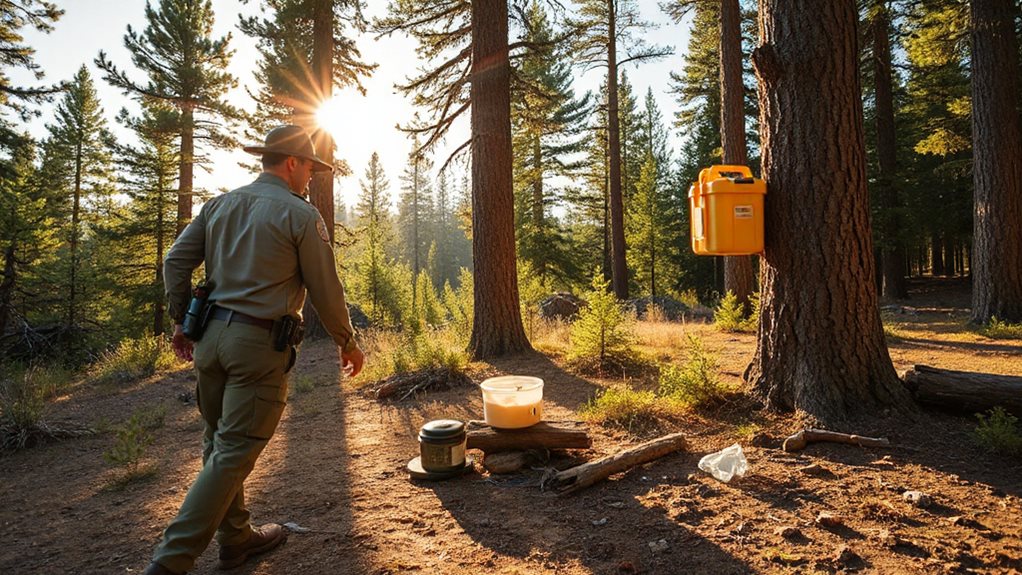
The southern United States, especially Texas, Florida, and Georgia, accounts for nearly half of wildlife‑related fatalities, so the next step is to focus on how you can actively reduce those risks. Carry EPA‑approved bear spray on a holster, practice deployment upwind, and keep it within arm’s reach. Hike in groups of three, make noise, stay on maintained trails, store food in bear‑proof containers, and use tracking apps to inform others of your location. These habits lower encounter chances and keep you safe.
Immediate Action After an Encounter – First‑Aid and Reporting Guidelines
You should keep emergency contact numbers handy, so you can call for help the moment you’re safe.
Apply pressure to any wound with a clean cloth, clean it with soap, and note the animal’s description for medical staff.
Then document the incident—date, location, species, behavior—and report it to local wildlife authorities or a game warden promptly.
Secure Emergency Contact Numbers
Call the appropriate hotline immediately after spotting a dangerous animal, then follow basic first‑aid steps—apply pressure to bleeding wounds, keep the victim still, and avoid further contact—while you gather essential details like location, species, and injury severity to report to wildlife authorities. Dial 866‑4USDA‑WS for national help, 866‑318‑2401 in North Carolina, 757‑543‑7000 for Wildlife Response Inc., or 910‑457‑0089 ext. 5 for Bald Head Island. Use email contacts for non‑urgent reports.
Immediate Wound Care Steps
After you’ve secured the scene and called the proper wildlife hotline, the next step is to focus on the victim’s wound. First, assess consciousness, airway, and any life‑threatening injuries. Apply firm pressure with a clean cloth for three minutes, raise if possible, and avoid lifting the pad. Wash the wound with soap and warm water, rinse debris, then spray an antibacterial cleanser. Dab antibiotic ointment, cover with a sterile dressing, keep the area immobilized, and seek medical care promptly, treating every bite as a potential rabies risk.
Document and Report Incident
How do you ensure an animal‑related incident is recorded accurately and promptly after the immediate threat is neutralized? Call 9‑1‑1, then notify police, animal control, or ZooCom (ext 7542). Keep the animal in sight, note its behavior, injuries, and any human harm. Fill out the online Alaska Fish and Game report, include ID, location, witness contacts, photos, and a concise narrative. Follow up with your supervisor and the assigned officer.
Final Note
You’ve learned that wildlife risks vary by species, season, and location, so staying alert and informed is essential. Respect animal space, follow local safety guidelines, and keep your vehicle and surroundings clean to deter encounters. If you do cross paths, remain calm, give the animal room, and know basic first‑aid steps. By combining awareness with practical prevention, you dramatically lower the chance of a dangerous incident while enjoying North America’s outdoors.


