
Pick a site away from water, trails, and food‑smelling paths, then set up on a stable gravel or rock pad at least 200 feet from any source. Store all food, scented gear, and trash in bear‑proof containers or hard‑sided canisters, placing them a hundred yards from your tent on level ground. Keep the cooking area clean, wash dishes with biodegradable soap far from water, and wipe down gear to erase scents. Make regular noise—clap, whistle, or bang a pot—when wildlife is near, and carry a reliable bear spray and emergency kit. Following these steps will help you keep animals out and stay safe, and the next sections will show you even more tactics.
TLDR
- Store all food, scented gear, and trash in bear‑proof containers at least 100 feet from the tent.
- Choose a campsite on established gravel or rock pads, 200 feet from water and away from trails or forest edges.
- Keep the cooking area clean, wash dishes with biodegradable soap far from water, and pack out all waste.
- Make regular noise (whistling, clapping, pot‑banging) when wildlife is nearby to deter approach.
- Carry EPA‑strength bear spray, practice proper deployment, and keep a flashlight, whistle, and first‑aid kit on hand.
Why Site Choice Matters for Wildlife Safety
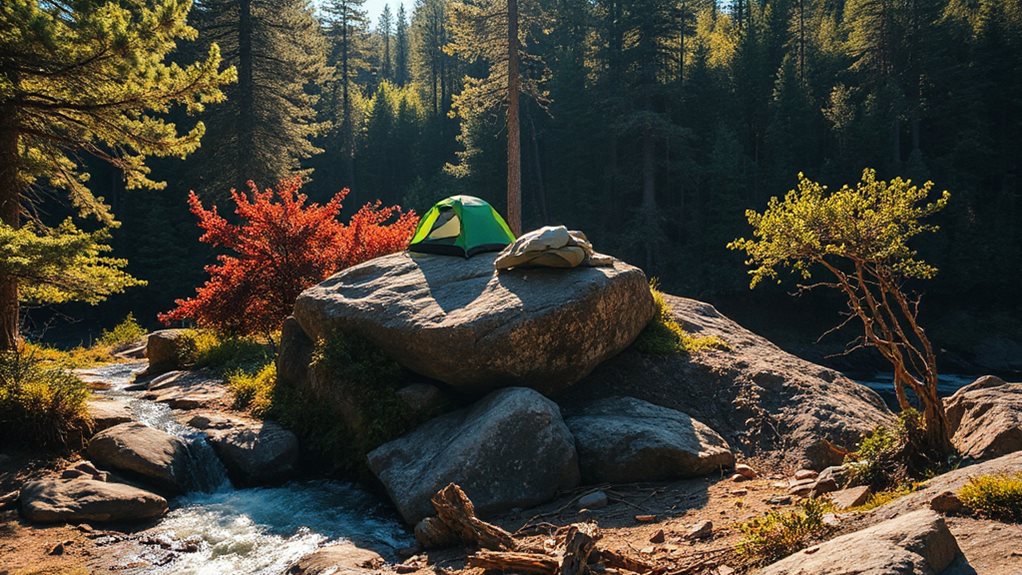
Why does the spot you pick matter for wildlife safety? You choose a site away from riverbanks and food‑smelling trails, you cut down on animal habituation and litter draw. Select sites with good drainage and adequate ventilation to reduce condensation and avoid attracting animals with lingering food odors.
Fixed, backcountry locations increase grizzly risk, while early‑morning or dusk stays raise cougar encounters.
Keep at least 100 yards from bears, 25 yards from other wildlife, and follow Leave No Trace to stay free and safe. High‑use campsites show significant environmental degradation regardless of visitation frequency.
Choose the Ideal Campsite to Deter Wildlife
Where you set up camp can make all the difference between a peaceful night and an unexpected wildlife encounter, so start by choosing a spot that respects the animals’ natural routes and resources.
Pick established gravel or rock pads, stay 200 feet from water, avoid forest edges and trails, follow signage, and keep to designated paths, ensuring minimal disturbance and safe, free roaming for both you and wildlife. Use durable gear and keep food secured to minimize attractants and reduce the chance of animal visits to your site, keeping food storage practices consistent.
Store Food and Scented Gear in Bear‑Proof Containers for Wildlife Safety
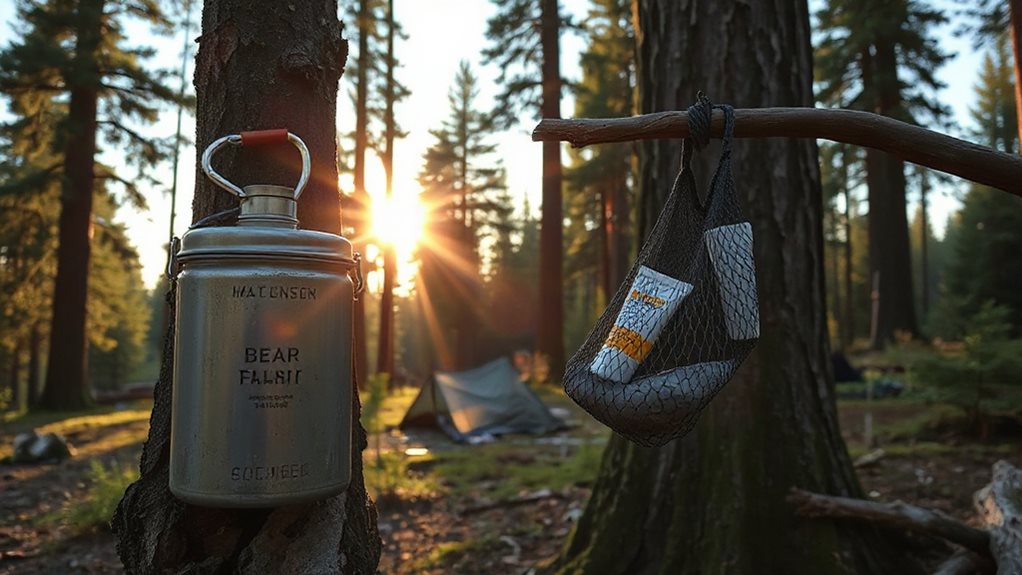
Ever wondered how a single container can keep both you and the local wildlife safe?
Use an IGBC‑approved hard‑sided canister, like BearVault, and keep it 100 feet from your tent on level ground.
Store all food, scented gear, and trash inside, never rely on coolers or zip‑top bags.
This prevents bears from associating you with food, protects your freedom, and complies with regulations across national parks.
Topwater lures work best during dawn and dusk when wildlife activity and visibility patterns are similar to peak fish feeding times.
Keep Your Campsite Spotless to Protect Wildlife
Keeping your campsite spotless is essential for protecting wildlife, because even tiny crumbs or lingering scents can attract animals and disrupt their natural behavior. Clean cooking areas after meals, wash dishes 200 feet from water with biodegradable soap, and wipe down gear to erase scents. Pack out all trash, use bear‑proof containers, and store scented toiletries away. Follow Leave No Trace, check for footprints, and dispose greywater at designated sites. This routine keeps nature free and safe. Use three short whistles or other audible signals to alert companions if wildlife approaches and coordinate a calm response.
Top Natural Repellents and How to Apply Them for Wildlife Safety
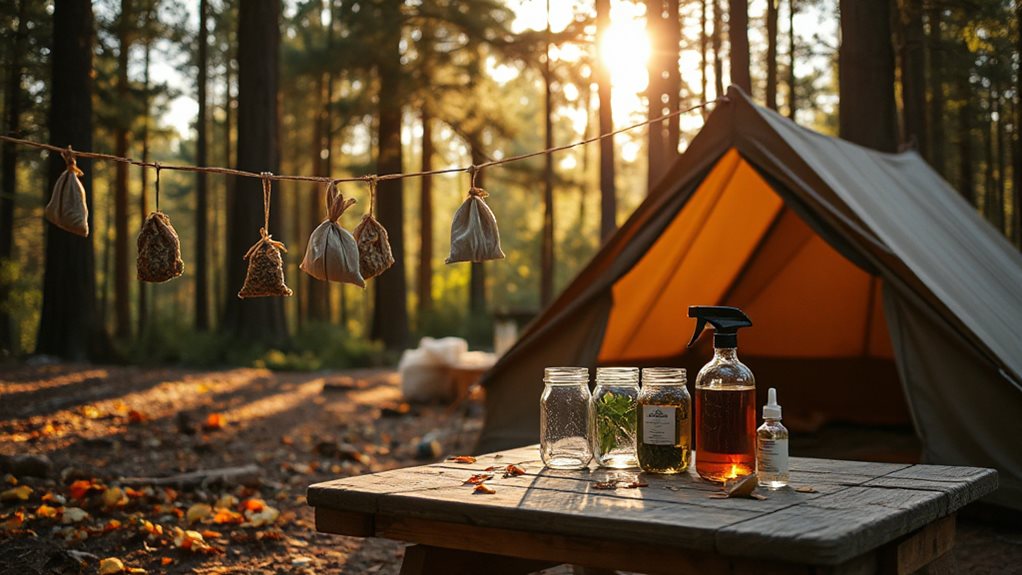
Ever wondered which natural repellents actually work and how to use them safely at your campsite? Light citronella candles around the perimeter, spray diluted citronella oil on clothing, and combine with fire for extra protection.
Use 30% lemon eucalyptus oil as a spray or lotion for 5‑7 hour coverage.
Mix lavender with coconut oil for skin, scatter rosemary sprigs, and apply garlic or coffee‑ground sprays for low‑cost, wildlife‑friendly deterrence. Female moose typically do not grow antlers, so consider campsite layout and vegetation to reduce encounters with large antlerless females.
Make Noise to Deter Curious Wildlife
How can you keep curious critters at bay without relying on gadgets that often fall short? Simple noise works: clap, whistle, or bang a pot whenever you hear rustling. Consistent sounds signal human presence, prompting animals to avoid the area. Avoid relying on ultrasonic devices—they lose power quickly, get blocked by foliage, and wildlife habituates. Use a portable bell or voice shout, timing it to deter without startling yourself.
Pick Night‑time Bear Spray & Emergency Gear for Wildlife Safety
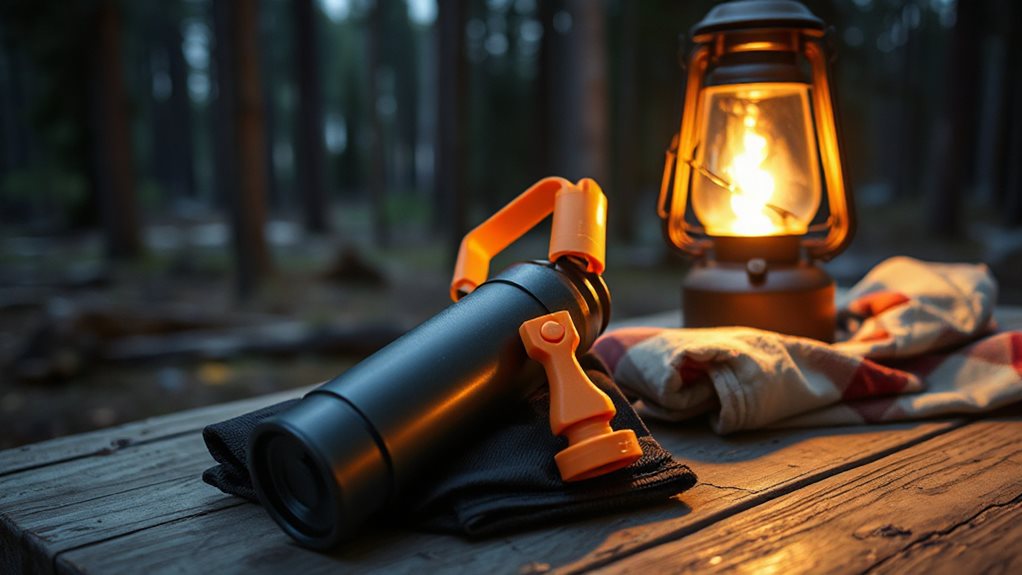
Why choose a night‑time bear spray and the right emergency gear? Pick an EPA‑strength formula with at least 30‑feet range and a 7‑second canister, store it close to your body for quick access in sub‑zero weather, and practice the 20‑30‑foot deployment angle downward.
Carry a backup, keep a flashlight, a whistle, and a sturdy first‑aid kit ready, and treat the spray like a firearm—always aim, never point at friends.
Manage Pets, Lighting, and Night‑time Visibility to Minimize Wildlife Attraction
When you set up your campsite, the way you manage pets, lighting, and night‑time visibility can make all the difference between a peaceful night and unwanted wildlife visitors.
Keep pets leashed, supervised, and vaccinated; use reflective collars and dispose of waste properly.
Dim lights, limit fire glow, and shut pet doors at night.
Store food high, lock containers, and keep trash sealed.
Maintain tidy vegetation and respect distance rules.
Final Note
By choosing a smart site, securing food, keeping things clean, using natural repellents, making noise, and packing bear spray and night gear, you’ll greatly reduce wildlife encounters. Managing pets, lighting, and visibility adds extra protection, ensuring both you and the animals stay safe. Follow these practical steps, and you’ll enjoy a peaceful, wildlife‑free campsite while respecting the natural habitat around you.


