
You’ll keep muscles fueled and pace steady by packing lightweight snacks that mix quick‑digest carbs, modest protein, and healthy fats—think a trail‑mix of almonds, dried mango, and a few jerky strips, which together deliver steady glucose and amino acids for sustained energy and muscle recovery; add a low‑fiber granola bar or fruit gummies for steep climbs, and a high‑protein bar like MTN OPS Venture for mid‑day repair, while using airtight pouches and labeled zip‑locks to stay organized and fresh, and the next sections reveal deeper details.
TLDR
- Choose snacks with a 4:1 carbohydrate‑to‑protein ratio, aiming for 15‑30 g carbs and 5‑10 g protein per serving.
- Prioritize quick‑digest carbs (e.g., dried fruit, fruit gummies) for steep climbs and reserve higher‑protein or fat‑rich options for flat sections.
- Pack high‑protein, low‑sugar bars (e.g., MTN OPS Venture, EPIC Jerky) to support muscle maintenance without excess weight.
- Use airtight silicone bags or collapsible containers, pre‑portioning and labeling each packet for easy, organized access.
- Include a daily mix of nuts/seeds, dried fruit, and a portable protein source, adjusting electrolytes and hydration to match calorie burn (300‑600 kcal/hr).
Why Energy‑Rich Hiking Snacks Matter for Long Hikes
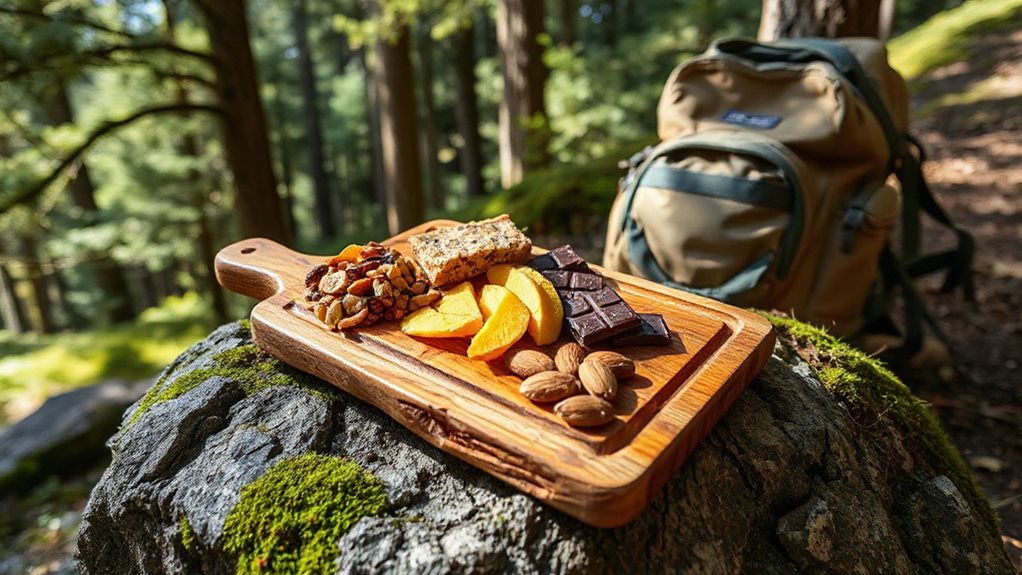
Why do energy‑rich snacks matter on a long hike? Your muscles demand constant fuel, and the terrain drains glycogen fast, so you need carbs, protein, and healthy fats to keep moving. Quick carbs spark bursts for steep climbs, while nuts and seeds release steady energy, preventing fatigue. Frequent, balanced bites every hour sustain weight, preserve muscle, and let you stay free on the trail. Moderate hiking burns 300–600+ calories per hour, making regular refueling essential. Premium gear like high-quality coolers can help keep perishable trail snacks fresh on multi-day outings.
How to Evaluate Snacks by Protein, Carbs, and Sugar
How do you decide whether a trail snack will keep you powered without weighing you down? Check the carbohydrate‑to‑protein ratio, aiming for about 4:1; snacks like Clif Nut Butter Bars hit 3.7–4.6 g carbs per gram protein, fitting the 15‑30 g carbs and 5‑10 g protein target. Ensure sugar stays modest, favoring complex carbs from dates or dried fruit, and verify the snack scores close to zero on the nutrient balance formula for optimal, lightweight energy.
Quick‑Digest Carbs for Steep Ascents – Hiking Snacks
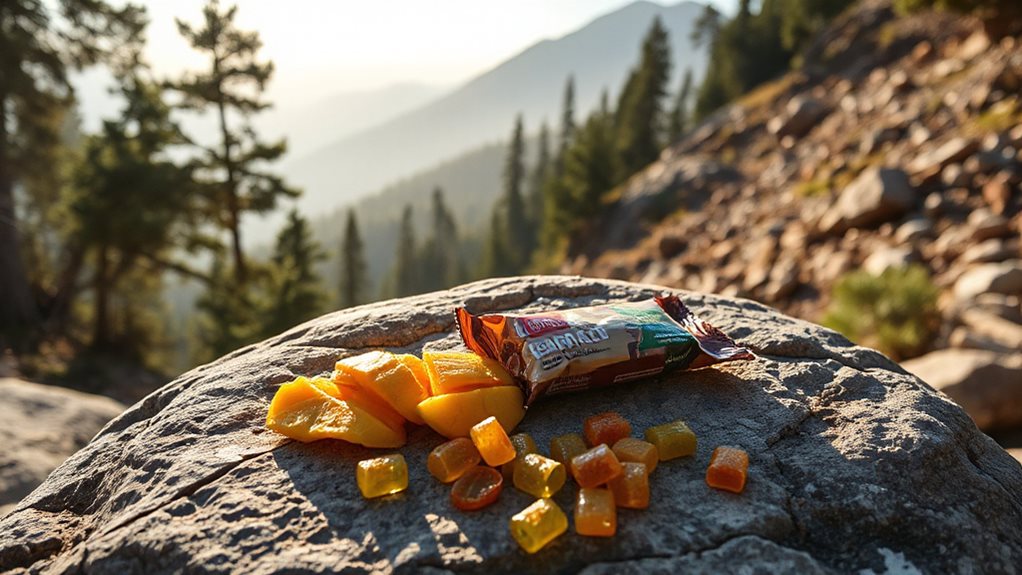
When you’re tackling a steep ascent, your muscles need instant fuel, and simple carbohydrates deliver that rapid surge of glucose better than any other macro. Pack dried mango, banana chips, or fruit gummies for quick‑digest carbs; they’re lightweight, low‑fiber, and hit your bloodstream within minutes. Sip a glucose‑rich sports drink or eat a low‑fiber granola bar every 30‑45 minutes, and avoid protein‑heavy or fatty snacks that slow digestion. This keeps you moving freely, without cramps or nausea. For varied environments, remember that opportunistic predators adapt to available resources and select whatever offers the best energy return, including size-based prey choices that shift with conditions.
High‑Protein Bars That Stay Light – Best Choices
What makes a protein bar truly trail‑ready is its ability to deliver sustained muscle support without weighing you down, and the options below hit that sweet spot. MTN OPS Venture Bars balance macros and natural ingredients at $2.49, staying lightweight yet tasty. EPIC Jerky Bars offer keto‑friendly, low‑carb protein for steady release. CLIF Builder’s Bar packs 20 g protein in a compact 68 g, while KIND provides nut‑based, slow‑burn fuel. Rise Bars deliver high protein with simple, gluten‑free formulas. Properly matching spool direction can reduce line twist and improve performance by up to 20% when using a line spooler, so remember to align filler and reel spools for proper alignment.
Low‑Sugar, High‑Fiber Hiking Snacks for Sustained Energy
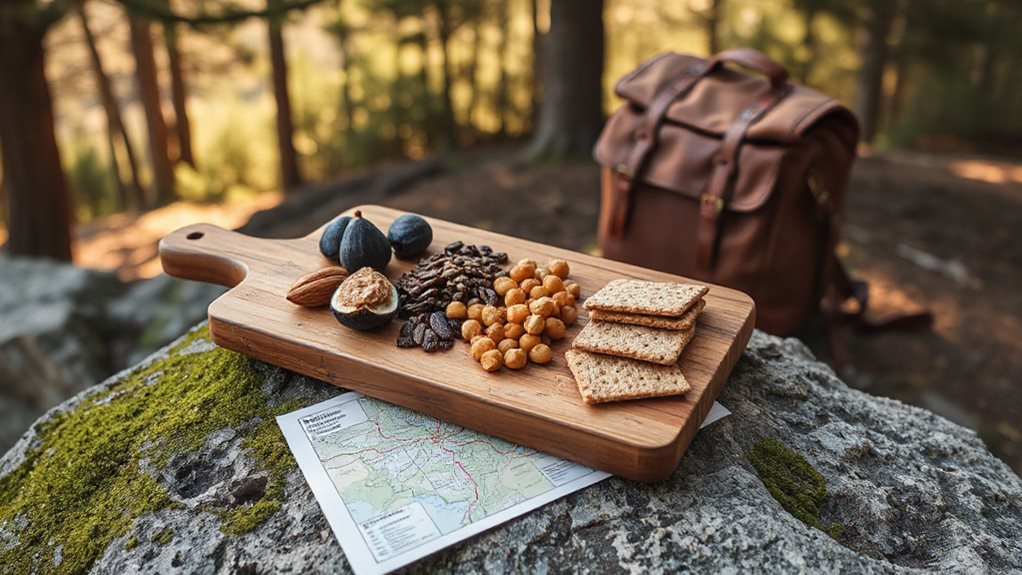
Ever wondered why low‑sugar, high‑fiber snacks keep you moving steady on a long hike? Veggies with hummus deliver carbs, protein, and fat while fiber steadies blood sugar; roasted chickpeas add crunch and plant protein for lasting energy; dried apricots supply quick carbs and three times the fiber of fresh fruit; beet chips or almond‑flour veggie chips give lightweight, micronutrient‑rich crunch without added sugars. Choose these for sustained, balanced fuel. Bass often hold near submerged vegetation where they ambush prey, so learning to read structure can improve timing and confidence on the trail.
Portable Nut & Seed Packs for Healthy Fats and Steady Fuel
You’ll find that portable nut and seed packs deliver a quick burst of healthy fats, which your body converts into a steady flow of energy for long hikes.
By choosing mixes that pair magnesium‑rich pumpkin seeds with vitamin‑E loaded sunflower seeds, you get heart‑healthy polyunsaturated fats and a stable release of calories that keeps cravings at bay.
The compact, portion‑controlled bags fit easily in your pack, so you can snack confidently without over‑eating or worrying about spoilage.
Bring a small first aid kit for safety on longer outings.
Healthy Fat Boosts
A handful of portable nut and seed packs can supply the steady, calorie‑dense fuel you need for long hikes, delivering a balanced mix of unsaturated fats, protein, and carbs in a compact, mess‑free format.
Choose trail‑mix blends with almonds, cashews, pistachios, or macadamias for healthy fats and plant protein; add dried fruit for quick carbs.
Nut‑butter squeeze packs give 200‑plus calories and antioxidants, while seed crackers paired with tuna boost protein and anti‑inflammatory benefits, keeping you energized and ready for the next mile.
Steady Energy Release
Healthy fats from portable nut and seed packs keep your energy steady on long hikes, offering a compact, mess‑free source of calories that releases slowly over time. You’ll grab a resealable pouch of almonds, pistachios, sunflower or pumpkin kernels, and cranberries, then enjoy a balanced mix of carbs, protein, and polyunsaturated fats that fuels muscles without spikes, while staying lightweight, mess‑free, and ready for any trail.
Jerky and Meat‑Based Snacks for Protein‑Heavy Days
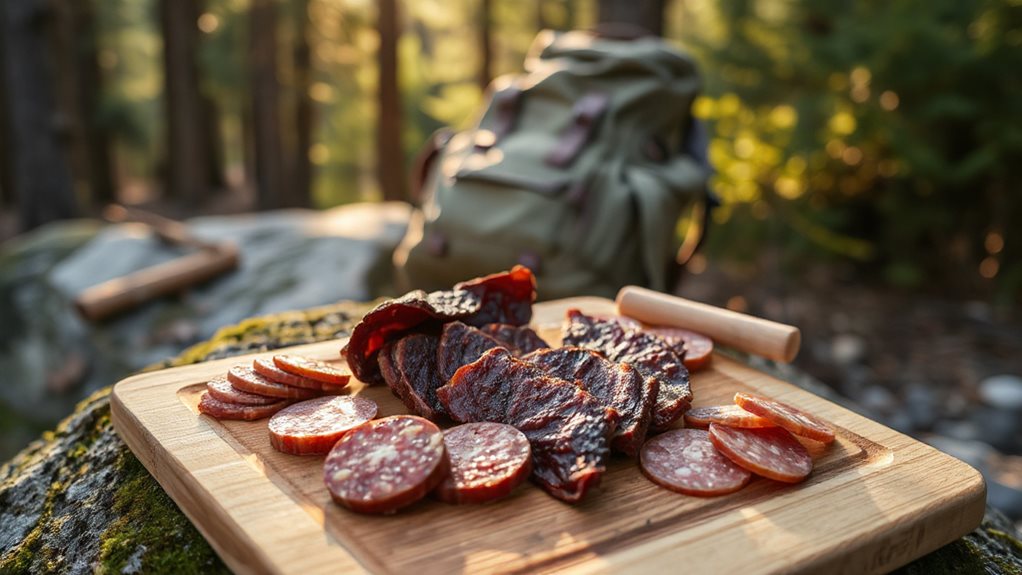
You’ll find high‑protein portable options like beef, ostrich, or yak jerky that pack 7–14 g of protein per ounce while staying low in sugar, so they keep your energy steady on the trail.
These snacks are calorie‑dense yet easy to carry, delivering the muscle‑supporting nutrients you need without weighing you down.
Because protein digests slowly, you’ll feel fuller longer, avoiding the crashes that can come from high‑carb foods.
High‑Protein Portable Options
When you’re tackling a long, rugged trek and need a compact source of sustained fuel, high‑protein portable options like beef jerky and other meat‑based snacks become essential. A 3‑oz jerky pack delivers over 19 g protein, niacin, B12, and selenium, all sugar‑free, lightweight, and shelf‑stable. Pair tuna pouches with seed crackers for a balanced meal, or toss nuts, seeds, and roasted legumes into a trail mix for extra protein, fiber, and micronutrients that keep muscles repairing and energy steady.
Low‑Sugar, High‑Energy Choices
Ever wonder how to keep your energy steady without the sugar crash? Choose beef jerky or meat sticks; they’re lightweight, shelf‑stable, and packed with 20‑25 g protein per bag, delivering slow‑burn fuel.
Pair jerky with dehydrated mandarins for a balanced macro boost, or swap for edamame if you prefer plant protein.
Low‑sugar, high‑energy snacks keep muscles fed and cravings at bay.
Fast‑Acting Waffle Snacks – Honey Stinger Review
How can a tiny, soft‑baked waffle deliver the quick, steady energy you need on a steep ascent?
Each 30‑gram Honey Stinger waffle packs 140‑160 calories, 19 g carbs, 1 g protein, and a honey core that releases glucose fast yet sustains you, the 7 g fat slows a crash. They’re lightweight (1.06 oz), gluten‑free, organic options exist, and fit easily into pockets, making them ideal for pre‑hike fueling 30‑60 minutes beforehand.
How to Keep Your Hiking Snacks Cheap Without Sacrificing Calories
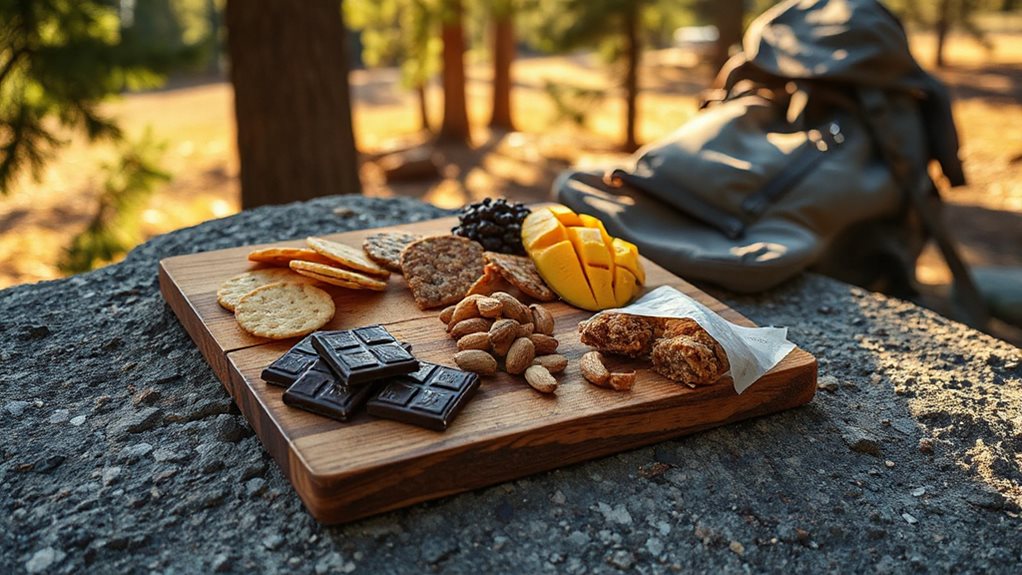
Why sacrifice calories for cost when you can pack both? Buy bulk nuts like Costco almond jars at $6.99 for 40‑cent servings, grab cheap protein bars at $0.59 each, and mix peanut butter squeeze packs with honey for calorie‑dense spreads. Pair instant oatmeal (66 cents per packet) with peanut butter, and stock affordable tamales or cheese that never spoils. This strategy maximizes energy while keeping your budget light.
Packing Tips to Keep Snacks Fresh and Easy to Access
You’ll keep snacks fresh by sealing containers tightly and pre‑portioning them into bite‑size packets, so you can grab exactly what you need without exposing the rest to air. Label each packet with a quick note—like “high‑protein” or “quick‑energy”—so you can spot the right snack in a hurry, even after a long trek. This simple system saves space, cuts waste, and lets you stay fueled without fumbling through a jumble of loose foods.
Seal Containers & Portion
Ever wondered how to keep your trail snacks fresh without adding bulk? Choose silicone bags for lightweight, airtight seals that block odor and drying, then pack leftovers without extra weight.
Opt for insulated jars—double‑wall, leak‑proof, BPA‑free—to keep hot or cold foods at temperature for hours.
Collapsible containers compress as food disappears, saving space, while bear‑resistant canisters store multi‑day rations securely.
Use lightweight wraps for sandwiches, folding them flat for minimal volume.
Easy‑Access Packets & Labels
After sealing your snacks in silicone bags or insulated jars, the next step is making them easy to grab on the move.
Slip single‑serve packets into chest pockets, label each ziplock by meal—breakfast, lunch, snack—and stack lightweight pouches on top layers for instant access.
Use reusable tins or cardboard tubes for bulk items, and keep high‑energy bars in dead‑space sacks, ensuring you stay fueled without stopping.
Sample 3‑Day Hike Snack Plan With Nutrient Breakdown
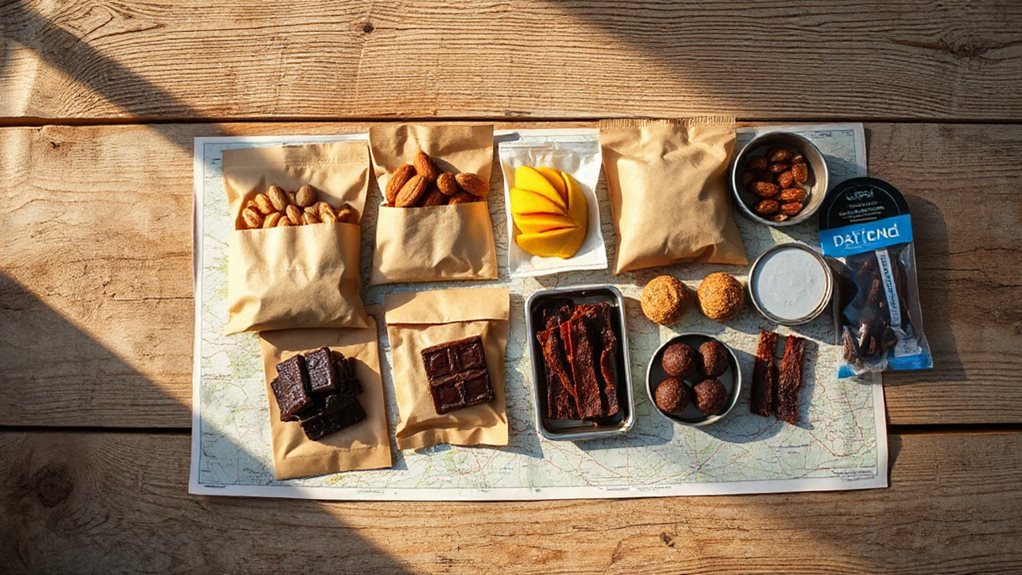
A solid three‑day hike snack plan starts with a balanced macronutrient foundation, so each day’s meals include a mix of carbs, protein, and healthy fats to keep energy steady and muscles recovered. Day 1: trail mix (nuts, seeds, dried fruit), banana, bison stick;
Day 2: nut‑butter pack, whole‑grain crackers, dried apricot;
Day 3: Greek yogurt‑granola, cheese, raisin‑cocoa oatcake.
Each snack delivers quick carbs, sustained protein, and electrolytes for hydration.
Final Note
By choosing snacks that balance quick‑digest carbs, steady‑release protein, and low‑sugar fiber, you’ll keep energy steady without crashing. Pack lightweight bars, dried fruit, nuts, and a few fast‑acting waffles for steep climbs, and store them in airtight containers to stay fresh. The sample three‑day plan shows how a few hundred calories per snack can meet your needs while staying affordable. Follow these guidelines, and you’ll stay fueled, focused, and ready for any trail.


