
You lose speed quickly in humid heat because your sweat can’t evaporate well when humidity exceeds 60%, leaving your body overheated. Your heart works harder, your core temperature rises, and every mile feels tougher. High dew points—especially above 65°F—cut performance by up to 5% or more. Even with proper hydration and breathable clothing, your effort increases noticeably. You’ll adapt better by adjusting pace, staying fueled, and listening to your body’s signals—there’s more to managing humidity than just pushing through.
TLDR
- High humidity reduces sweat evaporation, impairing cooling and increasing perceived effort during outdoor activities.
- Humidity above 60% can slow running performance by up to 0.2% per percentage point, especially in temperatures over 65°F.
- Dew points above 60°F hinder heat dissipation, causing 2–3% performance drops, with greater losses above 65°F.
- Elevated heart rate and faster dehydration occur in humid conditions due to reduced cooling and increased strain.
- Wearing moisture-wicking clothing and adjusting pace helps maintain comfort and performance in high humidity.
How Humidity Slows Your Running Performance

When the air feels heavy before you’ve even started your run, humidity’s already working against you. Once temperatures rise above 65°F, humidity starts cutting your performance—especially above 60% RH. Your body struggles to cool itself, increasing strain. In training, incorporate cardio sessions and strength work to build the endurance needed to cope with these conditions.
In hot, humid conditions, expect up to 8% slowdown, with harder efforts feeling much tougher. Stay aware, adjust pace, and let your effort guide you. This greater performance decline occurs because hot-humid conditions elicit higher heart rates for the same effort compared to dry heat or comfortable conditions.
Why Sweat Can’t Cool You in Humid Runs?
You sweat to cool down, but in humid runs, the moisture in the air stops your sweat from evaporating.
When sweat can’t evaporate, it just sits on your skin and your body heat doesn’t escape. That’s why you overheat faster—even if you’re used to the pace. Wearing breathable, moisture-wicking layers can help manage sweat and comfort during humid runs moisture-wicking materials.
Sweat Evaporation Blocked
Because humid air is already packed with moisture, your sweat struggles to evaporate—meaning it can’t effectively cool you down, no matter how much you produce.
Instead, it drips off your skin, removing little heat. High humidity shrinks the evaporation gradient, traps heat, and forces your body to sweat more, raising core temperature and increasing strain, all while limiting your body’s natural cooling power.
Body Overheats Faster
High humidity doesn’t just make your run feel harder—it actively works against your body’s ability to stay cool, setting the stage for faster overheating.
When moisture hangs in the air, sweat can’t evaporate, so your core temperature rises quickly. Even at 60% RH, your heart works harder, cooling fails, and performance drops—putting you at risk without obvious warning.
How Dew Point Affects Your Workout Difficulty

When the air feels heavy and your sweat isn’t drying, it’s not just the heat you should blame—it’s likely the dew point.
This number tells you how much moisture is in the air, affecting how well your body cools itself. Higher dew points make workouts harder by slowing sweat evaporation, reducing performance—especially above 60°F—so adjust effort accordingly. Traditional saunas operate at high temperatures and can inform how heat and humidity affect comfort.
How Much Slower Does Humidity Make You?
You’ll likely run slower when humidity rises, especially if the temperature’s already above 65°F.
High humidity hampers sweat evaporation, so your body overheats faster and your pace drops—expect up to a 0.2% slowdown for every percentage point of humidity above 60%.
Combine that with heat, and you’re facing a real performance hit, particularly in longer efforts like marathons.
Kayaking also illustrates how outdoor activity can provide cardiovascular benefits and improve heart and lung fitness when conditions are favorable.
Performance Decline In Humidity
Even if you’re well-trained and properly fueled, exercising in humid conditions can quietly undermine your performance—often more than you realize.
When humidity hits 60% or higher, sweat doesn’t evaporate well, so your body overheats, forcing your heart to work harder and cutting blood flow to muscles. You slow down—up to twice as much as in dry heat—because your body simply can’t cool itself efficiently.
Dew Point Impact On Speed
Though humidity’s effect on performance isn’t always obvious, the dew point gives you a clear, measurable way to predict just how much slower it’ll make you.
When dew point hits 60°F, expect 2–3% slowdowns; above 65°F, it climbs to 5% or more.
High dew points hinder sweat evaporation, forcing your body to work harder, raising heart rate and perceived effort—so adjust your pace accordingly, stay safe, and train smart.
How Heat and Humidity Overload Your Body

When the air feels thick and sticky, it’s not just discomfort you’re sensing—your body is struggling to cool itself. Sweat can’t evaporate well in high humidity, so it drips off, wasting your cooling effort.
Your core temperature rises, heart works harder, and breathing feels heavier. Dehydration sets in fast, reducing sweat and straining your system. You lose salts and fluids critical for function—push too hard, and your body may shut down. Choose clothing in layers and wear moisture-wicking fabrics to help manage sweat and retain comfort.
Why Humid Runs Feel Harder Than Dry Heat
You might think it’s just the heat slowing you down, but humidity plays an even sneakier role—turning manageable runs into grueling efforts by sabotaging your body’s cooling system.
Sweat can’t evaporate well, so heat builds up faster, your heart works harder, and less oxygen reaches your muscles.
Even at the same temperature, humid air feels heavier, breathing gets tougher, and your brain senses fatigue earlier—making every mile feel longer.
When Humid Runs Become Dangerous
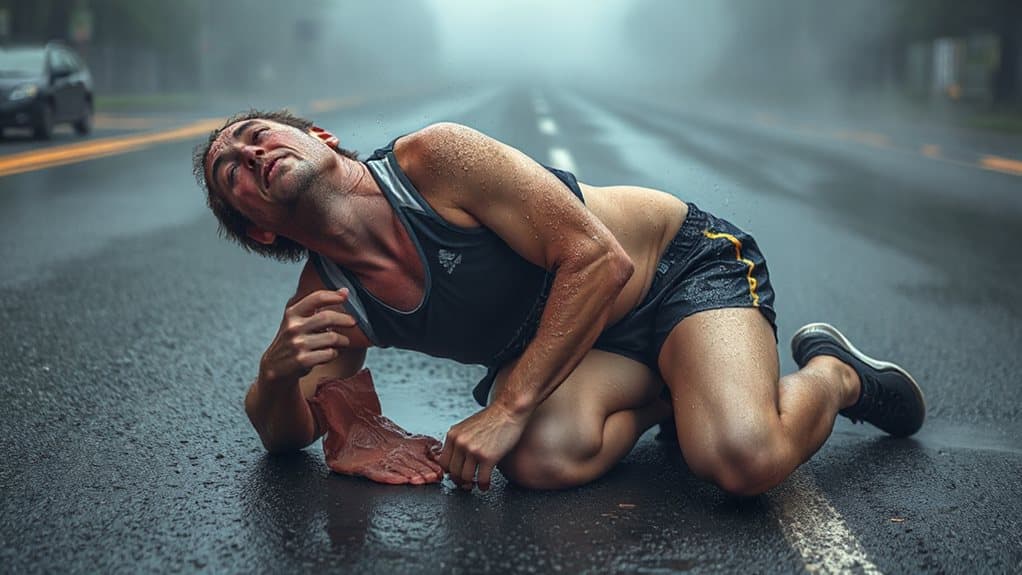
If the air feels thick and your sweat isn’t drying, it’s not just discomfort—you’re likely in dangerous territory. When humidity hits 70–80% with temps above 95°F, your body can’t cool efficiently, raising core temperature.
Add direct sun and you’re risking heat exhaustion or worse. Watch for dizziness, nausea, or cramps—they mean stop now.
Stay free, stay safe: know the signs, respect the thresholds.
How to Pace and Hydrate in High Humidity
Because your body struggles to cool itself as humidity climbs, adjusting how you pace and hydrate isn’t just helpful—it’s essential for safe, effective performance.
Slow your pace early, especially above 40–60% humidity, and drink more fluids with balanced sodium.
Start hydrated, monitor sweat loss, and let your effort guide you—this keeps you free, strong, and in control.
Final Note
You now know humidity doesn’t just feel heavy—it slows you down, hampers sweat evaporation, and increases strain on your body. By understanding dew point and heat index, you can adjust your pace and hydration wisely. High humidity raises risks, so listen to your body and act early. With smart planning, proper hydration, and realistic expectations, you’ll stay safe and perform better, even when the air feels thick. You’ve got this.


