
Bring reusable bottles, dishes, and bags to cut waste, and skip single-use plastics whenever you can. Conserve water by taking short showers and turning off taps when brushing. Use solar power like portable panels to keep devices charged efficiently. Choose durable, established campsites and stay 200 feet from water sources. Follow Leave No Trace—pack out trash, respect wildlife, and leave nature as you found it; your small choices make a real difference, and there’s more where that came from.
TLDR
- Use reusable water bottles, dishes, and bags to eliminate single-use plastics and reduce camp waste.
- Install low-flow showerheads and turn off taps while brushing to conserve precious water.
- Choose high-efficiency solar panels and keep them clean for reliable, off-grid renewable power.
- Camp on durable surfaces like rock or dry ground to protect fragile ecosystems and vegetation.
- Pack out all trash, follow Leave No Trace principles, and use labeled bins to support waste separation.
Cut Waste on Sustainable Camping Trips
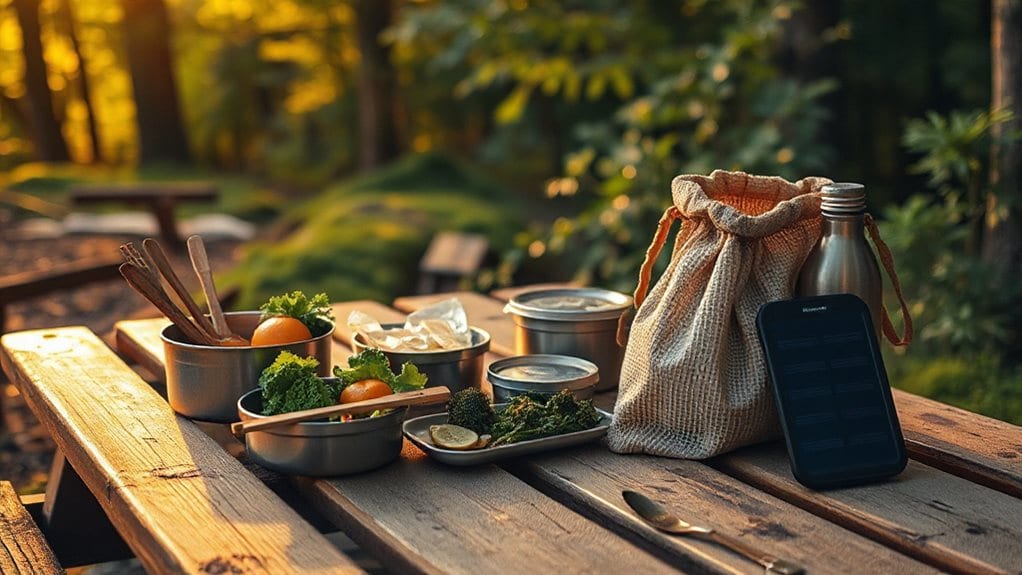
Cutting down on waste while camping isn’t just good for the planet—it’s easier than you might think.
Bring reusable water bottles, dishes, and bags, and use refill stations to cut plastic.
Choose compostable or biodegradable gear, and pack out all trash.
Use clearly labeled recycling bins, and join camps that follow Leave No Trace principles to keep nature pristine.
Many campers struggle with proper disposal, so choosing sites with strong educational support can make a difference—77.8% consider waste separation a challenge.
Consider volunteering for conservation projects while on trips to learn hands-on waste reduction techniques.
Save Water Without Sacrificing Comfort
While you’re out enjoying the great outdoors, conserving water doesn’t mean giving up cleanliness or comfort—small changes make a big difference. Install low-flow fixtures in camp showers and sinks to cut waste, take short showers, and turn off taps when brushing.
Collect rainwater for chores, reuse greywater wisely, and rely on reusable containers with filtration. You’ll stay fresh, save resources, and keep moving freely. Camp at least 200 ft. away from water sources to help protect freshwater and surrounding habitat and reduce contamination risks (200 ft. away).
Use Solar and Efficient Energy On the Go
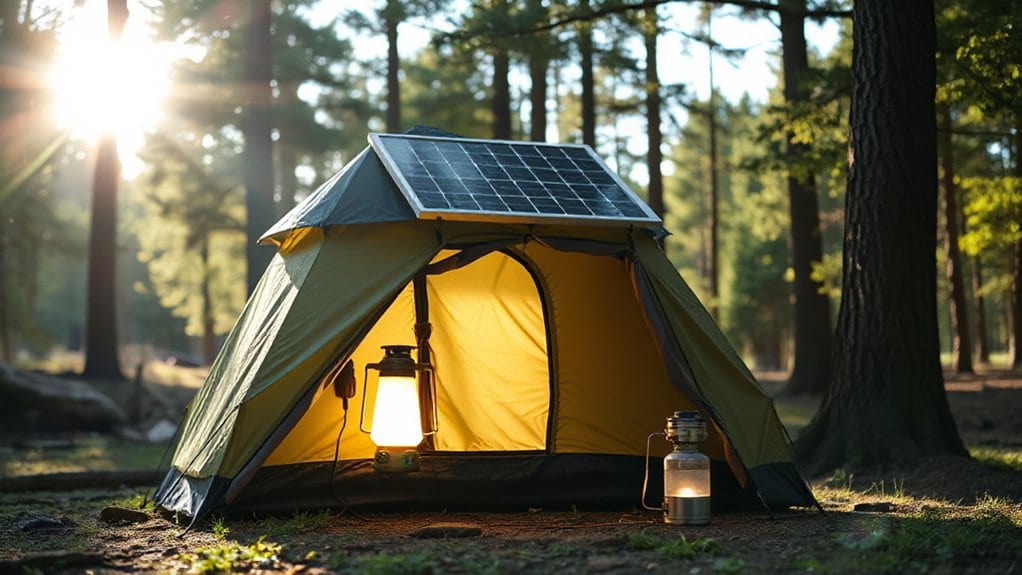
You’ve already taken smart steps to conserve water without giving up comfort, and now it’s time to power your trek just as thoughtfully. Choose high-efficiency monocrystalline panels like the 200W Renogy or Rich Solar Mega 200 Pro for reliable output.
Position them in direct sunlight, adjust angles daily, and use smart inverters to manage energy. Prioritize essential devices, and consider portable options like the Jackery SolarSaga 100W for flexibility on the move. Make sure to keep solar panels clean and unobstructed and monitor charging progress using LED indicators to maximize performance.
Choose Low-Impact Campsites to Protect Nature
When you pitch your tent, make it count—choosing the right spot can mean the difference between preserving a wild space and harming it.
Stick to established campgrounds and durable surfaces like rock or dry grass to prevent soil erosion.
Avoid wetlands, water sources, and fragile vegetation.
Use existing trails and campsites, and keep impacts low by camping on flat, resilient terrain that needs no modification.
Practice Leave No Trace principles and store food properly to reduce wildlife encounters and habitat disturbance, including using proper food storage to prevent attracting animals.
Follow Leave No Trace to Preserve Wild Spaces
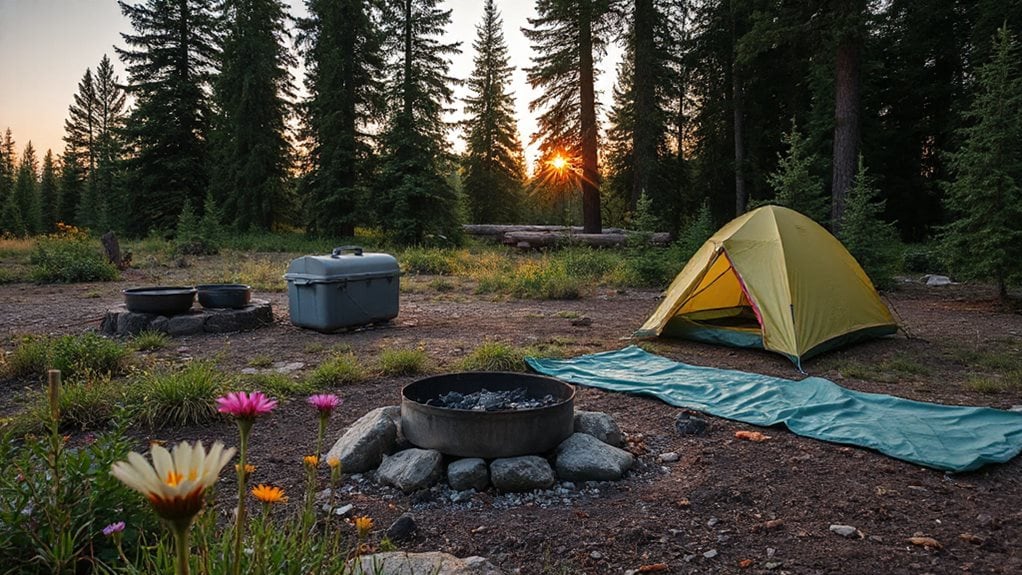
Because every outdoor experience leaves a mark—no matter how small—following Leave No Trace principles helps guarantee that wild spaces stay healthy and beautiful for years to come.
You can minimize impact by packing out all waste, using established fire rings, leaving natural objects undisturbed, respecting wildlife, and camping away from others.
Small, mindful choices add up—protecting freedom to roam wild, unspoiled places now and later.
Also, remember to camp at designated sites to avoid harming new areas and help nature thrive.
Final Note
You’ve got the tools to camp smarter and lighter on the planet. By cutting waste, saving water, using solar power, choosing campsites wisely, and following Leave No Trace, you protect the wild places you love. These small, intentional changes add up—making your outings more sustainable without sacrificing comfort. Keep it simple, stay mindful, and let nature stay as you found it.


