Yes, lightning can strike a kayak on open water, especially because water conducts electricity and extends the danger beyond the initial strike point. Lightning can strike horizontally over vast distances—up to 10 miles—and energy can radiate up to 300 feet, putting you at risk even if the storm isn’t directly overhead. Paddling during thunderstorms considerably increases your danger, but understanding how to recognize signs of an approaching storm can help you stay safe and avoid potential strikes.
TLDR
- Yes, lightning can strike a kayak on open water due to water’s conductive properties.
- Lightning can strike from over 10 miles away, affecting kayaks far from the storm.
- Water acts as a pathway, increasing the risk of lightning reaching kayaks during thunderstorms.
- The energy from a lightning strike can radiate up to 300 feet, extending injury zones.
- Monitoring weather and seeking shelter quickly reduces the risk of being struck while kayaking.
Can Lightning Strike a Kayak on Open Water?
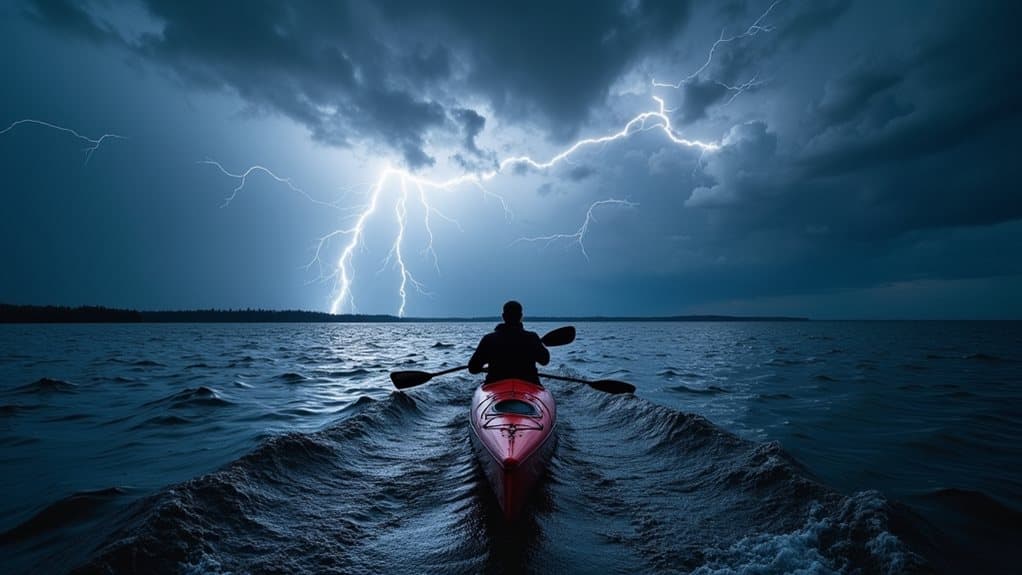
Yes, lightning can definitely strike a kayak on open water, and the risk is significant. Water’s conductive nature amplifies the danger, especially since lightning can strike horizontally over 10 miles and radiate energy up to 300 feet. A kayak or the person inside becomes a prime target because of its prominence as the tallest object in the area during a storm. Additionally, bears’ climbing capabilities demonstrate how animals and humans alike can be vulnerable to natural forces when exposed in open environments.
How Do You Recognize Signs of an Approaching Storm?
You can often spot an approaching storm by paying attention to the sky’s color, which may shift from clear to darker shades, and by noticing darkening cloud bases that signal instability. Sudden shifts in wind direction and speed are also key indicators, sometimes occurring minutes before other signs become visible. Additionally, changes like a rapid drop in temperature or an increase in humidity can alert you that a storm is on its way. Monitoring trail conditions for signs of erosion or trail damage can also help you recognize environmental stress caused by approaching storms.
Changes in Sky Color
How can you tell if a storm is approaching just by looking at the sky? A change in sky color signals trouble, with clouds darkening or turning gray, black, or even greenish.
Anvil-shaped clouds, increasing storm activity, and lightning hints, combined with overall sky darkening, indicate an approaching storm.
Recognizing these signs helps you stay safe and prepared.
Sudden Wind Shifts
Have you ever noticed how the wind can suddenly shift direction, catching you off guard? Sudden wind shifts often signal an approaching storm, with rapid changes in wind and temperature.
Watch for gusts that come from different directions, increasing speed, and listen for shifts in thunder or wind patterns—these are key signs to recognize an imminent storm on open water.
Darkening Cloud Bases
Darkening cloud bases are among the most noticeable signs that a storm may be approaching on open water. Watch for towering, anvil-shaped clouds with dark bases, which indicate increasing storm strength.
A rapid color change from white to gray or black signals imminent danger, while lower cloud bases warn of higher lightning risk and more severe weather ahead.
What Immediate Steps Should You Take if Lightning Is Near?
When lightning is nearby, your first priority should be to get off the water as quickly and safely as possible. Seek shelter on land or in a secure location, avoiding solitary trees and water’s edge. If you can’t reach land, stay in your kayak, paddles secured, and crouch low to reduce contact. Monitoring weather updates is important to determine when it’s safe to return. Additionally, understanding the impact of fishing location on safety can help you choose better spots to minimize risk.
Where Is the Safest Place to Shelter During a Thunderstorm?
During a thunderstorm, the safest place to seek shelter is inside a substantial, enclosed building that offers solid protection from lightning strikes.
If no building is available, find low-lying ground like a valley, but stay away from trees, water, and metal objects.
A vehicle with a metal roof can serve as shelter, but avoid touching metal inside.
How Far Can Lightning Reach When Striking Water?
Lightning can strike water over considerable distances, sometimes more than 10 miles from the storm. The energy from a bolt can radiate up to 300 feet or more. In saltwater, this reach can extend even further because of its high electrical conductivity. As a result, the area affected by a lightning strike on open water can be much larger than you might expect, increasing the risk for anyone nearby. Protection levels are crucial to consider when understanding the risks associated with lightning strikes on open water.
Lightning Radiates Over Water
Lightning doesn’t just strike a single point on open water; it radiates energy outward in all directions, creating a widespread danger zone.
When lightning strikes, electrical energy can extend over 300 feet, and injury zones can reach at least 200 feet from the strike.
This unpredictable radiating effect makes the risk of injury extremely high, even without a direct hit.
Striking Distance Variability
Although lightning strikes are often thought of as pinpoint events, in reality, their reach can extend far beyond the initial contact point, especially over water. The striking distance varies, with energy radiating over 200 feet in general.
And beyond 300 feet on saltwater. Lightning can spread horizontally, making even distant strikes a serious threat to nearby boats or swimmers.
What Are the Best Safety Precautions for Paddling in Stormy Weather?
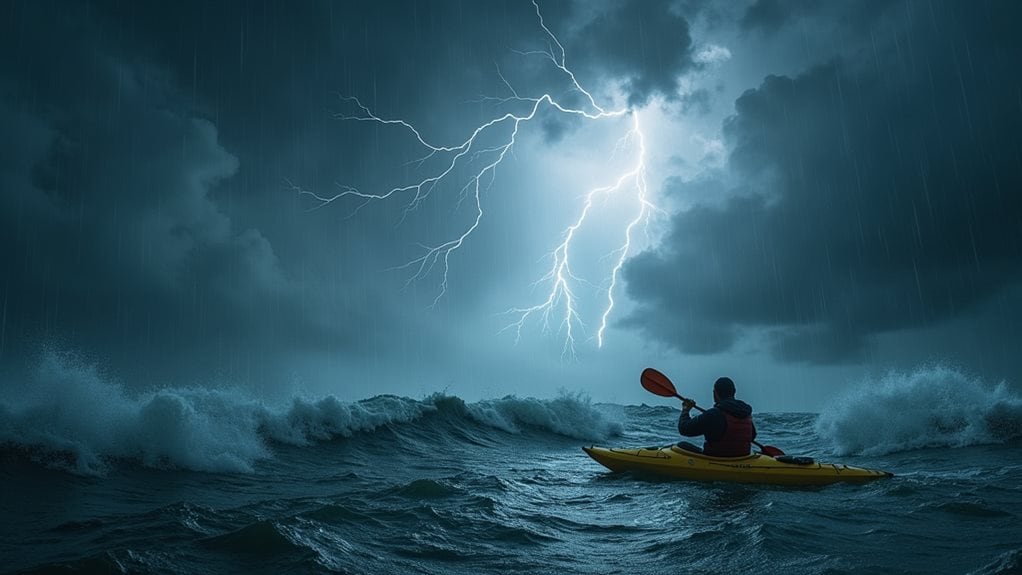
When paddling in stormy weather, safety should always be your top priority. If you hear thunder or see lightning, seek shelter immediately and avoid remaining in or on the water. Paddle quickly toward shore or a safe shelter, steering clear of solitary trees and exposed areas. Wait at least 30 minutes after the last thunder before resuming your trip. Monitoring weather conditions and understanding lightning behavior can help you make better decisions during unexpected storms.
How Can You Minimize Your Risk of Lightning Injury While Kayaking?
To reduce your risk of lightning injury while kayaking, it’s essential to keep a close eye on weather conditions and be prepared to act quickly if storms develop. Using lightning detection devices can give you early warnings, allowing you to seek shelter before the storm reaches you. Additionally, seeking immediate shelter and avoiding open water or tall objects can markedly decrease your exposure to lightning strikes. Being aware of environmental conditions such as water clarity and surrounding structure can also help you identify safer areas to navigate or seek shelter during storms.
Monitor Weather Conditions Closely
Staying informed about weather conditions is essential for minimizing your risk of lightning. Regularly check forecasts and use lightning detectors like TALOS to stay aware of storm activity.
Count seconds between lightning and thunder; less than 30 seconds means lightning is within 6 miles.
Recognizing signs of changing weather helps you avoid open water during thunderstorms.
Seek Immediate Shelter
During a thunderstorm, seeking immediate shelter is essential to reduce the risk of lightning injury while kayaking.
If possible, get off the water quickly and reach a grounded shelter, such as a sturdy building or low-lying area.
If you can’t reach land, minimize contact with your kayak, stay low, and avoid touching metal parts or paddles to lower your risk.
Use Lightning Detection Devices
Using lightning detection devices can considerably improve your safety while kayaking in unpredictable weather conditions. These devices, like TALOS, provide real-time alerts of thunderstorms within a specific radius, giving you early warnings up to 10-15 miles away.
Regular monitoring helps you determine when the lightning threat has passed, reducing the risk of injury and enhancing situational awareness.
What Are the Top Tips for Storm Safety on the Water?
When a storm approaches while you’re on the water, quick and informed actions can considerably reduce your risk of injury or worse.
For storm safety, immediately seek shelter, avoid open water, solitary trees, and raised land.
Use weather alerts or lightning detectors, and paddle swiftly toward safety.
Why Is It Critical to Avoid Paddling During Thunderstorms?
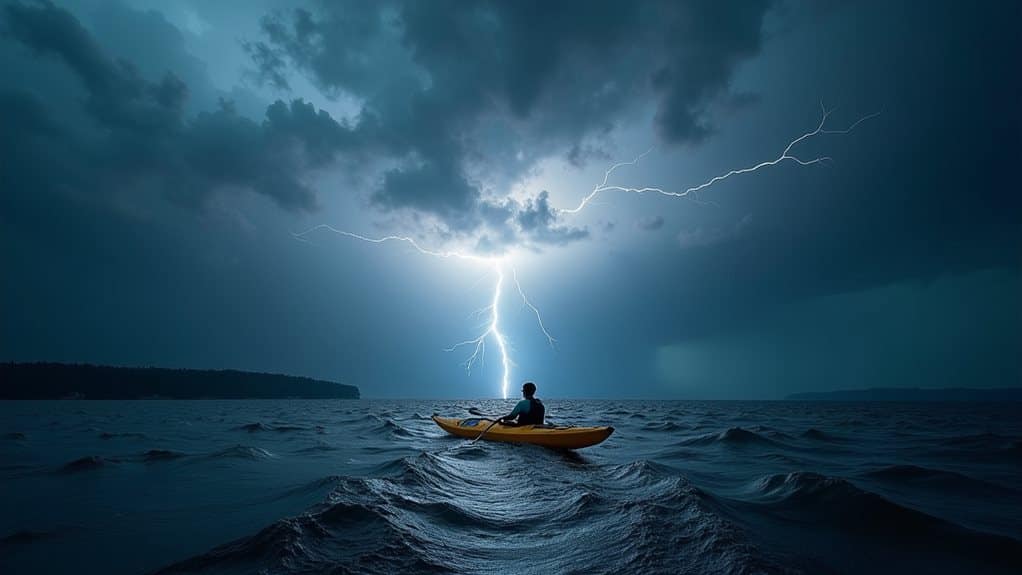
Paddling during thunderstorms is extremely dangerous because water is a highly conductive material, which makes it an ideal pathway for lightning to reach the ground.
Lightning can strike boats, including kayaks, even when the storm is miles away.
To protect yourself, it’s critical to get off the water immediately, as being in a kayak greatly increases your risk of injury or death from lightning.
How Can You Prepare for Stormy Conditions Before Heading Out?
Preparing for stormy conditions before heading out on the water is essential to guarantee your safety. Check weather forecasts and storm warnings, use lightning detectors or weather apps for real-time updates, and plan routes with nearby shelter options.
Avoid open water and tall objects, and inform someone on land of your itinerary to stay prepared for sudden lightning or storms.
Final Note
While lightning can strike water and pose risks to kayakers, the chances are relatively low if you follow safety guidelines. Recognize storm signs early, seek shelter immediately when thunderstorms develop, and avoid paddling during bad weather. Preparing beforehand by monitoring weather forecasts and knowing safe shelter locations can substantially reduce danger. Staying informed, vigilant, and ready to act promptly guarantees your safety on open water, allowing you to enjoy kayaking without unnecessary risks.