
Yes, cold weather drains batteries faster than you might expect because low temperatures slow down chemical reactions, increase internal resistance, and reduce ion movement, all of which lower battery capacity and efficiency. This means your devices or vehicles can lose power more quickly, even if fully charged. Batteries such as lithium-ion or car batteries can lose up to 60% of their capacity overnight in cold conditions. To learn how to protect and extend your battery life under cold, keep exploring helpful strategies.
TLDR
- Cold weather significantly increases internal resistance, causing batteries to drain faster than expected.
- Lithium-ion and car batteries can lose up to 50-60% capacity overnight in cold conditions.
- Chemical reactions inside batteries slow down, reducing efficiency and accelerating power loss.
- Active use in cold temperatures depletes batteries quickly, even if fully charged.
- Proper insulation and warming can help mitigate rapid battery drain in low temperatures.
Why Cold Weather Can Be Hard on Batteries
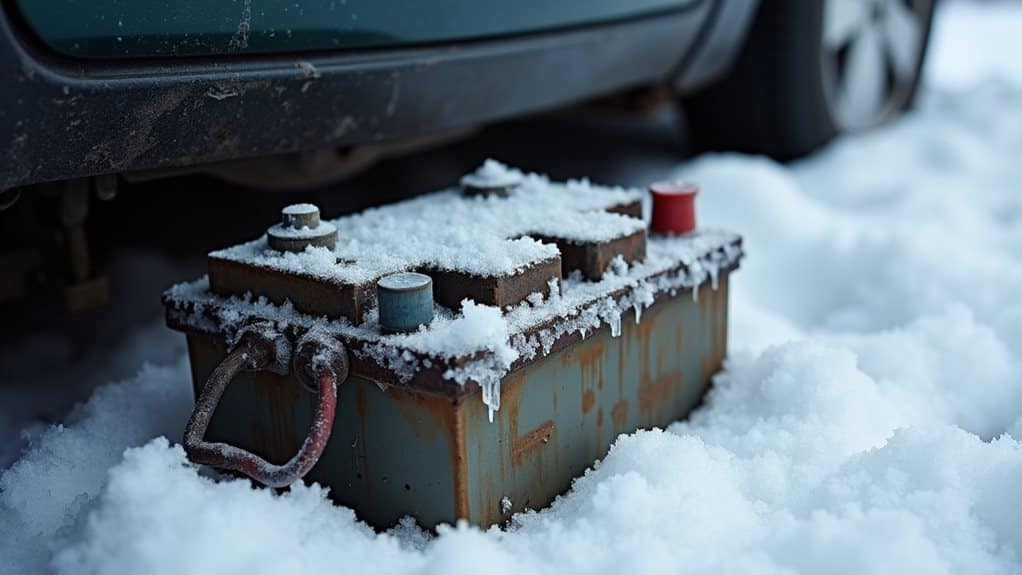
Cold weather can be surprisingly tough on batteries because lower temperatures slow down the chemical reactions that generate electrical power. Cold batteries experience increased internal resistance, which hampers efficiency. As a result, batteries drain faster, losing capacity quickly. This means you might notice your batteries dying suddenly, especially during freezing conditions, due to the reduced chemical activity inside. Additionally, the design of outdoor enclosures can influence how well batteries are protected from the elements, impacting their performance in cold weather.
How Cold Affects Your Battery’s Chemistry and Performance
As temperatures drop, the chemical reactions inside your battery slow down considerably, affecting its overall performance. Cold temperature effects increase internal resistance, making it harder for the battery to deliver power. This slowdown reduces ion movement, decreasing capacity and causing sudden power loss, so your device may shut down earlier than expected in cold conditions. Additionally, the internal resistance of the battery can lead to increased heat generation, which may further impact its efficiency and lifespan.
How Quickly Do Batteries Drain in Cold Weather?
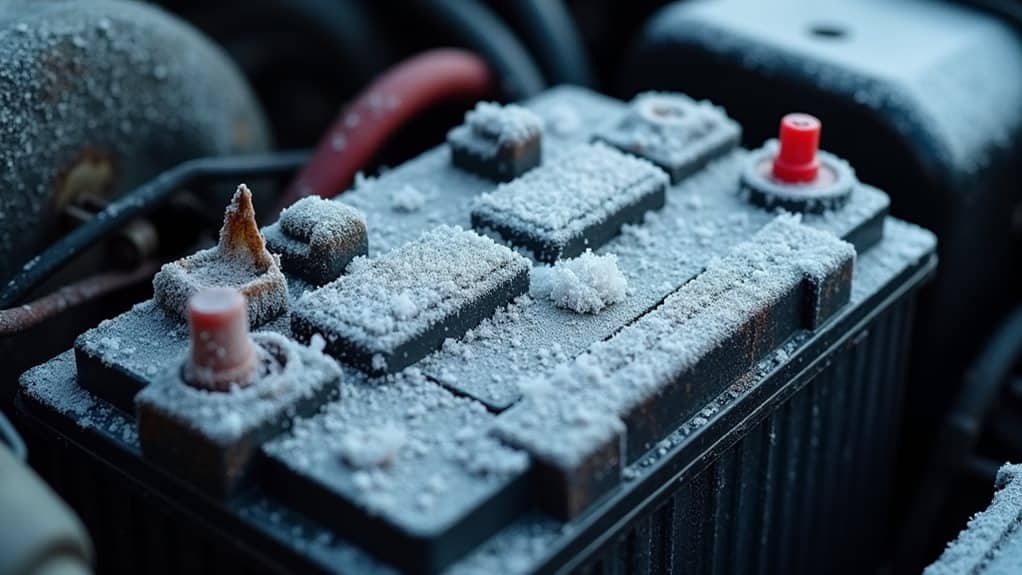
When temperatures drop, your batteries tend to drain much faster than they do in warmer conditions, often surprising even seasoned users.
Cold temperatures increase internal resistance, causing quicker battery drain and shorter operational times.
Lithium-ion devices and car batteries can lose up to 50-60% of their capacity overnight, making active use deplete energy rapidly despite full charges.
Practical Tips to Keep Your Batteries Warm and Charged
To keep your batteries warm and maintain their performance, consider using insulating accessories like cases or wraps that trap heat.
Keeping your devices close to your body or in warm pockets can help preserve battery life in cold conditions.
Additionally, warming batteries indoors before charging guarantees they operate efficiently and reduces the risk of slow charging or power fluctuations.
A well-insulated safe zone around your devices can prevent accidental exposure to cold temperatures and help sustain battery health.
Use Insulating Accessories
Using insulating accessories such as battery cases or thermal pouches can make a significant difference in preserving your battery’s performance during cold weather.
These insulating accessories help retain heat, preventing rapid cooling. Whether you choose thermal pouches or battery cases, they provide an effective barrier against the cold.
This ensures your device stays warmer and maintains peak battery function longer.
Keep Devices Close
Keeping your devices close to your body is one of the simplest yet most effective ways to maintain battery warmth in cold weather. When you keep your phone near you, body heat helps raise its temperature, preventing batteries from die faster.
This small step can markedly improve performance outdoors and extend your device’s usable life in chilly conditions.
Warm Before Charging
Warming your device indoors before charging is a simple but highly effective step to guarantee peak battery performance in cold weather. By doing so, you help maintain ideal battery power, reduce internal resistance, and prevent voltage fluctuations.
Using thermal pouches or keeping your device in your pocket assures your battery stays warm, enabling safer, more efficient charging in cold conditions.
Signs Your Battery Might Be Damaged by Cold and How to Recover It
Cold weather can silently weaken your battery’s performance, making it more vulnerable to failure even if it initially seems fine. Signs include rapid voltage drops and reduced capacity, especially in phone batteries with internal damage from cold conditions.
To recover, gently warm the battery and recharge slowly. Conduct conductance testing after warming to assess if it’s still usable or needs replacing.
Best Strategies to Protect Your Batteries During Winter
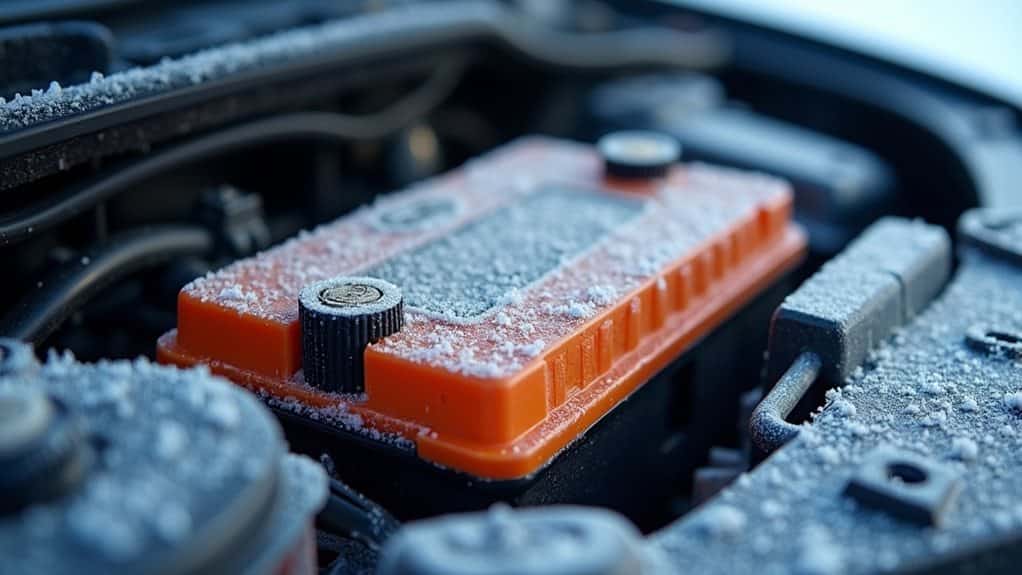
During winter, your batteries face increased stress due to lower temperatures, which can considerably impair their performance if you’re not careful. To protect your battery, keep it in insulated cases or pocket storage, pre-warm it before use, fully charge it before cold exposure, and regularly test and replace weak batteries. Proper handling and understanding of rechargeable battery characteristics can also help prevent performance issues in cold weather. These strategies help maintain performance and prolong your battery’s life in cold weather.
Final Note
Understanding how cold weather impacts your batteries allows you to take proactive steps to protect them. By keeping batteries warm, avoiding extreme temperatures, and monitoring for signs of damage, you can extend their lifespan and maintain peak performance. Proper care during winter guarantees your devices and vehicles remain reliable, even in the harshest conditions. Stay informed and implement these strategies to minimize cold-related battery issues and enjoy uninterrupted use throughout the season.


