You’ll find most fish stop biting when water drops below 40‑45 °F because their metabolism slows and they conserve energy, and they also quit once temperatures climb past each species’ comfort zone; trout and lake trout typically cease feeding around 50‑60 °F, while bass stay active from the mid‑50s up to the low‑70s, with peak action at 65‑75 °F. Sudden temperature shifts, low oxygen, and pressure changes can further suppress bites, so if you keep exploring you’ll find more details.
TLDR
- Most fish sharply reduce feeding around 40 °F (5 °C) because metabolism and digestion slow, prompting energy‑conserving behavior.
- Trout and lake trout typically stop biting near 50–60 °F, while walleye and northern pike can continue feeding in cooler water.
- Bass become active once water exceeds 48 °F, with peak action from the mid‑50s to low‑70s; activity wanes as temperatures approach 40 °F.
- Sudden temperature drops, low dissolved oxygen, and rapid pressure changes intensify bite‑stop thresholds by increasing stress.
- In warm water above 75 °F, fish seek cooler pockets and reduce bait interest, often requiring ultra‑slow lures and smaller baits.
How Temperature and Species Decide Bite‑Stop Points
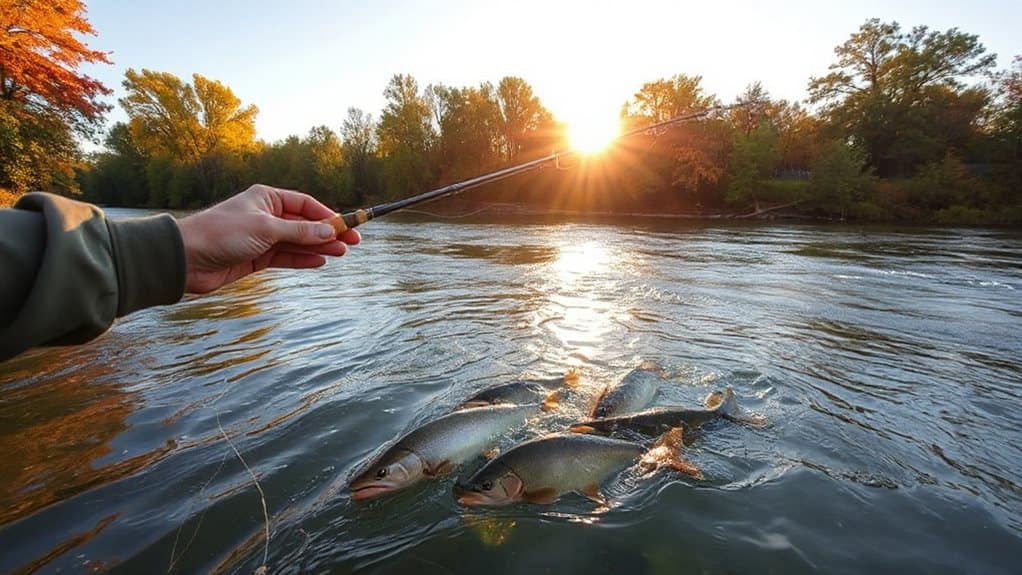
When water temperature shifts, each fish species reaches its own bite‑stop point because its metabolism, digestion, and energy needs are tightly linked to the surrounding heat. You’ll notice trout and lake trout quitting around 50‑60°F, walleye and northern pike persisting cooler, while carp and bass fade as water cools below 39‑60°F. Sudden changes and low oxygen amplify these thresholds, so monitoring both temperature and stressors lets you stay ahead of the bite‑stop. Seasonal temperature shifts also drive fish into deeper or shallower waters, further influencing bite‑stop behavior. Peak feeding often occurs in the 60°F–75°F range where metabolism maximizes.
What Temperature Range Gets Bass Biting?
As water warms past the cool‑down point you noticed for trout, bass start to wake up and bite more aggressively.
You’ll find peak action from the mid‑50s up to the low‑70s, especially 65‑75°F for largemouths.
Pre‑spawn activity spikes at 48‑55°F, while post‑spawn vigor holds through 70‑80°F.
Below 45°F, slower presentations still work, but overall biting eases.
Peak spawning activity often aligns with the full moon, increasing bites during that period.
Cold‑Water Thresholds That Make Most Fish Go to Sleep
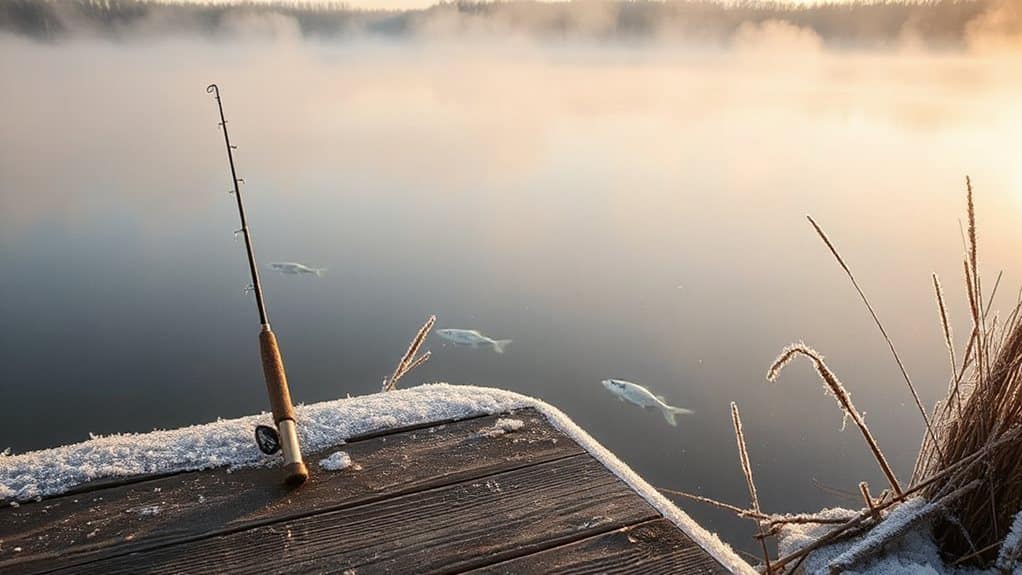
Around the 40 °F (5 °C) mark, most fish start to slow down dramatically, shifting from active hunting to conserving energy.
Below this threshold, metabolism drops, digestion slows, and they linger near structure or deeper water, making strikes rare.
You’ll need ultra‑slow lures, precise placement, and patience, because fish are now conserving energy rather than chasing prey.
Smaller baits and very slow presentations, such as smaller baits, often produce better results in cold conditions.
How Hot Water Stresses Fish and Cuts Bites?
Even after fish slow down at the 40 °F (5 °C) mark, rising temperatures bring a whole new set of challenges that can cripple their willingness to bite.
Warm water spikes metabolism, steals oxygen, and forces fish into survival mode, so they ignore baits.
They gasp, linger in cooler pockets, and move erratically, shortening feeding windows and weakening strike confidence.
Stay aware, and adapt your tactics.
Warmer seasons also push bass toward deeper water where lower oxygen and limited food further reduce feeding activity.
Rapid Weather Swings and Pressure Changes That Affect Bite Patterns
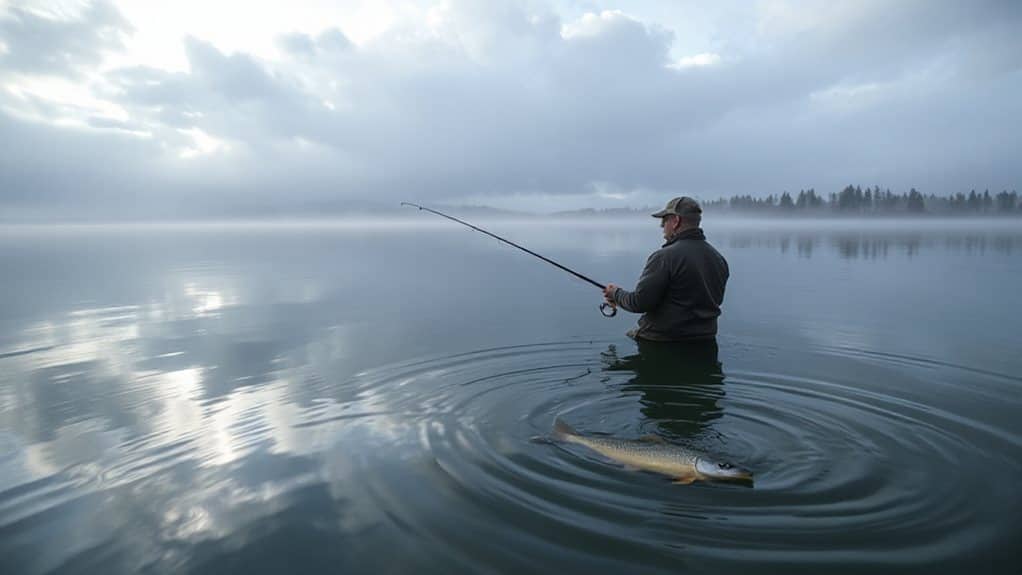
When the barometric pressure starts to fall, fish often sense the approaching front and ramp up their feeding activity, creating a short but intense bite window that can be missed if you’re not paying attention.
You’ll notice clouds thickening, wind picking up, and water turning turbid, prompting fish to chase vibrations.
After the front, rising pressure and clear skies push them deeper, slowing bites until conditions stabilize again.
Colder air sinking in behind the front increases surface pressure and often leads to clearer skies, which can suppress surface feeding.
And Finally
You’ll find that fish stop biting when water temperatures drift outside their ideal activity window—usually below 50 °F for cold‑water species and above 80 °F for warm‑water ones. Below those thresholds metabolism slows, feeding drops, and stress rises, so the fish either retreat to deeper, more stable layers or become lethargic. Likewise, rapid temperature swings or pressure changes can disrupt their feeding rhythm, making bites scarce. Understanding these limits lets you plan trips for when the water’s just right, maximizing your chances of a successful catch.