
You should aim for about 0.5–1 liter of water per hour of hiking, enhancing intake when it’s hot, the trail is steep, or you’re at altitude, because sweat and breathing losses rise. Sip roughly 3–8 oz every 15–20 minutes, and add a safety margin of 20–30 % to cover unexpected delays or extra exertion. Choose a bottle or bladder that fits your pace and refill options, and track your loss to fine‑tune future plans; the next section shows how to adjust for personal factors.
TLDR
- Aim for 150–250 mL (3–8 oz) every 15–20 minutes, adjusting to 1 L per hour in hot or vigorous conditions.
- Increase intake by roughly 500 mL per hour when combining heat, steep terrain, and high altitude.
- Add 100 mL of water for every 300 m of elevation gain to offset extra respiratory loss.
- Carry a safety margin of 20–30 % above your calculated total and keep a backup container.
- Choose a water‑carrying system (side bottles, soft bladder, or wide‑mouth bottle) that matches trek length, terrain, and refill opportunities.
Baseline Hike Water Needs: What Every Hiker Should Know
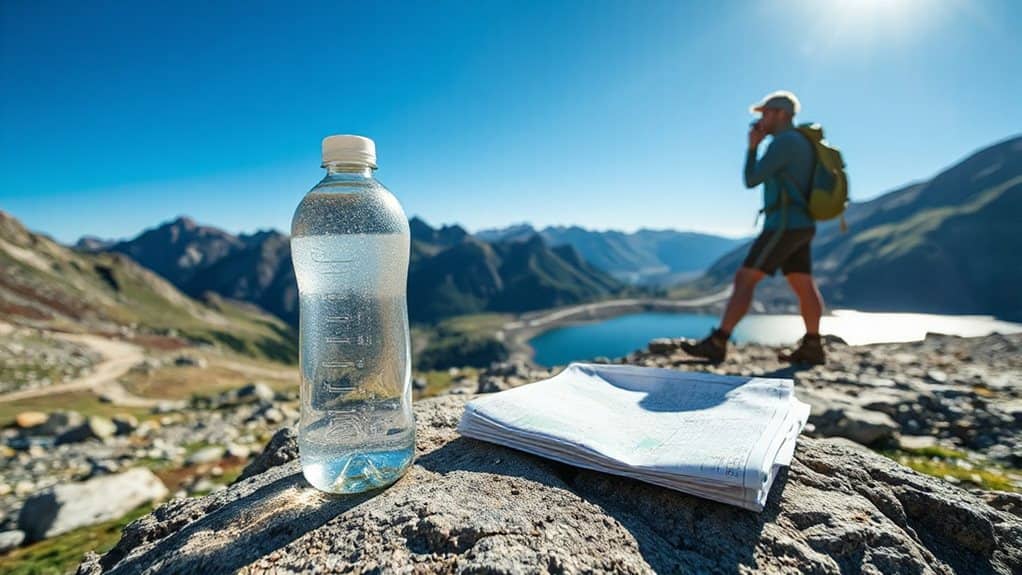
On a typical hike you’ll need roughly half a liter to a full liter of water each hour, depending on how hard you’re moving and how hot it gets. You’ll baseline thermoregulation, nutrient transport, and waste removal, so aim for 3‑8 oz every 15‑20 minutes, roughly 150‑250 ml per interval. Adjust toward 1 L/hr for vigorous or hot conditions, and track intake to fine‑tune future plans. Your personal sweat rate can be key factor in determining exact needs. Detect dehydration early by monitoring body‑mass loss to spot ≥2% decreases and adjust fluids accordingly.
How Weather, Altitude, and Terrain Change Your Hike Water Needs
When the sun beats down, the air thins, or the trail turns steep, your water needs can shift dramatically from the baseline. Heat can double intake, pushing you toward one litre per hour, while altitude adds hidden losses through faster breathing. Steep, rugged terrain raises effort and sweat, extending exposure.
Combine these factors, and you’ll need extra margin—often 500 mL extra per hour—to stay safe and free. Atmospheric pressure drops with altitude, reducing air molecule density and the partial pressure of oxygen, which increases breathing rate and therefore water loss through respiration reduced oxygen pressure.
Personal Factors That Alter Your Hike Water Consumption
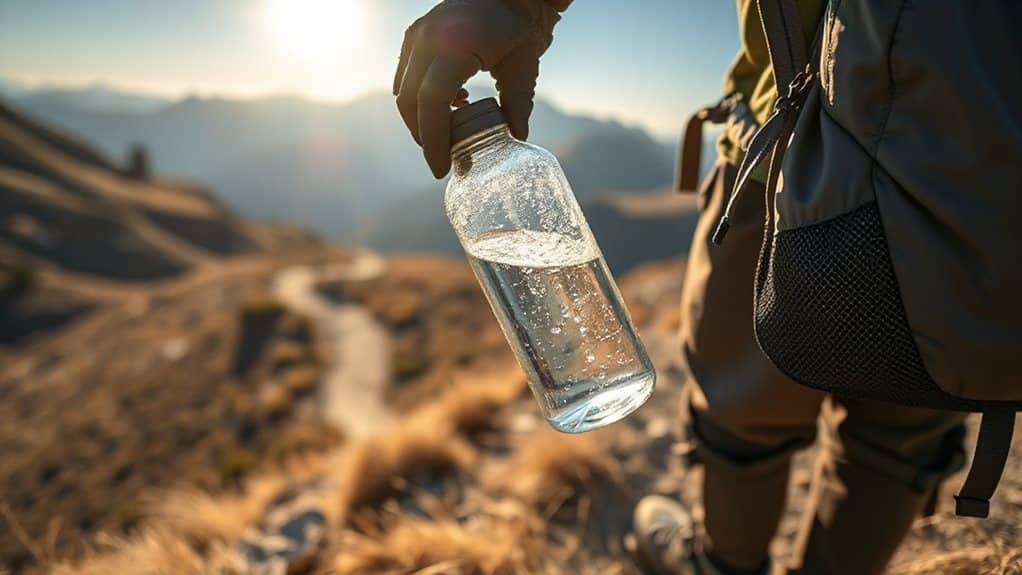
Heat, altitude, and terrain set the stage, but your own body decides how much water you truly need. Larger frames and more muscle burn hotter, so you’ll sweat more and need extra fluid.
Your fitness level tweaks how fast you dehydrate; less‑conditioned hikers feel thirst sooner. Track weight loss to gauge sweat rate, and adjust for acclimation, hike length, and intensity. Hiking poles can also help reduce joint stress and redistribute effort, which may modestly affect fluid needs by changing exertion patterns and fatigue management joint stress.
Choosing the Best Carrying System for Your Hike Water Load
Choosing the right way to carry your water starts with matching the system to your hike’s length, terrain, and refill opportunities, and it means considering the pros and cons of bottles, bladders, and hybrid setups.
You’ll likely favor a side‑pocket bottle for quick sips and visual checks, a soft bladder for hands‑free drinking on longer stretches, and a backup container for redundancy.
Wide‑mouth designs simplify refilling, while durable, leak‑resistant materials keep weight low and reliability high.
Consider carrying a compact backup bottle when heading to remote areas with limited refill options to avoid running out of water.
Quick Reference Charts: Water Amounts by Hike Length & Conditions
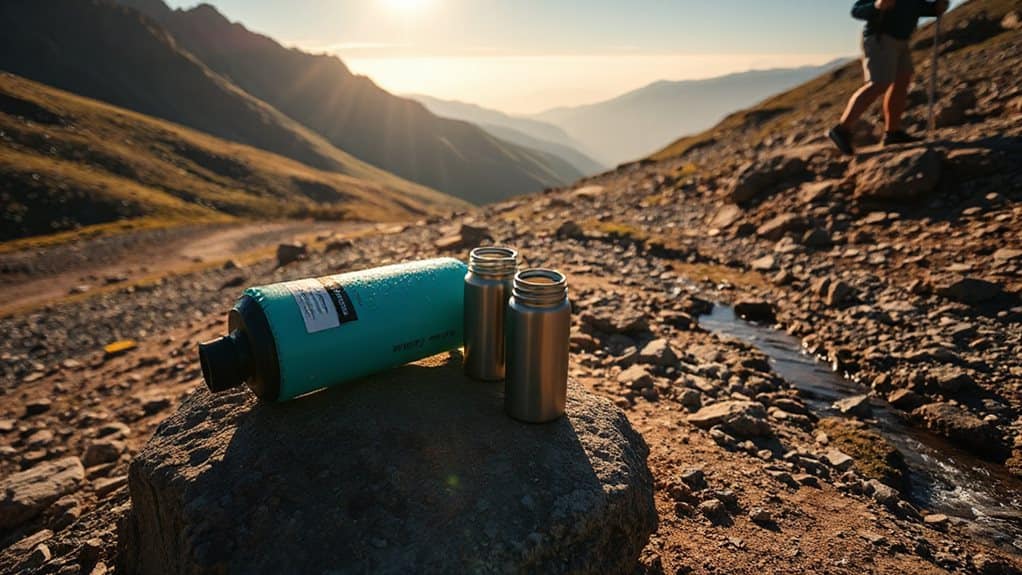
Your water‑carrying choice now meets the numbers that keep you hydrated, so let’s turn to the quick‑reference charts that match hike length and conditions to concrete fluid targets.
For a 2‑hour moderate trek, aim for 1–1.2 L, bump to 1.5 L if it’s warm; 3‑hour climbs need 1.5–2 L, up to 3 L in heat.
Add 100 mL per 300 m elevation, and always carry a 20‑30 % safety margin.
Also remember to pack the 10 essentials so you’re prepared for changing conditions and can manage water and safety on the trail.
And Finally
By matching your water intake to hike length, weather, altitude, terrain, and personal factors, you’ll stay hydrated without over‑packing. Use the quick‑reference charts to estimate daily needs, then choose a carrying system that balances weight and accessibility. Adjust on the fly—drink a little more in heat, a little less when cooler, and always listen to your body. With these guidelines, you’ll hike confidently, keeping performance and safety on track.


