
You see stars shine brighter in the wilderness because the sky’s background light is far lower, so faint starlight isn’t drowned out by city glow. Rural areas have fewer poorly shielded LEDs, less blue‑rich light that scatters, and reduced atmospheric aerosols and moisture, which together enhance contrast and let your eyes fully adapt. The Bortle Scale shows how dark‑sky classes reveal more stars, and winter’s crisp, dry air further sharpens them. If you keep exploring, you’ll uncover even more factors that enhance night‑sky visibility.
TLDR
- Rural areas have minimal artificial lighting, so skyglow is low and stars stand out with higher contrast.
- Fewer aerosols and lower humidity in the countryside reduce atmospheric scattering, letting more starlight reach the eye.
- Darker night skies increase the naked‑eye magnitude limit, allowing detection of fainter stars that are washed out in cities.
- Absence of blue‑rich LED illumination reduces glare, preserving the natural color and brightness of stars.
- Clear, dry air during new‑moon nights further minimizes background brightness, making stars appear sharper and brighter.
How City Lights Wash Out Star Brightness
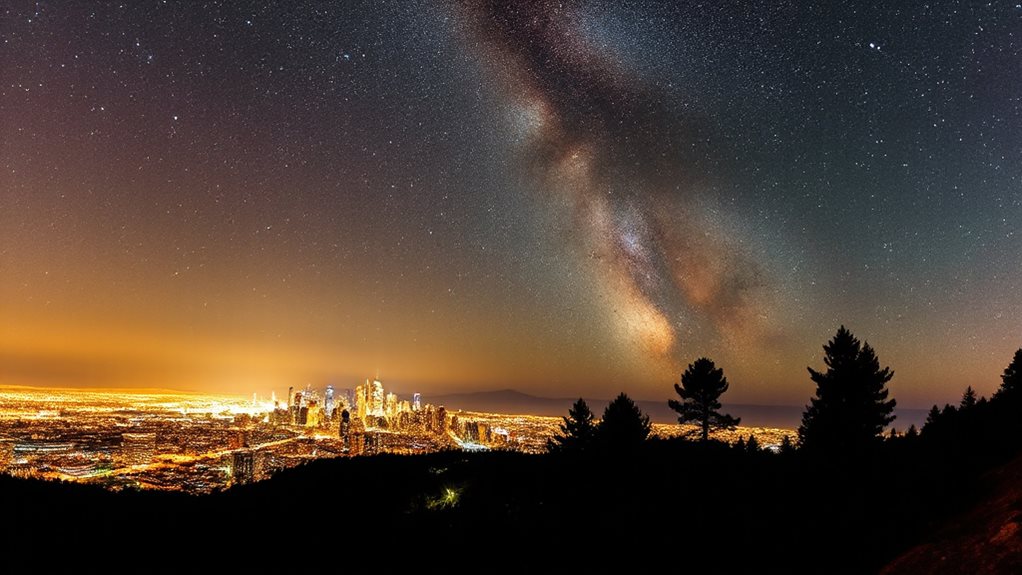
Why do city lights seem to erase the night sky’s sparkle? You look up, but upward‑facing lamps spill glare into the atmosphere, creating skyglow that lifts background brightness and drowns dim stars. Use of LEDs increases blue wavelengths that scatter more, while poorly shielded fixtures glare directly. LEDs add blue wavelengths that scatter more, while poorly shielded fixtures glare directly. As urban sky luminance climbs 7‑10 % yearly, contrast drops, making constellations vanish and freedom‑seeking eyes lose the stars. Night skies are 9.6% brighter every year.
How the Bortle Scale Measures Dark‑Sky Darkness
How does the Bortle Scale actually gauge the darkness of a night sky? You compare naked‑eye limiting magnitude and SQM readings to nine classes, from Class 1 (21.99‑22.0 mag/arcsec², 7.6‑8.0 magnitude) to Class 9 (bright city glow).
Each class predicts visible phenomena—zodiacal light, Milky Way detail, globular clusters—and tells you how light pollution will affect both unaided eyes and telescopes.
Why Rural Skies Reveal Fainter Stars
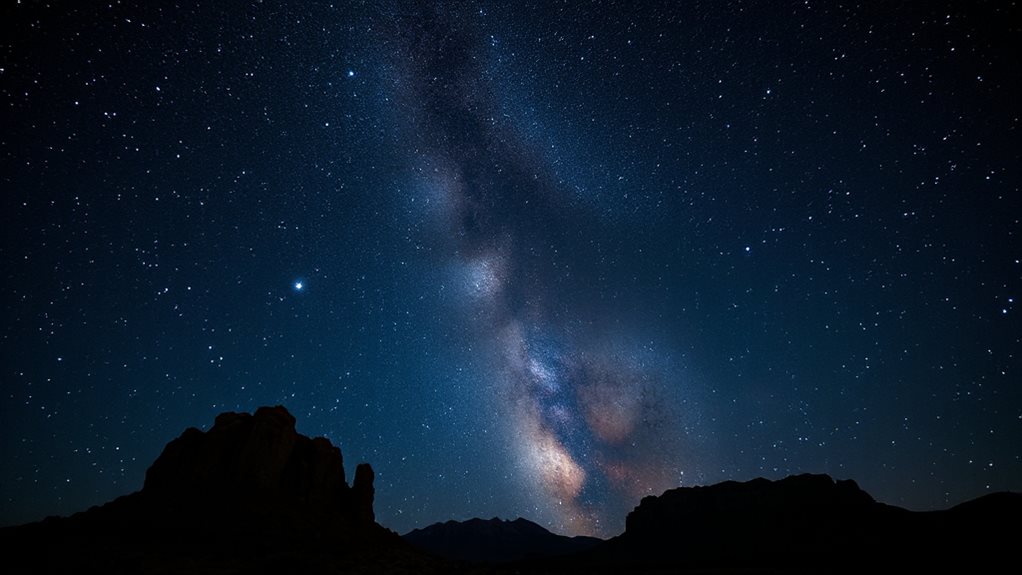
When you step into a rural night, the lack of streetlights and billboards means far less artificial glow surrounds you, so the sky’s overall brightness drops dramatically.
That lower sky brightness lets more of the atmosphere’s natural transparency shine through, allowing even the faintest stars to pierce the darkness.
As a result, you’ll see a richer tapestry of points—far beyond the few brilliant stars that dominate urban skies.
Create a rain shelter using tarps to extend outdoor enjoyment.
Reduced Light Pollution
Ever notice how the night sky seems to burst with countless stars when you step away from city lights?
Light pollution drops dramatically in wilderness, because artificial fixtures barely send upward glow, so skyglow fades.
With fewer blue‑rich LEDs and better shielding, the background darkens, contrast sharpens, and your eyes fully adapt, revealing thousands of faint stars that cities hide.
Higher Atmospheric Transparency
Reduced light pollution already gave you a darker backdrop, but the air itself plays a starring role. In the countryside, fewer aerosols and lower humidity mean less scattering, so starlight reaches your eyes with minimal loss. Rural air’s higher transparency lets even faint stars pierce the night, delivering clearer, sharper views that urban smog simply obscures. This atmospheric clarity expands your celestial horizon, revealing distant constellations more vividly.
Lower Sky Brightness
Why do rural skies let you see fainter stars? In dark fields the artificial glow drops to Bortle 1‑2, so background brightness is only 1‑2 % above natural levels. That low glow preserves contrast, letting faint stars and the Milky Way emerge.
Urban skies, Bortle 8‑9, drown out everything but the brightest objects, because scattered light raises the sky’s luminosity and masks subtle celestial details.
Why Atmospheric Clarity Matters for Dark‑Sky Stargazing
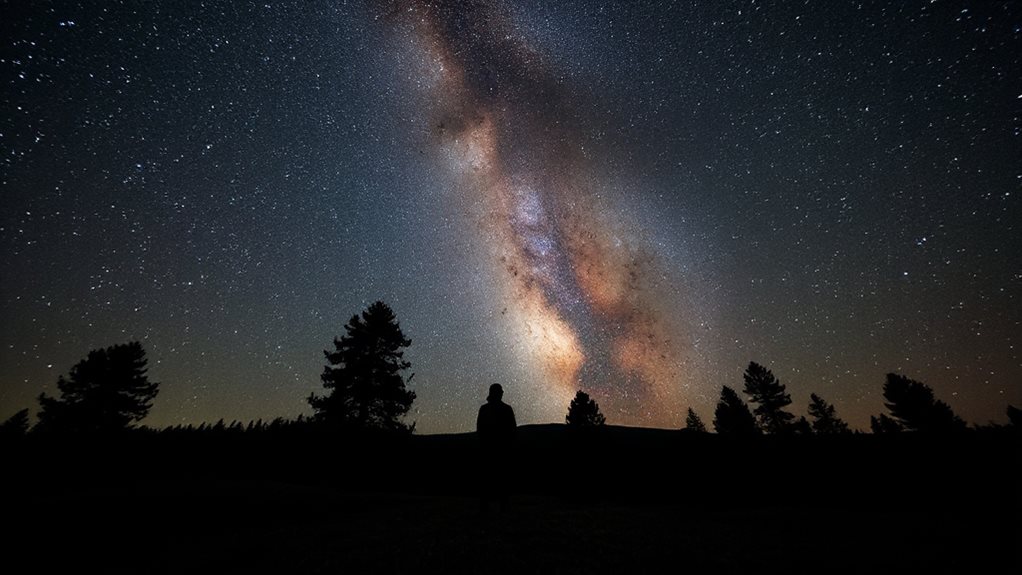
How does atmospheric clarity shape what you see when you step into the wilderness at night? You notice sharper, brighter stars when humidity drops, smoke clears, and thin clouds dissolve. High transparency reduces scattering, letting faint Milky Way details pop, while altitude and post‑rain conditions boost contrast. Less moisture and pollution mean bold constellations, deeper sky objects, and richer photographs—all essential for true dark‑sky freedom. Use field-appropriate gear and techniques like tight line choice to maximize your outdoor experience.
How Winter Darkness Boosts Milky Way Visibility
When you leave the clear‑sky wilderness behind and head into winter, the longer nights and reduced twilight give the Milky Way a distinct advantage. Dark, extended evenings suppress skyglow, while new‑moon windows and 00:00‑05:00 darkness amplify faint band contrast.
Early‑morning February lifts the galactic core above 20°, letting you capture a brighter, clearer sweep before sunrise. Camp on durable surfaces and follow Leave No Trace practices to keep skies and ecosystems pristine.
Star‑Magnitude Limits: Urban vs. Remote Sites
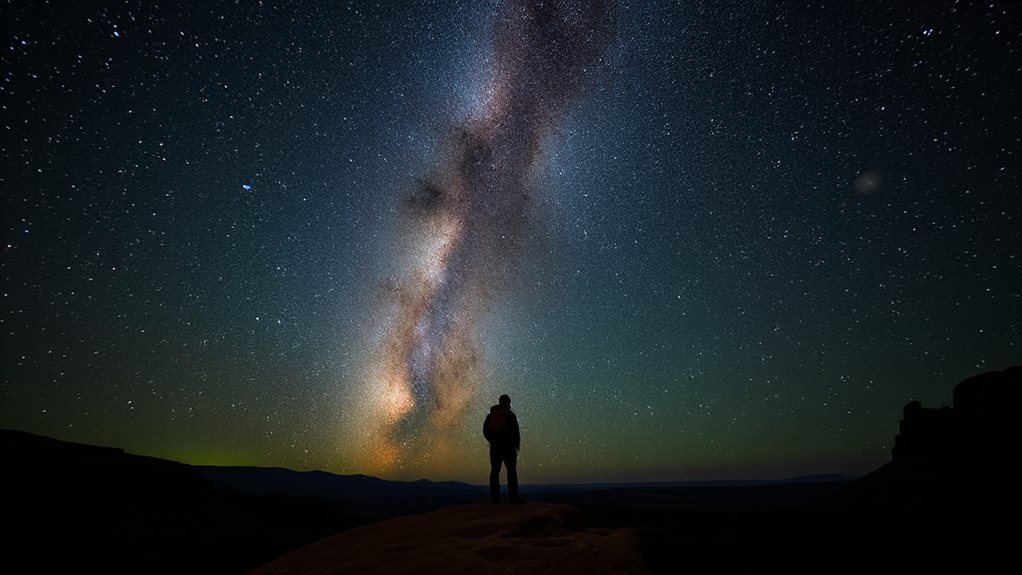
You’ll notice that your naked‑eye magnitude limit drops from about 2 mag in a city center to 6 mag or fainter in a dark rural spot, because light‑pollution glow washes out the faintest stars and reduces atmospheric transparency.
As you move away from streetlights, the sky background darkens, letting your eyes adapt and your averted‑vision technique reveal many more stars.
This shift in limiting magnitude explains why the Milky Way and faint constellations become visible once you escape the urban glare.
Sea kayaking trips often take you to remote coastal locations where dark rural spots make stargazing significantly better.
Naked‑Eye Magnitude Limits
Where does the night sky truly begin to dim for the naked eye?
In suburban areas you’ll top out around magnitude 3.5‑4.9, while city centers barely reveal the Moon and planets. Dark sites push limits to 6.5, sometimes 8.5 for seasoned observers. Your eyes adapt, averted vision helps, and altitude, humidity, and moonlight further shift the threshold, letting you see fainter stars far from artificial glow.
Light Pollution Dimmer Effect
The naked‑eye limits you noted fade dramatically once artificial light overwhelms the natural night sky, and that shift is most pronounced in urban environments where skyglow can be 50 % or more above the natural background.
In cities, LED‑rich light scatters, raising brightness by 7‑10 % annually, muting stars beyond magnitude 3, while remote wilderness retains dark adaptation, revealing faint stars up to magnitude 7 and the Milky Way.
Atmospheric Transparency Gains
Ever wondered why a city sky hides the faintest stars while a remote wilderness reveals them in abundance? In cities, high aerosol optical depth from pollution scatters starlight, limiting naked‑eye magnitude to about 4‑5, while wilderness air, with lower PM2.5 and finer 10 m resolution clarity, lets you see magnitude 6‑7 stars. Finer spatial data improves transparency estimates, and stable, clean layers in remote sites preserve that gain.
How Artificial Lighting Alters Star Colors for Observers
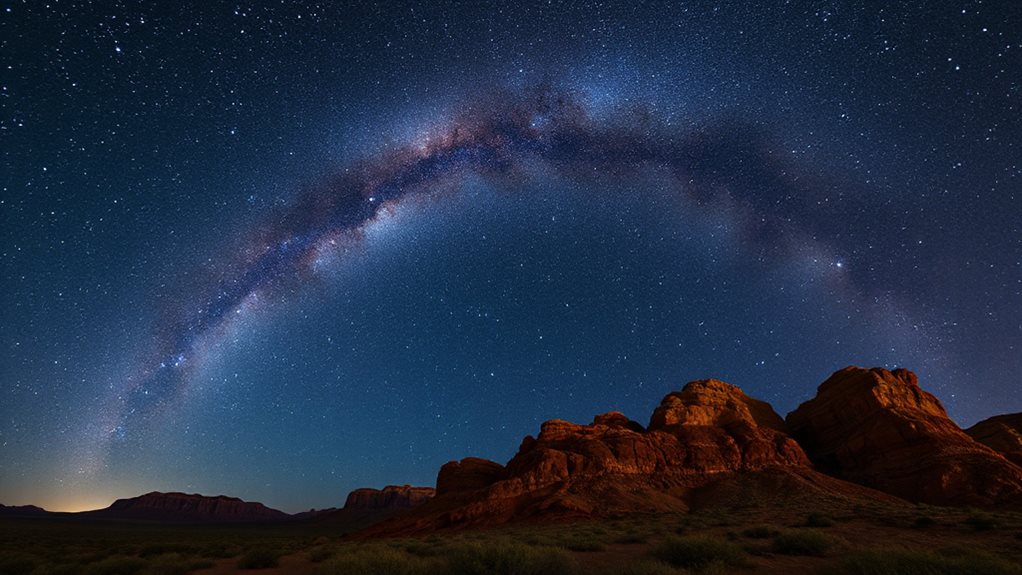
How does artificial lighting change the colors you see in the night sky? You notice a whitish, yellowish haze that mutes natural star hues because skyglow scatters blue‑rich LED light, raising background brightness and drowning faint colors.
The cooler tint from LEDs dulls reds and yellows, while glare blends multicolored spectra into a uniform glow, leaving only the brightest stars with discernible color.
Seasonal Conditions That Improve Dark‑Sky Visibility
When winter nights arrive, the air turns crisp and humidity drops, giving you clearer, darker skies that let faint stars shine.
Pair a new‑moon phase with the typically low‑light conditions of this season, and you’ll minimize skyglow and maximize visibility.
Choose a high‑altitude, flat site after a recent storm for the best atmospheric transparency and stable seeing.
Winter Nights, Clear Skies
Why do winter nights reveal such crisp, star‑filled skies? You’ll find the Milky Way’s outer edge above you, so fewer distant stars crowd the view, and Orion’s bright arm dominates. Cold, dry air reduces vapor and haze, while snow‑brightened horizons amplify contrast. Look north after midnight, stay above tree lines, let eyes adapt ten minutes, and enjoy unobstructed, high‑contrast constellations.
Low Humidity, Crisp Air
Winter’s clear, dry air already hints at the advantage of low humidity, and when you move to seasons where moisture stays stubbornly low, the sky becomes even sharper. You’ll notice fewer water‑vapor particles scattering starlight, so stars appear brighter and crisper.
Crisp air also reduces aerosol haze, preserving contrast and preventing condensation on optics, giving you unobstructed, high‑contrast night views.
New Moon, Minimal Light
Ever wondered why the night sky looks clearest just after the New Moon? With the Moon between Earth and Sun, its illuminated side faces away, leaving the night virtually moonless. Skyglow drops to 22 mpss, and under cloud cover you may record just 0.5 mlx. Those few nights before and after New Moon give the darkest conditions, perfect for deep‑sky stargazing.
Dark‑Sky Maps and Apps for Finding the Best Spots
Ever wondered how to pinpoint the darkest, most star‑filled spots without wandering blindly? Use SkySafari’s dark‑sky map to see light‑pollution levels, save favorite sites, and investigate designated dark‑sky areas. Hipcamp overlays campsites on the same map, while SkyView Lite offers offline AR pinpointing. Night Sky and Sky Guide provide free, high‑resolution constellations, and Sky Tonight gives unlimited objects with partial blurring for beginners.
Simple Actions to Protect Dark Skies While Stargazing
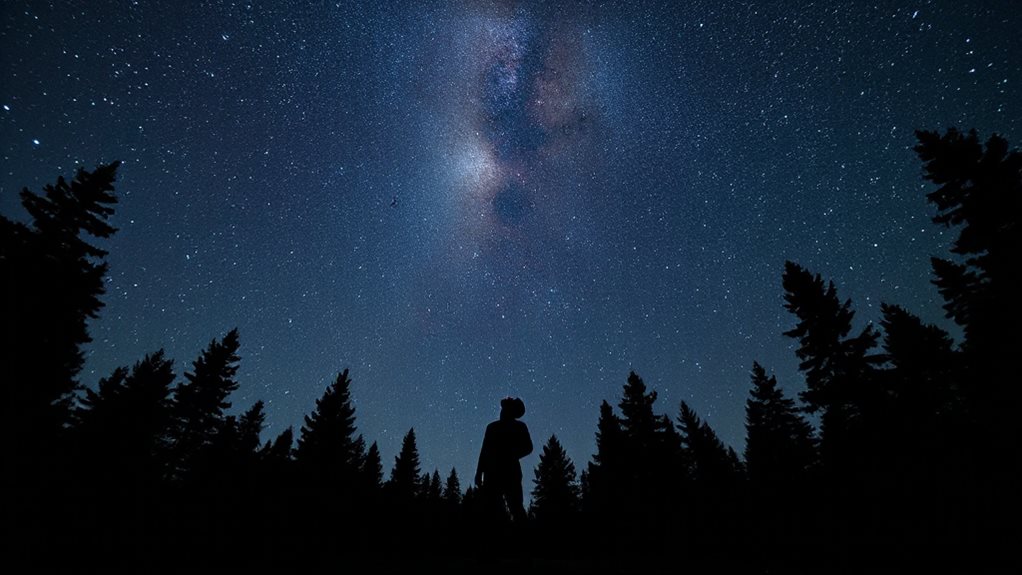
How can you keep the night sky clear while you’re enjoying a stargazing session? Use fully shielded, amber‑colored fixtures that point downward, choose DarkSky‑approved lights, and avoid any source above a 90‑degree angle. Turn off or dim interior lights, set motion sensors, and close curtains. Talk to neighbors, host community events, and share measurements with apps to protect your freedom under the stars.
Final Note
By seeking out dark‑sky sites, you’ll notice how city lights wash out faint stars, while the Bortle Scale helps you gauge sky darkness. Rural locations and clear, dry air reveal dimmer stars and a richer Milky Way, especially in winter when nights are longest. Stay aware of artificial lighting that can shift star colors, and use dark‑sky maps or apps to locate optimal spots. Simple actions—shielding lights, using low‑impact lighting, and respecting local regulations—preserve these vistas for everyone.


