
Pick a spacious, accessible venue with solid infrastructure, flexible scheduling, and reliable tech, then match it with scalable activities like looping hiking trails, wide‑path bike rides, and adaptive stations for sit‑skis, handcycles, or adaptive kayaks, ensuring safety with RFID crowd monitoring, clear signage, and first‑aid kits, while coordinating shuttle routes, color‑coded parking zones, and real‑time app updates; budget‑friendly gear rentals and tech tools for sign‑ups and check‑ins keep everything running smoothly, and the next sections will show you how to plan each detail.
TLDR
- Choose activities that can be divided into smaller packs, like looping hiking trails, to keep participants engaged while managing crowd size.
- Offer inclusive options such as wide‑path bike rides, adaptive kayaks, and sit‑skis to accommodate diverse abilities and demographics.
- Ensure robust infrastructure: ample parking, shuttle coordination, RFID crowd monitoring, and clear signage for smooth logistics.
- Prioritize safety with mapped hazards, staffed first‑aid stations, defibrillators, and separate entry/exit routes.
- Use scalable equipment rentals (bulk chairs, modular tents) and tech tools (event apps, real‑time updates) to streamline planning and communication.
Choose the Right Outdoor Venue for a Large Group Outdoor Event
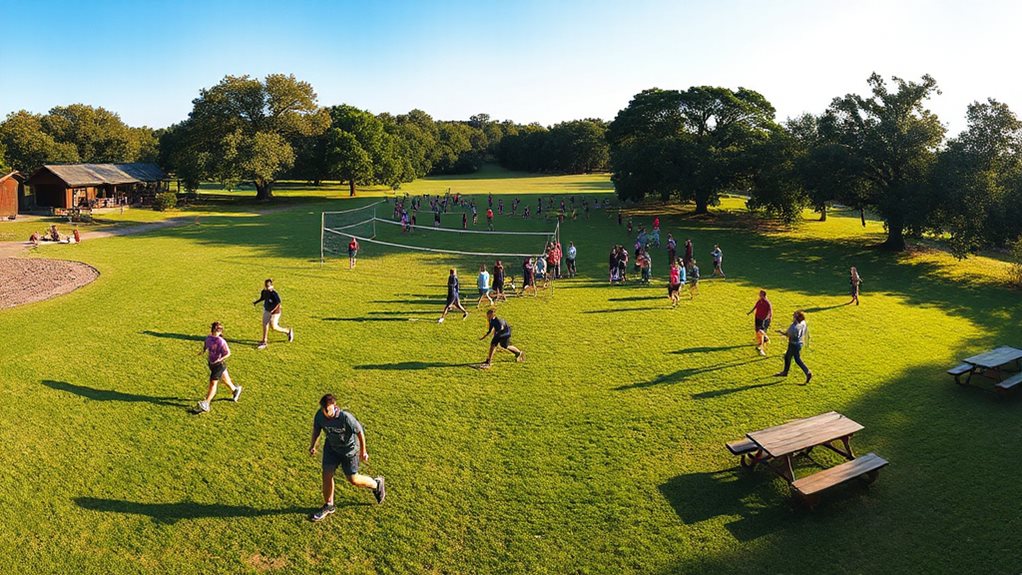
Looking for the perfect outdoor venue for a large‑group event? You’ll want space that handles 200‑plus attendees, offers solid infrastructure, and stays flexible for your schedule.
Prioritize venues with strong services, reasonable cost, and reliable tech, especially in Tier 1 cities where airports and transport ease logistics. Consider how captive breeding can affect local wildlife regulations and permitting for event sites near sensitive habitats.
Check safety measures, RFID crowd monitoring, and sustainable options, while ensuring food, beverage, and accessibility meet your team’s needs.
Add AI IntelliSense to enhance lead scoring and ICP matching for post‑event follow‑up.
Select Scalable Activities for a Large Group Outdoor Event
How do you choose activities that stay fun, safe, and manageable when you have 200 + people spread across a park or campus? Pick hiking trails that loop, letting 57 % of participants stay active while you split into small packs; organize bike rides on wide paths, which draw 51.9 % female and 60 % LGBTQ+ riders; set up fishing stations at accessible lakes, scaling effortlessly for diverse groups; and schedule short runs or walks that accommodate all fitness levels, ensuring freedom and flow throughout the event. Consider incorporating visits to Talcott Mountain for scenic viewpoints and beginner-friendly trails.
Design a Safety & First‑Aid Plan for a Large Group Outdoor Event
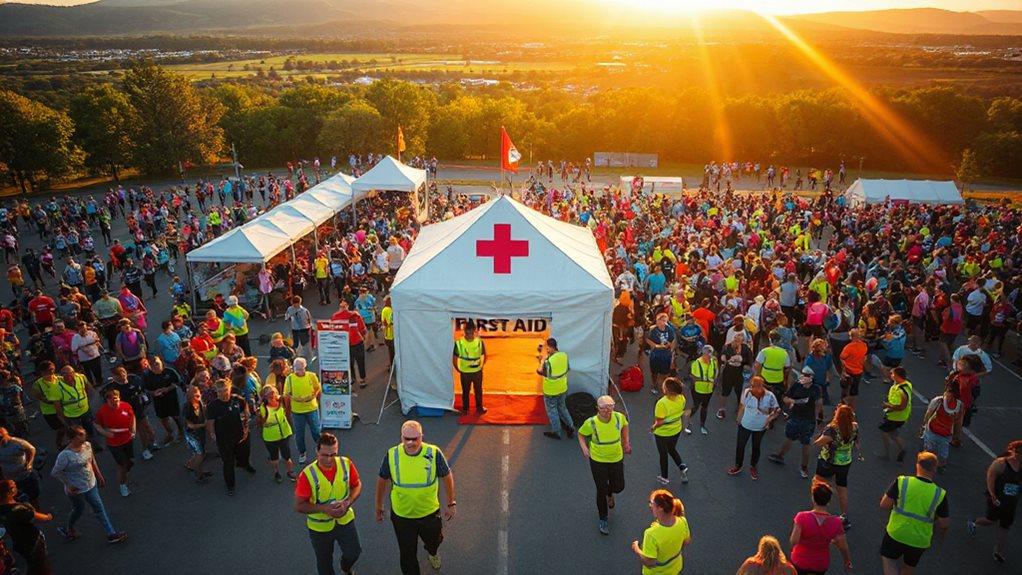
After selecting scalable activities like looping hikes and bike rides, you now need a solid safety and first‑aid framework that keeps 200 + participants protected without slowing the fun.
Map hazards, assign staff roles, post clear signage, and stock kits with bandages, antiseptics, defibrillators, and trauma supplies at strategic points.
Establish separate entry/exit routes, one‑way pathways, and staggered timing, then brief everyone on evacuation, weather alerts, and communication devices.
Include daily lifestyle activities in the event schedule to help participants stay active throughout downtime and aid recovery.
Find Budget‑Friendly Gear & Rentals for a Large Group Outdoor Event
A solid budget‑friendly gear plan starts with a clear inventory of what you actually need, then matches each item to the most cost‑effective rental or bulk‑purchase option. Compare tent sizes: a 20×20 party tent at $200‑$500 daily beats a 20×40 frame at $750‑$900.
Choose bulk chair bundles—50 resin chairs for $1,973.19—over individual rentals.
Opt for tables with cart bundles, and add sidewalls or lighting only if essential, keeping labor and permit fees in mind.
Always plan storage and care for gear to avoid creating hazards on trails and trailheads, and consider yielding to equestrians where events use shared paths or staging areas to protect both safety and trail integrity by stepping to the downhill side and communicating calmly with riders and handlers when necessary (see trail etiquette).
Arrange Transportation and Parking for a Large Group Outdoor Event
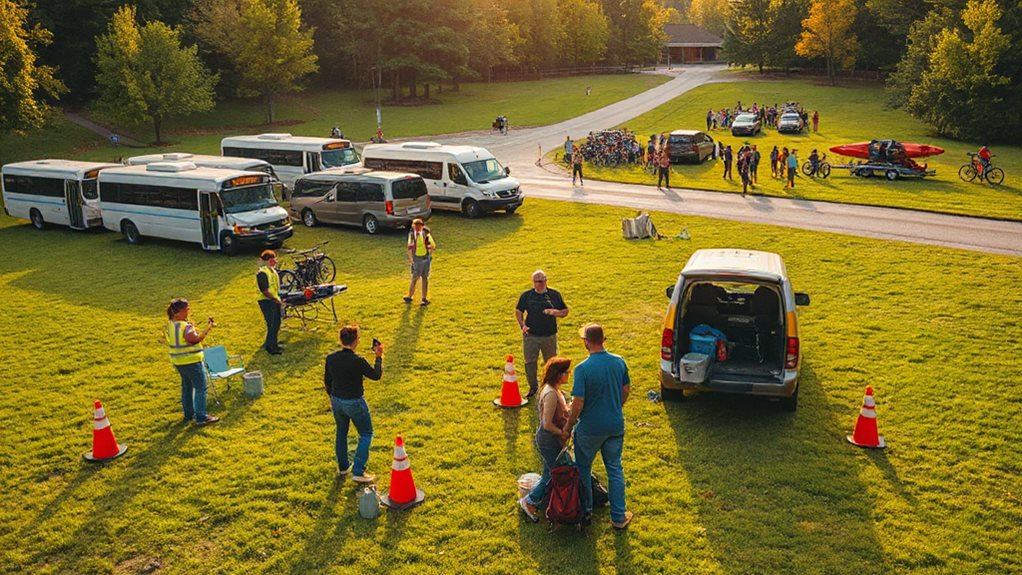
You’ll want to map out efficient shuttle routes, scheduling staggered pick‑ups and drop‑offs so traffic flows smoothly and waiting times stay short.
Pair those shuttles with clear parking zones—signage, staff guides, and on‑site coordination keep vehicles organized and prevent bottlenecks.
Center heavy items near the back of packs for stability and balance when transporting gear between sites to reduce strain and conserve energy.
Efficient Shuttle Coordination
How can you keep thousands of attendees moving smoothly to and from an outdoor event without creating traffic chaos? Form a cross‑agency team, use AI‑driven tracking, and schedule shuttles in waves.
Replace cars with dedicated buses, close regular lanes, and guide riders to low‑congestion routes. Adjust on the fly for weather, release vehicles in phases, and keep costs low while preserving freedom to roam.
Accessible Parking Strategies
Thousands of attendees can navigate parking effortlessly when you blend pre‑event reservations with clear, on‑site guidance, so start by selling parking passes online and assigning each a specific zone—general, VIP, staff, or accessible—so drivers know exactly where to go before they even arrive.
Use color‑coded signs, real‑time app updates, and trained attendants to direct cars, reserve nearby lots for overflow, and ensure accessible spots meet regulations, keeping traffic smooth and everyone’s freedom intact.
Create Flexible Timetables to Keep Everyone Engaged in a Large Group Outdoor Event
Why should you design a timetable that can bend and shift as the day unfolds? You map overlapping start times, sprinkle buffer slots, and spread zones so activities flow without bottlenecks.
Publish a simple agenda early, then add pop‑up games or rotating stations that let groups drift between structured events and free zones. This flexible structure respects preferences, keeps energy high, and lets every participant choose their own pace.
Leverage Tech Tools for Sign‑Ups, Check‑Ins, and Real‑Time Updates in a Large Group Outdoor Event
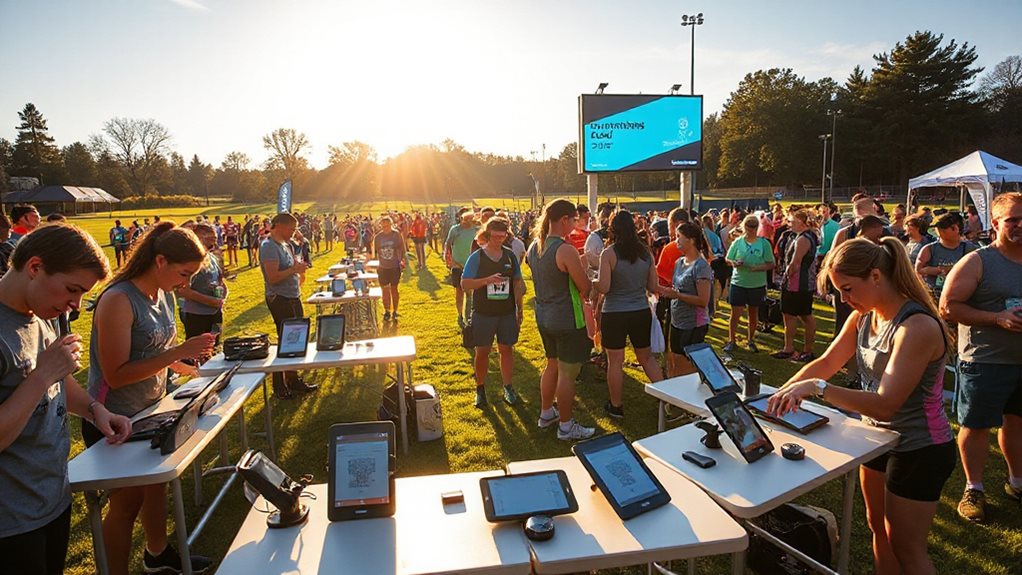
A flexible timetable works best when you pair it with the right technology, because digital tools keep the flow smooth and participants informed. Use Eventbrite or Cvent for quick sign‑ups, then let Whova or Momentus handle mobile check‑ins with gamified QR scans.
Push real‑time updates via Total Party Planner, monday.com, or Whova’s social wall, so everyone stays on track, feels free, and enjoys the outdoor expedition without bottlenecks.
Adapt Activities for Diverse Ages, Abilities, and Interests in a Large Group Outdoor Event
You’ll notice that inclusive trail design—wider paths, smooth grading, and low‑incline sections—lets participants of any mobility level move confidently, while adaptive activity stations equipped with sit‑skis, handcycles, and sensory‑friendly games give everyone a chance to join in.
By pairing these features with flexible programming that lets people choose their pace and interaction style, you create a space where children, adults, and veterans can all engage without feeling left out.
This approach not only enhances safety and comfort but also encourages natural collaboration, turning a simple outing into a truly shared adventure.
Inclusive Trail Design
How can you design a trail that welcomes every participant—children, seniors, and people with disabilities—while still keeping the experience enjoyable for a large group? Use gentle grades, switchbacks, and frequent rest spots that meet ANSI A117.1 and ADA standards, incorporate universal‑design surfaces, and engage local residents in planning so the route reflects neighborhood geography, history, and equity goals, ensuring freedom for all.
Adaptive Activity Stations
Designing adaptive activity stations builds on the inclusive trail foundation, turning a shared path into a series of engaging, accessible experiences for every participant.
You’ll set up sit‑skis, handcycles, adaptive kayaks, raised garden beds, and ergonomic tools, all at ADA‑compliant heights.
Staff guide observers, pair partners, and break tasks into short steps, while shade, seating, and stable paths keep everyone comfortable and free to explore.
Capture and Share the Experience With Photo & Video Strategies for a Large Group Outdoor Event
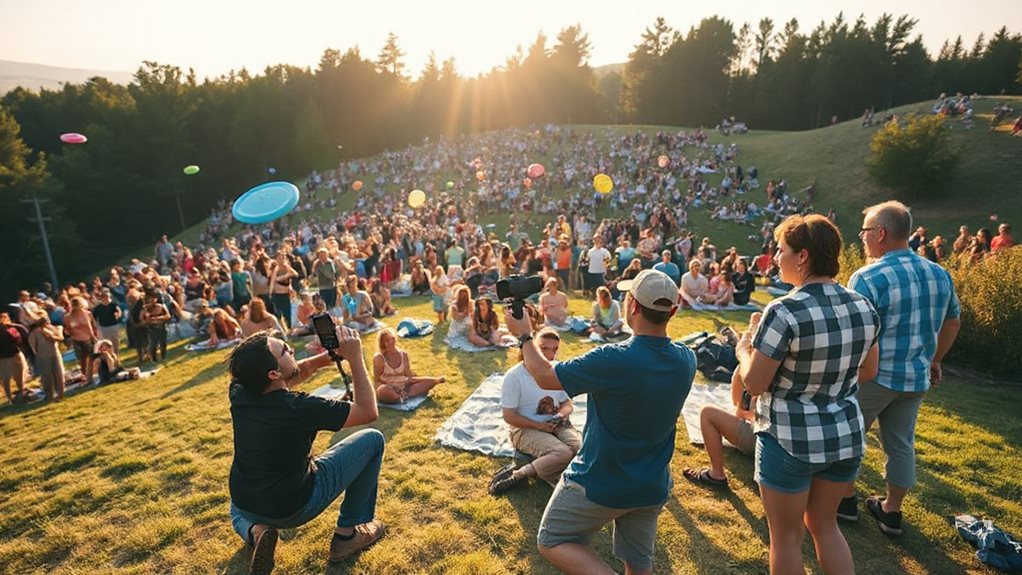
Ever wondered how to turn a sprawling outdoor gathering into a seamless visual story? Use aperture‑priority (f/2.8‑f/8) with auto‑ISO 100‑1600, keep shutter at 1/250s, and shoot from a ladder or monopod for gentle downward angles. Position the sun behind the crowd, add bare flashes for fill, and switch between 24‑105mm and 70‑200mm lenses for wide scenes and close‑ups. Capture 500+ frames, then edit raw files, exposing to the right for shadow detail, and transplant open eyes for flawless group shots.
Final Note
By picking the right venue, scaling activities, and planning safety, budgeting, transport, and tech, you set the stage for a smooth, enjoyable outdoor event. Tailor games and amenities to all ages and abilities, keep schedules flexible, and capture the moments with simple photo‑video tools. When each piece fits together, the group stays engaged, safe, and thrilled, turning a large gathering into a memorable experience.


