
When a fish swallows a hook deep, the point can pierce its throat, gills, or stomach, tearing tissue, causing rapid bleeding and swelling that can block breathing and feeding. The injury triggers an acute stress response, spiking cortisol, raising heart rate, and making the fish gasp for oxygen. If the hook moves, it may irritate or perforate the stomach wall, inviting infection and chronic inflammation, which can eventually lead to poor nutrition or starvation. Keeping air exposure short and handling gentle improves survival, and the next sections explain how to decide between cutting the line or safely extracting the hook.
TLDR
- The hook can travel past the lips into the throat, gills, or stomach, causing tissue tears and internal bleeding.
- Deep‑mouth injuries impair suction feeding, leading to reduced oxygen intake and heightened stress responses.
- Damage to gills disrupts oxygen exchange, while stomach punctures risk perforation, infection, and chronic irritation.
- Immediate stress spikes cortisol, accelerates heart rate, and may cause rapid breathing and agitation, especially with air exposure.
- Survival odds vary: mouth‑hooked fish have ~90% survival, whereas throat or gut hooks drop to 40‑50% without rapid, careful release.
How Hooks End Up Deep Inside a Fish
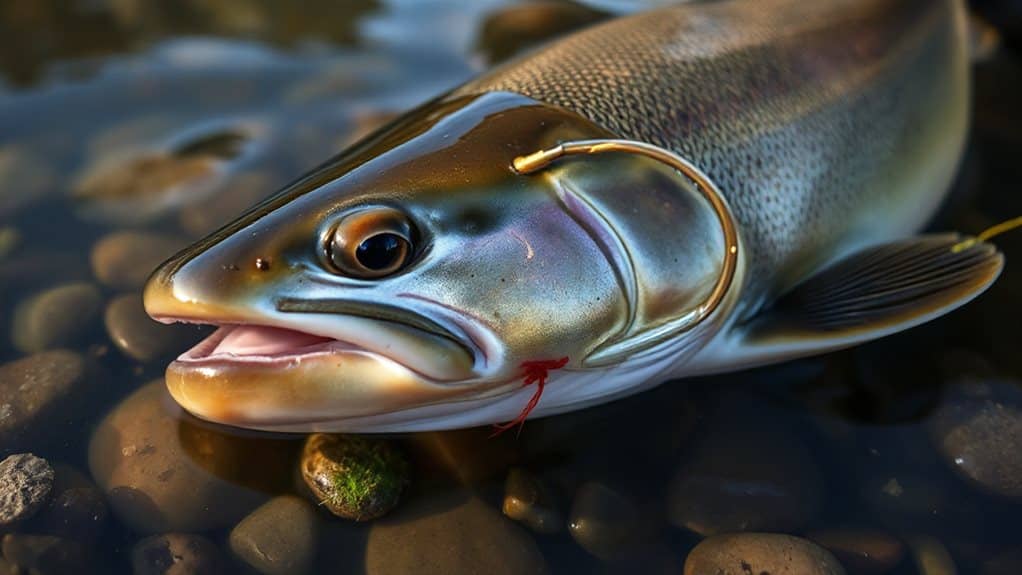
When a fish snaps at bait, the sudden gulp can carry the hook far beyond the lips, and if you wait too long to set, the hook may end up deep in the throat. You’ll find that fast suction feeders, soft or live baits, and small hooks let the hook travel past the mouth corner. J‑hooks, treble hooks, light line, and delayed sets all increase depth, while circle hooks, larger sizes, and quick, decisive action keep the hook near the lips, preserving your freedom to release. Barbless hooks typically shed within 24 hours, further reducing the risk of deep‑mouth retention. Proper hook choice and rigging techniques, such as using EWG hooks and weedless presentations, can help keep hookups shallower and improve landing rates.
Physical Damage to Throat, Gills, and Stomach
You’ll notice that a hook lodged in the throat can tear tissue, cause rapid bleeding, and swell enough to block swallowing or breathing.
When the hook punctures the gills, it disrupts the delicate vascular network, leading to heavy blood loss and impaired oxygen exchange.
If the hook reaches the stomach wall, it may perforate the lining, creating a blockage, chronic irritation, or infection that can jeopardize the fish’s survival.
Accidents often happen because of safety rule violations, so proper handling and preparation are important.
Throat Laceration and Bleeding
If a hook lodges deep in a fish’s throat, it tears soft tissue, triggers profuse bleeding, and can bruise the surrounding gills and esophagus, creating a cascade of internal hemorrhage that may not show up on an X‑ray.
You’ll notice swelling, neck bulging, and rapid blood loss; removal attempts can double bleeding, and infection risk spikes.
Prompt, careful debridement and possible suturing are essential for survival.
Gill Tissue Disruption
Deep hooks that pierce the gill slit can snag the delicate filaments and arches, tearing them as the fish thrashes and the line tightens, and that mechanical damage quickly reduces the surface area available for oxygen exchange.
You’ll see ragged filaments and bent arches, causing ventilation loss and short‑term lethargy.
Line tension can enlarge the wound, while careful, along‑entry removal minimizes further tissue trauma and improves survival odds.
Stomach Wall Perforation
After the gill‑slit damage, the hook can travel further down the digestive tract and lodge in the stomach wall, where its sharp point may pierce the mucosa and create a perforation.
You’ll feel intense abdominal pain, possible peritonitis, and tenderness that can worsen suddenly.
CT scans reveal free air or inflammation, while endoscopy may confirm penetration.
Prompt removal—endoscopic if possible, surgical if needed—prevents infection and preserves freedom.
Short‑Term Stress, Breathing, and Feeding Effects
When a fish is hooked deep, the capture and handling trigger an acute stress response that spikes cortisol within minutes, raises heart rate, and can cause agitation.
You’ll see rapid breathing, reduced oxygen transport, and heightened agitation, especially if the fish is exposed to air.
Mouth injuries impair suction feeding, making prey capture like drinking through a leaky straw, so short‑term energy intake drops while recovery stalls.
Wearing protective gear like a helmet significantly reduces severe head injury risk and can improve survival odds in fall incidents.
Long‑Term Risks: Infection, Irritation, and Starvation
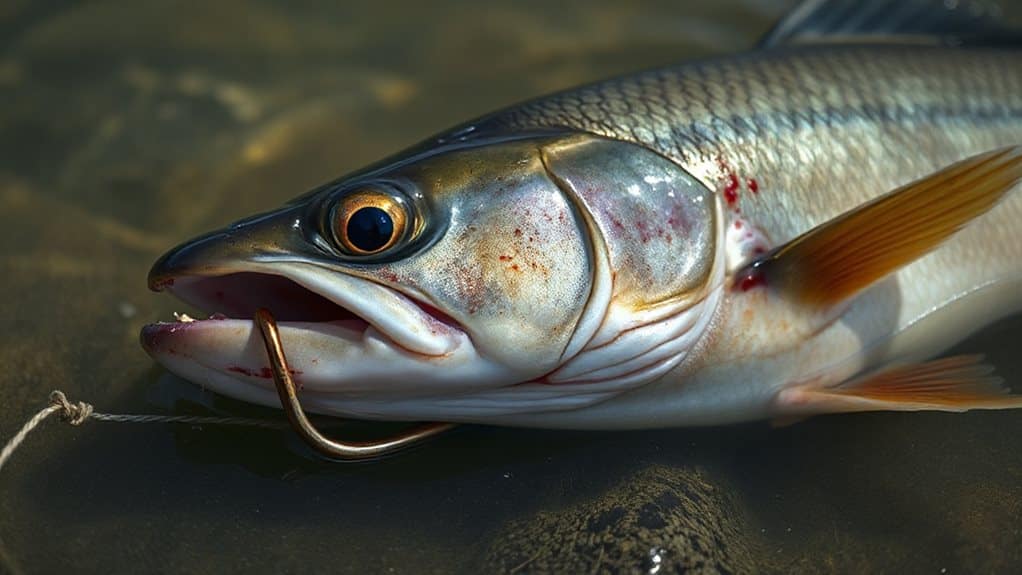
You’ll notice that the hook’s constant movement rubs the stomach lining, causing chronic irritation that can scar tissue and leach metal ions.
Because the fish can’t open its mouth fully or swallow comfortably, it eats less, leading to reduced nutrient absorption and eventual starvation.
Meanwhile, the damaged tissue becomes a breeding ground for bacteria, so infections can spread, weakening the immune system and compounding the nutritional deficit.
A fish that eats less may also show changes in its excrement, such as reduced frequency or altered color and consistency, which can indicate worsening health.
Chronic Tissue Irritation
Even a single barbed hook lodged deep in tissue can set off a cascade of chronic irritation that, far from healing on its own, invites infection, inflammation, and even nutritional problems.
You’ll feel persistent soreness as the body walls off the foreign barbs, forming granulomas and swelling joints, while macrophages and fibroblasts keep the area inflamed.
Over weeks, nodules or abscesses may appear, and tendons or ligaments near the hook can stiffen, limiting motion and freedom.
Starvation From Reduced Feeding
If a fish swallows a hook, the mechanical blockage and tissue damage it creates can quickly turn normal feeding into a struggle, and the resulting nutritional shortfall often escalates into a serious starvation risk.
You’ll see reduced intake for weeks, weight loss after two weeks, and cortisol‑driven anorexia compounding mechanical obstruction.
Infections can halt appetite entirely, so the combined stress, malabsorption, and organ damage dramatically increase mortality.
Survival Odds: Species, Hook Location, and Handling Time
When a fish swallows a hook deep, its chances of survival hinge on three key factors: the species, where the hook ends up, and how long it stays out of the water.
Species matter—red drum with mouth hooks survive ~92%, but throat or gut hooks drop to ~47%; muskellunge gut‑hooked suffer high mortality.
Hook location is critical; jaw or lip hooks are far less lethal than gill, throat, or esophagus placements.
Minimize handling time, keep air exposure under 30 seconds, and release quickly to improve odds.
Using tools like Quickdraw Contours can help anglers avoid deep-hooking by improving situational awareness and locating productive structure before casting.
Should You Cut the Line or Try to Remove the Hook?
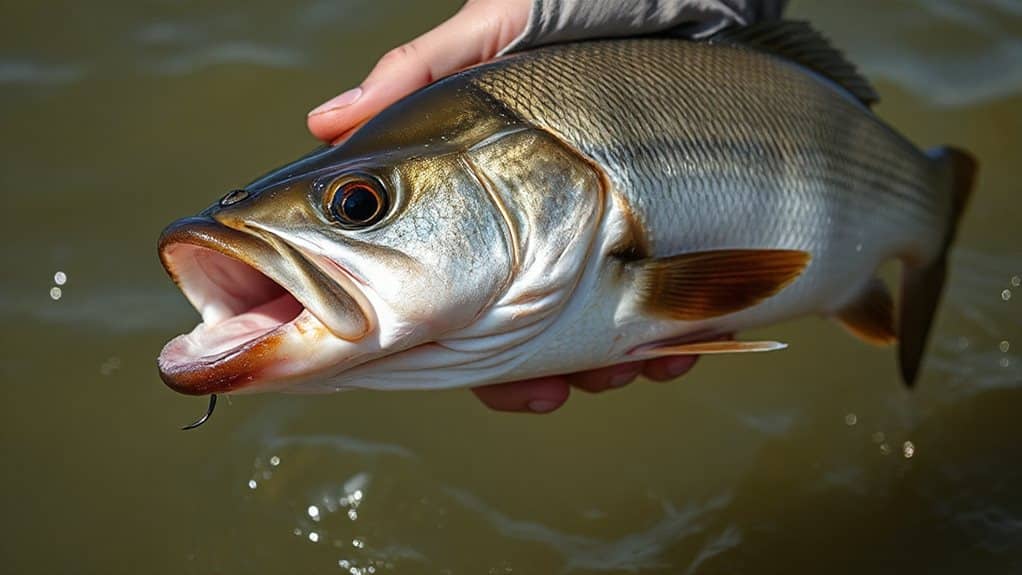
Because the primary goal is to keep the fish alive, you’ll usually want to cut the line rather than wrestle the hook out of a deep swallow.
Cutting releases tension instantly, protects you from a struggling, possibly aggressive fish, and avoids the high bleeding and tearing rates seen with forced extraction.
Leave 10‑18 inches attached, keep the fish’s airway clear, and let nature handle the hook.
Tools for Safely Extracting Deep‑Swallowed Hooks
Even if the hook is lodged deep in the throat, you can still pull it out safely with the right tools.
Use a 7‑inch long‑reach extractor or a spring‑loaded trigger‑grip model to reach inside while your hands stay outside, or grab a stainless‑steel rotation remover that turns the hook up to 200°.
For smaller fish, needle‑nose pliers or hemostats work through the gills, and compact forceps handle tiny hooks.
All these tools minimize stress, protect tissue, and keep you in control.
Preventing Deep‑Swallowed Hooks While Fishing
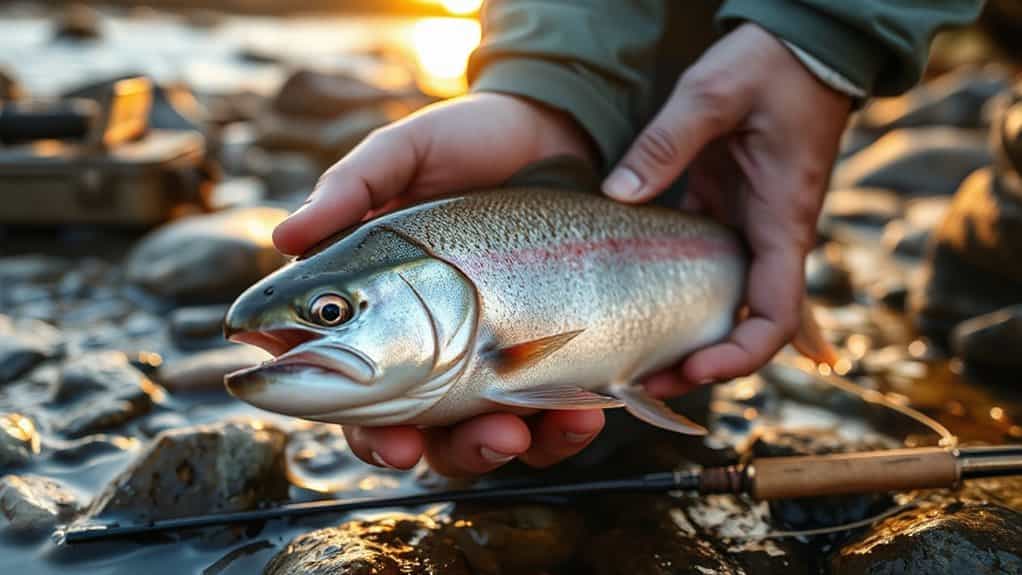
After you’ve got the right tools for extracting a deep‑swallowed hook, the next step is to stop the hook from getting there in the first place.
Choose true in‑line circle hooks, match hook size to bait, and favor lures over live bait; set quickly, keep steady tension, and use proper drag.
Adjust presentation to the species’ strike style, and avoid slack line to keep bites immediate and hooks near the mouth corner.
And Finally
You’ve learned that a hook swallowed deep can damage a fish’s throat, gills or stomach, cause immediate stress, and lead to infection or starvation if not handled promptly. Survival hinges on species, hook placement, and how quickly you act. When you find a deep‑swallowed hook, cut the line only as a last resort; otherwise, use proper tools and steady hands to extract it safely. Prevention—using barbless hooks, proper bait placement, and gentle handling—remains the best strategy.


