
You’ll want 25‑50 ft of paracord for day hikes, 50‑100 ft for weekend trips, and a dedicated 40‑50 ft line for a reliable bear‑hang, so trim or daisy‑chain the rest as needed. A 100‑ft coil balances shelter lines, tie‑outs, and peak supports without adding excess weight, while a 25‑30 ft piece serves minimal‑load short trips. Cut pre‑made segments (15 ft, 8 ft, 6 ft) for quick‑access kits and store them in daisy‑chain bags or containers. If you keep reading, you’ll uncover when to carry more than 100 ft and how to avoid common rope mistakes.
TLDR
- 25–30 ft of 550‑lb paracord covers day hikes, minimal shelter, and quick bear‑hangs while adding under 80 g weight.
- 50–100 ft is ideal for weekend trips, allowing multiple guy‑lines, tie‑outs, and a sturdy tarp ridge without overpacking.
- Split longer coils into modular 5‑30 ft sections for versatile anchor points and easy storage in daisy‑chain bundles.
- Use a daisy‑chain or double‑daisy‑chain coil to compact 50 ft into a 2‑ft bundle, preventing tangles and saving space.
- Choose rope type (polyester for UV resistance, nylon for stretch) and diameter matching the load; avoid sisal and polypropylene for shelter work.
How Much Paracord Do Most Campers Actually Need?
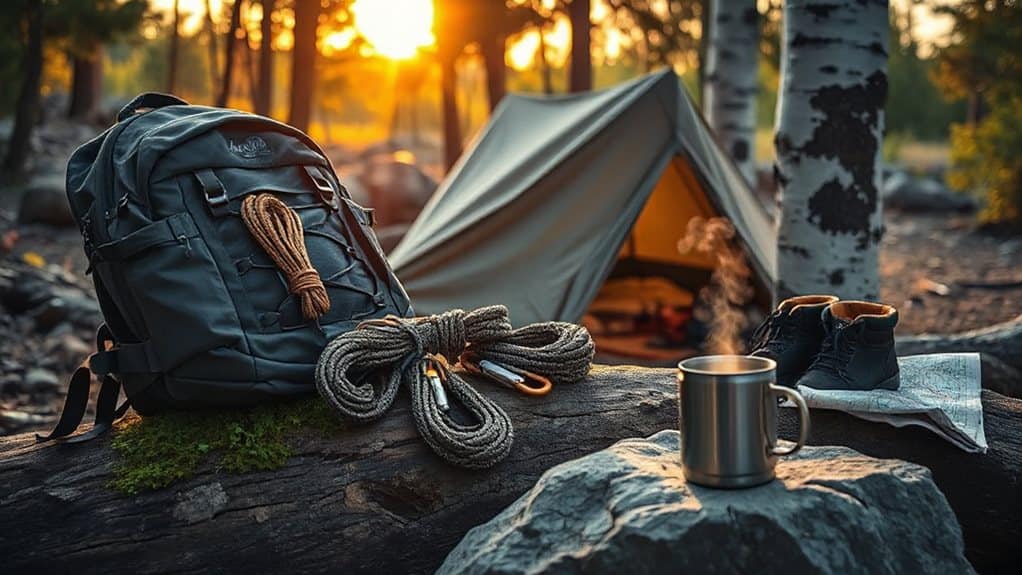
Most campers find that 25–50 feet of paracord covers the basics for day hikes and short outings, while overnight trips usually benefit from 50–100 feet to handle shelter lines, gear lashings, and occasional repairs. You’ll often split the cord into 25‑foot hanks, keep a few spools handy, and use winders to avoid tangles. This modular approach gives you flexibility for quick fixes, bear hangs, and tent rigging without bulk, preserving the freedom you crave. Paracord’s 550‑pound tensile strength makes it ideal for securing gear and building shelters. A compact length like 50–100 feet also pairs well with a backpack from the 60–70 liter range for multi-day trips.
Why 100 Ft Is the Weekend Sweet Spot
You’ll find that 100 ft lets you balance load management across guy lines, tie‑outs, and peak supports without overpacking, so you can keep the campsite tidy and your gear light.
The length works for a versatile shelter setup, letting you split the rope into several 10‑ to 30‑ft sections for corners, wind‑exposed spots, and auxiliary uses while still leaving a margin for unexpected anchor spacing.
Because braided polyester resists UV and stretches minimally, that baseline gives you reliable tension and easy adjustments even when the weather turns wet.
Choose high, well‑draining ground at least 200 ft from water sources to anchor your lines and avoid washouts, which helps maintain secure tension in heavy rain and runoff site selection.
Balanced Load Management
When you’re planning a weekend trek, a 100‑foot coil of rope hits the sweet spot because it balances versatility with pack weight.
You can cut it into 25‑plus‑foot ridgeline pieces, several 6‑foot tie‑outs, and handy 3‑foot utility lengths, keeping tasks separate and tangles minimal.
This distribution lets you handle bear hangs, stream crossings, and tarp setups without excess bulk, preserving freedom on the trail.
Versatile Shelter Setup
If you plan a weekend trek, a 100‑foot rope gives you the flexibility needed for most shelter configurations without burdening you down.
It covers a primary tarp or tent pitch, extra tie‑outs, and mid‑panel supports, while leaving room for wind‑adjusted anchors or a quick clothesline.
You’ll avoid juggling short cords, keep weight low, and adapt to trees, stakes, or terrain with confidence.
Short‑Trip Paracord Length: 25‑30 Ft for Minimal Gear
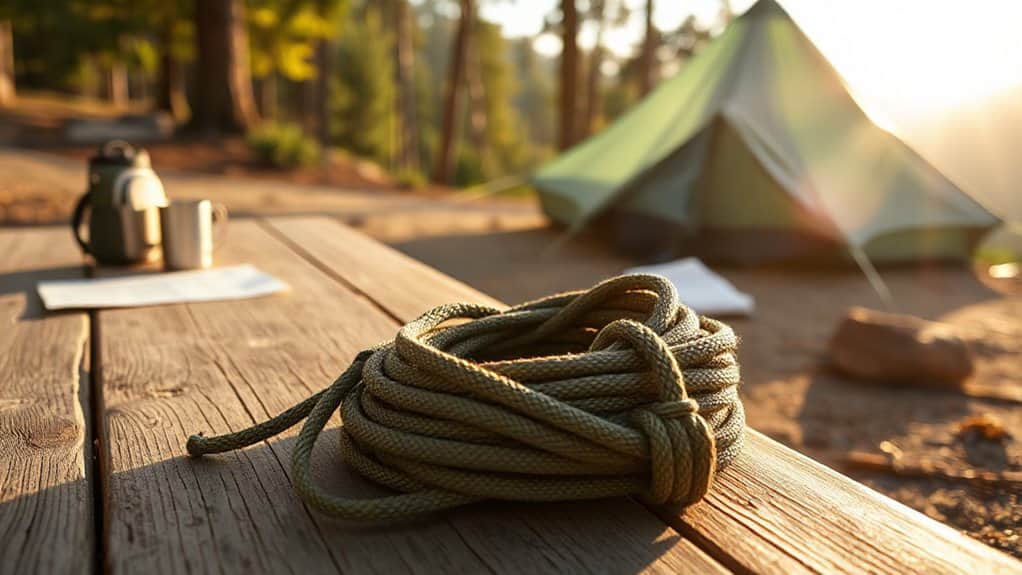
You’ll find that a 25‑30 ft piece of 550 paracord adds barely any weight—under 80 g—so it fits in a pocket without slowing you down.
With that length you can rig a simple shelter in minutes, using a few knots to secure poles and tarp, and you’ll still have enough slack to hang a food bag or lantern out of reach of critters.
The compact hank also lets you cut short segments for quick tie‑downs, giving you versatile utility without bulk.
A short length like this is ideal for rigging adjustable guylines using a taut-line hitch for shelter stability in changing weather.
Minimal Gear Weight
On a short‑trip backpacking adventure, keeping your rope weight low is essential, and a 25‑30 ft segment of 1/8‑inch nylon paracord hits the sweet spot between utility and packability.
It weighs roughly 2.6 oz, far lighter than a 100‑ft roll, and fits neatly in a daisy‑chained hunk.
You’ll still secure gear, make quick repairs, and tie‑off items without sacrificing precious pack space or freedom.
Quick Shelter Setup
A 25‑30 ft piece of 1/8‑inch paracord gives you just enough length to rig a simple ridge line and a few tie‑outs for a quick tarp shelter, keeping the setup lightweight while still offering solid protection from wind and rain.
You can span two trees, attach a 5‑by‑7 ft tarp, use a trucker’s hitch for tension, tie four stakes, and add short loops for corner tie‑outs, achieving a reliable lean‑to or A‑frame in minutes.
Easy Food Hang
If you’re only out for a night or two, a 25‑30 ft length of 1/8‑inch paracord typically covers everything you need for a simple food‑hang, keeping the pack light while still giving you enough reach to secure a small bear‑bag under a moderate‑height branch.
Use a single loop, tie a secure knot, and test the drop; the cord’s modest length saves weight, fits in a pocket, and still lets you hang food safely when branches are within reach.
Bear‑Hang Basics: 40‑50 Ft of Paracord and the Best Knot
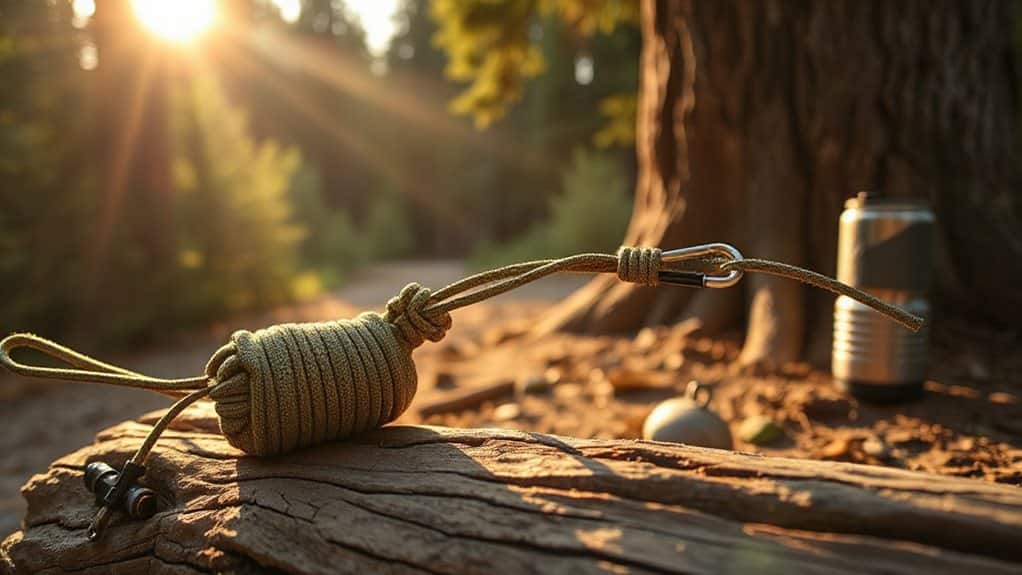
With 40‑50 ft of paracord in your pack you’ve got enough length to throw a line over a branch, tie a secure knot, and still have slack for a quick release, all while keeping the system light and easy to handle.
Use a slipped knot for fast, reliable cinching, or a bowline if you prefer easy untangling.
Pair the cord with a throw bag and a carabiner for smooth deployment and minimal snagging.
Always store scented items in a bear canister or similar resistant container to minimize wildlife encounters.
Tarp & Shelter Paracord Length: 25‑50 Ft of Rope
When you’re pitching a tarp, 25‑50 ft of paracord usually covers everything you need, from a simple single‑person ridgeline to a more spacious setup with multiple tie‑offs.
A 25‑ft hank serves as a basic ridge or utility line, while a 50‑ft piece adds margin for wider tree spacing and extra tie‑outs.
Carry a mix of short 5‑6 ft guys for corner control, cut longer strands into modular hanks, and use taut‑line hitches or prusiks to manage stretch, keeping weight low and flexibility high.
Also consider bringing tarred bank line or additional cordage for better knot holding and long‑term tension control with a trucker’s hitch.
Paracord vs. Other Ropes: When to Choose Nylon or Polypropylene

Choosing the right rope for a camping trip hinges on the environment and the task at hand, and understanding the differences between nylon paracord, polyester, and polypropylene helps you make an informed decision.
Use nylon when you need stretch, shock absorption, and easy knotting for general utility; pick polyester for low‑stretch, UV‑resistant lines that stay taut; opt for polypropylene if flotation, wet strength, and lightweight handling matter most.
Match rope type to conditions, then to strength and handling needs.
Exact Pre‑Cut Lengths for Quick‑Access Kits
You’ll find that cutting your rope into 15‑foot, 8‑foot, and 6‑foot pieces lets you grab the right length for tarp guy‑lines, tent corners, and backup anchors without measuring in the field.
Storing these segments in daisy‑chain bundles keeps them tangle‑free, while an overhand loop on one end makes each piece ready to use the moment you need it.
This quick‑cut length guide, combined with efficient storage solutions, cuts setup time and waste, so you can focus on the trail.
Quick‑Cut Length Guide
A quick‑cut length guide gives you exactly the pieces you need, when you need them, so you can grab a pre‑cut segment and set up a tarp, tie‑off a shelter, or rig a ridgeline without hunting through a tangled coil.
You’ll carry eight 3‑foot daisy‑chain loops for corners, four 6‑foot ties for medium spans, two 12‑foot ridgeline sections, and a 25‑30‑foot remainder for long reaches, all organized for instant freedom‑focused deployment.
Efficient Storage Solutions
After you’ve got the right pre‑cut pieces ready, the next step is storing them so you can grab the exact length you need without fumbling through a tangled coil.
Use rope bags or buckets with a clear pull end, label each piece, and keep short lengths in quick‑access pouches while longer lines sit in a tote.
This keeps your kit light, organized, and ready for any expedition.
Organizing Paracord on the Trail: Daisy Chains, Bags, Containers
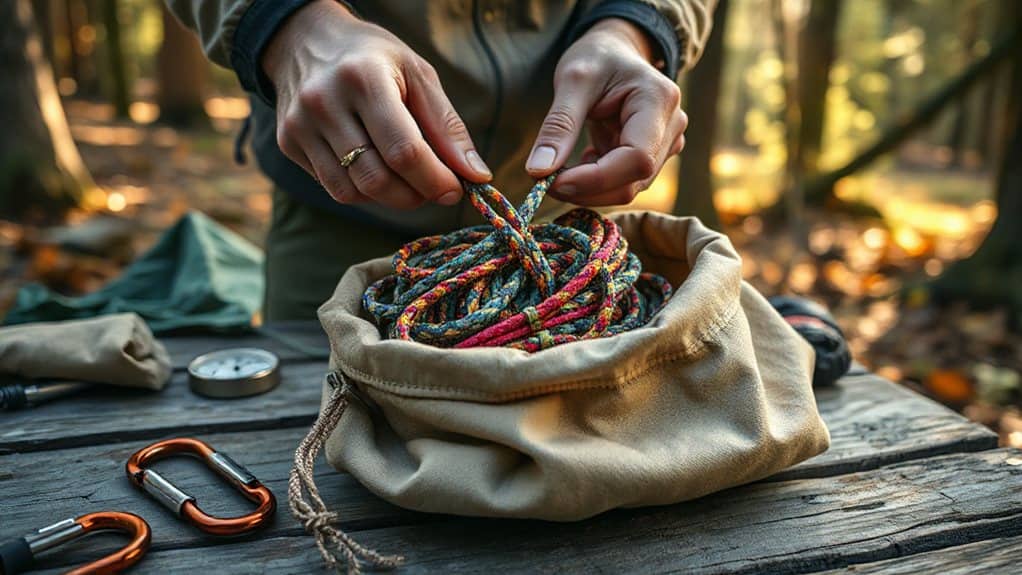
When you’re on the trail and need quick access to the right length of paracord, a daisy chain can be a game‑changer; by looping each bite of rope through the previous one, you turn a 50‑foot coil into a compact 10‑foot strand, and a double daisy chain squeezes the same length down to just over two feet, saving space and preventing the frustrating tangles that often happen with traditional coiling.
Pull from the secured end, cut only what you need, and reball the rest; the thicker bundle grips better, stays snag‑free, and fits neatly in a lightweight bag or container, keeping your pack lean and your freedom unlimited.
When to Take >100 Ft: Survival, Hammocks, and Emergency Fixes
If you’re heading into backcountry terrain where weather can shift quickly, wildlife is a concern, or gear failures are a real possibility, carrying more than 100 ft of rope becomes a practical safety net rather than a luxury.
You’ll span distant trees for a hammock‑tarp ridge, secure a 60‑ft bear‑bag hang with slack for knots, and improvise lashings or splints when a pole snaps, giving you freedom to adapt without hunting for extra cordage.
Common Rope Mistakes and On‑The‑Spot Fixes
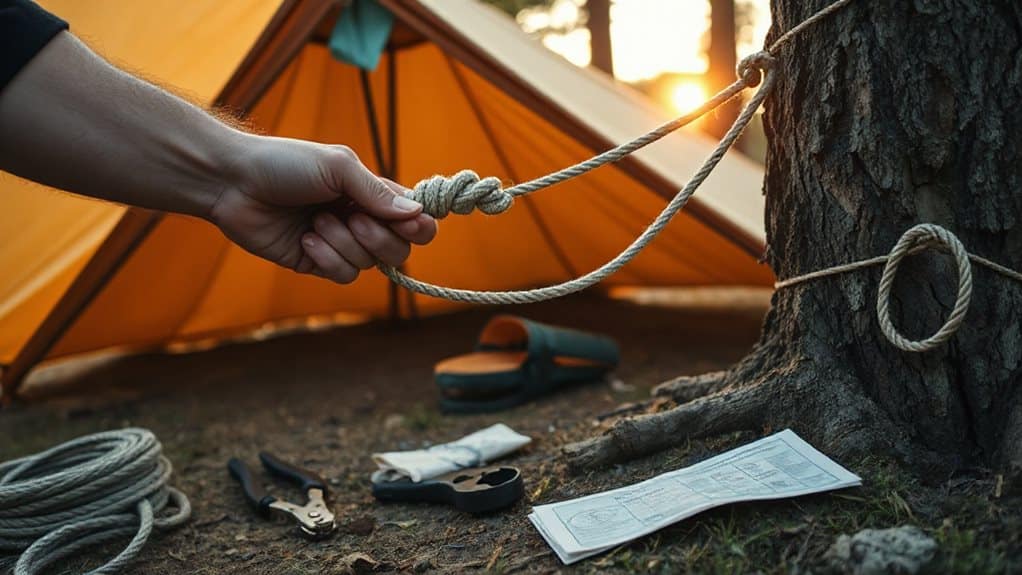
A rope that’s the wrong type, diameter, or length can quickly turn a simple campsite setup into a frustrating puzzle, and many campers find that the biggest setbacks come from avoid, knots, and tensioning.
Choose polypropylene for water, nylon for stretch, avoid sisal.
Match diameter to load, cut excess length, use reflective rope.
Tie bowlines, taut‑line hitches, clove hitches correctly, and dress double‑fisherman knots.
Adjust tension so lines aren’t slack or over‑tightened, aiming for a 45‑degree angle.
Inspect for frays, replace damaged sections, and re‑check anchors after wind shifts.
And Finally
You’ve seen how a 100‑ft roll covers most weekend needs, while 25‑30 ft works for minimal gear and 40‑50 ft handles bear‑hangs and shelters. Keep pre‑cut lengths handy for quick kits, and store extra rope in daisy‑chains or lightweight containers for emergencies. When you’re tackling long‑term treks, hammocks, or survival scenarios, bring more than 100 ft. By matching length to the specific task, you stay prepared without lugging unnecessary weight.


