
At high altitudes, your food cooks slower because lower atmospheric pressure causes water to boil at lower temperatures, reducing heat transfer during cooking. This means it takes longer for foods to reach safe and desired internal temperatures. The reduced boiling point also leads to moisture loss and affects baking outcomes. Adjusting cooking times, temperatures, and using proper equipment like pressure cookers can help. If you want to understand the technical reasons behind these changes, keep exploring these key factors.
TLDR
- Higher elevations lower atmospheric pressure, causing water to boil at lower temperatures.
- Reduced boiling point decreases heat transfer efficiency during cooking.
- Faster evaporation leads to moisture loss, slowing down cooking processes.
- Lower temperatures require longer cooking times to reach desired food safety and doneness.
- Adjustments like increasing oven temperature and covering foods help compensate for slower cooking.
Why Water Boils at Lower Temperatures at High Altitudes
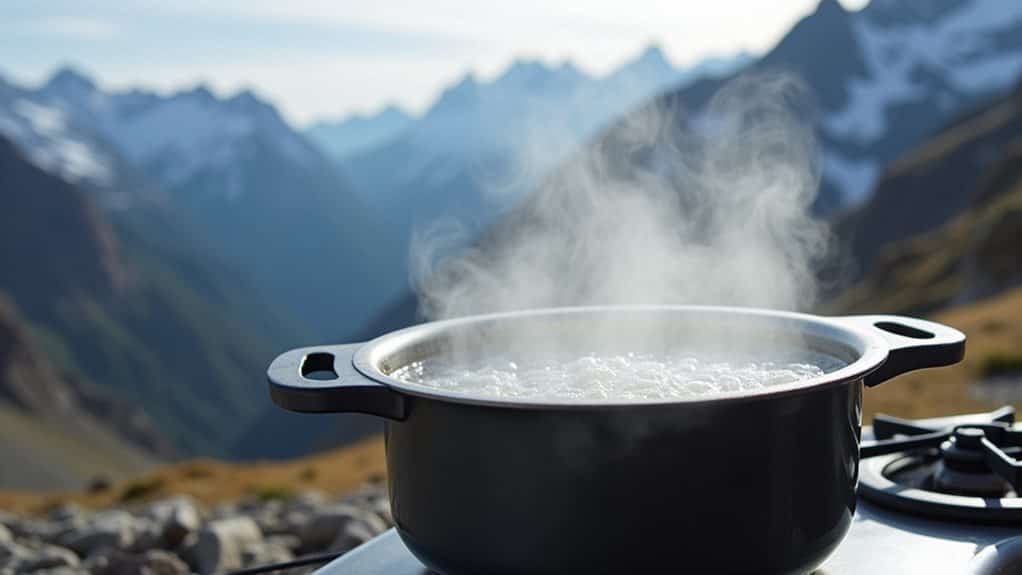
When you cook at high altitudes, you’ll notice that water boils at lower temperatures than it does at sea level.
As elevation increases, pressure decreases, causing the boiling point of water to drop. This means water boils at a lower temperature, around 203°F at 5,000 feet, making it less effective at transferring heat and slowing down your cooking process.
How Reduced Atmospheric Pressure Affects Cooking Efficiency
Reduced atmospheric pressure at high altitudes considerably impacts cooking efficiency by altering the way heat is transferred to food. With water boiling at lower temperatures, heat transfer slows, increasing cooking times. Evaporation occurs more quickly, reducing pressure cooker effectiveness. Additionally, the risk of internal damage to cookware increases if proper adjustments are not made, further complicating cooking processes. Understanding how atmospheric pressure influences the boiling point helps you adjust techniques for better high altitude cooking results.
Why You Need Longer Cooking Times for Food at High Altitudes
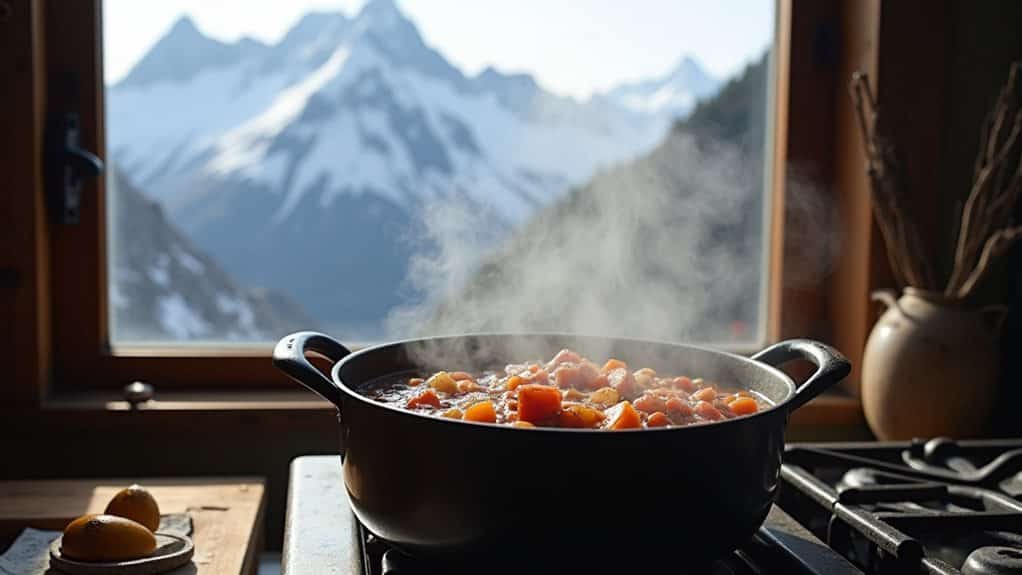
At high altitudes, water boils at lower temperatures, which means foods cooked by boiling or steaming take longer to reach the proper internal temperature. Additionally, the faster evaporation of moisture can cause foods to dry out more quickly, requiring adjustments in cooking time and moisture levels. Incorporating sustainable cookware made from eco-friendly materials can help maintain moisture and heat more effectively during high-altitude cooking. Understanding these factors helps guarantee your meals are thoroughly cooked and retain the right texture, even at higher elevations.
Lower Boiling Temperatures
As you cook at higher elevations, you’ll notice that foods prepared by boiling or simmering take longer to reach the desired tenderness.
The boiling point of water drops at high altitude due to lower atmospheric pressure, resulting in lower boiling temperatures.
This decreases heat transfer efficiency, requiring longer cooking time and altitude adjustments to compensate for reduced water evaporation and slower heat transfer.
Increased Evaporation Rates
Because the air at high altitudes is drier and less humid, moisture in your food tends to evaporate more quickly during cooking.
The increased evaporation rate causes rapid moisture loss, leading to dehydration of ingredients.
To balance this, you may need to add more liquids or extend cooking time, as liquids evaporate faster and reduce water vapor, affecting even cooking.
How Low Boiling Points Impact Baking and Moisture Loss
Lower boiling points at high altitudes markedly impact baking and moisture retention in your recipes. The lower boiling points cause increased evaporation, leading to moisture loss.
This moisture loss can result in dry baked goods and hinder gluten development. To counteract this, you may need to adjust your recipe’s liquids and baking temperature.
Additionally, covering foods during baking can help improve moisture retention.
Adjusting Cooking Times and Temperatures for Meat and Poultry
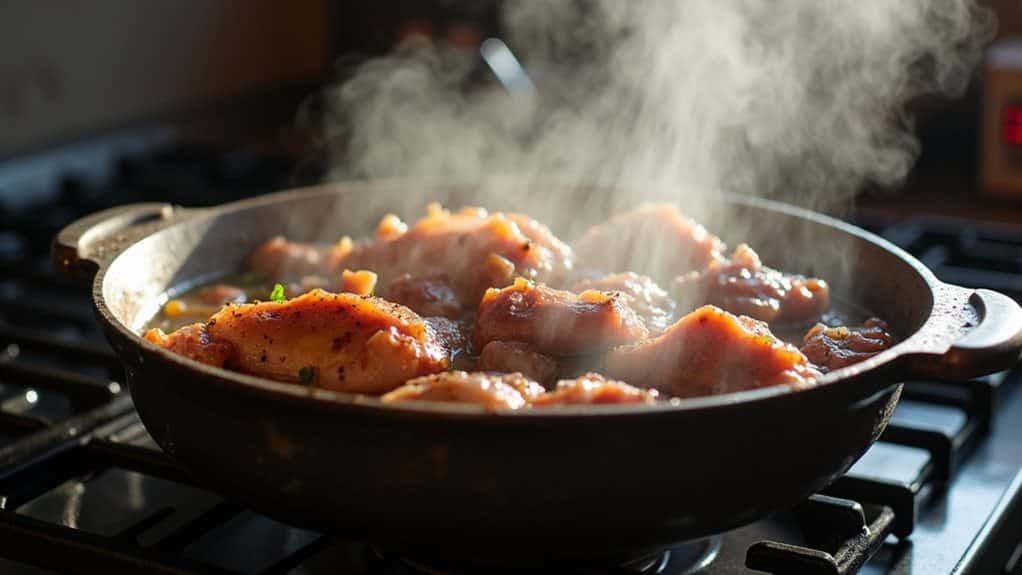
At high altitudes, you’ll need to cook meat and poultry longer than usual because lower boiling points slow heat transfer. Covering the meat and adding extra moisture can help prevent drying out, while adjusting oven temperatures guarantees thorough cooking. Using tools like a meat thermometer is crucial to verify safe internal temperatures, especially since cooking times and methods may need to change. Additionally, utilizing appropriate rigging techniques can improve heat distribution and cooking consistency, ensuring your meat reaches the desired doneness.
Longer Cooking Duration Needed
When cooking meat and poultry at high altitudes, you’ll need to adjust your timing because these foods take longer to reach safe internal temperatures.
The higher altitude causes a lower boiling point, meaning liquids evaporate faster and heat transfer is less efficient.
As a result, longer cooking times are necessary at high altitudes to guarantee food safety and thorough cooking.
Use Additional Moisture
Because moisture evaporates more quickly at high altitudes, you need to add additional moisture when cooking meat and poultry.
Covering during cooking helps retain moisture and combat evaporation, reducing moisture loss.
Extended cooking times are necessary, especially in low humidity environments, to guarantee proper moisture retention, safety, and achieving that higher boiling point for more effective, consistent doneness.
Adjust Oven Temperatures
Adjusting oven temperatures is a key step in successfully cooking meat and poultry at high altitudes. Increasing oven temperatures by 15-25°F helps counteract moisture loss and improves browning, but doesn’t substantially speed up cooking.
To guarantee safety, you must also extend cooking time and verify internal temperatures with a food thermometer, especially for safety temperatures like 165°F for poultry.
Practical Recipe Modifications for High-Altitude Baking
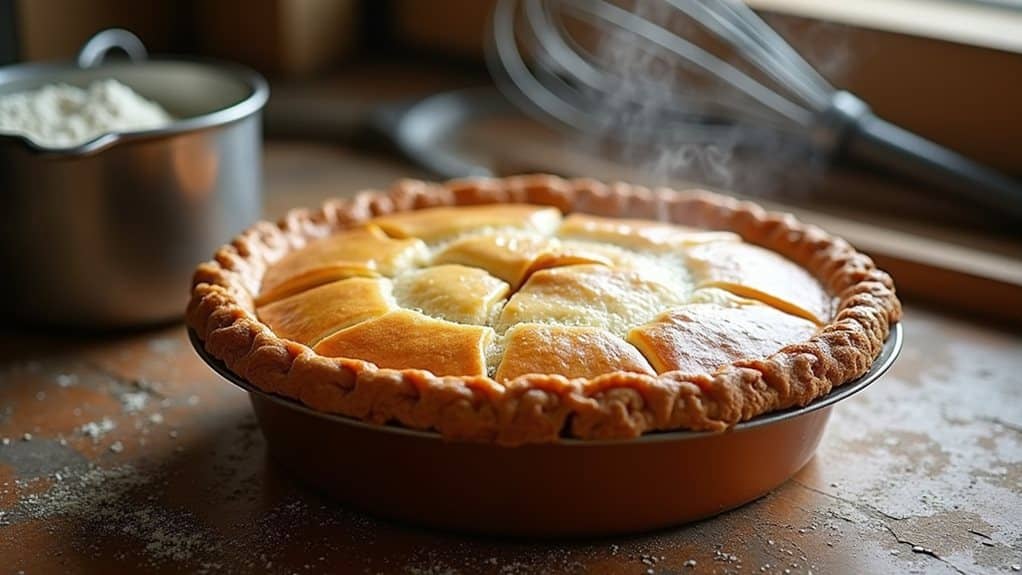
High-altitude baking requires some key modifications to make certain your recipes turn out well, as the lower air pressure affects how baked goods rise and set.
Adjust recipe modifications by increasing oven temperature slightly, reducing baking time, decreasing sugar, and adding more liquid.
Use more flour and tweak leavening agents cautiously to guarantee proper rising and structure. Additionally, incorporating battery powered fans can help maintain consistent oven temperatures in outdoor settings, ensuring even baking.
Using Proper Equipment: Pressure Cookers and Canners
Using the right pressure settings on your pressure cooker or canner is vital, especially at high altitudes where the atmospheric pressure is lower. You need to adjust the pressure based on your elevation to guarantee foods are cooked thoroughly and preserved safely. Proper weight placement and maintaining a pressure cooker seal are also crucial for consistent results. Additionally, maintaining a proper seal and tracking cooking times help prevent undercooking and assure consistent results.
Adjusting Pressure Settings
To guarantee safe and effective cooking at high altitudes, you need to adjust pressure settings on your pressure cooker or canner.
Altitude adjustments increase the boiling point by regulating steam pressure, typically adding 1 pound per 2,000 feet.
For high elevation pressure canning, use a 15-pound weight, following manufacturer or USDA guidelines for proper temperature regulation.
Ensuring Proper Seal
Making certain a proper seal on your pressure cooker or canner is fundamental for safe, effective cooking, especially at high altitudes. Check the sealing ring and valve regularly to prevent steam from escaping, which maintains the correct pressure.
Using equipment with adjustable weights or gauges guarantees accurate pressure regulation, helping you achieve safe temperatures for canning and cooking at various elevations.
Monitoring Cooking Duration
Monitoring the cooking duration when using pressure cookers and canners is crucial for achieving safe, properly cooked food at high altitude.
By carefully observing pressure adjustments, you can maintain the correct boiling point and temperature control.
Regular monitoring guarantees consistent cooking time, prevents undercooking, and assures food safety, even when higher pressure settings are necessary due to the lower boiling point.
The Importance of Thermometers for Safe Cooking and Baking
Using a food thermometer is an essential step in achieving safe and successful cooking and baking results. It guarantees you measure the internal temperature accurately, preventing overcooking or undercooking—especially important at high altitude.
Thermometers confirm safe cooking, helping you reheat leftovers properly and maintain food safety standards. This provides peace of mind and control in your culinary pursuits.
Tips for Successful Cooking and Baking at High Elevations
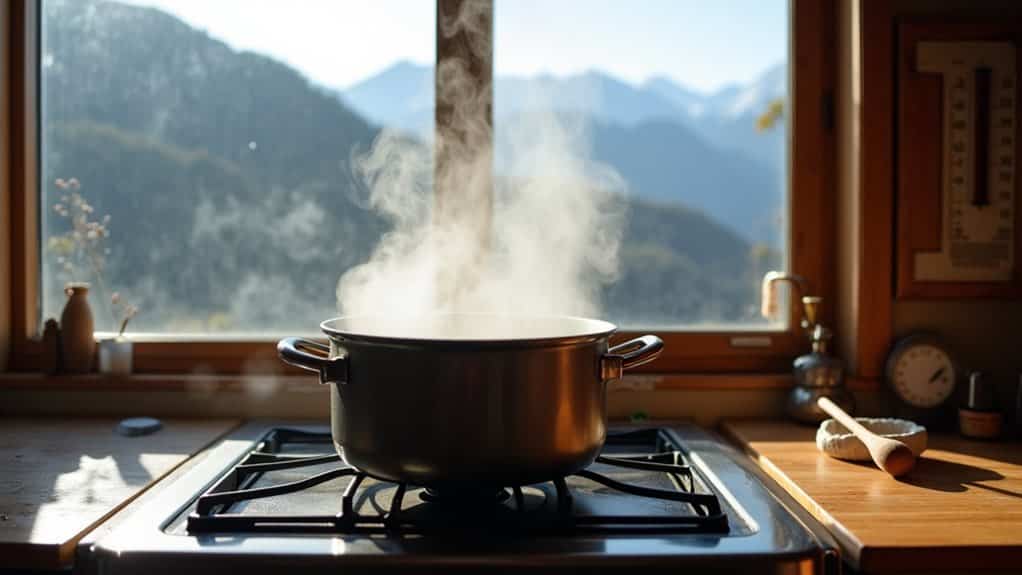
Cooking and baking at high elevations often require adjustments to your usual methods because of the lower air pressure, which affects how heat interacts with food.
To improve high altitude cooking, increase oven temperature slightly, extend baking times, and make recipe modifications like reducing sugar and adding liquids.
Using a pressure cooker can also raise the boiling point, speeding up cooking.
Quick Reference: High-Altitude Cooking Cheatsheet
At high altitudes, the lower atmospheric pressure causes the boiling point to decrease, affecting cooking time.
To guarantee food safety and proper doneness, extend cooking times or use a pressure cooker, which compensates for temperature adjustment.
Always modify recipes based on the altitude, considering the impact on boiling point and cooking efficiency for reliable results.
Final Note
Cooking at high altitudes requires adjustments to time, temperature, and equipment. Understanding how lower atmospheric pressure affects boiling points and moisture retention helps you modify recipes effectively. Using tools like pressure cookers and thermometers guarantees safety and accuracy. With proper planning and techniques, you can achieve consistent results despite the challenges posed by high elevations. Embracing these adjustments allows you to cook and bake successfully, preserving flavor, texture, and safety in your high-altitude kitchen.


