
If your propane freezes while camping, it can cause flow restrictions, appliance failures, and safety hazards like leaks or pressure drops. Cold temperatures increase the risk of frost buildup around tanks, regulators, and lines, leading to inconsistent operation or system shutdowns. Freezing can also cause gas leaks, raising the fire or explosion risk. To avoid this, proper insulation, keeping tanks full, and using heaters help maintain safe operation. Understanding these precautions will help you stay safe and efficient when camping in cold environments.
TLDR
- Propane freezing can block gas flow, causing appliances to sputter or shut down unexpectedly.
- Freezing may lead to pressure drops, increasing the risk of leaks or regulator failure.
- Ice buildup around tanks or lines can cause safety hazards like leaks or potential explosions.
- Appliance performance becomes unreliable, disrupting cooking, heating, or refrigeration during camping.
- Regular inspection and winter precautions are essential to prevent freezing and ensure safe operation.
How Can You Tell If Your Propane Is Freezing or Not Flowing?
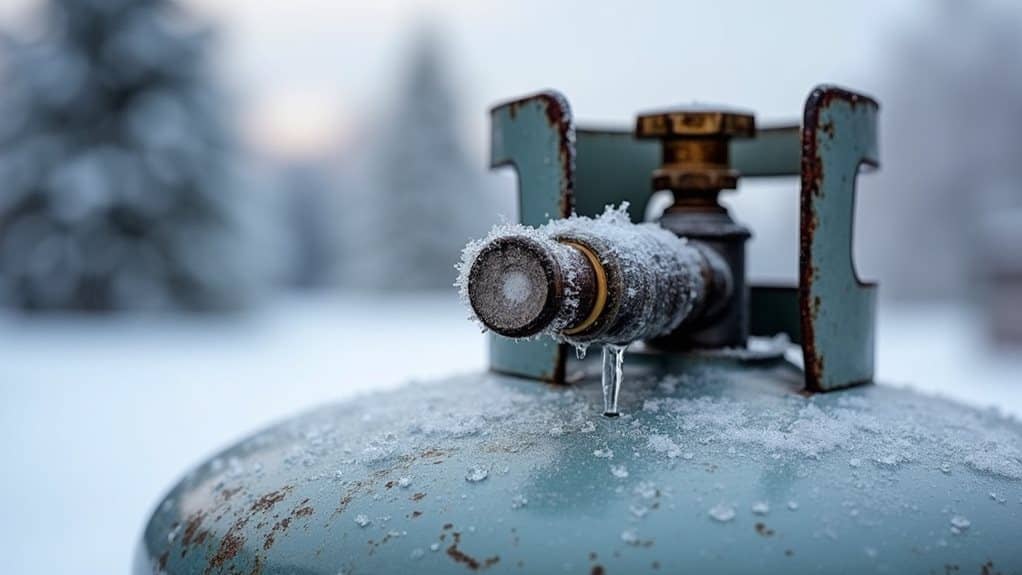
If your propane isn’t flowing properly or seems to be freezing, there are several signs to watch for that can help you identify the issue.
Frost or ice buildup around the regulator or tank, appliance sputtering, or flow issues during cold temperatures indicate potential regulator freezing.
You might also notice a gas odor, inconsistent gas pressure, or sounds like hissing, signaling frozen lines or flow problems.
What Are the Effects of Freezing on Your Camping Propane Appliances?
Freezing temperatures can deeply impact your camping propane appliances, often causing them to operate less reliably or even malfunction.
A propane freeze can lead to pressure issues, regulator freezing, and frost buildup, disrupting gas flow and vaporization.
Cold weather effects may trigger appliance shutdowns, increase the risk of propane system damage, and hinder your ability to cook or stay warm.
Is It Dangerous If My Propane System Freezes?
When your propane system freezes, it can pose serious safety risks that shouldn’t be overlooked. A freeze inside the regulator or propane tanks can cause pressure drops or leaks, increasing safety hazards like appliance failure or gas leaks.
These issues may lead to dangerous situations, including fire or explosion risks, emphasizing the importance of regular inspections and winter precautions to keep your system safe.
How Can You Prevent Propane Freezing When Camping in Cold Weather?
Preventing propane from freezing during cold-weather camping involves taking proactive steps to maintain proper pressure and keep the tanks warm.
To prevent freezing, guarantee propane tanks are adequately filled, insulate or cover tanks, and use propane warmers.
Position tanks in sheltered areas and consider frost-resistant regulators or tank heaters to avoid regulator freeze-up during extreme cold temperatures.
Troubleshooting Frozen or Blocked Propane Lines and Regulators
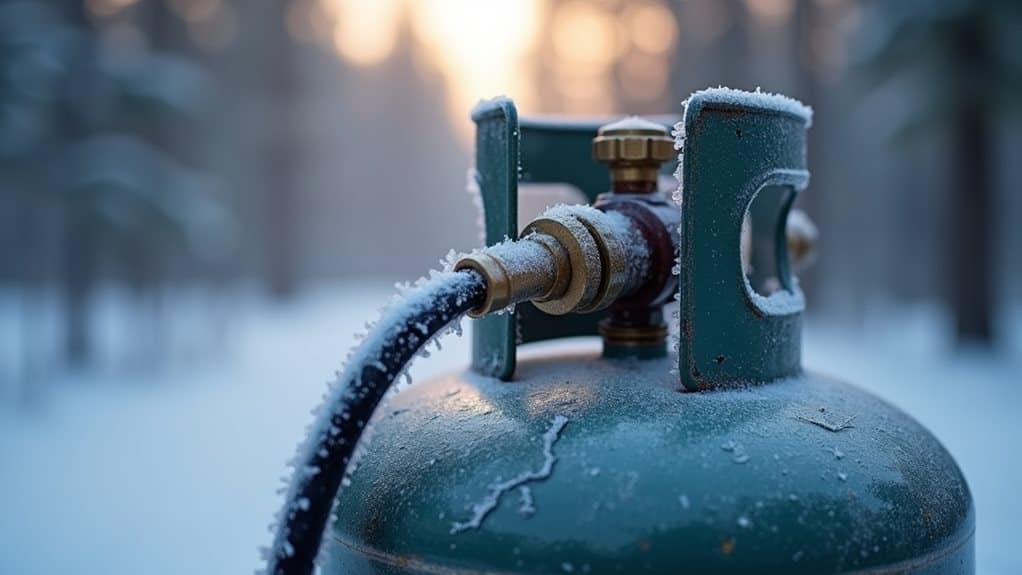
If you notice your appliances lose power or won’t operate during cold weather, it’s likely due to frozen propane lines or regulator freezing. Ice buildup causes gas flow blockage, leading to propane vaporization issues and pressure loss.
To troubleshoot, check for frost on fittings, insulate lines, and avoid overfilling tanks.
Prevent line freeze by maintaining proper insulation and monitoring propane pressure.
Final Note
Understanding how propane behaves in cold weather helps you stay safe and prepared during camping trips. Freezing can block flow and damage your appliances, but with proper precautions, you can prevent these issues. Regularly inspect your system, keep tanks warm, and use appropriate regulators to avoid freezing. If you encounter problems, troubleshoot carefully to identify and resolve blockages. Staying informed guarantees you enjoy your camping experience safely, even in chilly conditions.


