
Even a half‑inch of rain can turn a low‑lying campsite into a flash‑flood hazard, but the real danger depends on terrain, drainage, and storm intensity. Light rain may swell dry creek beds into deadly torrents, while heavy rain can trigger debris flows and rapid runoff, especially in valleys, gullies, or clay soils that hold water. Aim for higher ground, avoid depressions, and stay at least 200 ft from streams; if you notice pooling water, rumbling sounds, or rising runoff, move to higher ground immediately. Check forecasts for 0.5 inches or more, and use radar alerts to stay ahead of the storm—then you’ll learn the exact thresholds and gear tips you need.
TLDR
- Light rain (≈0.1 in) can cause puddles; avoid low‑lying spots where water pools.
- When rain reaches 0.25 in, low‑ground risk rises—choose higher, well‑drained sites.
- Forecasts of 0.5 in or more for the day should trigger final safety checks and gear preparation.
- Heavy rain of 0.5 in+ can produce flash‑flood hazards; evacuate immediately if water starts moving.
- Avoid camping within 200 ft of streams or depressions, especially when rain exceeds 0.5 in and ground is saturated.
Why a Few Inches of Rain Aren’t the Whole Story for Camping Safety
Even if the forecast calls for just a few inches of rain, that number alone doesn’t tell the whole safety story for your campsite.
You must consider intensity, duration, and upstream conditions, because light rain can swell dry creek beds into deadly torrents, while heavy rain may trigger flash floods or debris flows.
Storm timing, lightning, wind, and cold amplify risk, so reliable gear, staked shelters, and waterproof clothing become essential for staying safe and free. Avoid low‑lying sites when setting up camp. Make sure to pick sites on higher ground with good drainage to reduce flood and water‑pooling hazards.
How Terrain and Drainage Influence Rain‑Safety at Your Campsite
You’ll want to choose higher ground, because it naturally sheds water and keeps runoff from pooling around your tent.
Low‑lying spots and natural drainage basins collect rain, so you should avoid them even if the sky looks clear.
Arrive early and be prepared to choose a different site, since walk-up campsites are first-come, first-served and popular spots can fill quickly.
Elevated Ground Reduces Flooding
When you set up camp on a rise, even a few feet above the surrounding terrain, you’re already giving water a path to flow away, which dramatically cuts the chance of your tent being submerged.
Gentle slopes shed runoff quickly, ridges and rock outcrops channel water, and sandy or gravelly soils drain fast.
Aim for 2‑5 % grade, orient tents uphill, and use natural berms to keep dry, secure, and free.
Avoid Low‑lying Drainage Areas
If you set up camp in a low‑lying drainage area, rain can quickly turn the ground into a soggy mess, increasing the risk of flooding and making your tent unstable.
Spot standing water, damp soil, or depressions; avoid valleys, gullies, and forest pits that collect water.
Choose sandy or rocky sites, check topographic maps for ridges or gentle slopes, and dig shallow trenches or place a groundsheet to redirect runoff, ensuring dry, stable footing for your journey.
Spotting Flash‑Flood Risks for Rain‑Safety Camping Decisions
Even a light drizzle can turn a seemingly safe campsite into a flash‑flood hazard when the terrain funnels water quickly, so you need to read the terrain as closely as you read the forecast.
Watch low‑lying washes, dry creek beds, and gullies; look for recent debris lines, scoured soil, or vegetation bent downstream.
Notice rising water, muddy runoff, or rumbling sounds, and if water starts moving, head for higher ground immediately.
Also subscribe to real‑time lightning and storm alerts like TALOS to get advance warnings that help you evacuate before flooding begins.
How Wind, Thunderstorms, and Lightning Amplify Rain‑Safety Hazards
When a thunderstorm rolls in, lightning can strike your tent’s metal poles and cause a sudden collapse, so you must avoid setting up in exposed spots that attract strikes.
Strong winds will tear fabric, snap poles, and turn debris into flying hazards, making any open‑sided shelter unsafe once you hear thunder.
Modern rescue devices like avalanche beacons operate on 457 kHz and can be affected by electronic interference, so keep unrelated electronics well away from safety equipment.
Lightning‑Driven Tent Collapse
Because thunderstorms bring sudden gust fronts that can lift a tent like a parachute, the combination of wind, rain, and lightning turns a simple campsite into a high‑risk zone.
You’ll feel the canopy surge, poles snap, and debris fling, like the Tulsa and Lancaster tragedies showed.
Metallic poles attract strikes, side‑flashes travel, and darkness slows escape.
Evacuate when winds hit 38 mph, seek solid shelter, and wait 30 minutes after the last clap.
Lightning‑Risked Exposed Campsites
A campsite perched on an exposed ridge or open meadow becomes a triple threat when wind, rain, and lightning converge, turning a simple drizzle into a hazardous electrical environment.
You should avoid high points, isolated trees, and metal poles; seek low ground, dense groves, or a sturdy shelter.
When you hear thunder, move at least 50 m away, wait 30 minutes after the last strike, and never trust a tent alone for protection.
Exact Rain‑Amount Thresholds That Experienced Campers Use
If you’re planning a camping trip, knowing the exact rain‑amount thresholds that seasoned campers rely on can mean the difference between a dry night and a soggy disaster.
You’ll avoid sites that turn into puddles at 0.10 inches, steer clear of low spots once 0.25 inches accumulates, and cancel if half‑inch rain falls all day.
Stream banks become unsafe at six inches of moving water, and three‑inch forecasts demand immediate departure.
Add elevation to your site selection to prevent water accumulation around the tent area and reduce flooding risk by choosing higher ground with good drainage and elevation.
Gear Choices That Boost Rain‑Safety for Campers
When rain starts to fall, the gear you choose can mean the difference between staying warm and dry or getting soaked and uncomfortable.
Pack a hardshell jacket with a stiff brim, quick‑dry baselayers, and synthetic insulation that bounces back when wet.
Wear waterproof boots, keep spare shoes in a rain‑proof rack, and use a rainfly or tarp canopy over your tent.
Store electronics in waterproof bags and use IPX4‑rated headlamps for reliable lighting.
How to Set Up a Tent to Withstand Heavy Rain and Gusts
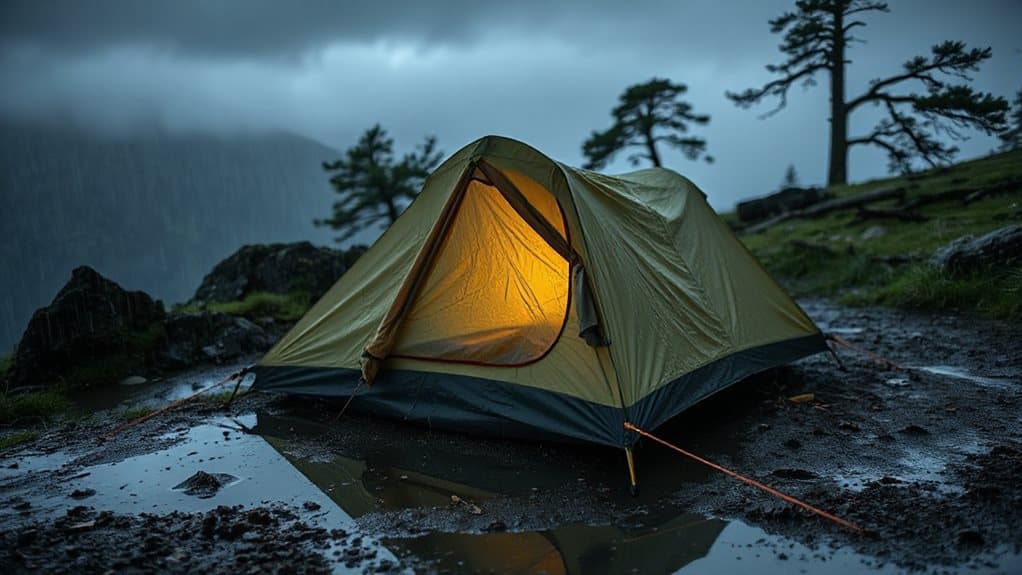
Choosing the right spot and orienting your tent are the first steps to beating heavy rain and gusts.
Pick flat ground, face the smallest end toward wind, keep the door sheltered.
Stake corners at 45°, start windward, add guy lines, tension evenly.
Use sturdy poles, keep the fly taut, slope fabric, and protect the inner tent with a footprint.
This setup maximizes stability and drainage.
Real‑Time Weather Tools for Rain‑Safety Decisions on the Trail
How can you stay safe when rain threatens your hike? Use radar‑based apps like Rain Viewer, updating every ten minutes, to spot fast‑moving cells and gaps.
Enable WeatherSentry alerts for lightning and severe storms, set GPS‑specific notifications, and check hourly forecasts from MyRadar or the Weather Channel.
Combine real‑time precipitation gauges with radar composites to gauge intensity, then decide whether to press on or seek shelter.
When to Cancel, Relocate, or Evacuate Because of Rain?
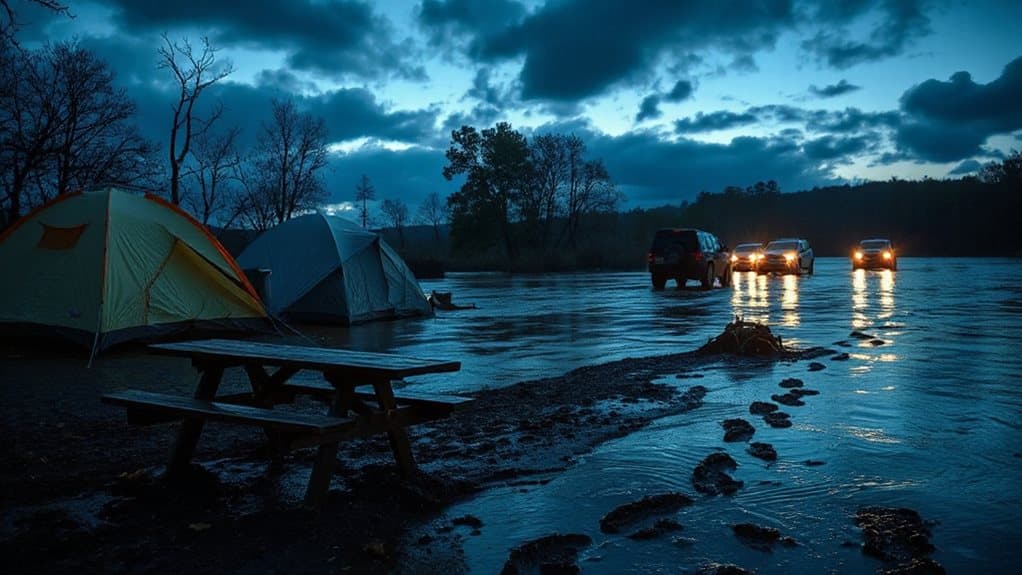
You should first scan the latest forecast for any half‑inch‑plus rain or flash‑flood warnings, then compare those numbers to the terrain’s drainage and exposure.
If the site sits in a low‑lying canyon, near a stream, or on clay soil that holds water, even moderate rain can turn hazardous, so you’ll need to evaluate relocating.
When lightning, gale‑force winds, or severe thunderstorm alerts appear, prioritize evacuation over staying put.
Assess Weather Forecasts
When you’re planning a camping trip, the first step is to read the forecast beyond a simple “chance of rain” percentage and look at timing, intensity, and storm type.
Check radar for prolonged periods, heavy inches, and thunderstorm outlooks; note flood watches and flash‑flood warnings.
Prioritize storm duration over amount, and watch for lightning or wind alerts that could force relocation or evacuation.
Check Site Vulnerability
After you’ve parsed the forecast, the next step is to examine the campsite itself for any signs that rain could turn a pleasant night into a hazardous situation.
Check for low‑lying spots, poor drainage, or clay soil that holds water; avoid depressions, valley bottoms, and flood‑prone streams.
Spot visible runoff paths, saturated ground, or dead limbs.
If water pools, lightning threatens, or wind picks up, relocate or evacuate immediately.
Pre‑Trip Decision Checklist: Final Rain‑Safety Check Before You Head Out
If the forecast shows 0.5 inches of rain or more for the day ahead, double‑check every item on your rain‑safety list before you head out.
Verify tent rating meets at least 1,500 mm, set rainfly and tarp, pack waterproof bags and fire starters, choose raised ground with drainage trenches, stay 200 ft from water, note high‑water marks, avoid dead branches, keep dry clothing and socks ready, and monitor alerts for floods or storms.
And Finally
Remember that rain isn’t dangerous on its own—terrain, drainage, and weather patterns determine the risk. Check forecasts, watch for flash‑flood warnings, and assess your site’s slope and ground soak‑away. Secure your tent with proper guylines and a rainfly, and have a plan to relocate or evacuate if conditions worsen. By staying informed and prepared, you’ll keep your campsite safe and enjoy the outdoors, rain or shine.


