
You’ll find that most freshwater fish—goldfish, tetras, and similar species—last only ten minutes out of water, and stress can cut that to under a minute, while bettas stretch to about an hour thanks to their labyrinth organ. Larger air‑breathing types like snakeheads or walking catfish can survive hours to days if their gills stay moist and the air is cool and humid. Saltwater fish follow the same rules; keeping gills wet and temperature low is key. If you keep the fish damp, support it gently, and limit exposure, you’ll extend its window dramatically, and the next sections will show you exactly how.
TLDR
- Survival hinges on keeping gills moist; dry air collapses filaments and stops oxygen exchange within minutes.
- Small freshwater species (goldfish, tetras) typically survive 5‑15 minutes; larger, air‑breathing species (snakeheads, walking catfish) can last hours to days.
- Cooler, humid environments slow dehydration and metabolic demand, extending survival by a few minutes to tens of minutes.
- Immediate handling on wet, soft surfaces and minimizing air exposure dramatically improve post‑transfer recovery.
- Exceptional species (killifish embryos, lungfish, mudskippers) possess specialized adaptations that allow weeks of survival out of water under specific conditions.
Freshwater Fish Out‑of‑Water Survival Times
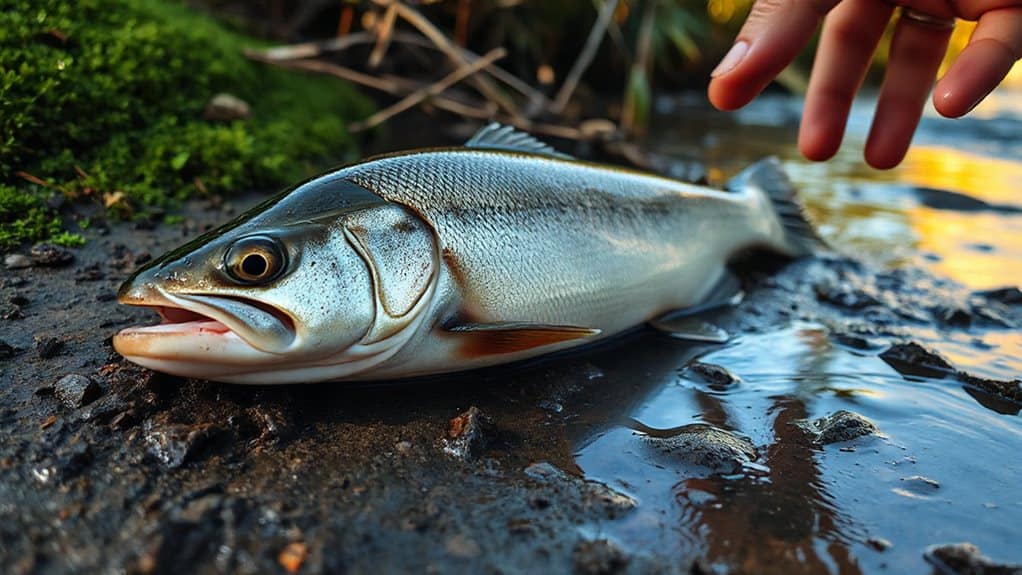
Most common freshwater aquarium fish can survive only a few minutes out of water—goldfish last about ten minutes, though stress can cut that to under a minute, betta fish manage roughly an hour thanks to their labyrinth organ, and tetras survive roughly ten minutes before suffocation sets in.
Larger species like snakeheads or walking catfish push endurance to days or hours, while temperature, humidity, and moisture on gills dramatically affect survival.
Keep them moist, limit exposure, and return them to water swiftly.
Because gill wetness is essential for oxygen exchange, keeping the gills moist can extend survival time.
Saltwater Fish Out‑of‑Water Survival Compared to Freshwater
You’ll notice that keeping a saltwater fish’s gills moist is the single most critical factor for buying any extra minutes out of water, because dry air collapses the gill filaments and stops oxygen exchange.
Cooler temperatures also help, slowing the rate of oxygen loss and reducing stress, while heat speeds up mortality dramatically.
Compared with most freshwater species, the difference is only a few minutes, so the same rules—wet gills and cool conditions—apply to both groups.
Regulations about how equipment is carried and transported, such as rules requiring that certain weapons be cased during transport, vary by state and can affect how anglers transport gear to and from fishing sites.
Water Gill Moisture Matters
In the moment a fish is lifted out of its watery home, its gills begin to dry, and that moisture loss is what determines how long it can keep breathing.
You’ll notice that even saltwater species, which face hypertonic dehydration, need their gills and skin wet to survive a few minutes, while freshwater fish suffocate faster without that moisture.
Keep them damp, use wet hands or nets, and return them to water promptly to maximize chances.
Temperature Accelerates Mortality
When a fish’s gills dry, the temperature of the surrounding air becomes a decisive factor in how long it can stay alive out of water.
Warm air spikes metabolism, raising oxygen demand and stress, so saltwater species—especially tropical reef fish—die faster than freshwater ones.
Cool, shaded conditions slow metabolism, extending survival, but extreme cold can cause shock.
Handle quickly, keep temps low, and you’ll preserve life longer.
How Gill Moisture, Temperature, and Humidity Affect Survival
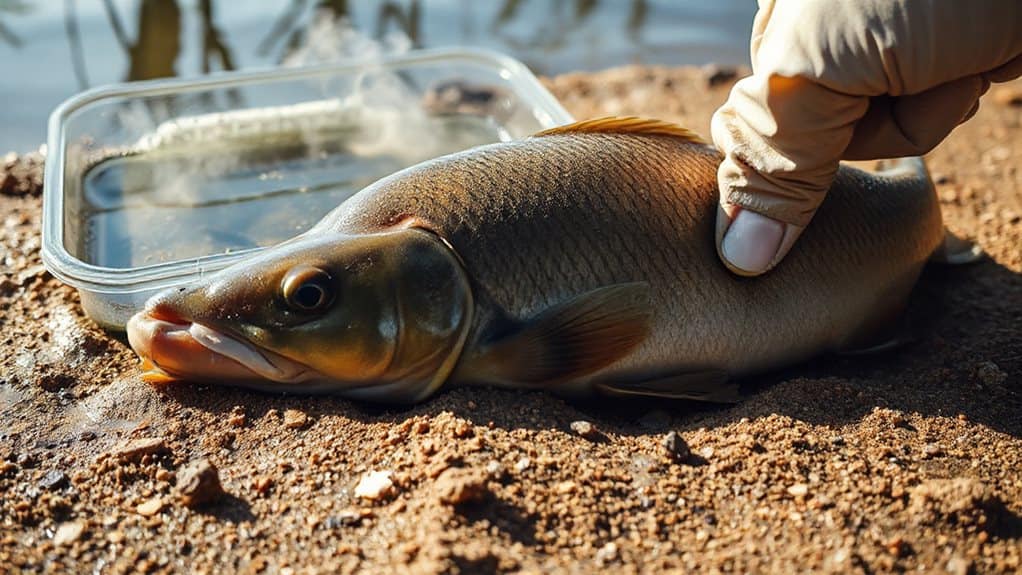
If you’ve ever wondered why a fish dies quickly out of water, the answer lies in three intertwined factors: gill moisture, temperature, and humidity.
Moist gills keep a thin water film for oxygen diffusion, but warm air evaporates it fast, raising metabolic demand and dehydration.
High humidity slows that, preserving exchange, while cool, humid conditions extend survival, though gill collapse still limits respiration.
Ground contact also accelerates heat loss and dehydration risk for stranded fish, especially in exposed conditions, so always consider insulation and dryness when assessing survival.
Handling Practices That Extend Out‑of‑Water Survival
You should keep the fish wet and use soft, damp surfaces whenever you handle it, because a moist slime layer protects against disease and stress.
By minimizing transfer time—having your net, pliers, and release area ready—you reduce air exposure and give the gills a chance to resume oxygen exchange quickly.
These simple steps, combined with gentle support, notably enhance the fish’s chance of surviving after being taken out of the water.
Avoid prolonged handling and consider using moisture-wicking socks to reduce friction and keep skin (and gear) dry during extended outings.
Maintain Keep Fish Wet
Even a brief exposure of 10–20 seconds can stress a fish, so keeping it wet throughout handling is essential for survival.
Keep the fish in water whenever you can—support it while you remove the hook, use a gentle, flowing hold, and avoid lifting it for photos.
Wet your hands and tools, protect the slime layer, and limit fight time; these steps preserve oxygen intake and reduce stress.
Use Soft, Damp Surfaces
A soft, damp surface—like a piece of wet cloth, a patch of moss, or fresh aquatic plants—provides an ideal holding area that protects a fish’s delicate skin and slime coat while you work.
The moisture creates a micro‑climate that slows evaporation, keeps gills cool, and supplies dissolved oxygen, so scales stay intact, metabolism stays low, and survival time extends noticeably for goldfish, bettas, catfish, and other species.
Minimize Transfer Time
When you’re ready to release a fish, cutting the transfer time to the absolute minimum can make the difference between a quick recovery and a fatal outcome. Keep the fish horizontal, support it gently, and lower it with a rubber‑mesh net or your hands wet.
Use long‑nosed pliers or barbless hooks to dehook in water, and avoid any extra handling or photos.
This swift, low‑stress approach maximizes oxygen flow and reduces mortality.
Extraordinary Survivors: Killifish, Lungfish, Mudskippers, Snakeheads
If you think fish need water to survive, the killifish, lungfish, mudskippers, and snakeheads will surprise you.
Killifish embryos endure months in dry mud, sealing themselves after a week, while adults perform tail‑flips to hunt on land.
Lungfish gulp air, forming lung‑filled cocoons for weeks.
Mudskippers breathe through skin, sprinting across mud flats.
Snakeheads gulp atmospheric oxygen, slithering onto land to chase prey, all showcasing extraordinary terrestrial resilience.
Predicting Survival Duration by Species and Conditions
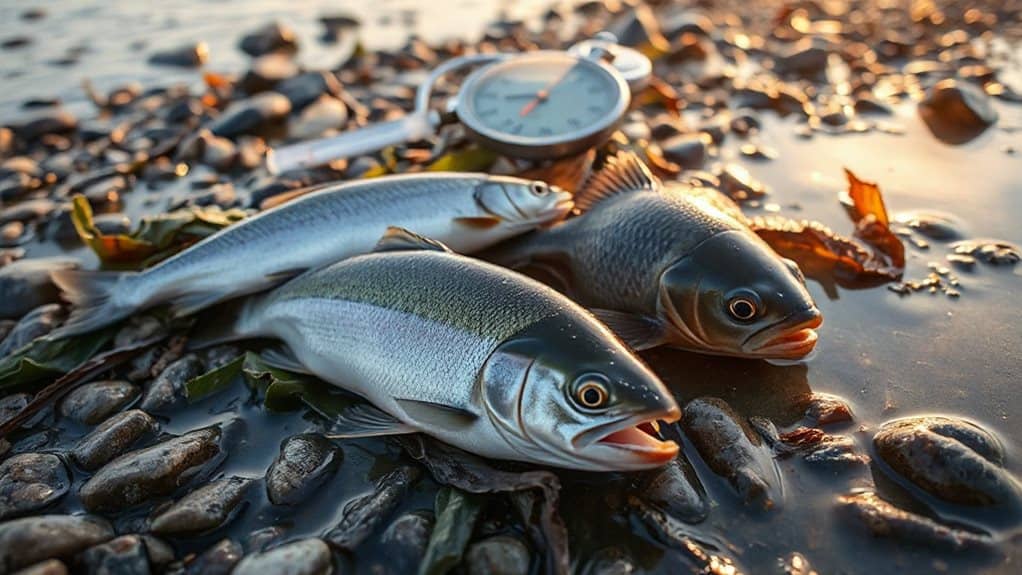
Because moisture is the single biggest factor, you can predict how long a fish will survive out of water by looking at both its species‑specific adaptations and the surrounding conditions.
Cartilaginous fish die in minutes, while air‑breathing catfish, climbing perch, and eels last hours if damp.
Humid shelters let snakeheads, walking catfish, and mangrove killifish persist days or weeks, skin respiration and labyrinth organs extending endurance dramatically.
Heavy gear like 50–65 lb braid and a long, heavy‑action rod are crucial when retrieving bulky topwater lures from thick cover to land large, exhausted fish after extended struggles with frogs and mats, especially when fishing dense vegetation.
Quick Tips to Maximize Out‑of‑Water Survival During Capture
Moisture determines how long a fish can stay alive out of water, so the moment you hook a catch you should focus on keeping it wet and minimizing exposure.
Keep it in water while unhooking, wet your hands, and use barbless hooks and rubber nets.
Prepare pliers and release tools ahead, shorten drag, and land quickly.
Hold fish facing current, let it recover, then release.
Using a sharp filleting knife and keeping fish on ice or in cold water helps preserve quality if you need to keep the catch for later, so consider these cold storage steps when immediate release isn’t possible.
And Finally
Remember, the longer you keep a fish moist, cool, and shaded, the more time you buy it before oxygen loss becomes fatal. Freshwater species typically survive a few minutes to an hour, while some saltwater and specialized fish can last several hours under ideal conditions. By minimizing handling stress, using damp towels, and avoiding direct sunlight, you maximize survival chances. Use these practical tips to make informed decisions during capture and transport.


