
A spinnerbait combines rotating metal blades with a skirted jig head to create flash and vibration that trigger bass strikes, making it essential for fishing in murky water and heavy cover where other lures struggle. The blades produce visual attraction like baitfish scales while displacing water to send vibration pulses that bass detect through their lateral line. You’ll want Colorado blades for stained water, Willow Leaf blades for clear conditions, and Indiana blades for balanced performance. This guide examines prime techniques and scenarios to maximize your spinnerbait success.
TLDR
- A spinnerbait features rotating metal blades on a wire frame with a weighted jig head and skirt that mimics baitfish.
- Blade rotation creates visual flash and water vibration that attracts bass from distance, even in murky conditions.
- Different blade types suit specific conditions: Willow for clear water, Colorado for muddy water, Indiana for balanced performance.
- Spinnerbaits excel around heavy cover, in stained water, and during fall when baitfish schools move shallow.
- Varying retrieve speed with pauses triggers reaction bites while fluorocarbon line and graphite rods maximize effectiveness.
Understanding the Anatomy of a Spinnerbait
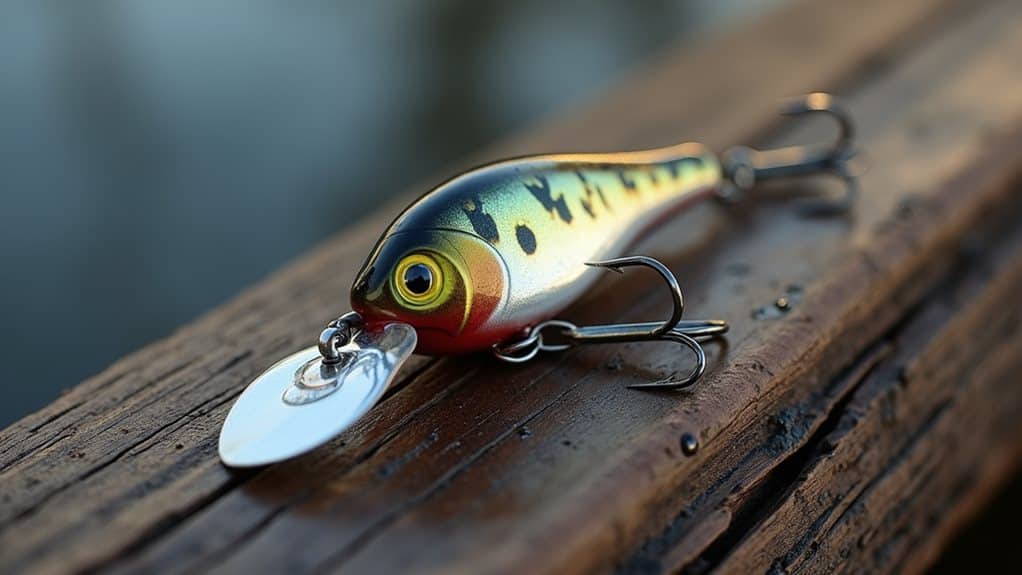
Before you can become proficient at spinnerbait fishing, you’ll need to understand how each component works together to create one of bass fishing’s most versatile lures.
The main parts include rotating metal blades that produce flash and vibration, a wire frame with swivels, a weighted jig head with an integrated hook, and a rubber or silicone skirt that mimics baitfish movement. The blades come in common shapes like Colorado, Willowleaf, Indiana, and Oklahoma, each affecting the lure’s lift and retrieval speed differently. Modern anglers often pair spinnerbaits with GPS navigation to return to productive spots.
How Flash and Vibration Trigger Strikes
When a spinnerbait’s blade begins rotating through the water, it creates two powerful strike triggers that work in tandem to attract bass: flash and vibration.
The flash mimics baitfish scales reflecting light, drawing visual attention from a distance. Meanwhile, blade vibrations displace water and send pulses bass detect through their lateral line system, especially in murky conditions where visibility is limited. Anglers often pair spinnerbaits with seasonal tactics to match retrieval speed and presentation to water temperature and bass behavior.
Different blade types produce distinct vibration patterns, with hard-thumping Colorado blades creating stronger pulses than streamlined willow blades.
Choosing the Right Blade Type for Your Fishing Conditions
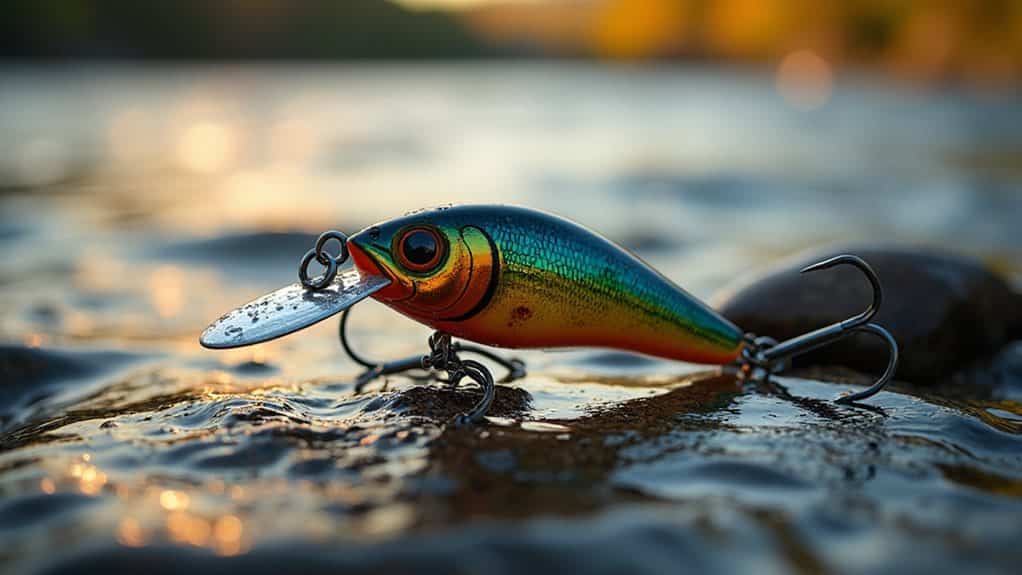
Understanding flash and vibration is only part of the equation—you’ll need to match your spinnerbait blade to the specific conditions you’re fishing.
In clear water, Willow Leaf blades deliver maximum flash for visual attraction. Stained or muddy water calls for Colorado blades, generating strong vibrations fish can feel. Indiana blades offer versatility, providing balanced flash and vibration when conditions are moderate or uncertain. When spooling your reel, maintaining consistent tension and proper line lay helps ensure your spinnerbait presentation runs true and avoids line twist.
Where and When Spinnerbaits Excel
Spinnerbaits shine in situations where other lures struggle, making them one of the most versatile presentations in your tackle box. They excel in murky water where vibration attracts bass, around heavy cover like docks and brush, and during fall shifts when baitfish schools move shallow.
You’ll find success burning them near the surface in windy conditions or slow-rolling them along deep structure, proving effective across diverse fishing scenarios. Many anglers pair spinnerbaits with a graphite rod for increased sensitivity and casting distance.
Essential Tips for Maximizing Your Success
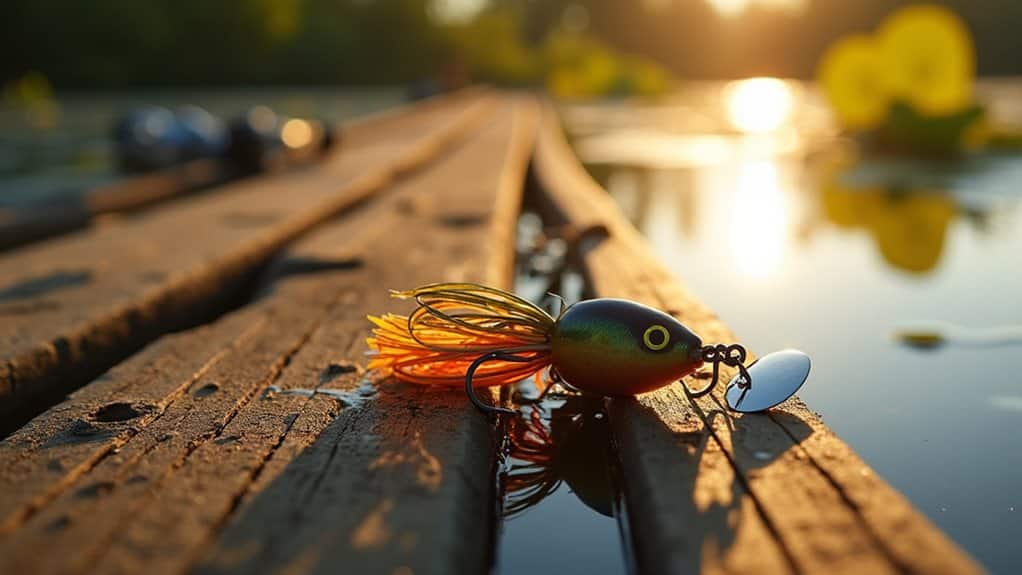
Becoming proficient at spinnerbait fishing requires attention to several key details that separate occasional success from consistent catches.
You’ll want to vary your retrieve speed throughout each cast, incorporating pauses and twitches to trigger reaction bites. Match your blade selection to water clarity—Colorado blades for murky conditions, willow blades for clear water. Use 17-pound fluorocarbon line with a medium-heavy rod for ideal control and sensitivity.
Final Note
Now you understand why spinnerbaits deserve a spot in your tackle box. They’re versatile lures that produce strikes when other baits fail, thanks to their unique combination of flash and vibration. You’ve learned about blade configurations, best fishing conditions, and proven techniques to increase your success rate. Start experimenting with different retrieval speeds and depths, and you’ll quickly find out why experienced anglers rely on spinnerbaits throughout the season.


