
In clear water, you’ll want to focus on natural color patterns that match local forage fish and baitfish. Opt for watermelon, green pumpkin, or pearl-colored soft plastics, as these blend seamlessly with the environment. During bright days, choose lighter shades like white or silver, while darker lures work better in cloudy conditions. Translucent baits offer excellent stealth presentation, and matching your lure to seasonal patterns will enhance your success. There’s much more to mastering clear-water fishing techniques.
TLDR
- Natural colors like green pumpkin, watermelon, and pearl work best in clear water by mimicking local forage species.
- Translucent plastic baits provide optimal stealth and reduce fish spooking in clear conditions.
- Match lure colors to light conditions: use lighter colors on sunny days and darker colors during cloudy weather.
- Brighter variations of natural tones become more effective as water depth increases.
- Color patterns that imitate local baitfish, such as bluegill and shad patterns, increase strike rates in clear water.
Understanding Clear Water Fishing Challenges
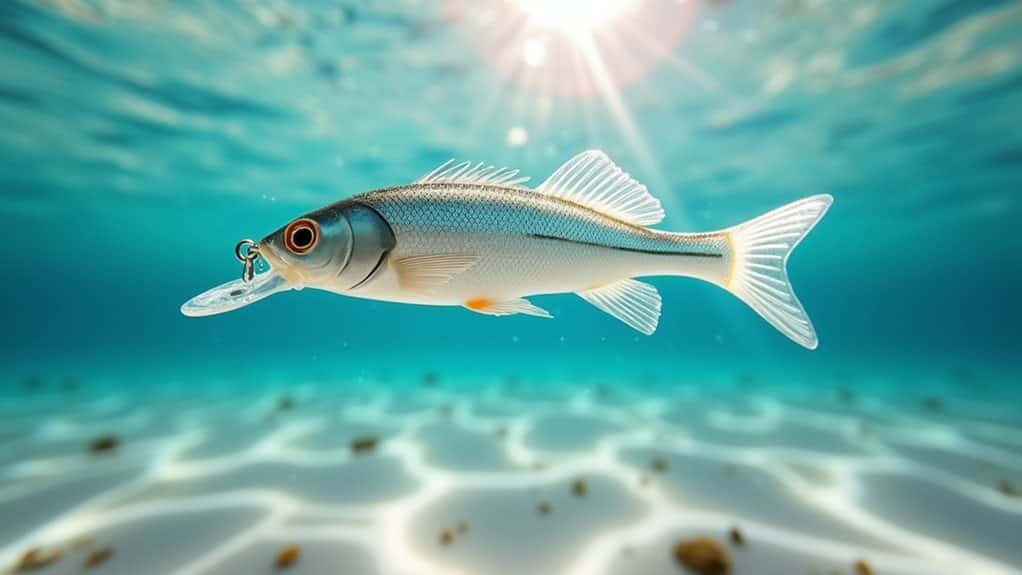
While fishing in clear water might seem like an advantage, it actually presents unique challenges that require careful consideration and specific techniques.
You’ll find that fish can see your lures in high definition, making them more selective and likely to reject unnatural presentations. This selectivity can be linked to the competitive nature of fishing, as fish have adapted to avoid lures that seem out of place in their environment.
Additionally, they’re easily spooked by movement and pressure, which means you’ll need to be extra stealthy in your approach. Making longer casts becomes essential to maintain distance and avoid alerting fish to your presence.
Essential Color Selection Principles
Successful fishing in clear water depends heavily on choosing the right lure colors, as this decision can make the difference between a productive day and coming home empty-handed. You’ll want to select natural colors like watermelon, pearl, or green pumpkin that match local forage. Additionally, using natural colors can help mimic the local ecosystem, making your lure more enticing to fish. When fishing deeper waters, remember that colors appear differently at depth, so opt for slightly brighter variations of these natural tones. For optimal stealth in transparent conditions, use translucent plastic baits that won’t startle wary fish.
Top-Performing Natural Color Patterns
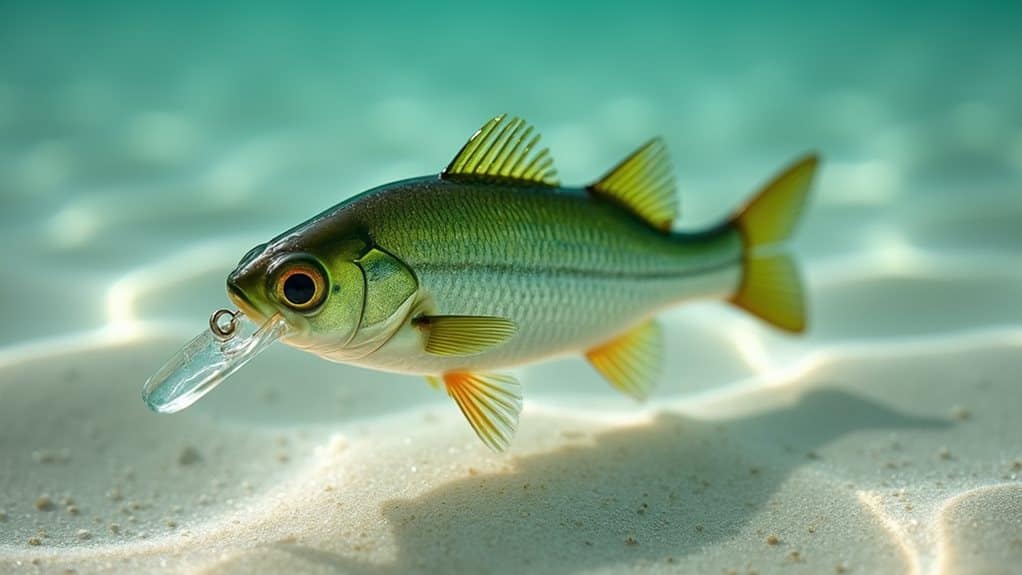
Natural color patterns consistently rank among the most reliable choices for clear-water bass fishing, building on the core principles of matching local forage.
You’ll find green pumpkin and watermelon soft plastics particularly effective, while bluegill and shad patterns excel at mimicking common baitfish.
For ideal results, don’t overlook translucent patterns and crawdad colors, which naturally blend into clear water conditions. Additionally, understanding the safety of eating freshwater fish can enhance your overall fishing experience, ensuring you enjoy your catch with peace of mind.
Light Conditions and Their Impact on Lure Colors
Understanding light conditions can dramatically impact your lure color choices when fishing clear waters.
On bright, sunny days, you’ll want to use light-colored lures like white, silver, or gold, as they’ll reflect sunlight effectively.
During cloudy conditions or low-light periods, switch to darker lures that create better contrast.
Remember that light penetration decreases with depth, so adjust your color selection accordingly. Additionally, consider that fishing techniques can vary based on the water clarity and light conditions, affecting your overall success.
Special Considerations for Smallmouth Bass
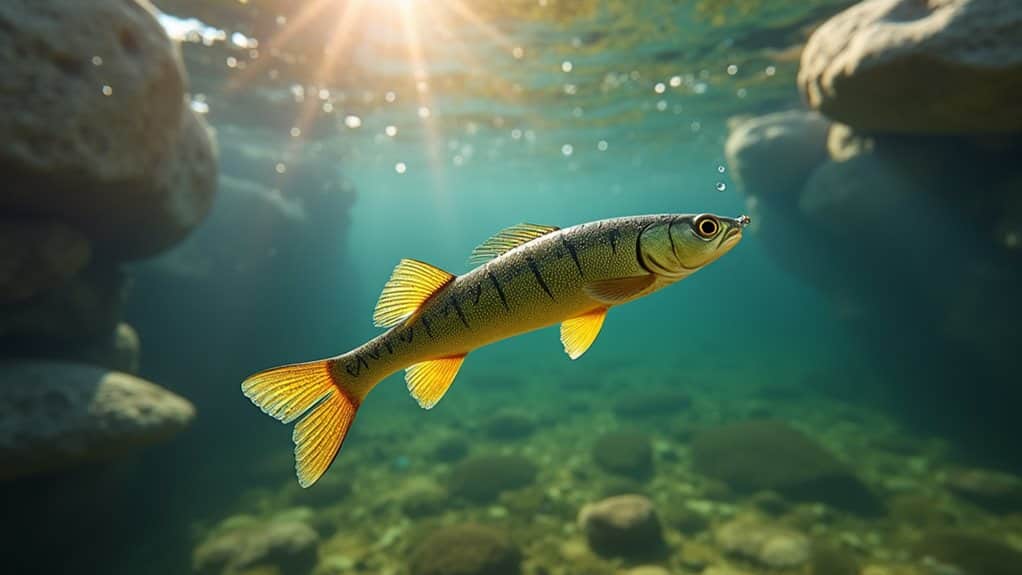
While smallmouth bass in clear water react strongly to bright, contrasting colors like chartreuse and orange, you’ll need to match these bold choices with the fish’s aggressive strike patterns.
You can maximize your success by studying local forage species and selecting lures that closely mimic their size, shape, and natural coloring patterns.
When fishing for smallmouth bass, don’t hesitate to experiment with both natural and bright color combinations, as these fish will often travel significant distances to strike a lure that catches their attention.
Bright Colors Work Well
Bright colors prove remarkably effective when fishing for smallmouth bass in clear water, especially during sunny conditions.
You’ll find that chartreuse stands out as a top performer, particularly when used with jerkbaits and spinnerbaits.
While natural colors work too, aggressive smallmouth can’t resist the appeal of lively hues.
For best results, combine these bright lures with erratic movements that mimic fleeing prey.
Aggressive Strike Patterns
Successful smallmouth bass fishing in clear water demands specific strike patterns that match the fish’s aggressive nature.
You’ll want to focus on walk-the-dog flies and poppers in warmer waters, while using diving patterns when fish are holding deeper.
Match your retrieve speed to conditions, and don’t forget that fall fishing often requires more aggressive presentations with sound-producing flies to trigger strikes.
Match Local Forage Species
Understanding local forage species forms the cornerstone of successful smallmouth bass fishing in clear water.
You’ll want to focus on matching your lures to crayfish, insects, and baitfish that naturally occur in your fishing area.
During summer months, target areas where gobies and panfish congregate, as smallmouth bass actively pursue these prey in shallower waters.
You’ll need to adapt your approach as forage patterns shift seasonally.
Seasonal Color Strategies for Clear Water

When fishing clear water in spring, you’ll want to focus on white, grey, and Ayu green colors that perfectly match the small forage fish active during this season.
During winter months, Elite Blue and translucent lures become your best options, as they create a natural, subtle presentation that won’t spook cautious bass.
You can enhance your success in both seasons by carefully matching your lure’s size and profile to the local baitfish, while maintaining a slower, more deliberate retrieve that allows bass to carefully inspect your offering in the crystal-clear conditions.
Spring Clear Water Colors
Although spring brings clearer water conditions, selecting the right lure colors doesn’t have to be complicated.
Focus on natural shades like green pumpkin and watermelon for soft plastics, while red and brown crankbaits effectively mimic crawdads.
During sunny days, you’ll want to use brighter colors, but switch to more subtle hues when it’s cloudy.
Winter Transparency Tactics
Clear winter water demands a strategic approach to lure selection and presentation, as bass become increasingly wary in transparent conditions.
You’ll want to focus on translucent finishes and muted colors like Elite Blue or pearl that mimic natural baitfish.
Choose flat-sided crankbaits and jerkbaits with dull finishes, and don’t forget that black lures can provide excellent contrast in clear water.
Advanced Clear Water Presentation Techniques
Successfully fishing in crystal-clear water demands advanced presentation techniques that’ll make your lures appear more natural and less threatening to wary bass.
You’ll want to focus on using light fluorocarbon lines, downsized lures, and natural colors that mimic local prey.
When fishing on sunny days, opt for subtle presentations like wacky rigs or drop shots, and don’t forget to vary your retrieve speeds until you find what works.
Final Note
When fishing clear water, you’ll find success by adapting your lure colors to match natural prey and light conditions. Remember to choose translucent or natural-colored baits during bright days, and switch to slightly more visible options in low light. Don’t forget that presentation matters just as much as color – slow down your retrieve and focus on subtle movements. With these color selection principles and techniques, you’re well-equipped to tackle clear water challenges.


