You rely on skater shoes for tough, grippy performance that handles pavement and griptape without slipping or wearing out fast. They blend suede or leather uppers, double-stitched seams, and sticky rubber soles for durability and control. You get cushioning for landings, flexible soles for board feel, and pro-influenced designs that balance function and street style. Whether you’re skating daily or styling an outfit, these shoes do it all—and there’s more to how they’ve evolved.
TLDR
- Skater shoes combine durable materials like suede and reinforced stitching to withstand abrasion from griptape and tricks.
- They feature sticky rubber outsoles and vulcanized soles for superior board grip, control, and responsive boardfeel.
- Designed with padded collars, cushioned insoles, and flexible midsoles to support impact protection and natural foot movement.
- Reinforced toes, double-layer uppers, and seamless zones enhance durability in high-wear areas from repeated grinds.
- Skater shoes blend streetwear style with performance, evolving from functional gear to fashion icons through pro influence.
What Makes a Shoe a Skater Shoe?
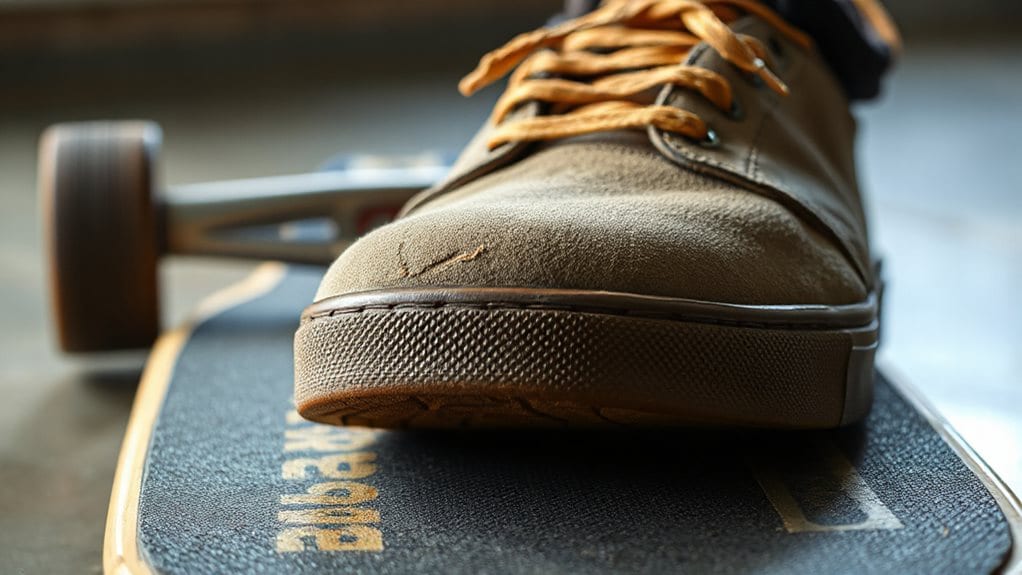
When it comes to picking the right shoe for skating, not just any sneaker will do—what sets a skater shoe apart comes down to a mix of durable materials, reinforced construction, and purpose-built design.
You need suede or leather uppers, double-stitched seams, and a cupsole or vulcanized sole for grip and board feel.
Reinforced toes, cushioned insoles, and flat profiles help you land hard tricks while staying in control. Daily use also helps the shoe mold to your feet and break in for better performance.
Flat rubber soles provide maximum grip on skateboard decks, enhancing control during tricks and maneuvers.
Why Grip Is Everything in Skater Shoes?
You’ve got the right materials and reinforced stitching—now let’s talk about what really keeps you locked on your board: grip.
Sticky rubber outsoles, deep treads, and vulcanized soles enhance control and last longer. Reinforced toe caps, seamless zones, and protective lacing prevent wear.
Suede uppers and flexible soles give you responsive feel, so you stay grounded, flip clean, and ride free—exactly how skating should be. Winter hiking boots with Gore‑Tex membranes help keep feet dry and insulated on cold treks.
High-Top vs Low-Top: Which Gives Better Ankle Support?
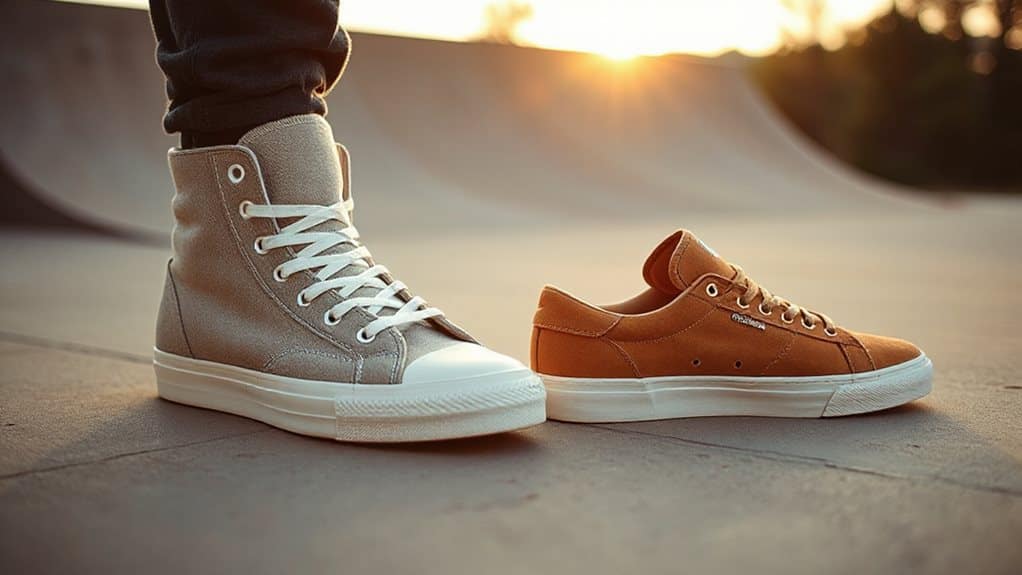
While both high-top and low-top skater shoes have their place in your lineup, the choice between them often comes down to how much ankle support you actually need.
High-tops offer more stability, protection, and impact resistance—great for beginners or big tricks.
Low-tops give you freedom, flexibility, and cooler feet, ideal if you prioritize movement over support.
Many skaters also consider the terrain and season when choosing shoes, with wide-open spaces often favoring high-top protection.
Materials That Survive Griptape and Grinds
If you’ve ever shredded a new pair of skater shoes in just a few sessions, chances are the battle wasn’t against your skills—it was against griptape.
Choose silicon carbide griptape for durability, or rubber alternatives like DKL to save your shoes. Opt for suede uppers, cupsoles, and double-wrapped foxing; they resist grinds and abrasion.
Reinforced stitching and toe caps help, too—keeping your kicks intact, session after session, without holding you back.
Be aware that using the wrong materials (like inappropriate griptape) can increase wear and lead to appliance damage.
How Pro Skaters Shape Skater Shoe Design
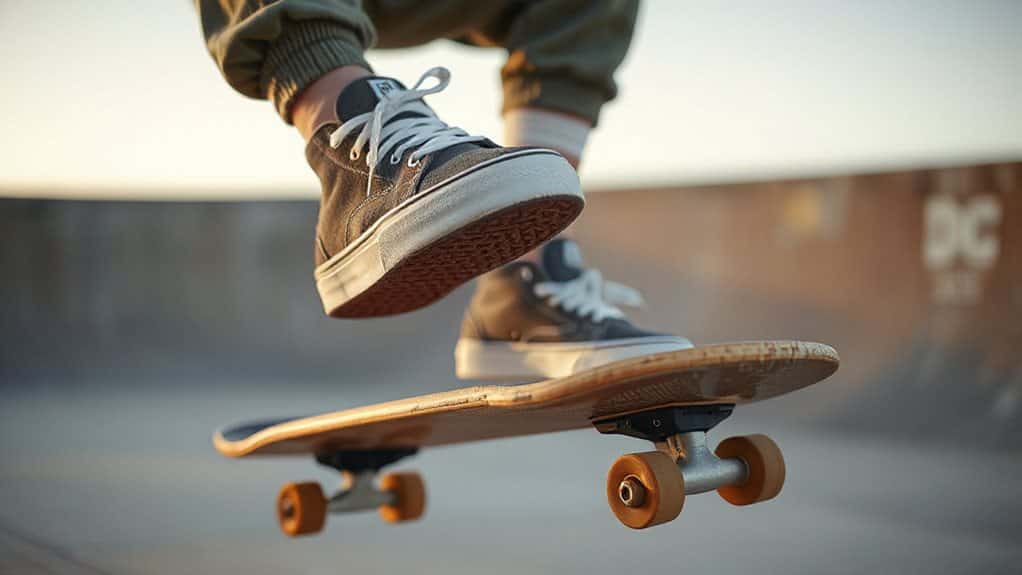
You’ve seen your favorite skaters land impossible tricks, but did you know they’re also shaping the shoes you wear? Pro models push innovation by turning real-world feedback into better cushioning, stronger soles, and smarter lacing systems, all designed to survive street and park.
Their influence blends function with street style, making every pair a direct result of what works—on and off the board. Many pro skaters also collaborate with brands to create signature lines that reflect their personal style and performance needs, often promoting street style and technical innovations.
Pro Models Drive Innovation
Step into the world of skate shoe design, and you’ll quickly see how pro models aren’t just endorsements—they’re blueprints for innovation.
You demand durability, so pros like Sal Barbier pioneered neoprene socks and reinforced builds. Their input drives features like grippy rubber, lace-savers, and cushioned insoles.
These aren’t just tweaks—they’re transformative breakthroughs, built for real skating, giving you control, comfort, and boardfeel that lasts.
Skater Input Shapes Design
While innovation in skate shoe design often starts with a vision, it’s the direct input of pro skaters that turns concepts into reliable, high-performance gear.
You see it in Jamie Foy’s reinforced builds, Tiago Lemos’ precision engineering, and how designers like Jeff Mikut skate what they make.
Your shoes evolve from real street use, not just sketches—durability, grip, and comfort shaped by those who push limits daily.
Function Meets Street Style
When it comes to skate shoes, function and style aren’t competing priorities—they’re partners shaped by the pavement, the tricks, and the skaters who live for both.
You see it in triple-stitched suede, grippy soles, and neoprene socks built for impact. Brands like éS, DC, and Vans blend athletic DNA with street-ready looks, so your shoes perform hard and look sharp, mile after mile.
How Skater Shoes Changed From the ’60s to Now?
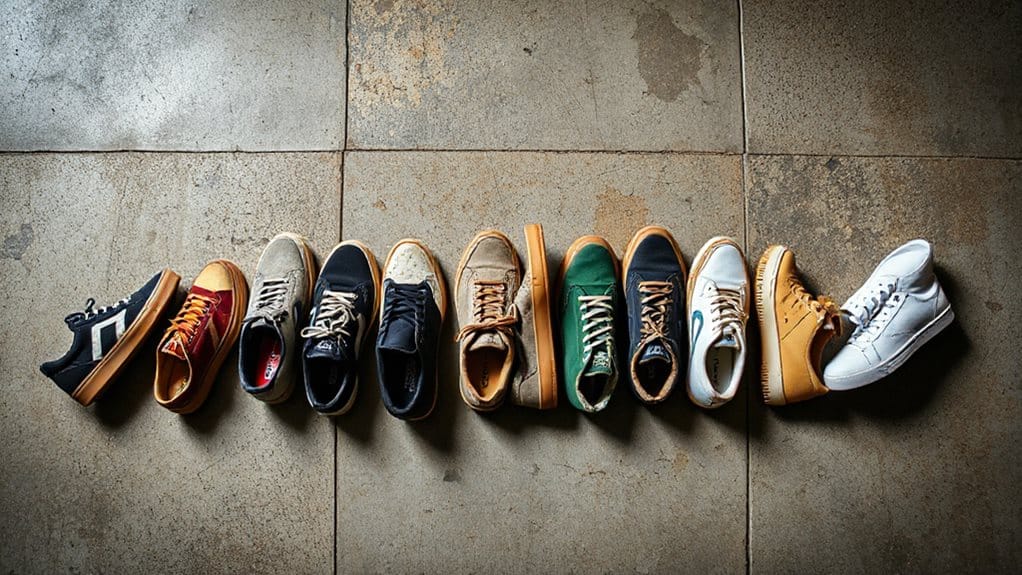
You’ve seen how skaters shaped shoe design, but have you ever wondered how those early barefoot rides turned into today’s high-tech kicks?
From the first dedicated skate shoe in 1965 to modern builds with Zoom Air and Hyperfeel, innovation has kept pace with trick progression, durability needs, and changing styles.
Now, you get the best of both worlds—low-top flexibility for flip tricks and advanced cushioning that still lets you feel the board.
Rise Of Dedicated Designs
You mightn’t realize it, but the skater shoes you see today didn’t start with high-tech materials or reinforced stitching—they began with bare feet on sunbaked pavement.
Tech Advances In Footwear
Step into the evolution of skater shoes, and you’ll see how decades of wear, tear, and innovation shaped a niche sneaker into high-performance gear.
You’ve felt the shift—from basic Keds to polyurethane wheels enhancing control, then ollies demanding tougher toes.
Brands like Vans, Etnies, and Nike SB built shoes with reinforced ollie zones, neoprene liners, and grippy soles, blending protection, style, and function for your unceasing grind.
Style Meets Performance Today
From the quiet streets of 1960s California to today’s lively urban plazas, skater shoes have evolved dramatically—driven by both necessity and culture.
You now get sleek, lightweight designs with reinforced toes, padded collars, and grippy soles, blending streetwear style with serious durability. Brands mix fashion and function, so your kicks look fresh while handling flips, grinds, and daily wear effortlessly.
Iconic Skater Shoe Models That Defined Each Era
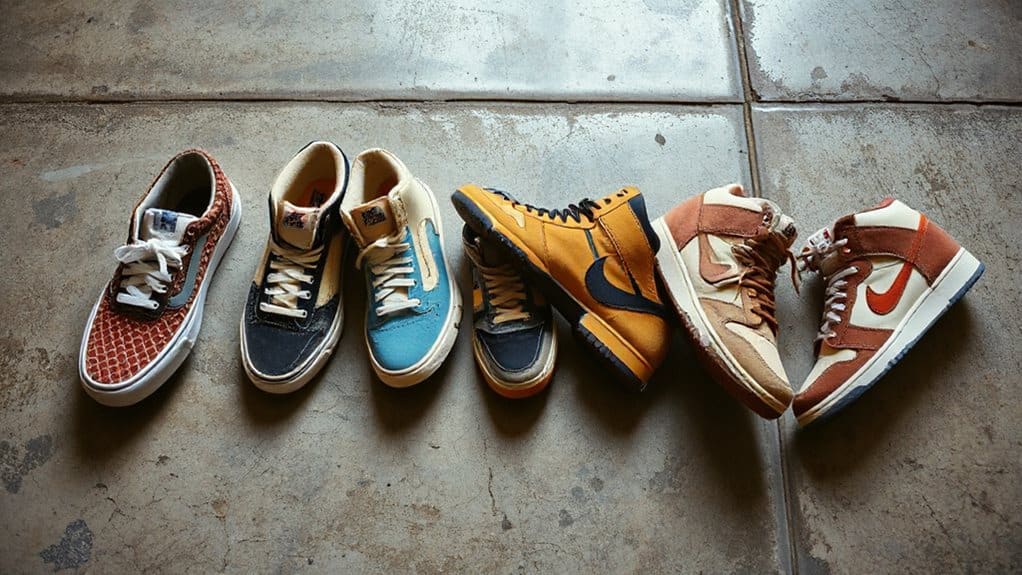
Skateboarding’s evolution has always been mirrored in the shoes that carried it forward. You’ve seen the Vans Era, Old Skool, and NATAS define the ’70s and ’80s.
The ’90s brought the Half Cab and éS SLB, blending tech with style. Then came chunky Osiris models, Nike SB Dunks, and minimalist Janoskis—each era’s icon, built for performance, shaped by culture, and made for you.
How Skater Shoes Went From Function to Fashion?
You’ve seen them on sidewalks, in malls, and even on runways—skater shoes started as tough, flat-soled gear built for grip and board control, not style.
Over time, their durable design caught the eye of streetwear fans, turning functional details like padded collars and vulcanized soles into fashion statements.
Now, whether you’re landing tricks or just love the look, skater shoes blend heritage and modern trends in everyday wear.
From Sidewalks To Runways
You mightn’t realize it, but that pair of chunky skater shoes you see on city streets or even strutting down a fashion runway started life solving a real problem: how to stay grounded on a speeding board.
Built for grip, cushioning, and durability, they evolved with skate culture, then caught the eye of designers. Soon, brands like Adidas and Louis Vuitton reimagined them for high fashion, blending function with bold aesthetics, proving utility and style can thrive together—on any terrain.
Built For Tricks, Worn For Style
While they were originally engineered to withstand the punishing demands of concrete rails and sticky grip tape, skater shoes quickly proved their worth beyond the bowl or street spot.
You’ve seen them: durable suede uppers, reinforced toes, padded collars—all built for impact, yet sharp enough for the streets.
Today, you wear them not just to ollie, but to express, blending function with fearless style, comfort with credibility, wherever you roam.
Heritage Meets Modern Trends
Though rooted in the gritty demands of street and vert skating, skater shoes have steadily evolved into a cultural staple, merging decades of functional design with today’s fashion-forward sensibilities.
You see classic silhouettes like the Vans Old Skool or Nike SB Dunk everywhere, not just on boards. Heritage styles stay relevant by blending durability, grip, and cushioning with modern aesthetics, letting you express individuality without sacrificing performance, proving function and style thrive together.
Modern Tech Upgrades in Skater Shoes
When it comes to landing hard drops or threading together quick shifts, today’s skater shoes do way more than just look good—they’re built with smart tech that works with your feet, not against them.
You get foot-shaped designs for natural movement, flexible soles that bend with the board, and responsive cushioning to handle impact. Durable outsoles resist wear, while sustainable materials let you skate with purpose—lightweight, grippy, and eco-conscious, all in one.
What to Look for in Today’s Best Skater Shoes?
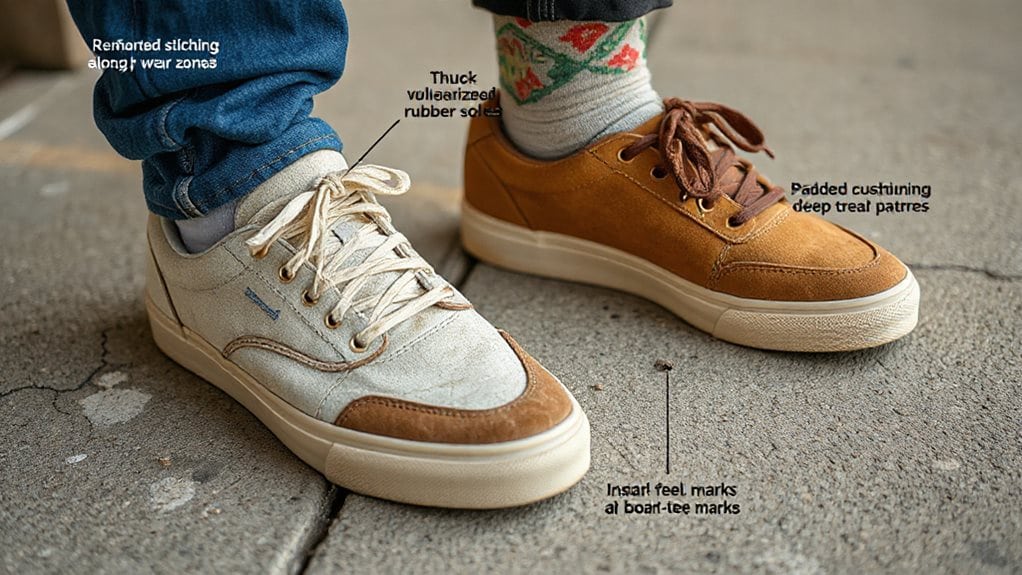
If you’re serious about your skate sessions, you’ll want shoes that keep up with both your style and your steeziest moves—so knowing what to look for in today’s best skater shoes makes all the difference.
Prioritize durable materials like suede or leather, reinforced with DURACAP or AdiTuff. Choose sticky rubber outsoles, such as SICKSTICK or NDurance, for grip. Opt for responsive cushioning like Zoom Air or POPCUSH. Pick low-profile, vulcanized soles for better board feel, and make certain a secure, breathable fit with padded collars and wide toe boxes.
How to Pick Skater Shoes That Last and Perform?
Since you’re putting your shoes through grinds, ollies, and daily pavement impact, picking skater shoes that last and perform means balancing smart material choices with how you actually skate.
Go for double-layer suede uppers, reinforced stitching, and sealers to enhance durability. Rotate pairs, clean regularly, and save your favorites for skating only—this keeps them fresh longer, so you stay covered, session after session.
Final Note
You now know what sets skater shoes apart: durable materials, grippy soles, and smart design built for impact. Whether you’re skating ramps or walking streets, the right pair supports your moves and lasts longer. Look for strong stitching, vulcanized or cupsole construction, and padded collars. High-tops offer more ankle support, while low-tops give flexibility. Choose based on your style, terrain, and needs—function meets fashion without compromise.