
You’ve got your excursion in mind, so start by defining your trip’s purpose and matching gear, meals, and skills to your group’s goals and fitness. Pick a destination and season that fit your desired experience, then secure permits, transport, and reservations early. Pack weather-appropriate clothing, a reliable shelter, and a well-organized camp kitchen. Don’t skip a customized first aid kit and emergency plan. A free printable checklist helps you track it all—and there’s more to fine-tune for a seamless expedition.
TLDR
- Download a free printable outdoor trip planning checklist by signing up for email access to customizable templates.
- Use pre-filled or blank checklists to plan meals, gear, clothing, and activities for your camping trip.
- Organize packing with categorized lists covering shelter, sleep gear, kitchen supplies, and emergency items.
- Customize your checklist in Canva to include eco-friendly gear and trip-specific essentials.
- Ensure safety and preparedness by including first aid supplies, permits, and weather-appropriate clothing.
Start With a Clear Trip Purpose and Goals
Before you explore into picking gear or plotting routes, take a moment to clarify why you’re heading outdoors in the first place—your trip’s purpose sets the foundation for every decision that follows.
Are you seeking solitude, expedition, or growth? Define clear goals using the 5 W’s, align them with your group’s interests and fitness, and let that vision shape a meaningful, well-balanced outdoor experience. Proper planning helps ensure safety and contributes to accomplishing trip goals safely and enjoyably. Consider creating an essential gear checklist to match your goals and avoid common mistakes.
Choose the Best Destination for Your Outdoor Adventure
You’ve clarified your purpose and set meaningful goals for your outdoor trip, so now it’s time to find a destination that matches your vision.
Consider terrain, family needs, wildlife, unique scenery, and available activities. Whether it’s Patagonia’s glaciers, Dominica’s rainforests, or the Dolomites’ alpine trails, pick a place that aligns with your expedition style, accessibility needs, and sense of exploration. You might also consider destinations known for exceptional paddling, such as the Colorado River for its scenic river routes through iconic landscapes.
Pick the Right Time: Season, Weather, and Availability
When planning your outdoor expedition, timing can make or break the experience—choosing the right season, understanding weather patterns, and checking availability all play essential roles in ensuring a smooth and enjoyable trip.
Pick spring for mild hikes or fall for lively foliage, avoid summer crowds by choosing hidden trails, and check permits early.
Use historic weather data, monitor conditions, and travel mid-week or off-season for more freedom, lower costs, and fewer restrictions.
Consider planning around peak months like July and August when services and access are most reliable.
Prepare Permits, Insurance, and Driver Forms Early
Though the trail may call with promises of solitude and escapade, securing your permits, insurance, and driver forms early guarantees you’re not turned away before you even lace up your boots.
Apply four months ahead on recreation.gov, aim for off-peak dates, or consider alternatives like Mount Langley.
Smaller groups and flexible plans improve your odds, while walk-up permits offer last-minute options—just act fast. Walk-up sites are typically first-come, first-served and may require arriving early to secure a spot, especially during peak season and on popular weekends; plan to arrive 1–2 hours before the daily checkout time to increase your chances of finding an open site and first-come, first-served availability.
Confirm Transport, Reservations, and Site Access
Lock in your travel logistics now to avoid last-minute surprises.
Book airfare early for remote trailheads, and reserve shuttles, buses, or rental cars with proper insurance.
Confirm campsite and trailhead reservations, plus pre- and post-trip lodging.
Verify park passes, route conditions, and access roads.
Download maps, load GPS files, and have backups.
Check local transit options and share your plans—stay prepared, not restricted.
Consider car camping if vehicle-based stays suit your trip and local regulations allow vehicle camping.
Build a Master Packing List by Category
To keep your gear organized and your mind at ease, start by building a primary packing list grouped into clear categories—this way, you’ll know exactly what to grab and what to leave behind.
Pack clothing, footwear, cooking gear, and electronics by function, using cubes and stuff sacks to separate essentials. Label each category, check off items as you pack, and tailor your list to match the terrain, weather, and trip length—keeping it lean, efficient, and fully under your control.
Pack Shelter and Sleep Gear for Your Trip Type
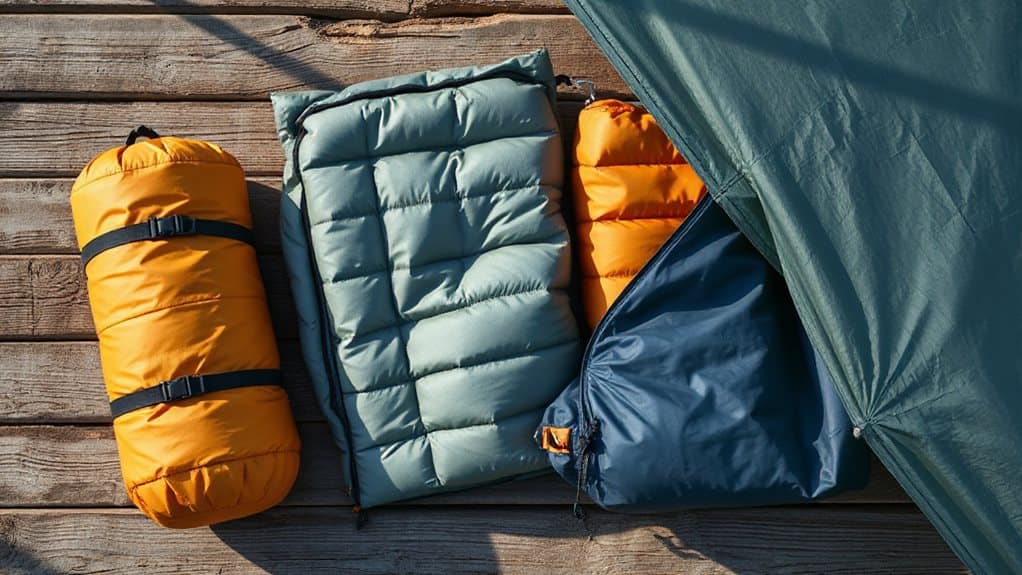
You’ll want to pick a shelter that matches your trip’s demands—whether it’s a tarp for lightweight speed, a bivy for stealthy backcountry moves, or a single- or double-wall tent for comfort and weather protection.
Pair it with the right sleep system, including a pad, bag, and bug protection, so you stay dry, warm, and undisturbed all night.
Think about your terrain, weather, and pace, then adapt your gear choices to keep things efficient and reliable.
Tent Setup Essentials
When choosing the right shelter for your outdoor excursion, starting with a season-appropriate tent is essential—make sure it comes with stakes, a rainfly, and a durable tarp to handle the elements. Pick a dome, cabin, or geodesic style that fits your group, then practice setup at home.
Use a tarp slightly larger than your tent’s footprint, secure it with stakes and a mallet, and add guylines for stability. Bring a repair kit, duct tape, and a doormat to keep dirt out.
Sleep System Components
Though your tent keeps the weather at bay, a well-chosen sleep system guarantees you stay warm, dry, and rested through the night—starting with gear that matches your trip’s season and conditions.
Choose a down sleeping bag under 2 lbs or a quilt for warmth and lightness. Pair it with an inflatable pad like the NeoAir XLite NXT (R-value 4.5) for comfort and insulation.
Add a clothing stuff-sack pillow and liner if needed. Keep your system under 3 pounds total.
Adapt For Trip Style
Depending on your pace, terrain, and how much comfort you’re willing to trade for weight, your shelter and sleep setup should align closely with your trip’s demands.
Choose ultralight tarps like the Hyperlite Square for fast, minimal trips, or opt for freestanding tents like the Big Agnes Copper Spur when weather and comfort matter.
For extreme conditions, consider modular systems like the Slingfin Splitwing—versatile, adaptable, and built to handle the unexpected, all while keeping your pack light and your freedom intact.
Choose Weather-Appropriate Clothing and Footwear
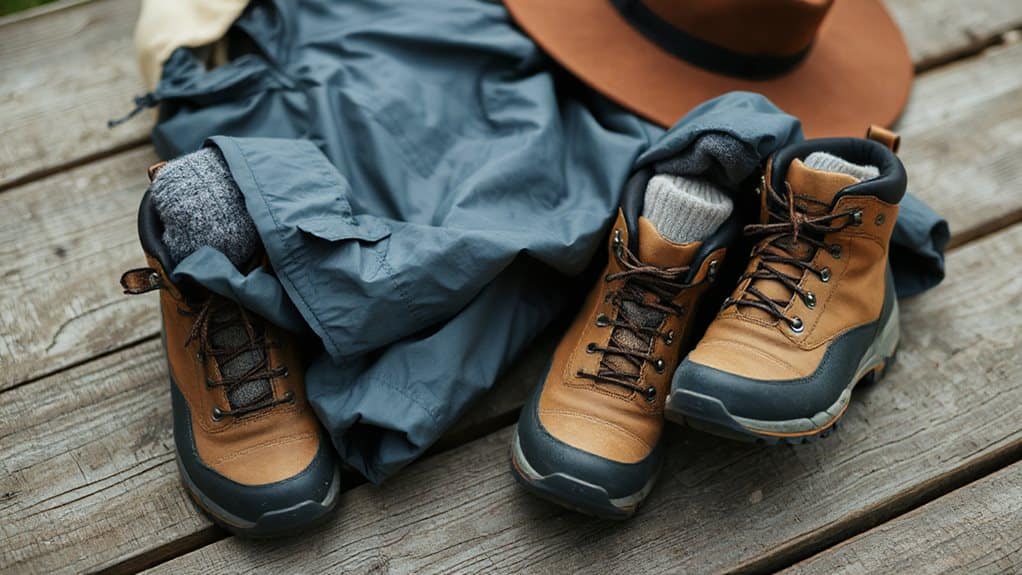
When facing cold conditions, layering is your best bet for staying comfortable and safe—start with a moisture-wicking base, add an insulating mid layer, and top it off with a waterproof, breathable outer shell.
Choose footwear based on the season and activity, like insulated, waterproof boots for snow or sturdy trail shoes for milder hikes.
Don’t forget key accessories like warm socks, gloves, and a hat to keep heat where you need it.
Layer For Cold Conditions
Why do some outdoor explorers stay warm and dry while others shiver through the same conditions? You can conquer this by layering smartly.
Start with a moisture-wicking base layer, add an insulating midlayer like fleece or down, then top with a protective outer shell.
Adjust each layer based on activity and weather, stay breathable, and always carry extras—you’ll stay comfortable, safe, and free on your journey.
Select Proper Footwear Type
Step into your next trek with confidence by choosing the right footwear for the weather and terrain you’ll face.
Pick insulated, waterproof boots with grip for winter’s cold and snow.
Go for breathable, quick-drying shoes with solid traction in rain.
Wear mesh, lightweight sandals or shoes in heat.
Match support and cut to your trail’s challenge—versatile, multi-season boots work well when conditions vary.
Plan Meals and Organize Your Camp Kitchen
Though planning meals might seem like just one part of the prep work, getting it right can make or break your outdoor experience—so start by calculating how many people you’re feeding, how long you’ll be out, and how many meals and snacks you’ll need each day.
Choose simple, balanced meals like foil packets, quesadillas, or mac and cheese, and prep ingredients ahead—chop veggies, pre-cook rice, freeze soups.
Pack backup options like ramen or canned soup, and organize your camp kitchen with re-packaged staples, a reliable stove, and a well-stocked cooler for frozen items.
Assemble a First Aid Kit and Emergency Plan
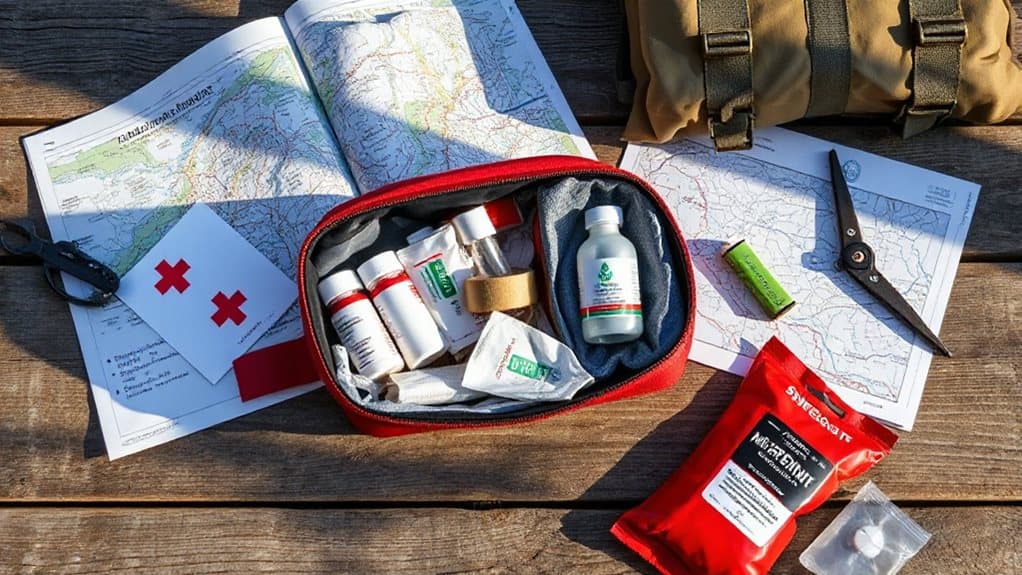
Pack a well-stocked first aid kit and outline a clear emergency plan—your safety net when help isn’t nearby.
Include antiseptic wipes, antibiotic ointment, gauze, and bandage tape for wounds.
Carry ibuprofen, antihistamines, and rehydration salts.
Add nitrile gloves, tweezers, and a CPR mask.
Use a wilderness first aid guide, note medical details, and customize supplies based on trip length, terrain, and personal needs.
Get the Free Outdoor Trip Checklist
You’ve taken the smart step of preparing for emergencies with a solid first aid kit and a clear action plan—now it’s time to streamline the rest of your trip prep with a reliable outdoor checklist.
Enter your email to get a free printable planner, customize it in Canva, or grab the packing list directly.
Choose blank or pre-filled formats, add eco-friendly gear, and plan meals, clothes, and activities with ease.
Final Note
You’ve got the tools to plan a smooth outdoor trip—now it’s time to take action. Review your goals, pack smart, and double-check permits and weather. With this checklist, you’re ready to stay safe and enjoy the outing. Don’t wait—download the free printable now, share it with your crew, and hit the trail with confidence. Great trips start with great prep.


