
Match your swivel’s pound-test rating to your line strength, then tie it securely using an improved clinch or Palomar knot—always wetting the line before tightening to preserve strength. Position the swivel 2–4 feet from your lure to prevent interference with its natural action, and choose ball-bearing swivels for spinning lures or trolling applications where twist prevention is critical. Skip swivels altogether when using live bait or fishing heavy cover, since unnecessary hardware reduces strikes and increases snag risk. The article below covers proper swivel selection, attachment techniques, and maintenance practices that separate weekend anglers from seasoned pros.
TLDR
- Match swivel type to application: use ball-bearing for trolling, barrel for general rigs, and three-way for multi-line setups.
- Position swivels 2–4 feet from lures to prevent action interference while controlling line twist effectively.
- Select swivels with pound-test ratings equal to or higher than your line strength to avoid equipment failure.
- Tie swivels using improved clinch or Palomar knots, always wetting line before tightening to preserve strength.
- Inspect swivels after each trip for rotation freedom and corrosion; rinse and dry thoroughly after saltwater use.
What Are Fishing Swivels and Why Do They Matter?
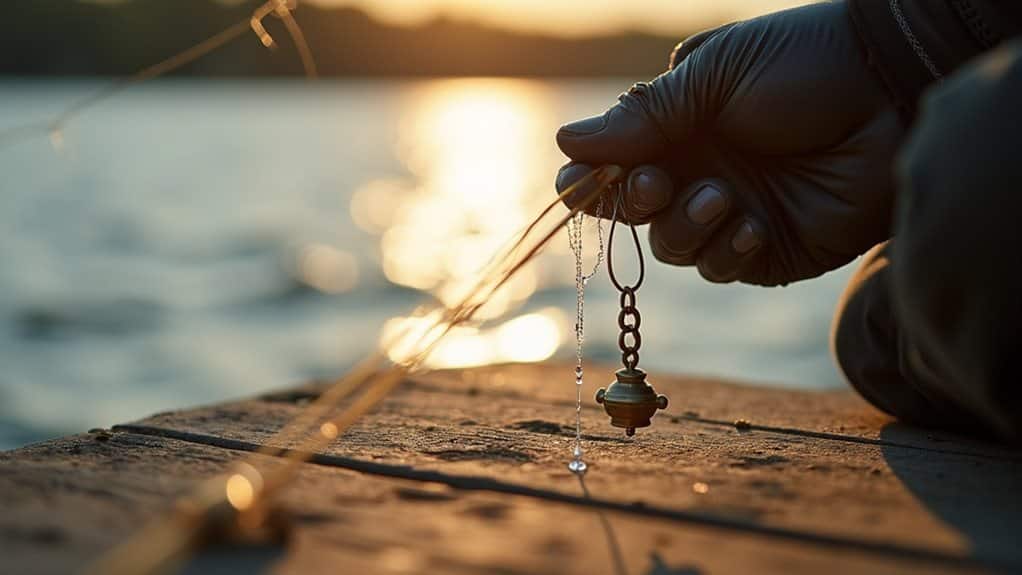
Line twist—the angler’s silent enemy—strikes without warning, weakening your fishing line and ruining what should’ve been a productive day on the water.
Fishing swivels are small metal devices featuring two or more rings connected by a pivot joint, allowing independent rotation between your main line and leader. They prevent twist, reduce tangles, and maintain line integrity, making them essential for successful fishing. The rings are connected by an anchor inserted into the joint, which enables them to rotate freely in any direction. Choose a swivel with a matching strength rating slightly higher than your leader to avoid equipment failure.
The Science Behind Line Twist Prevention
Understanding how swivels protect your fishing line requires a closer look at the mechanical forces at play when you’re casting, retrieving, and fighting fish.
When lures spin during retrieval, they create rotational force that travels up your line, storing torsional strain energy in the fibers. Swivels act as mechanical barriers, allowing lures to rotate freely while preventing twist transmission to your main line, preserving line integrity. In-line spinners are particularly notorious for causing line twist, making swivels especially important when using these lure types. A narrow sonar beam can help you detect how lure action and line behavior appear beneath the boat by showing detailed returns of lure movement and nearby fish down imaging.
Breaking Down the Different Types of Swivels
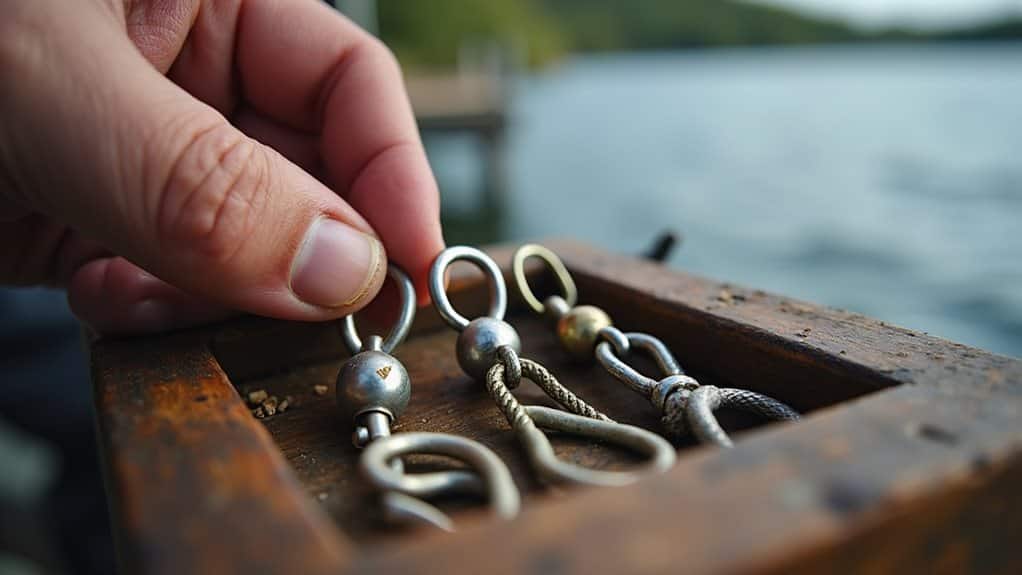
Choosing the right swivel for your fishing setup can dramatically improve your success on the water, but the variety of options available can quickly become overwhelming.
Snap swivels offer quick lure changes with built-in clips, while three-way swivels enable multi-line dropper rigs.
Finesse swivels provide delicate presentations for light tackle, rolling swivels excel in heavy saltwater applications, and crane swivels deliver reliable strength for big game fishing.
Telescopic combos and portable gear like the PLUSINNO rod can make pairing the right swivel with your setup easier by keeping your tackle compact and travel-ready.
Barrel Swivels: Your Basic Twist-Fighting Tool
You’ll want to reach for a barrel swivel whenever you’re fishing with lures that spin or when you need to connect two different line types, like braid to fluorocarbon.
The key to proper attachment is using a reliable knot—such as an improved clinch or Palomar knot—on both ends of the swivel, ensuring you wet the line before tightening to maintain knot strength.
Position the swivel at least 2-4 feet from your lure to prevent interference with its action while still getting the twist-fighting benefits you need.
Choose a swivel size that matches your tackle and the fish species you target to ensure durability and performance when angling tackle box size.
When to Choose Barrel
Barrel swivels shine when you’re dealing with lures that spin, fish that roll, or any situation where line twist threatens to ruin your day on the water.
They’re particularly effective with spinners, spoons, and soft plastics that twirl during retrieval.
You’ll also want them when targeting species like catfish and pike, which roll aggressively.
In deep water scenarios, they prevent accumulated twist that weakens your line and compromises casting performance.
Proper Attachment Techniques
Getting your barrel swivel attached correctly matters just as much as selecting the right one, since even the highest-quality swivel becomes useless if your knot fails or the connection weakens under pressure.
Thread your line through the eyelet, pull 6–8 inches through, then tie a reliable knot like the improved clinch or Palomar. Moisten before tightening to reduce friction, trim excess line, and test the swivel’s rotation to confirm it spins freely.
Ball-Bearing Swivels for Superior Performance
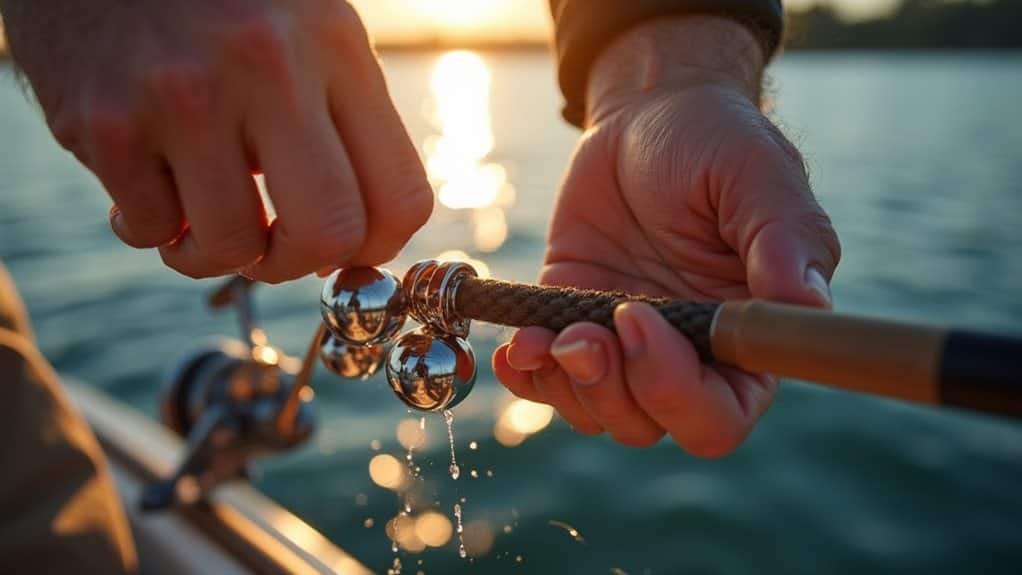
When you’re serious about preventing line twist and maintaining peak performance throughout your fishing session, ball-bearing swivels represent the gold standard in swivel technology.
Their internal ball bearings create friction-free rotation, responding instantly to line twists that traditional swivels miss. You’ll notice superior performance when trolling or using rotating lures like spoons and inline spinners, especially in demanding saltwater environments where corrosion resistance matters most.
Snap Swivels: The Quick-Change Artist’s Choice
While ball-bearing swivels excel at eliminating line twist through precision engineering, many anglers need something that addresses another common frustration: the time-consuming process of changing lures.
Snap swivels combine a rotating joint with a clasp mechanism, letting you switch baits in seconds without retying knots. They’re particularly beneficial when fishing spinning lures like spoons and inline spinners that cause line twist while simultaneously providing convenient lure changes.
Three-Way Swivels for Complex Rigging Systems
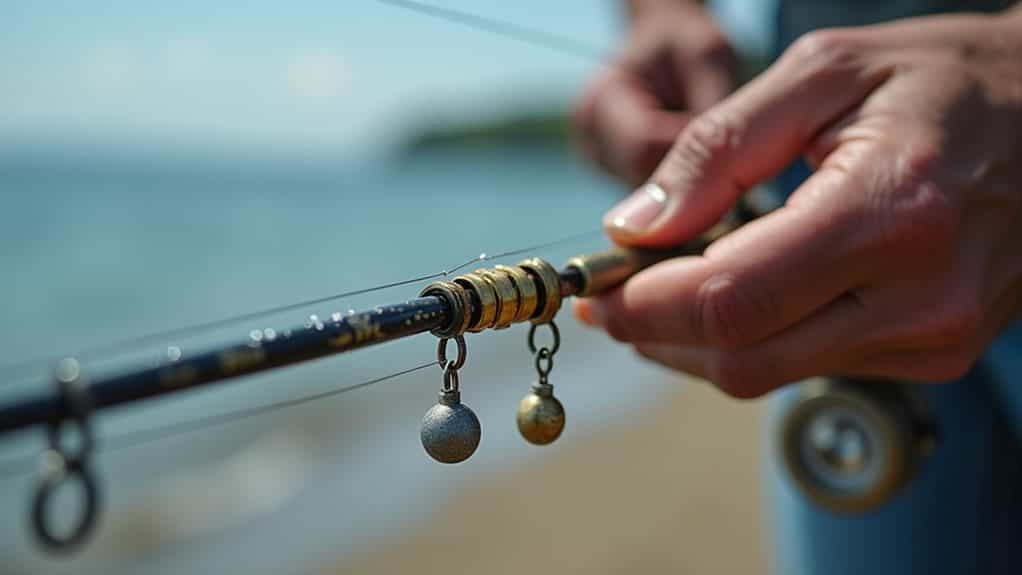
As fishing situations become more demanding, three-way swivels offer a solution that goes beyond simple line twist prevention.
These connectors join three separate lines, allowing you to run multiple baits or combine weights with lures effectively.
Your main line attaches to the top ring, while side connections handle leaders and sinkers independently.
This setup reduces tangles and keeps bait positioned perfectly for species like crappie, catfish, and bass.
Choosing the Right Swivel Size and Strength
Having the right swivel configuration matters little if you select the wrong size for your fishing situation. Match your swivel’s pound test rating to your line strength—always equal or exceeding it.
For 10–20 lb line, you’ll want #10–#8 swivels, while heavier applications demand larger sizes. Remember that smaller numbers indicate larger swivels, and aught sizes (1/0, 2/0) handle big game fishing duties effectively.
Step-by-Step Guide to Attaching Swivels to Your Line
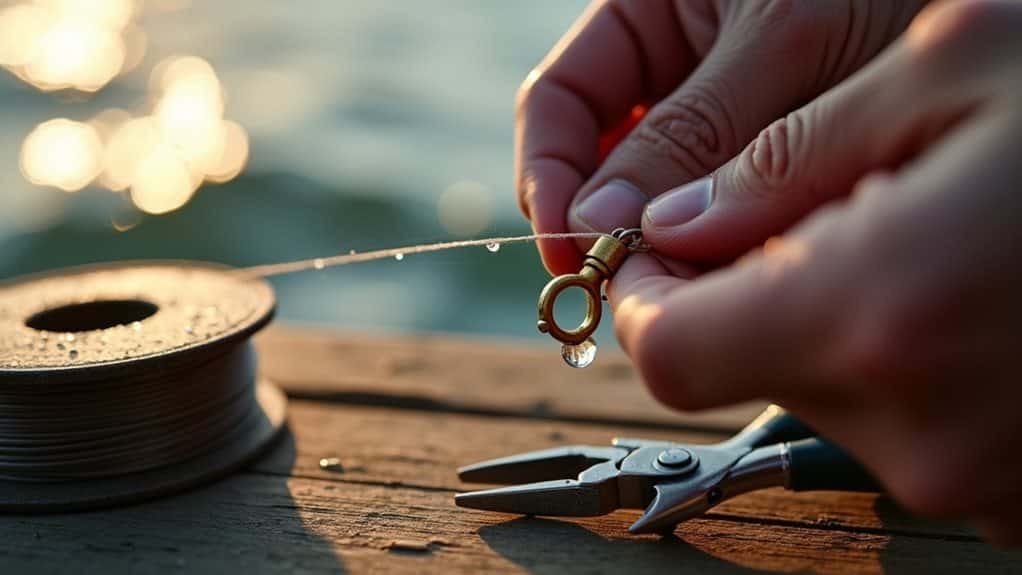
Once you’ve selected the proper swivel for your fishing setup, you’ll need to attach it securely to your line—and the method you choose can make the difference between landing your catch and watching it swim away.
Start by cleanly cutting your line’s end, then thread it through the swivel’s eye. You’ll create a clinch knot by wrapping the tag end around your main line five times, threading it back through the loop near the eye, moistening everything, and pulling tight before trimming excess line.
When You Should (and Shouldn’t) Use a Swivel
Understanding when to use a swivel—and when to skip it—will save you from unnecessary tackle complications while maximizing your chances of landing fish.
You’ll want swivels with spinning lures, spoons, and spinners that create line twist. They’re also essential when trolling deep-diving lures or fishing drop shot rigs.
However, skip swivels with live bait, slow-moving jigs, or when fishing heavy cover where direct ties prevent snagging.
Common Swivel Mistakes That Cost You Fish
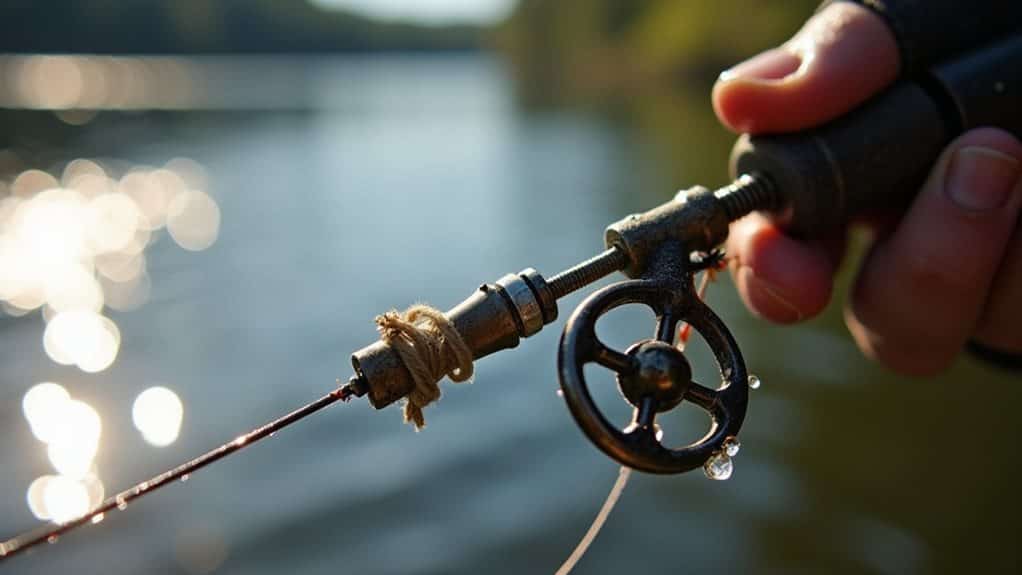
While swivels seem like foolproof tackle components, anglers regularly make critical errors that directly impact their success on the water.
Overusing swivels adds unnecessary bulk that spooks fish, while choosing cheap models leads to failures during critical moments.
Mismatching swivel types to your fishing application causes line twist and tangles.
Perhaps most importantly, using swivels when direct tying would work better restricts natural lure action and reduces strikes.
Maintaining and Inspecting Your Swivels for Maximum Reliability
Even the highest-quality swivels won’t perform reliably if you neglect their care and maintenance.
After each fishing trip, inspect your swivels for wear, corrosion, or damage, and verify they rotate freely. Rinse them thoroughly with freshwater, especially after saltwater exposure, then dry completely.
Store swivels in organized, moisture-controlled compartments separated from hooks and sharp objects.
Replace any compromised swivels immediately to prevent costly failures.
Final Note
You’ve now got the knowledge to use swivels effectively, from choosing the right type for your fishing style to attaching them properly and avoiding common mistakes. Remember to inspect your swivels regularly for wear, replace them when needed, and consider whether each fishing situation actually requires one. With these techniques in your arsenal, you’ll prevent line twist, maintain stronger connections, and ultimately land more fish on your next outing.


