
Your running shoes are good for 300–500 miles, or about 5–8 months with regular use, even if they look fine. Cushioning breaks down over time, especially from heavy impact, weight, or hard surfaces. Rotate pairs, track mileage, and store them in a cool, dry place to extend life. Check for flattened tread, midsole creases, or new aches—these signal it’s time to replace. You’ll uncover smarter ways to protect your shoes and performance just ahead.
TLDR
- Replace running shoes every 300–500 miles or 3–12 months, even if they look fine, to maintain support and cushioning.
- Midsole foam degrades with use, especially for heavier runners or those who heel-strike, reducing shock absorption over time.
- Rotate between multiple pairs and match shoes to terrain to extend lifespan and delay material breakdown.
- Inspect for worn treads, flattened cushioning, or shoe tilt, as these signal internal damage even without visible wear.
- Store shoes in a cool, dry place, clean them monthly, and air-dry to prevent foam, rubber, and upper material degradation.
How Long Do Running Shoes Last?
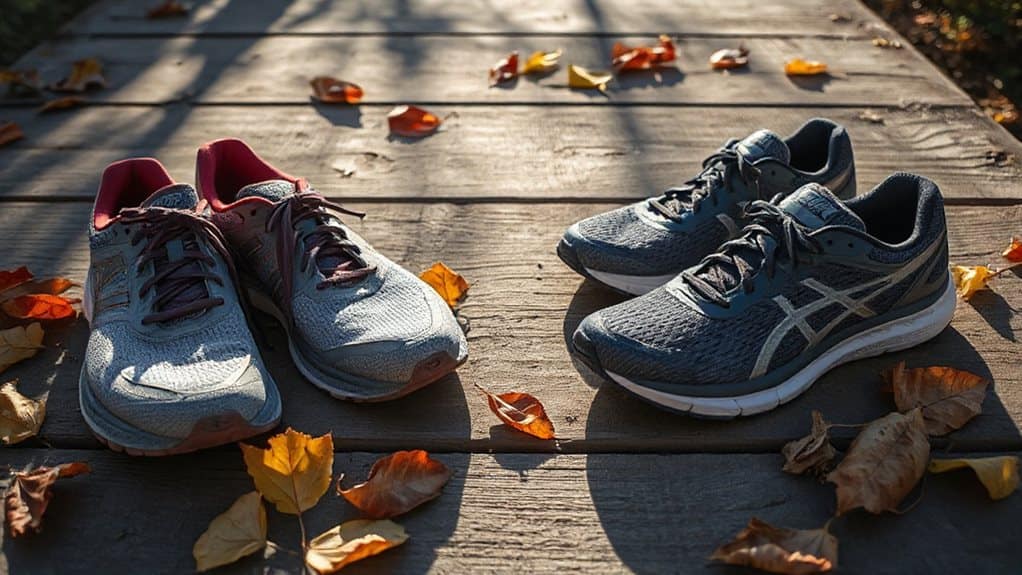
While your running shoes might still look good on the outside, their performance could be fading long before you notice.
You can expect 300–500 miles or about 5–8 months of regular use before cushioning degrades.
Heel support weakens around 550 miles, and outsoles wear out near 760 miles.
Your weight, stride, and terrain all influence how fast they break down—so listen to your feet and rotate pairs to stay free and moving strong.
Cushioning effectiveness drops significantly after 500 km, with impact forces on the foot increasing by approximately 100% due to compressed midsole foam 500 km cushioning drop.
The 500-Mile Rule: When to Replace Running Shoes
You’ve probably heard the 500-mile rule, and for good reason—most running shoes last between 400 and 500 miles before losing their support.
Even if your shoes still look okay, the midsole foam breaks down over time, reducing cushioning and increasing injury risk. Pay attention to how they feel, not just the mileage, and replace them before you start feeling aches or uneven wear.
Begin a training plan about 7–8 weeks before long hikes to build the leg strength needed for sustained uphill walking.
Mileage Matters Most
Most runners find their shoes start to lose key support and cushioning somewhere between 300 and 500 miles, which is why experts often recommend using that range as a practical benchmark for replacement.
Your mileage adds up fast, and tracking it helps you stay ahead of wear. Use apps, logs, or markers to monitor use—because when miles pile up, performance drops, and your freedom to run pain-free depends on fresh cushioning and support.
Replace Before Breakdown
Since the moment you lace up your running shoes, they begin a steady decline in performance, no matter how carefully you treat them.
Replace them before breakdown—every 300 to 500 miles, or 3–12 months—even if they look fine. Cushioning fades over time, especially with heavy use or hot conditions.
Track mileage, rotate pairs, and swap them proactively to stay protected and keep running freely.
How Running Shoes Lose Cushioning Over Time
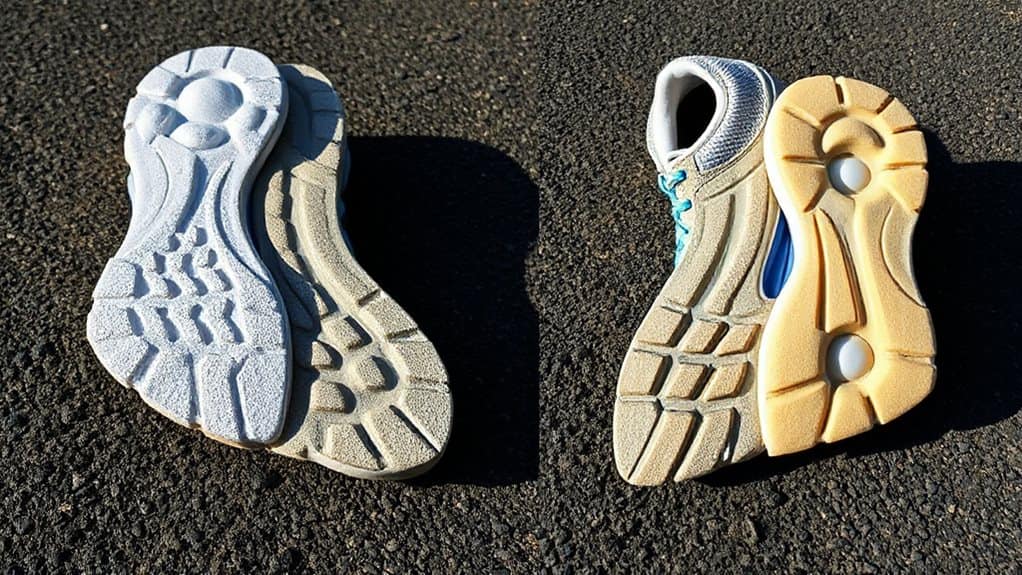
Feel the bounce fade as your running shoes log mile after mile—cushioning doesn’t last forever.
Your heel’s cushioning degrades around 550 miles, while the ball of foot wears faster, near 400 miles.
Foam breaks down from impact, especially EVA, which stiffens over time.
Supercritical and PEBA foams last longer.
Heavy weight, hard pavement, and intense runs speed up wear—listen to your body, and replace them before comfort fades.
Ensure you also check that you have adequate toe room in your shoes to prevent discomfort and injury.
Outsole Wear in Running Shoes: Tread Life by Surface
You’ll notice your shoe’s tread wears differently depending on where you run, with pavement smoothing out rubber evenly over 300–500 miles.
On trails, sharp rocks and roots chew through outsoles faster, often cutting life short under 300 miles, especially if you’re a heavier runner.
Keep an eye on lug depth and exposed foam—once it drops below 2–3mm, it’s time to replace them, no matter the surface.
Insulated sleeping pads are essential for preventing heat loss to the ground in cold weather and maintaining comfort insulated sleeping pads on chilly nights.
Tread Life On Pavement
Most runners regularly log miles on pavement, and that constant contact takes a noticeable toll on your shoe’s outsole.
You’ll see faster wear if you heel strike, run heavy, or pound the asphalt.
Hard surfaces like concrete grind down rubber quickly, especially in high-impact zones.
Look for flattened tread or shiny spots—these mean it’s time to replace your shoes.
Off-Road Durability Comparison
When hitting the trails, your shoes face a far more demanding environment than pavement, and that means outsole durability becomes critical across varied terrain.
Softer rubber like Vibram Megagrip grips wet rocks and sheds mud well, but harder compounds last longer. Full rubber coverage, stiff midsoles, and protective shields help you push farther, reducing wear from sharp rocks and constant flexing on technical ground.
Traction Loss Over Time
While your running shoes might feel fine long after the mileage adds up, their grip is quietly fading with every mile.
On pavement, expect 30% less traction by 500 km due to uneven tread wear. Treadmills wear soles 20–30% faster, while trails preserve grip longer.
Full rubber outsoles last best, and thicker rubber enhances durability. Know your surface—it shapes your shoe’s grip life.
How Weight Affects Running Shoe Lifespan
If you weigh more than 200 pounds, you’re likely getting around 300 miles from your running shoes—sometimes less—because your body weight increases the force pressing down on the midsole with every stride.
Heavier runners compress cushioning faster, reducing support. Use the formula: 75,000 divided by your weight for a mileage estimate. Rotate pairs and track miles to stay protected, not worn out. Consider your overall activity costs and maintenance when planning long-term gear needs and equipment purchases.
How Your Running Form Wears Down Shoes
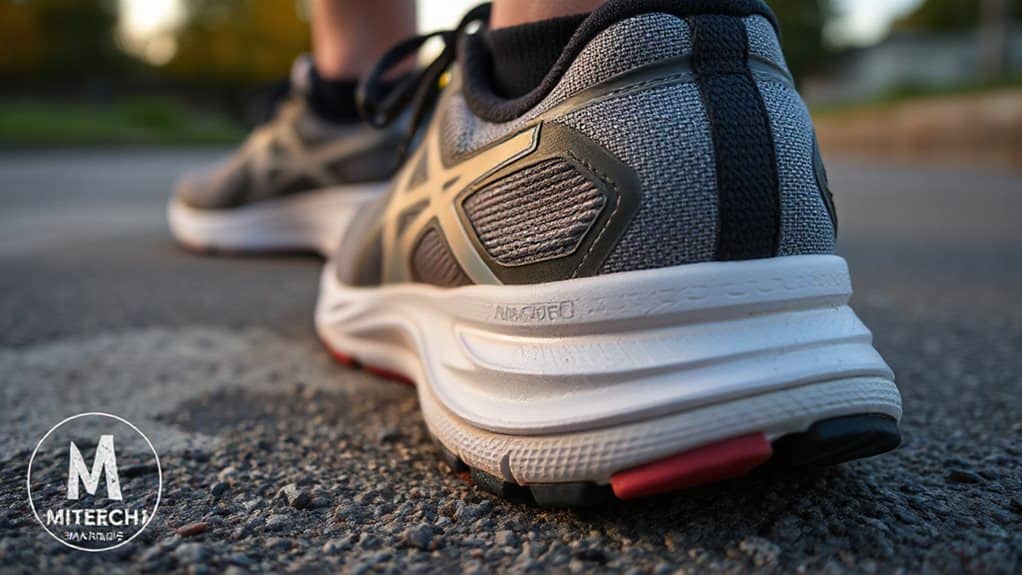
Your heel strike hits hard, especially in cushioned shoes, and that repeated force wears down the outer edge of your heel faster.
If you overpronate, your arch collapses inward, twisting the midsole and causing uneven sole wear over time.
Then there’s toe-off—each push forward grinds the forefoot area, smoothing rubber with every stride.
Choose the right support level, such as stability shoes, to help control pronation and reduce uneven wear.
Heel Strike Impact
Because heel striking sends shockwaves through your running shoes with every step, it’s no surprise this form accelerates wear in critical areas—especially the heel cushioning.
You absorb 3–5 times more impact than midfoot strikers, and even thick cushioning only reduces force by about 22%.
Over time, that repeated stress breaks down foam, reduces protection, and shortens your shoe’s lifespan—especially if you’re wearing heavy, high-drop models that encourage hard heel landings.
Arch Collapse Effect
While your arches are designed to act like natural springs—absorbing impact and helping propel you forward—running with weakened or collapsed arches can quietly sabotage both your form and your footwear.
Over time, poor arch mechanics strain your shoes’ structure, especially the midsole and medial support, leading to uneven wear.
This breakdown reduces shoe lifespan and compromises performance, increasing injury risk.
Choose flexible shoes and strengthen your foot muscles to maintain natural motion, support, and freedom in every stride.
Toe-Off Wear Pattern
As your foot rolls through each stride, the way you push off the ground leaves distinct marks on your shoes—literally. You supinate at heel strike, pronate at midstance, then re-supinate at toe-off, ideally pushing off the big toe.
Wear in the forefoot’s middle to inside shows efficient mechanics, while outer or inner edge wear hints at imbalances—adjust form, strengthen feet, and choose shoes that match your natural motion.
Road vs. Trail: How Terrain Impacts Shoe Longevity
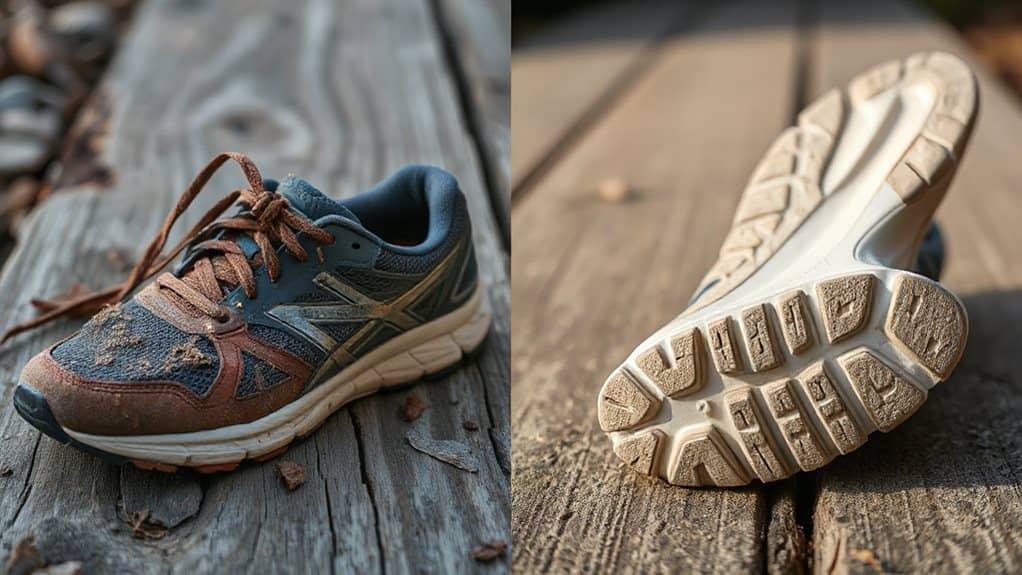
Choose the right shoe for the surface you’re running on, and you’ll get more miles out of every pair.
Road shoes wear quickly on trails—their smooth soles and soft rubber aren’t built for rocks or mud.
Trail shoes on pavement wear down lugs faster. Match your shoe to the terrain, and you’ll protect cushioning, outsoles, and midsoles, extending life while staying free to run where you want.
How Heat, Sun, and Moisture Damage Running Shoes
When your running shoes face extreme heat, direct sunlight, or constant moisture, their materials start breaking down faster than you might realize.
Heat softens foams, reducing stability, while cold hardens them.
UV rays fade and weaken uppers, and trapped moisture breeds mold.
Avoid radiators, sun-drenched spots, and damp storage—your shoes last longer when kept cool, dry, and shaded.
Warning Signs It’s Time to Replace Your Running Shoes
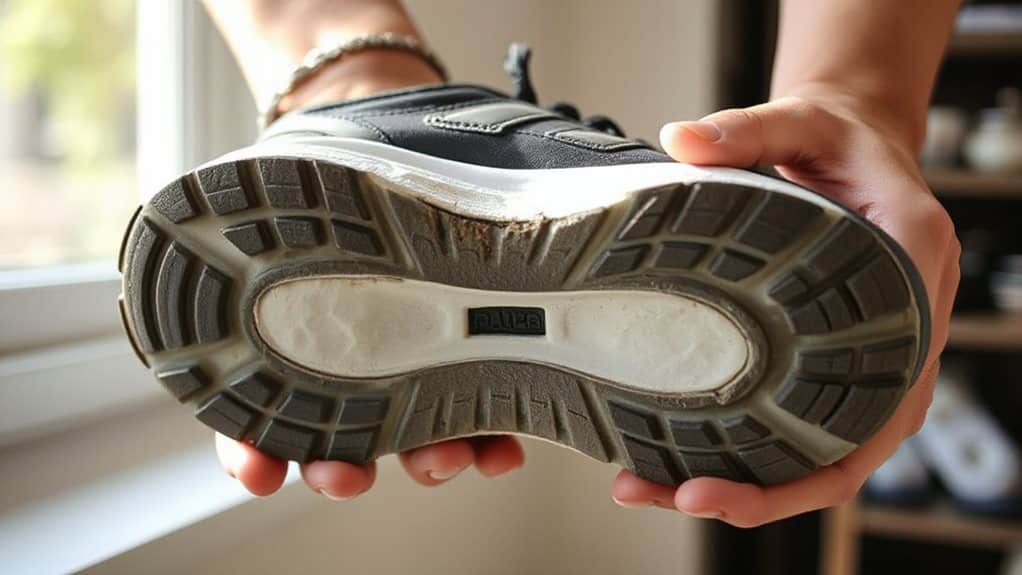
Even if your running shoes still look decent from the outside, they might be past their prime—watch for clear warning signs that it’s time to replace them before discomfort or injury sets in.
You’ve lost cushioning if the midsole feels flat, or the shoe tilts on a flat surface.
Visible creases, worn treads, or holes mean structural breakdown.
New pain, shin splints, or blisters? Your shoes aren’t supporting you anymore—time to move on.
How to Make Running Shoes Last Longer
Keep your running shoes in top shape by treating them like the performance gear they are—because small habits make a big difference in how long they last.
Clean them monthly with mild soap, air dry away from heat, and rotate pairs every 48 hours.
Store in a cool, dry spot, avoid soaking, and match shoes to terrain.
Untie laces, remove insoles, and track mileage to extend life past 500 miles.
Best Features for Durable, Supportive Running Shoes
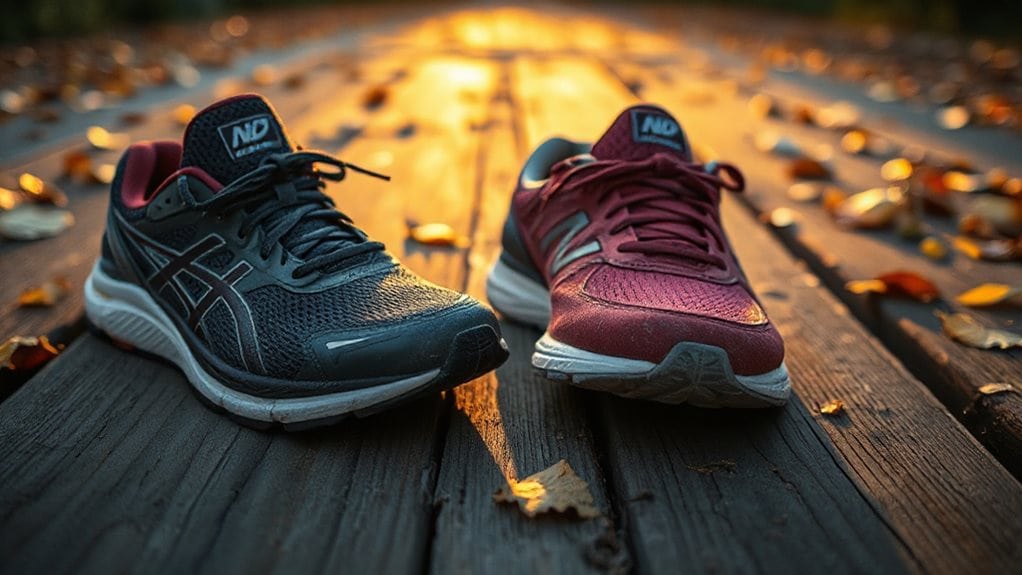
You’ve taken the right steps to extend the life of your running shoes with smart care and rotation, but choosing the right pair from the start makes all the difference.
Look for carbon rubber outsoles, PEBA or polyurethane midsoles, and reinforced uppers with welded seams. Features like heel cups, rock plates, and durable rubber compounds enhance support and longevity, so your shoes stay reliable, mile after mile.
Final Note
You now know how to spot worn-out shoes and extend their life. Stick to the 500-mile mark as a general guide, but also watch for flattened cushioning, smooth outsoles, or new aches. Your weight, running surface, and storage conditions all affect durability. Keep shoes dry, avoid heat and sun, and rotate pairs if possible. Choosing durable materials and proper fit helps too—smart habits mean safer, more comfortable runs.


