
Snowshoes keep you from sinking by spreading your weight over a larger surface, reducing pressure on the snow—like a foundation on soft ground. Their frame and deck work together to balance flotation and agility, while crampons underfoot grip ice and steep terrain. Bindings secure your boots, with rotating options aiding climbs and fixed ones offering stability. You’ll move differently, needing wider steps and more effort. Find out how to choose and use them for your next snowy expedition.
TLDR
- Snowshoes distribute your weight over a larger surface area to prevent sinking into deep snow.
- The frame and deck work together to provide flotation while maintaining balance and agility.
- Crampons underneath bite into ice and steep terrain for secure footholds in challenging conditions.
- Bindings secure your boots and allow natural movement, with types tailored to terrain and ease of use.
- Proper technique, like wider steps and using poles, enhances mobility and control on varied snow.
How Do Snowshoes Keep You From Sinking?
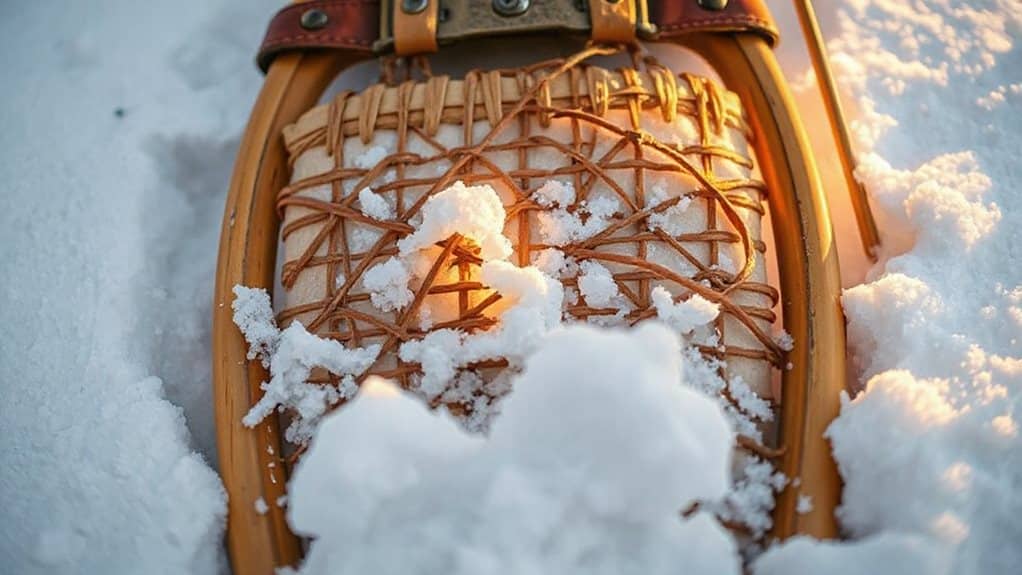
A lot of the reason you stay on top of the snow—instead of postholing down into it—comes down to simple physics: snowshoes spread your weight over a much larger surface area than your boots alone.
This reduces pressure on the snow, preventing sinking. The wider platform distributes your load evenly, letting you float atop soft layers, especially in deep, powdery conditions where every step counts.
Weight distribution is the key mechanism that allows snowshoes to keep you from sinking.
What Are the Key Parts of a Snowshoe?
You’ll stay steady in deep snow thanks to your snowshoe’s deck and frame, which spread your weight and keep you afloat.
The bindings hold your boots securely in place, while crampons underfoot give you grip on icy or steep terrain.
Together, these parts work as a system to keep every step stable and efficient.
Be sure to keep gear and clothes dry to maintain insulation effectiveness and comfort during long winter outings, especially your sleeping bag.
Deck And Frame Design
Visualize yourself stepping onto a winter trail, your snowshoes gliding over the surface like extensions of your boots—each part working together to keep you afloat.
You rely on a strong frame, often aluminum or composite, shaped for stability, while your deck—made of durable, flexible material—spans it, distributing weight.
Together, they balance flotation, traction, and agility, so you move freely, smoothly, across untracked snow.
Bindings And Traction Features
Step into deeper snow, and your snowshoes need to keep your feet secure while adapting to every shift in terrain—starting with the binding system that anchors you to the deck.
Choose rotating bindings to reduce fatigue on climbs, or fixed ones for stability on hard-packed trails.
Speed bindings let you step in fast, while BOA systems offer precise, glove-friendly tightening.
Pair these with well-placed crampons—especially underfoot—for reliable grip on icy or steep terrain.
Full vs. Fixed Rotation: Which Binding Is Best for You?
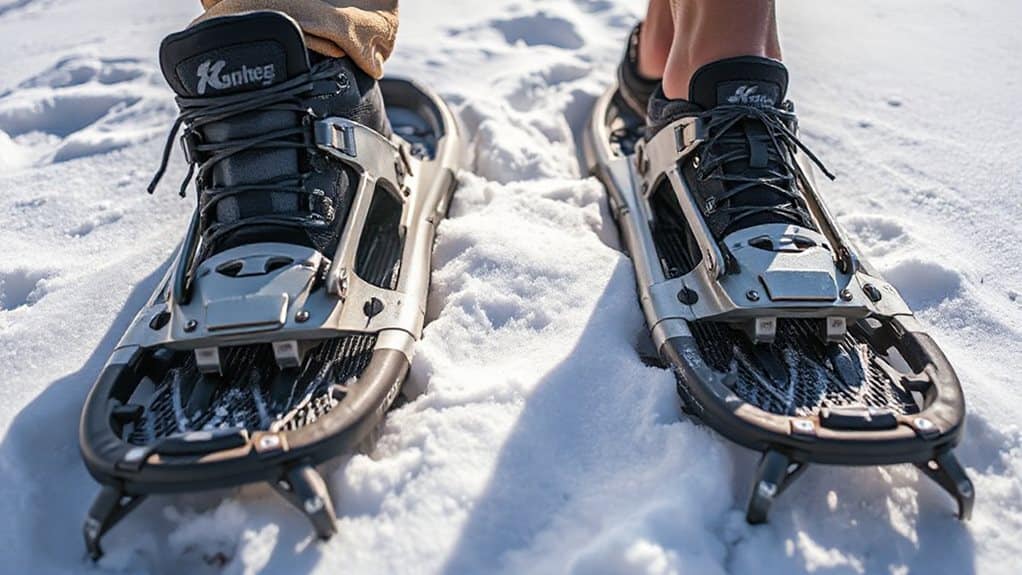
You’ll notice right away how full rotation bindings pivot at the ball of your foot, letting you walk more naturally, especially uphill or in deep snow.
Fixed rotation bindings, on the other hand, lock your whole foot down and work best when you’re trekking across flat, packed trails. Think about your terrain and stride—your choice shapes how smooth and efficient your snowshoeing feels.
Cold-weather campers should use sleeping bags rated lower than expected to stay warm; consider a sleeping bag liner to add insulation and protect your bag.
Full Rotation Explained
When tackling steep climbs or breaking trail through deep snow, full rotation bindings give you a distinct advantage by pivoting at the ball of the foot, letting the tail of the snowshoe swing freely with each step.
You’ll stride naturally, reduce fatigue, and shed snow easily. These bindings increase control on slopes, enhance maneuverability, and prevent buildup on your gear—ideal for backcountry freedom.
Fixed Rotation Benefits
While full rotation bindings shine on steep, soft slopes by letting your heel lift freely, fixed rotation designs take a different approach—one that’s built for stability and efficiency where the ground stays level.
You get a natural stride on packed snow, with the whole frame lifting together. These bindings offer better control, secure fit, and less snow drag, ideal for flat trails and firm conditions.
Choosing Your Binding
Picking the right binding comes down to matching your movement with the terrain you plan to tackle.
Full bindings lock your boot down for maximum control on steep, technical slopes. Fixed rotation keeps your heel secure, enhancing stability in deep snow.
Think about your route: rugged climbs favor full systems, while varied trails may suit fixed rotation’s balance of control and stride comfort.
How Snowshoes Grip Snow and Ice
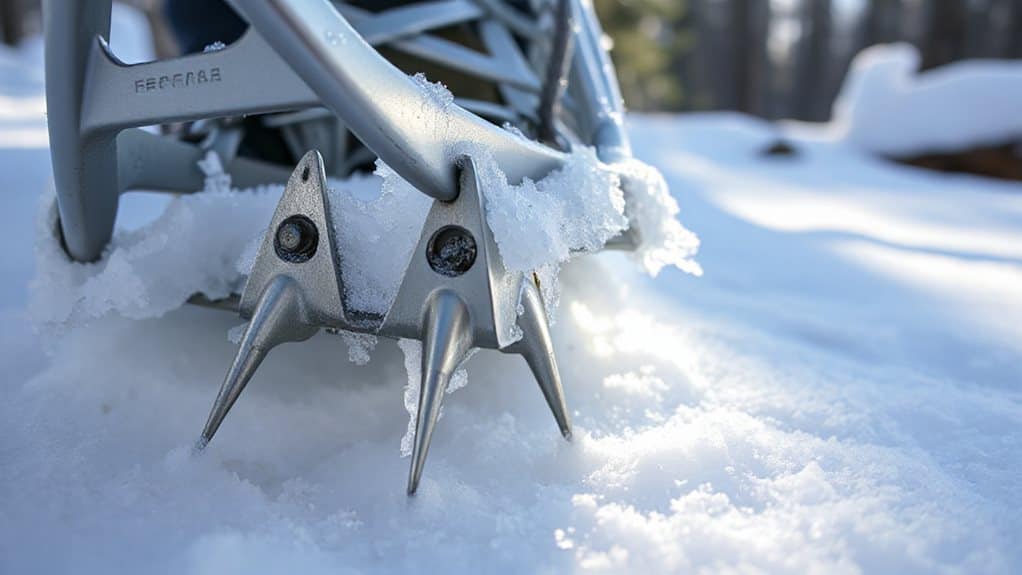
Though snowshoes float you across deep powder, they also need to grip when the terrain turns icy or steep—and that’s where specialized traction systems come into play.
You’ll find crampons with front points for kicking steps, coils for stability on slick streets, studs for running on ice, and spikes for secure footing. Choose bindings that fit well and stay flexible in cold weather, so every step feels confident, controlled, and free. It’s also important to remember proper layering keeps your feet warm and dry during long outings, especially using wool socks for insulation.
Why Walking in Snowshoes Feels So Different
Because snowshoes extend your footprint well beyond the natural width of your stride, you’ll need to adjust how you walk to stay balanced and efficient.
You’ll take wider steps, lift your knees higher, and engage your hips and thighs more. Poles help, and practice improves stability. Adopt the rhythm—soon it feels natural, freeing you to venture deeper into winter’s quiet wilds. Use terrain advantages like natural wind blocks to pick sheltered routes and campsites for more comfortable outings.
Best Snow Conditions for Snowshoeing
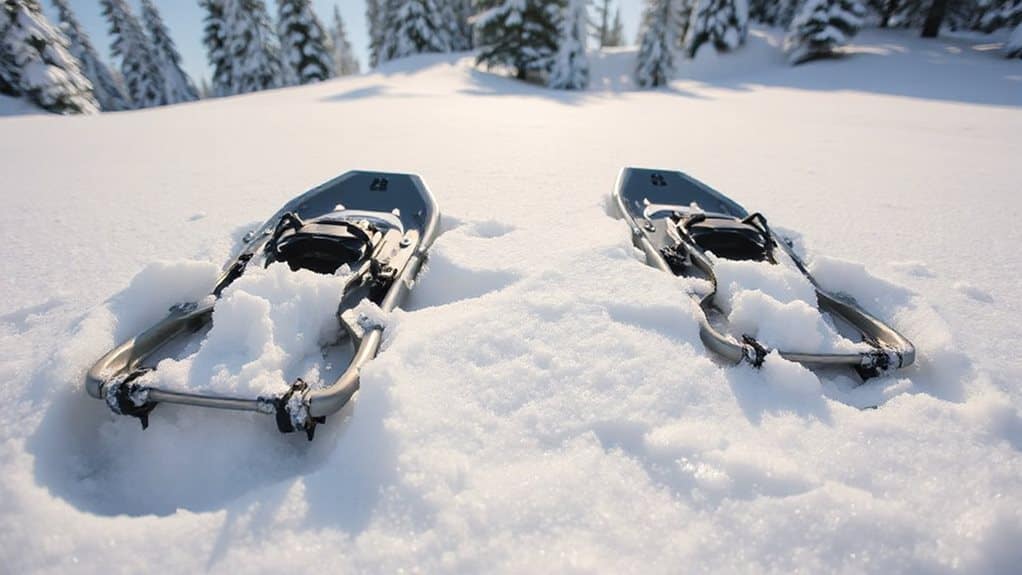
When snow blankets the ground just right, snowshoeing feels effortless—gliding over a firm, packed trail or floating across light powder with each step.
You’ll want 2–4 inches of snow for basic traction, but deeper, fresh powder demands larger snowshoes for flotation.
Packed snow reduces effort, while crusty snow calls for solid crampons.
Aim for cold, stable conditions—especially in late December to early January—for the best, most consistent coverage and control on your winter trek.
Always carry avalanche safety gear like a beacon, probe, and shovel to stay prepared in avalanche-prone areas and practice avalanche awareness.
How to Nail the Kick Turn and Other Moves
You’ve got the right snow under your feet—firm enough for grip, deep enough for float—and now it’s time to command the moves that keep you moving confidently across the slope.
Nail the kick turn by stepping past your turn point, shifting weight smoothly, and rotating one ski at a time.
In soft snow, shove the tail in; on hard pack, pivot with bent knees and use stamped platforms.
Keep poles close, low, and out of the way—especially with a pack.
Practice on flats first, then trust the technique when the slope steepens.
Match Snowshoe Type to Terrain and Use
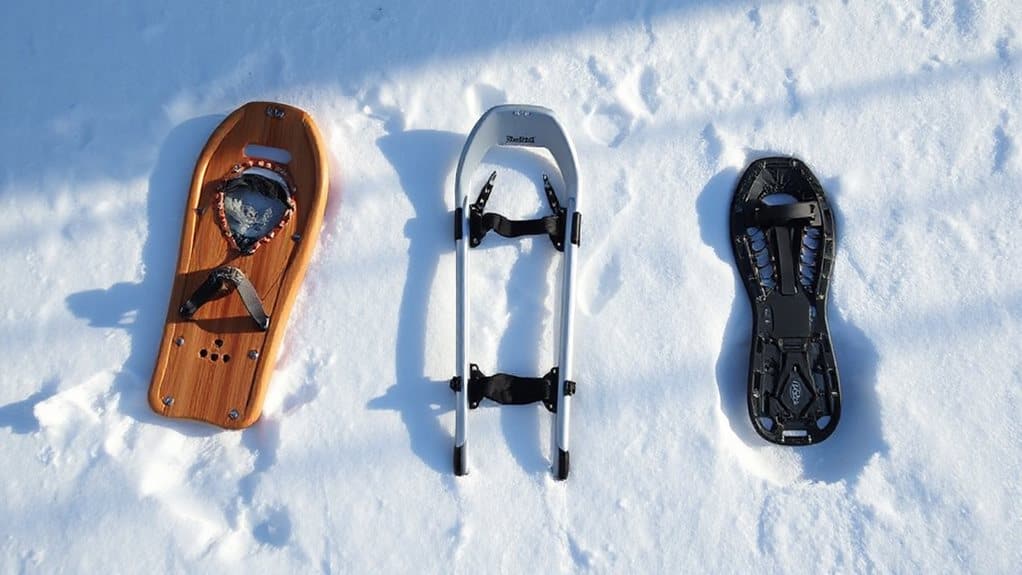
While your destination and snow conditions vary, picking the right snowshoe guarantees you stay stable, efficient, and comfortable on every winter trek.
Choose flat terrain snowshoes for easy trails and casual use, rolling terrain models for mixed conditions, or mountain snowshoes when tackling steep, icy ascents—each designed to match your movement, load, and freedom to roam.
Common Snowshoeing Mistakes and How to Avoid Them
Though snowshoeing might look like walking on snow, using the wrong technique can quickly turn a peaceful trek into a frustrating slog.
Take wider steps to stop frames from clanking, especially if you’re used to a narrow stride. Lean forward uphill, dig in with kick-steps, and use heel-lifts. Lean back downhill, shorten your stride, and plant longer poles ahead for balance.
Final Note
You now know how snowshoes distribute your weight to keep you from sinking, how bindings and crampons work, and why stride feels different. Matching your gear to terrain and conditions makes all the difference. With the right technique—like perfecting kick turns—you’ll move efficiently and safely. Avoid common mistakes by adjusting your pace and posture. Snowshoeing opens winter’s quiet beauty, so get out there, stay prepared, and enjoy every step across the snow.


