
Hiking in running shoes can be safe on well-maintained, flat trails where stability, support, and grip are less critical. However, on rugged, uneven, or steep terrains, they may increase risks like slips, twists, or injuries due to less ankle support and minimal tread. While lightweight and comfortable, they lack the protection needed for tougher conditions. If you want to understand when and how to choose the right footwear, exploring the details can help you make informed decisions for your next excursion.
TLDR
- Running shoes are suitable for well-maintained, less technical trails but offer limited support on rugged, rocky, or steep terrain.
- They provide less ankle support and protection, increasing injury risk on uneven or challenging surfaces.
- Minimal tread and outsole grip can lead to slipping on loose rocks, mud, or icy conditions.
- Proper footwear is essential for safety; rugged terrain typically requires hiking boots or trail shoes with deeper lugs.
- Additional safety gear like traction devices and gaiters enhance safety when using running shoes on difficult trails.
Can You Safely Hike in Running Shoes?

While it’s possible to hike in running shoes, whether it’s safe depends largely on the trail conditions and the type of shoes you’re wearing.
Running shoes work well on mild, well-maintained trails with stable terrain, offering comfort and flexibility.
However, for rugged or rocky trail sections, they may lack the support, grip, and durability needed to guarantee your safety.
What Are the Risks of Hiking in Trail Running Shoes?
Hiking in trail running shoes can increase your risk of injuries because they offer less ankle support and protection compared to hiking boots, especially on uneven terrain.
Their lighter, more flexible design can also make slipping more likely on loose rocks, roots, or muddy surfaces, which may lead to falls.
Additionally, the minimal outsoles and lack of rugged tread reduce traction, making it easier to lose your footing in challenging conditions.
Furthermore, without proper map orientation and navigation skills, you may find it harder to avoid dangerous areas or get lost on unfamiliar trails.
Reduced Foot Protection
Have you considered how trail running shoes might leave your feet vulnerable on rugged trails? Reduced foot protection with trail running shoes means less reinforcement, thinner soles, and minimal ankle support.
This increases risks of cuts, punctures, and injuries from rocks, roots, or debris.
This limited protection can lead to foot fatigue and higher injury chances during your hike.
Increased Slipping Risk
Wondering if trail running shoes are safe for rugged terrain? Be aware that these shoes often have less aggressive lugs and lighter soles, increasing slipping risks on steep, muddy, or rocky surfaces.
Their minimal tread and reduced ankle support can compromise grip and stability, especially on technical trails, making slips and falls more likely during your hike.
When Are Trail Running Shoes a Good Choice for Hiking?
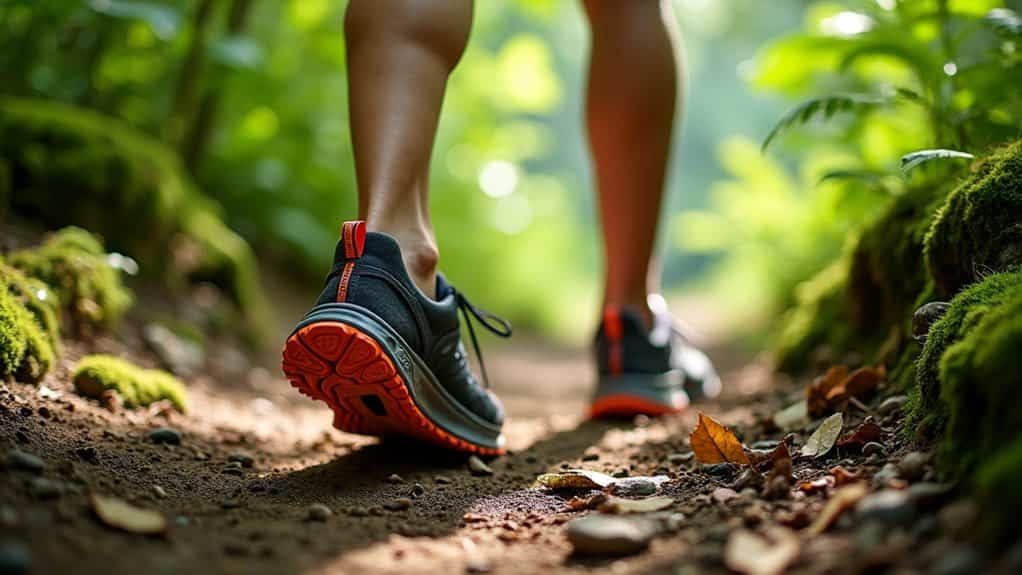
Trail running shoes can be a practical option for hiking when your plans involve mild, well-maintained trails that lack significant obstacles or rugged terrain.
Their lightweight, flexible design offers comfort and agility for shorter, less technical hikes.
Features like rugged outsoles with deep lugs and breathable mesh uppers make hiking shoes suitable when speed, comfort, and flexibility matter more than maximum support.
Additionally, considering kayak brands and their reputation for quality can help ensure you choose the right gear for your outdoor adventures.
What Features Matter Most in Trail Running Shoes for Hiking?
When choosing trail running shoes for hiking, focus on features like traction and grip to guarantee stability on different terrains, especially on steep or rocky paths.
Support and comfort are equally important, with cushioned midsoles and structural elements that help reduce fatigue and maintain balance.
Prioritizing these features will help you select footwear that keeps you safe and comfortable throughout your hike.
Traction and Grip
Good traction and grip are essential features to contemplate when choosing trail running shoes for hiking, especially if you’ll encounter uneven or slippery terrain.
Trail Runners with deep, aggressive lugs and Vibram MegaGrip soles offer better traction, while sticky rubber compounds improve grip in wet conditions.
The pattern and placement of outsole lugs directly influence stability on rugged, uneven surfaces.
Support and Comfort
Choosing the right trail running shoes for hiking depends heavily on their support and comfort features, which directly impact your overall experience on the trail.
Look for a secure fit, stable midsole, and responsive foam to prevent fatigue and blisters.
Reinforced heel counters and arch support help maintain foot stability.
Breathable mesh uppers keep your feet dry and comfortable over long distances.
How Does Terrain Influence Your Shoe Choice?
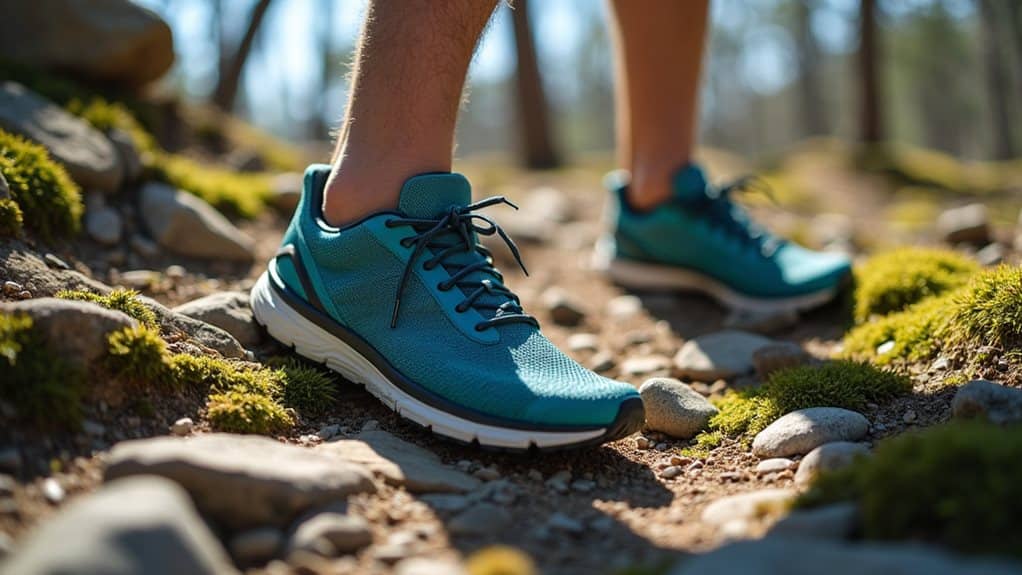
The type of terrain you encounter on your hike plays a crucial role in determining the most appropriate footwear. For technical terrain, sturdy hiking boots or trail-specific shoes with deep lugs are essential for grip and support. On smoother paths, trail runners or sneakers may suffice. But rugged or uneven ground demands footwear that keeps you secure and protected. For icy or steep slopes, specialized traction devices like crampons or microspikes can significantly enhance safety and stability.
How Do You Find the Right Fit and Support?
Finding the right fit and support is key to enjoying your hike and preventing discomfort or injury. Focus on shoes that provide proper fit, supporting the three anchoring points—heel, big toe base, and pinky toe base—for full ground contact. Look for support features like cushioned midsoles and secure lacing systems to stabilize your foot and reduce fatigue. Additionally, consider the setup time and ease, since quick-setup models with pre-attached poles can help you get on the trail faster and with less hassle.
What Are the Pros and Cons of Using Trail Runners for Hiking?

Trail runners offer several advantages for hikers who prioritize speed and agility, thanks to their lightweight design and flexibility. However, they provide less ankle support, increasing injury risk on rugged terrain.
Their rugged outsoles deliver excellent traction, and their breathability keeps feet dry. But, they wear out faster and offer less protection from rocks, roots, and weather.
How Can You Hike Safely in Running Shoes on Moderate Trails?
Hiking safely in running shoes on moderate trails requires careful preparation and awareness of their capabilities and limitations. Choose trail running shoes with rugged outsoles, deep lugs, and reinforced features to guarantee traction and protection. Support all three anchoring points of your foot, wear moisture-wicking socks, and regularly inspect your shoes for wear, replacing them as necessary for maximum safety. Incorporating appropriate rigging techniques can also improve stability and grip on uneven terrain.
What Gear Should You Use Along With Running Shoes for Hiking?

When using running shoes for hiking, it’s important to complement them with the right gear to enhance comfort, safety, and performance.
Use moisture-wicking socks to keep your feet dry and consider trail-specific insoles or orthotics for better support.
Gaiters prevent debris entry, while traction devices improve grip on icy or slippery terrain, ensuring a safer, more enjoyable hike.
Additionally, consider using a camping tent with screened porch or other protective shelter to shield yourself from insects and weather elements during your outdoor adventures.
Is Hiking in Running Shoes Right for Your Next Adventure?
Deciding whether hiking in running shoes is suitable depends largely on the terrain you plan to encounter and your comfort needs. While trail running shoes offer flexibility and lighter weight, they often lack the ankle support and rugged traction essential on rough or unpredictable trails. Additionally, proper footwear can help prevent injuries by providing joint protection and stability on uneven terrain. Evaluating these factors will help you determine if your footwear choice aligns with your safety and performance requirements for the next expedition.
Terrain Compatibility and Safety
While running shoes can be suitable for certain trail conditions, their safety largely depends on the terrain you’re tackling.
For moderate off-trail paths, trail running shoes with rugged traction and aggressive lugs offer decent grip, but they may fall short on steep, rocky, or muddy terrain.
Proper fit and sole tread pattern are essential for ensuring safety on challenging surfaces.
Support and Comfort Needs
Although running shoes are designed primarily for forward motion and cushioning, they can sometimes meet support and comfort needs for hiking, especially on moderate trails.
Their lightweight, flexible design enhances comfort and breathability, reducing fatigue. However, proper fit and supportive insoles are essential to prevent foot fatigue and injuries.
Making them suitable mainly for shorter, less rugged hikes.
Final Note
Hiking in running shoes can be suitable for well-maintained, moderate trails, especially if they provide good traction, support, and durability. However, for rugged or uneven terrain, hiking boots offer better ankle protection and stability. Always consider the trail conditions and your comfort needs, and supplement your shoes with appropriate gear like hiking socks and poles. Making informed choices guarantees your safety and enjoyment on the trail, regardless of the footwear you select.


