
You hear coyotes howling at night because the darkness lets their resonant calls travel far, letting pack members reinforce bonds, mark territory, and coordinate movements. The alpha pair starts with low notes and yips, then pups and betas join, creating a layered chorus that sounds like an auditory fence, deterring rivals up to several kilometers away. These calls also amplify perceived pack size, especially during the September‑November surge, and help reunite members after solo hunts. If you keep going, you’ll uncover even more details.
TLDR
- Night‑time howling reinforces pack cohesion, allowing members to locate each other and synchronize activities after dusk.
- Howls serve as an auditory “fence,” broadcasting territorial ownership and deterring rival packs over several kilometers.
- During twilight patrols, low‑light conditions amplify the perceived size of the pack, strengthening defense of boundaries.
- Post‑hunt yip‑howls reunite dispersed hunters, confirming family bonds and re‑establishing group hierarchy.
- Seasonal and habitat variations influence howling intensity; urban coyotes use shorter bursts, while rural packs emit broader, resonant calls.
Coyote Vocal Communication: An Overview
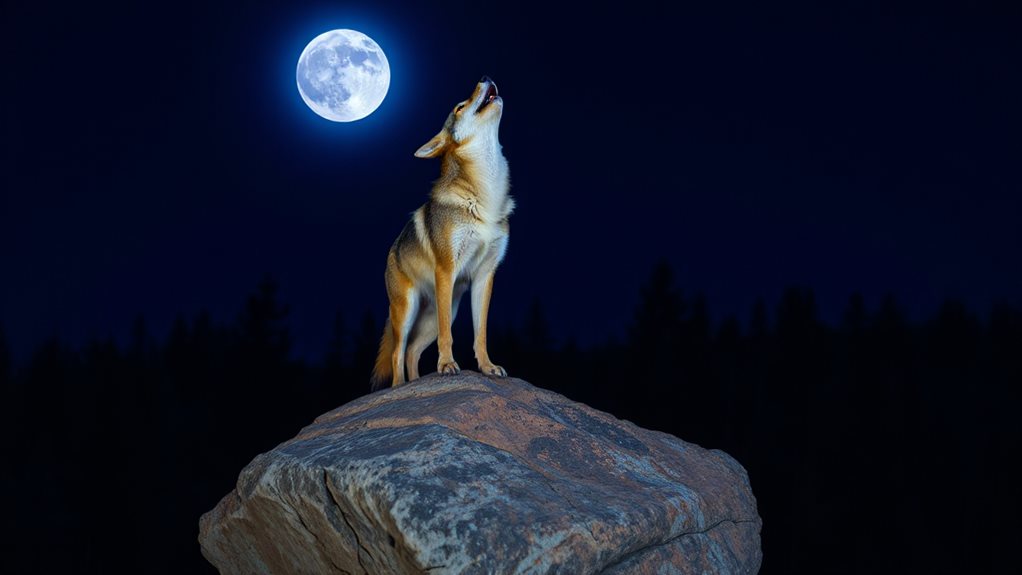
How do coyotes keep their packs coordinated across the night‑time landscape? You hear howls echoing far, yips that sound like playful pups, and barks that warn intruders. Their mouths shape sing‑song yips, whines, and raspy growls, creating a chorus that feels larger than the few individuals. Each call—interrogation, challenge, distress—serves a purpose, letting you understand their free‑spirited, adaptable communication. Individual howl patterns allow family members to recognize each other over long distances. Plan ahead when observing to stay safe and minimize disturbance by keeping your distance and not feeding wildlife observe from a distance.
Night‑time Howls: Pack Cohesion & Territory Defense
You’ll notice that a pack’s howls at dusk act like a living map, reinforcing bonds among members while broadcasting the group’s borders to rivals. When the alpha pair leads with a mix of yips and low notes, the pups and beta coyotes join in, creating an auditory fence that supplements scent marks and deters intruders.
This coordinated chorus, heard up to several kilometers away, serves both as a social glue and a defensive signal, keeping the territory secure through the night. High-performance marine engineering has no role here, but the way sounds travel at night can be influenced by corrosion‑resistant materials and environmental conditions.
Cohesion Through Howls
Ever wonder why a chorus of yips and howls erupts just before sunrise? You hear the mated alpha pair start, male howling, female interspersing yips and barks, while pups from this and previous seasons jump in, creating a layered chorus that feels like dozens of voices.
This nightly ritual binds the family, reinforces bonds after hunting, and signals unity to any nearby rival pack.
Territory Marking At Dusk
Why do coyotes choose dusk to patrol and mark their territory? At twilight you’ll find them strolling the edges, sniffing, urinating, and reinforcing scent lines when humans are quiet.
This low‑light window lets them broadcast ownership through howls, deterring rivals and keeping pack boundaries clear.
Dusk patrols also help breeding pairs maintain exclusive space, stabilizing population density and ensuring freedom across their domain.
Auditory Defense Mechanisms
How do coyotes use night‑time howls to keep their packs together and defend their territory?
You hear a mated alpha pair yip‑howling, females interspersing yips and barks, pups echoing nearby, creating a chorus that bonds the family and summons hunters home.
Simultaneously, the pack’s layered calls act as an auditory fence, warning rivals, amplifying perceived size, and reinforcing boundaries during moonless evenings.
Yip‑Howls: Their Role in Post‑Hunting Family Bonding
When the sun sets and a coyote’s solo hunt ends, it often breaks into a series of yip‑howls that ripple through the night, signaling the pack’s reunion. You hear short, rising and falling howls mixed with staccato yips, each note locating dispersed members, reinforcing family bonds, and quietly marking territorial borders. This collective chorus lets pups announce new sites, parents confirm cohesion, and the pack maintain harmony without conflict. Camping near forests and staying on durable surfaces helps protect the ecosystems where coyotes and other wildlife live, so always choose designated sites and minimize your impact.
Breeding‑Season Howls: Pair‑Bond Signals in Late Winter
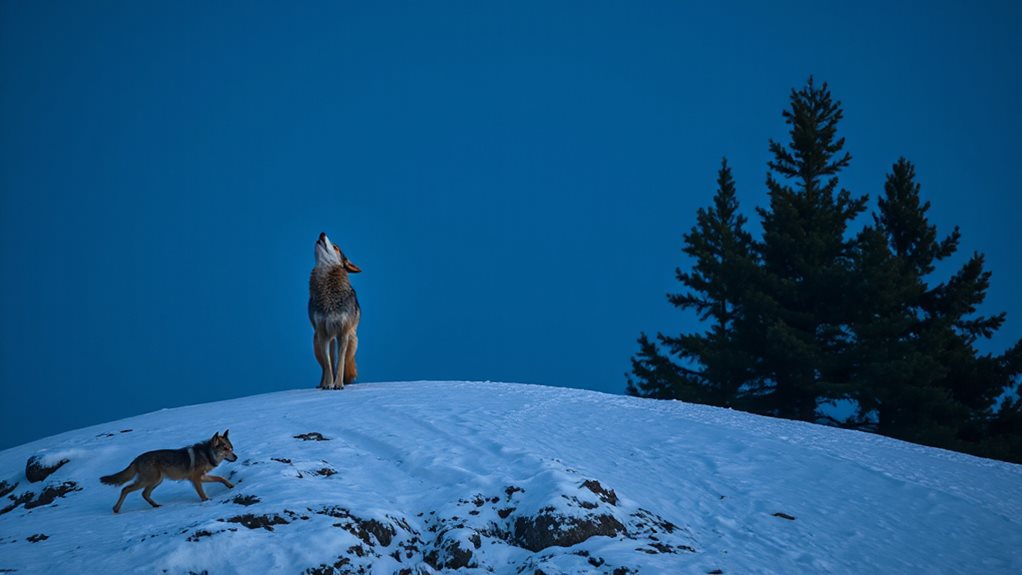
Ever notice how the night air seems to thrum with a softer, more intimate chorus as winter fades?
During late winter, breeding pairs exchange pair‑bond howls that mimic intruding families, signaling territory and unity.
Females emit higher‑pitched invitation howls, males answer with sharp barks, then both howl together, reinforcing their bond while warning rivals.
This coordinated chorus protects dens and secures mates.
Birds and mammals often use vocalizations to mark territory and communicate breeding status, much like anglers seek specific seasons for peak activity in places like breeding season hotspots.
Seasonal Peaks: Why Howls Surge From September Through November
Why do coyote howls seem to swell in volume and frequency from September through November? You’re hearing pups leaving natal territories, young coyotes staking new ground, and families broadcasting “Hey, I’m here.” Acoustic tricks make a duo sound like a pack, while cascading responses amplify the chorus. Hunger, territorial challenges, and the “beau geste” illusion all drive this seasonal surge. Many hikers in Yosemite also report hearing increased vocal activity near scenic viewpoints like Sentinel Dome.
Falsetto Yips & Staccato Howls: What They Mean
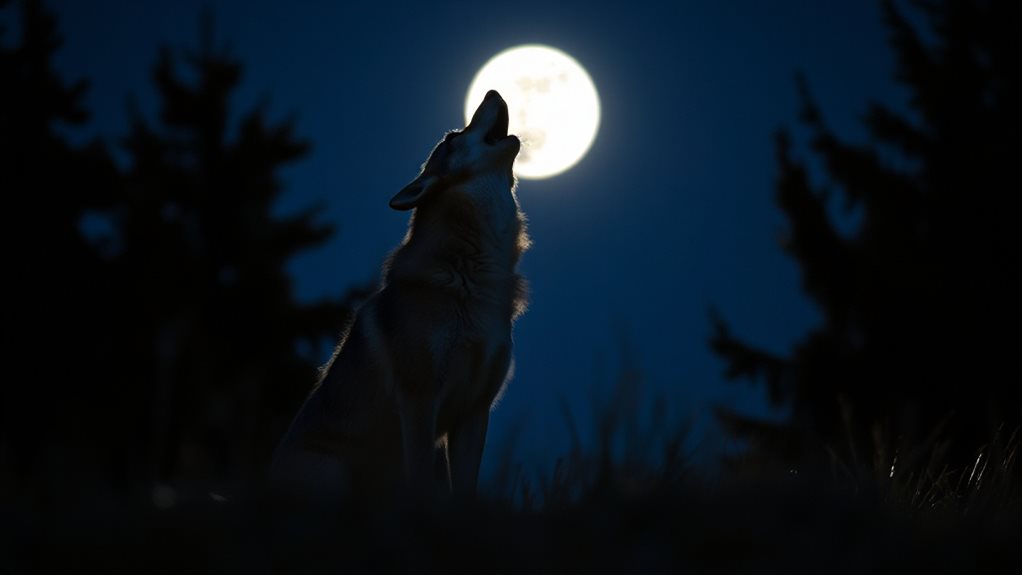
What do those high‑pitched “yips” and rapid, staccato bursts of howls tell you about a coyote’s mood? You’ll hear falsetto yips when they’re content, playful, or greeting family, while short, chattering staccato howls stitch those yips into a communal chant.
Raspy, bark‑laced bursts signal agitation or warning, and the mix of tones can make a lone coyote sound like a whole pack, broadcasting presence and territory.
Coyote Auditory Illusions: Why Your Ears Overestimate Pack Size
You’ll notice that a single coyote howl can sound like a whole pack, a trick our brains play called the auditory overestimation phenomenon, which often leads us to imagine twice as many animals as are actually calling.
This bias, sometimes referred to as the Beau Geste Effect, stems from the way overlapping howls and yip‑yaps blend together, making our ears over‑interpret the density of the sound.
Understanding this illusion helps you gauge coyote activity more accurately, without assuming the night is teeming with larger groups than reality.
Auditory Overestimation Phenomenon
Do you ever wonder why a single coyote’s howl can sound like an entire pack? Research shows that human listeners consistently overestimate the number of howling coyotes—often by nearly double—because the animals’ complex vocalizations blend into a richer, denier soundscape. You’ll hear one or two yips, yet your brain interprets them as three to twelve, creating a vivid illusion of larger packs that skews perceived density and influences wildlife management.
Beau Geste Effect
Why does a lone coyote’s howl sometimes feel like a chorus of many? You hear the Beau Geste Effect: a single pair’s howls, yips, barks, and pup cries blend, and terrain bends the sound, making two coyotes sound like seven or eight. This auditory illusion inflates pack size, reinforcing territory, bonding, and alerting allies, while your ears overestimate the numbers.
Urban vs. Rural Pack Size & Howling Strategies
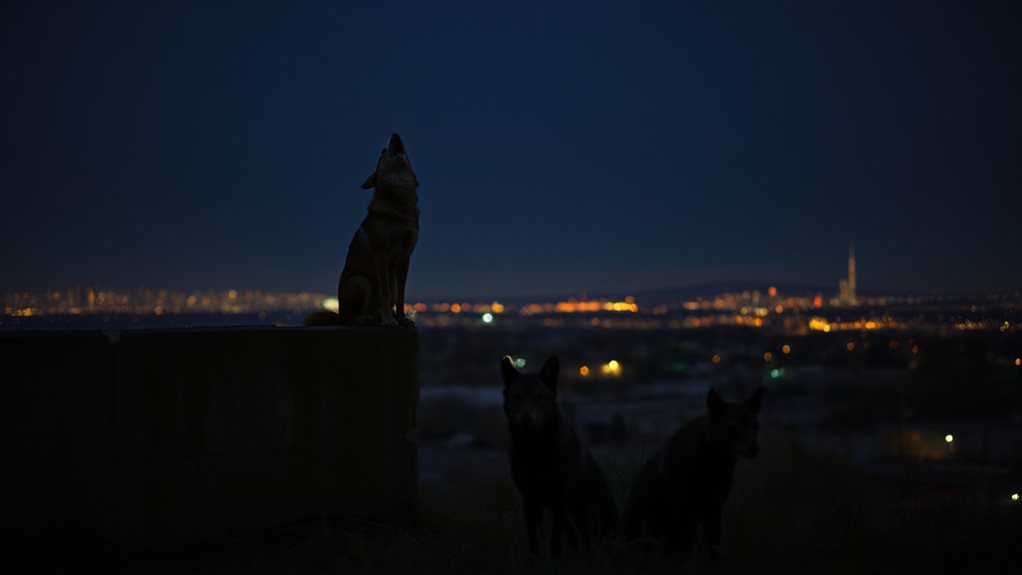
Ever wondered how a coyote’s pack size shapes its night‑time howling?
In cities you’ll find packs under two square miles, often centered on parks, so they howl in short, sharp bursts to mark tight territories, while solitary urban coyotes roam ten‑plus square miles, using longer calls to claim space.
Out in the country, families spread across larger ranges, needing broader, resonant howls to reach distant mates and rivals, and their higher genetic diversity fuels varied vocal patterns.
Final Note
You’ve learned that coyote howls serve many purposes—keeping packs together, defending territory, reinforcing family bonds after a hunt, and signaling pair bonds during breeding season. Seasonal peaks in September through November reflect heightened social activity, while urban coyotes adapt their calls to denser environments. Understanding the nuances of yips, falsetto notes, and staccato bursts helps you interpret what you hear, and recognizing auditory illusions prevents overestimating pack size. Armed with this knowledge, you can appreciate coyote communication with confidence.


