
Your fishing reel’s drag is a braking system that controls spool rotation and lets line slip under pressure, preventing breakage when a fish runs hard. It uses friction plates or washers that press together when you tighten the drag knob, creating resistance that tires out fish while protecting your line. Most anglers set drag at 25% of their line’s pound test—so 20-lb line slips at roughly 5 pounds of pressure. Understanding proper setup, adjustment techniques, and maintenance practices will help you land more fish consistently.
TLDR
- Drag is a braking system on fishing reels that controls spool rotation and allows line to slip under pressure.
- It prevents line breakage during powerful fish runs by releasing line smoothly while maintaining tension to tire the fish.
- Common drag types include star drag on baitcasters, front/rear drags on spinning reels, and lever drags on offshore reels.
- Set drag at 25% of line strength; for example, 20-lb test line should slip at 4–6 pounds of pressure.
- Test drag by pulling line against a scale until it releases, then adjust based on target species and conditions.
Understanding Drag: Definition and Core Function
When you’re first learning to fish, drag might sound like a vague term, but it’s actually one of the most critical mechanical features of your fishing reel.
It’s fundamentally a braking system that controls how your spool rotates, regulating tension on your line when a fish pulls. This resistance tires out the fish while preventing your line from snapping under sudden, powerful runs.
Think of drag like car brakes—it provides the stopping power you need to control a fish’s movement without breaking your line. Fish finders with built-in GPS can help you mark successful spots where you tested different drag settings.
Common Types of Drag Systems on Fishing Reels
Fishing reels come equipped with several distinct drag systems, each engineered to serve different fishing styles, target species, and angler preferences.
You’ll encounter star drags on baitcasting reels, front and rear drags on spinning reels, lever drags on offshore conventional reels, and specialized fly reel systems including disc, click-and-pawl, and hybrid designs. Many anglers also pair these systems with electronic or mechanical aids like fish finders to improve overall success on the water.
Each type offers unique advantages in smoothness, adjustability, and performance characteristics. Disc drag systems use friction between discs made of materials like carbon fiber or Teflon to provide exceptionally smooth and consistent resistance with precise adjustments.
The Mechanics Behind How Drag Works
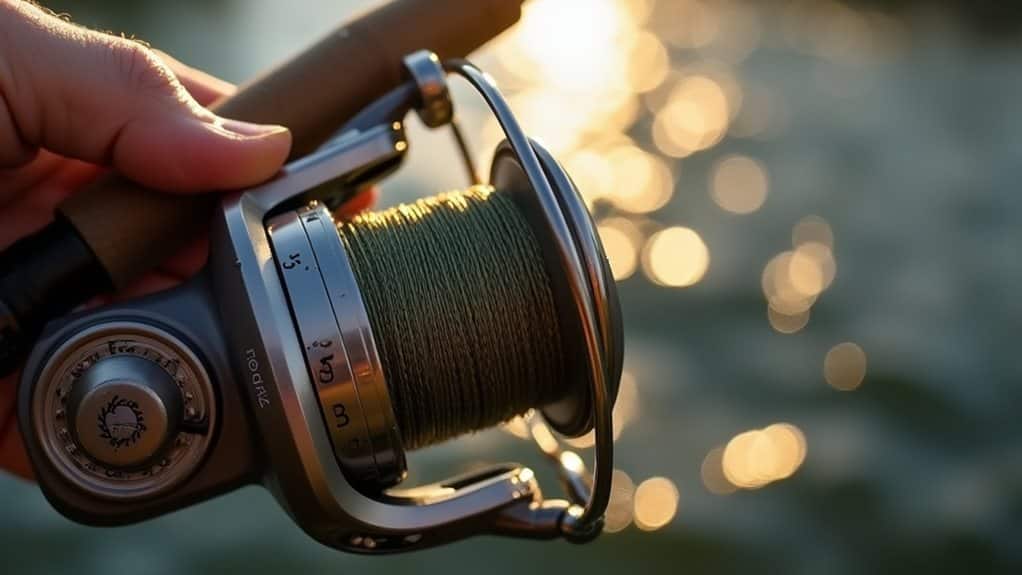
Understanding the various drag systems available leads naturally to a more important question: what’s actually happening inside your reel when a fish makes a powerful run?
Your drag functions as a controlled brake, using friction plates or washers that press together when you tighten the drag knob. This friction resists the spool’s rotation, allowing line to slip out under pressure rather than snapping when fish pull hard. Combos built with quality components like graphite or stainless steel often provide more consistent drag performance due to improved material durability and construction.
How to Set Your Drag Properly
Setting your drag properly stands as one of the most critical skills you’ll develop as an angler, yet it’s often overlooked by beginners who focus more on casting technique or lure selection.
Start by setting drag to approximately 25% of your line’s pound test—this balanced resistance prevents breakage during hard runs while maintaining sufficient pressure for effective hooksets and tiring fish through controlled line release. A reliable depth reference using a depth finder can help you choose appropriate line and drag settings for the water you’re fishing.
The Role of Drag During the Fight
Once your hook is set and the battle begins, drag becomes your primary tool for managing the fish’s powerful runs and sudden bursts of energy.
When a fish makes its first explosive dash away from you, properly set drag allows line to slip off the spool smoothly rather than snapping under the strain, absorbing that sudden surge of power while maintaining constant pressure.
You’ll need to control these runs carefully—letting the fish take line when it’s pulling hard, but keeping enough resistance to tire it out without overwhelming your line’s breaking strength.
Controlling Fish Runs Safely
When a fish makes a powerful run, your drag system becomes the critical buffer between landing your catch and watching it snap your line.
Set your drag to roughly 25% of your line’s breaking strength, allowing controlled line release without excessive slack.
You can palm the spool for instant adjustments during surges, helping tire the fish through consistent resistance while protecting your tackle from shock loads and potential breakage.
Absorbing Sudden Power Surges
Your drag setting provides the foundation for controlling fish runs, but the system’s most important work happens in those sudden, explosive moments when a fish surges with unexpected power.
The drag releases line when tension exceeds your preset limit, preventing breakage during jumps or rapid direction changes. This controlled slippage dissipates excess energy, protecting your line, hooks, and connections from the shock that would otherwise cause failure.
Testing and Adjusting Your Drag Settings
Testing your drag settings regularly is essential for preventing line breakage and lost fish, and you can do this by using a digital fishing scale attached to your line or simply pulling the line by hand to feel when it begins to slip.
Before each fishing trip, check that your drag releases at roughly 20–30% of your line’s breaking strength, which means a 20-lb test line should slip at around 4 to 6 pounds of pressure.
You’ll also need to adjust your settings throughout the day if conditions change, such as when targeting different species, fishing around heavy structure, or noticing temperature-related changes in your line’s performance.
How to Test Drag
Properly testing your drag guarantees you’ve set the correct tension to land fish without breaking your line or pulling the hook free.
Attach your fishing line directly to a spring scale, then pull steadily until the drag releases line. Note the reading—it should measure 20% to 30% of your line’s breaking strength.
Repeat several times to make certain smooth, consistent engagement without jerks or sticking.
When to Adjust Settings
Knowing when to adjust your drag settings separates successful anglers from those who lose fish or break lines at critical moments.
You’ll need to tighten drag when fishing heavy cover to prevent fish from reaching snags, and loosen it in open water to let them tire naturally.
Adjust on the fly during strong surges, when switching techniques, or as fish behavior changes mid-fight to maintain peak control.
Maintenance Tips for Optimal Drag Performance
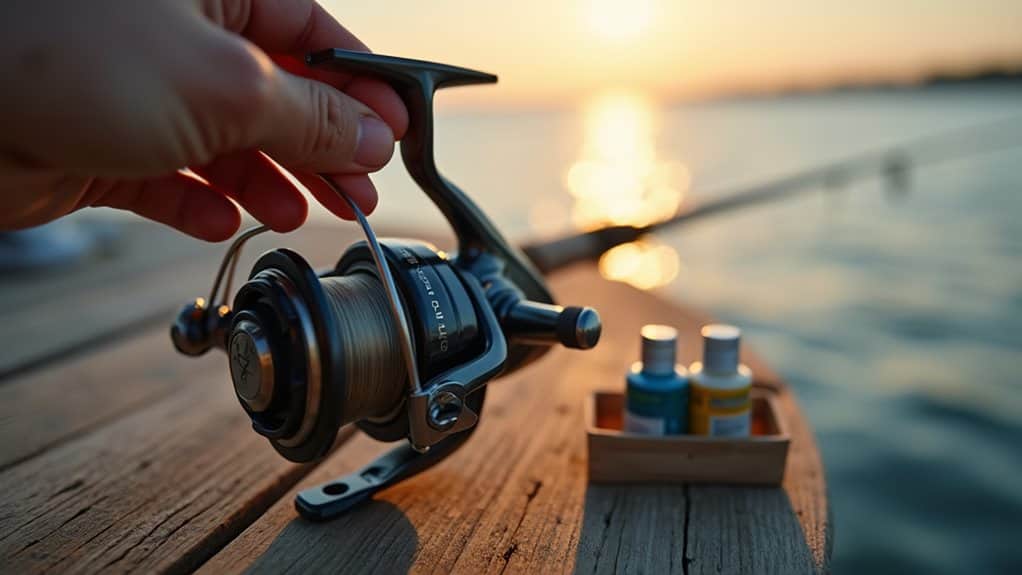
Your fishing reel’s drag system demands regular attention if you want it to perform reliably when a trophy fish tests your skills.
After each saltwater outing, rinse your reel thoroughly with fresh water to prevent corrosion.
Disassemble the drag components periodically, clean them with warm soapy water, and dry everything completely.
Apply manufacturer-recommended lubricants sparingly, and always loosen the drag before storage to prevent washer compression.
Final Note
You’ve now got the fundamentals of drag systems down, from understanding how they function to setting them correctly for different fishing scenarios. Remember, proper drag adjustment can mean the difference between landing your target fish and watching it snap your line. Practice testing your drag settings before you hit the water, maintain your reel regularly, and you’ll develop the confidence needed to handle any fish that strikes your line.


