Your carry-on bag is the luggage you keep with you during your flight, stored in the overhead bin from check-in to landing. It holds essentials like clothes, toiletries, and snacks, and must meet size limits—usually around 22 x 14 x 9 inches, including wheels and handles. Most airlines also allow a personal item, like a backpack, under the seat. TSA rules apply to liquids and gels, but medical items are often exempt. Stick to guidelines, and you’ll breeze through security—there’s more to know about flying smart.
TLDR
- A carry-on bag is luggage kept with you in the aircraft cabin, stored in overhead bins during the flight.
- It typically holds clothes, toiletries, and essentials, staying accessible throughout the journey.
- Most airlines allow one carry-on and one personal item, like a backpack or purse, for convenience.
- Size limits usually max out around 22 x 14 x 9 inches, including wheels and handles.
- Liquids must follow TSA’s 3.4-ounce rule, but medical items may exceed limits with proper documentation.
What Is a Carry-On Bag?
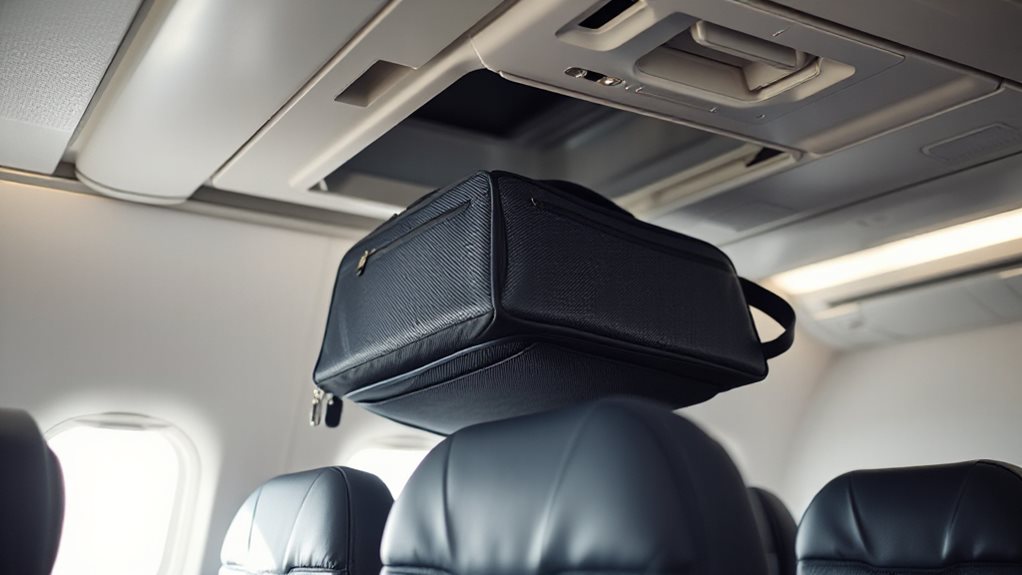
Think of your carry-on bag as your travel companion that stays with you from check-in to touchdown.
It’s the luggage you bring into the cabin, storing it overhead for easy access. Known as hand or cabin baggage, it’s not checked, so you keep your essentials close.
Unlike larger suitcases, it must meet size and weight limits set by airlines.
Most airlines allow a maximum combined dimension of 115 cm, with typical measurements like 55 cm x 45 cm x 25 cm, though policies vary by carrier (115 cm combined size).
Full-time RVers should also consider mail handling and residency needs when planning longer travel.
Carry-On vs. Personal Item: Key Differences
You’ve got your carry-on packed and ready—it’s the bag that keeps your clothes, toiletries, and extras within reach during your flight.
Now, don’t forget your personal item, like a backpack or tote, for essentials like your passport, phone, and snacks. It fits under the seat, stays with you, and avoids overhead hassle.
Airlines usually allow both, but check your fare’s rules—some basic tickets limit you to just one.
Car camping can be a practical alternative when ground accommodations are full, and it often involves sleeping in vehicles like vans and SUVs that provide safety and dryness.
Carry-On Size Limits by Airline
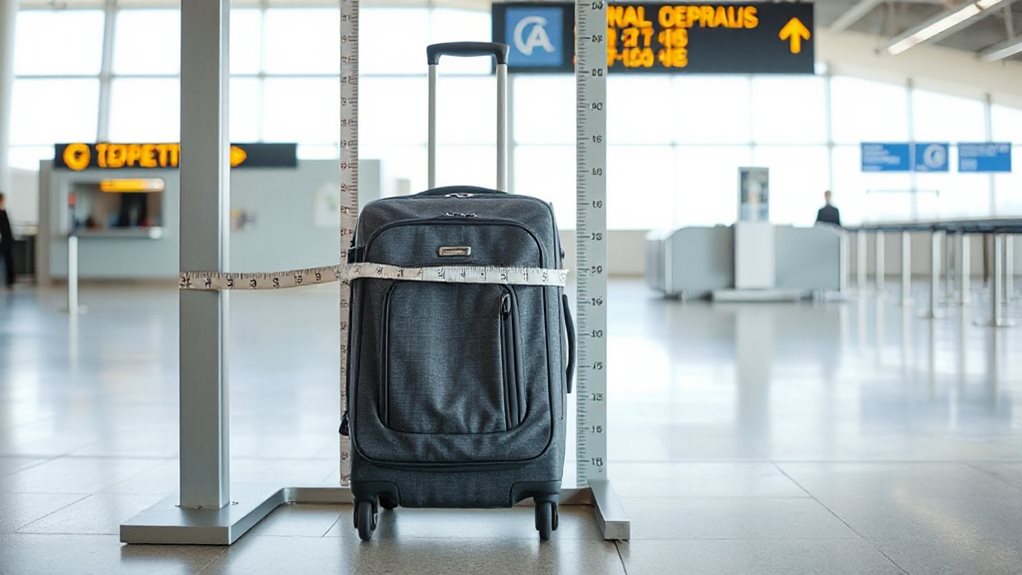
When it comes to carry-on size limits, knowing the exact dimensions can save you time, stress, and unexpected fees at the gate.
Most major U.S. airlines, like Delta and American, allow 22 x 14 x 9 inches—wheels and handles included. Southwest permits slightly larger bags at 24 x 16 x 10 inches, while budget carriers like Frontier restrict free items to 18 x 14 x 8 inches. Dealers are often motivated to make sales at the end of the season, which can be a good time to buy an RV.
Carry-On Weight Limits: What Airlines Allow
While size often takes center stage, don’t overlook carry-on weight limits—some airlines set them, even if they don’t always enforce them.
U.S. carriers like Delta and American rarely weigh bags, but international flights often cap at 15–22 pounds. Philippine Airlines, for example, limits carry-ons to 15 pounds.
Always check your airline’s rules, especially abroad, to avoid surprises at the gate. Arrow selection also depends on factors like draw weight and arrow length, which affect arrow spine and therefore performance.
Airline Carry-On Policies: Free Bags vs. Fees
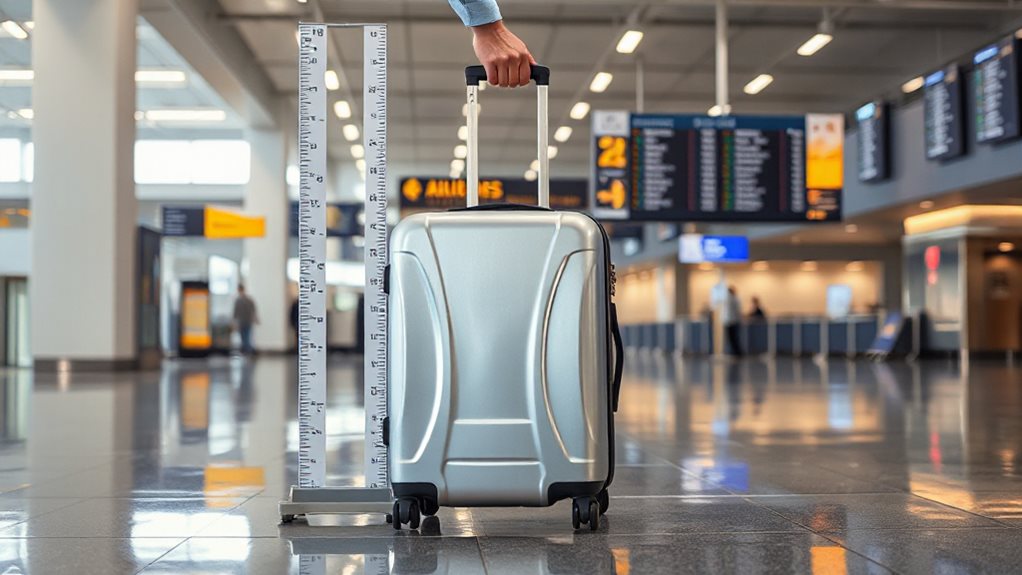
Getting a handle on airline carry-on policies can save you time, money, and stress at the airport—especially when it comes to knowing which bags fly free and where fees kick in.
Most U.S. carriers allow one carry-on and a personal item, but Basic Economy fares often restrict you to just the under-seat bag. Southwest, JetBlue, and others make exceptions, so always check your fare rules—staying informed keeps your travel light, easy, and fee-free. Ohio law also requires visible registration proof on kayaks, including stickers on either side and registration numbers displayed left to right with at least 3 inches height registration numbers.
What You Can Pack in a Carry-On (TSA Rules)?
You can bring liquids, gels, and aerosols in your carry-on, but each container must be 3.4 ounces (100 milliliters) or smaller and fit inside one clear, quart-sized resealable bag.
Don’t forget that even if a container isn’t full, it still needs to meet the size limit—so check those travel bottles before packing.
Medical liquids and baby formula are allowed in larger amounts, though you might need to declare them at the checkpoint for a quick screening.
Liquids And Gels Rules
When packing liquids and gels for your carry-on, knowing the TSA’s 3-1-1 rule makes the security process smooth and stress-free.
You can bring containers of 3.4 ounces (100 mL) or less, all fitting in one clear, quart-sized zip-top bag.
Keep it handy, as you’ll need to remove it for screening—this simple step keeps you moving freely through checkpoints.
Allowed Medical Exceptions
While the 3-1-1 rule covers most liquids in your carry-on, medical needs don’t always fit into standard limits—and the TSA knows that. You can bring medically necessary liquids, like insulin or nutritional supplements, in amounts over 3.4 ounces. Just declare them at security, remove them from your bag, and expect possible inspection.
Solid medications, injectables, and devices like EpiPens or CPAP machines are also allowed, so pack smart and travel with confidence.
Carry-On Exceptions: Medical Devices and Infants
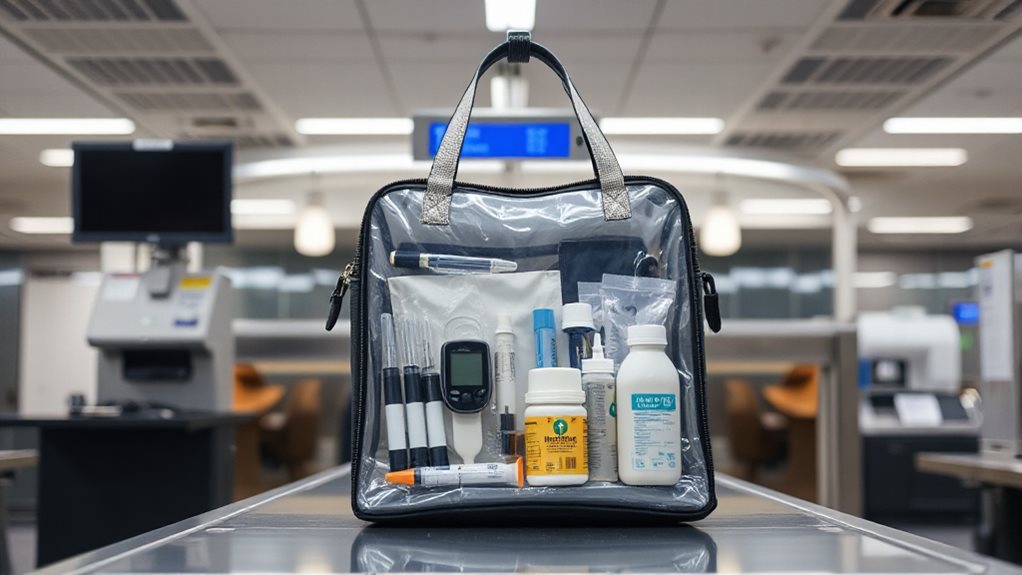
Though air travel often comes with strict baggage rules, exceptions are clearly in place for passengers who rely on medical devices or are traveling with infants, ensuring essential needs aren’t sidelined.
You can bring medical supplies, mobility aids, and necessary equipment without extra fees or standard limits. Medications, CPAP machines, and infant-related medical items are allowed, provided they meet size, labeling, or advance notice requirements—giving you the freedom to travel with confidence and ease.
Pro Tips to Avoid Carry-On Fees and Hassles
You can avoid carry-on fees by knowing your airline’s size limits and packing smart.
Stick to the allowed dimensions—especially with budget carriers like Spirit or Frontier, where smaller bags are required for free boarding.
Use a personal item that fits under the seat, and keep your main bag just under the max size to breeze through automated sizers at the gate.
Maximize Your Allowance
Pack smart and you’ll breeze through the terminal without paying a dime for your carry-on.
Measure your bag—including wheels and handles—to meet standard 22 x 14 x 9 inch limits.
Use soft-sided luggage for slight compression, and stick to one personal item if flying United or JetBlue basic economy.
Know your airline’s rules, pack light, and avoid overweight fees, especially overseas.
Navigate Airline Exceptions
Airline carry-on rules aren’t one-size-fits-all, and knowing the exceptions can save you time, stress, and unexpected fees at the gate.
Southwest allows larger bags, while United and JetBlue basic fares restrict carry-ons.
Budget airlines limit personal items strictly.
Measure your bag—including wheels—and check specific policies.
Pack light, size right, and you’ll move freely without surprises.
Final Note
You now know what a carry-on bag is, how it differs from a personal item, and why size and weight limits matter. You’ve seen airline policies, TSA rules, and special exceptions. With these tips, you can pack smart, avoid fees, and breeze through security. Traveling light saves time and stress, so use this guide to stay prepared. You’ve got this—happy travels!