
To catch bass like a pro, you’ll need to understand their seasonal patterns and adapt your approach accordingly. Focus on shallow waters during spring spawning, then follow them to deeper zones in summer heat. Choose quality gear like a Shimano spinning rod paired with an Abu Garcia Cardinal reel, and perfect essential techniques with spinnerbaits, crankbaits, and topwater lures. Track weather conditions and barometric pressure changes to maximize your success. These fundamentals form just the beginning of your expedition toward landing trophy bass.
TLDR
- Match your fishing techniques to seasonal patterns: shallow waters in spring, deeper zones in summer, and moderate depths in fall.
- Use spinnerbaits with Colorado blades in murky water and willow blades in clear conditions for versatile success.
- Target structure transitions like points and drop-offs, especially where depth changes meet, as these areas attract feeding bass.
- Adjust your presentation based on weather: fast retrieves before storms, slower techniques after cold fronts.
- Select appropriate gear combinations, like matching line strength to conditions and using circle hooks for catch-and-release fishing.
Understanding Bass Seasonal Movement Patterns
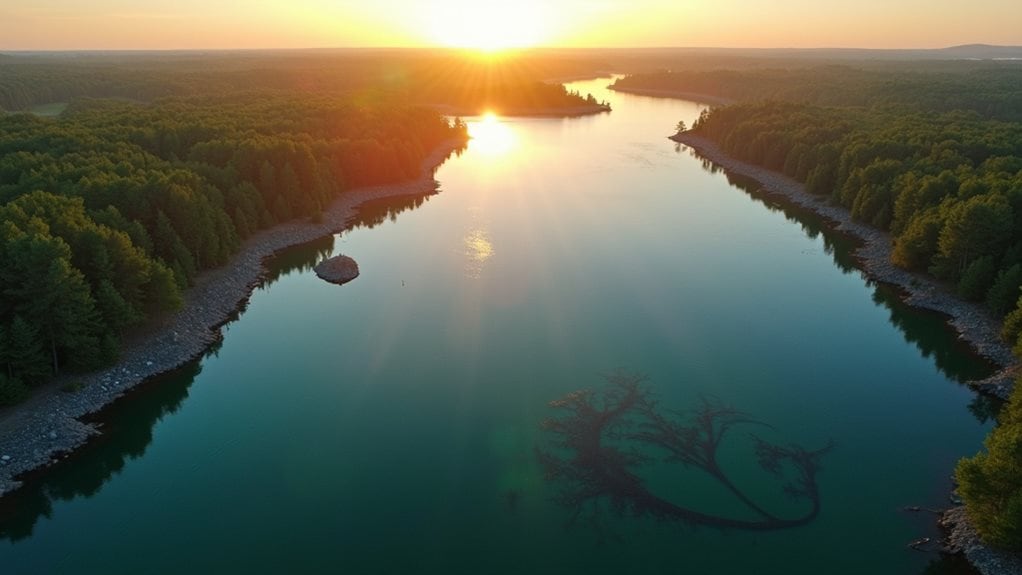
While bass fishing might seem straightforward, understanding the seasonal movement patterns of these fish is essential for consistently successful catches.
You’ll find that bass follow predictable migration routes between shallow and deep waters based on temperature changes. In particular, lakes like Rodman Reservoir provide great habitat for bass as they migrate to shallower areas in spring for spawning, seek deeper zones during summer’s heat, return to feeding grounds in fall, and retreat to deep, stable waters in winter. During summer months, bass are most active and exhibit their peak metabolism rates between 80 to 85 degrees.
Essential Gear and Equipment Selection
Since successful bass fishing relies heavily on having the right equipment, you’ll need to carefully select and maintain an arsenal of essential gear.
Start with a quality rod and reel combo, choosing between spinning setups for lighter lures and casting gear for heavier applications. Shimano Spinning Rod, paired with a reliable Abu Garcia Cardinal reel, makes an excellent beginner-friendly combination. Additionally, consider using circle hooks as they are designed to secure fish with minimal injury, making them a great choice for catch-and-release practices.
Don’t forget to match your line strength to your target conditions, with options ranging from 8-pound fluorocarbon to 40-pound braided line.
Mastering Key Fishing Techniques
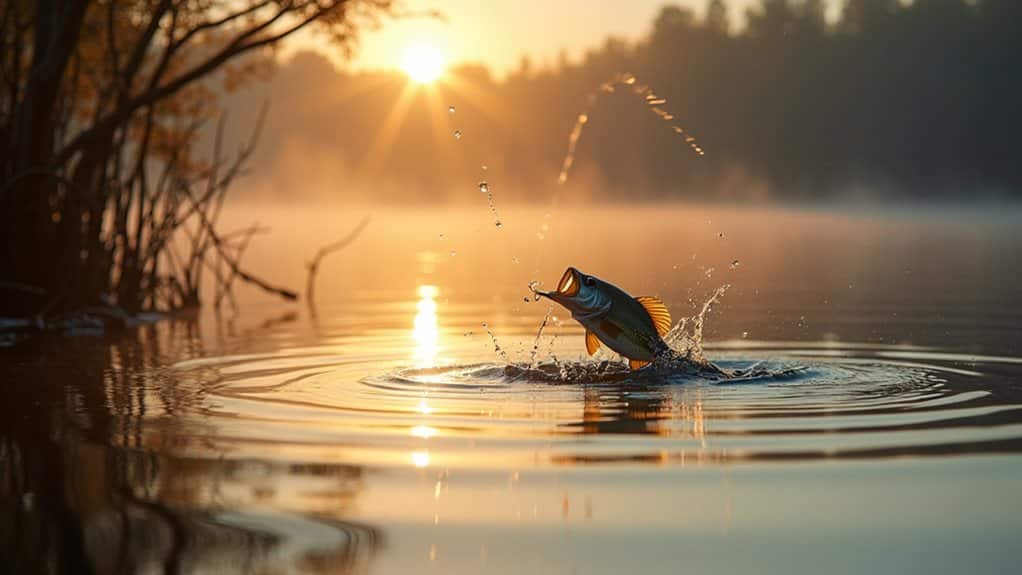
Because successful bass fishing relies on becoming skilled in multiple techniques, you’ll need to develop proficiency with various lure types and presentation methods.
Start with spinnerbaits for their versatility, using Colorado blades in shallow, stained water and willow blades in clear conditions.
You’ll also want to become proficient with crankbaits for reaction strikes, topwater lures for visual excitement, and drop-shot rigs for precise presentations. Additionally, understanding how weather conditions affect fish behavior can significantly improve your fishing success.
Identifying Prime Bass Locations
Your success in bass fishing starts with learning to read key lake structure features, such as points, drop-offs, and submerged vegetation that attract fish throughout the year.
You’ll want to track seasonal bass movements, focusing on shallow spawning areas in spring and deeper, cooler waters during summer’s heat.
Understanding changeover zones, where different types of structure or depth changes meet, will help you locate prime fishing spots where bass gather to ambush their prey. Additionally, consider the importance of depth changes in colder weather, as bass often move to deeper areas when temperatures drop.
Reading Lake Structure Features
Understanding lake structure features forms the foundation of successful bass fishing, as these underwater elements create the prime locations where bass congregate throughout the year.
You’ll want to focus on key structural elements like points, humps, and creek channels, which connect deep and shallow waters.
Using tools like depth finders and contour maps, you can identify these prime fishing spots and adapt your approach based on seasonal patterns.
Finding Seasonal Bass Hotspots
Successful bass fishing hinges on knowing exactly where these prized gamefish gather during different seasons.
You’ll find them moving from deep winter spots to shallower areas as waters warm to 40-50°F.
Focus on changeover zones like creek channels and secondary points during pre-spawn, then target shallow flats with vegetation during spawn.
Post-spawn, look for bass near deeper structures and vegetation.
Edge Areas and Transitions
When searching for prime bass locations, becoming proficient in the art of identifying edge areas and changing zones can dramatically improve your catch rate.
Look for changes between different bottom compositions like rock and gravel, while using your electronics to spot underwater ledges and gradual slopes.
You’ll find that even subtle alterations in bottom contour can reveal productive fishing spots.
Weather’s Impact on Bass Behavior
When you’re planning your bass fishing trip, it’s essential to understand that bass often become highly active right before a storm moves in, as the dropping barometric pressure triggers their feeding instincts.
You’ll want to take advantage of these pre-storm conditions by using fast-moving baits like spinnerbaits or crankbaits to cover more water and capitalize on the increased activity levels.
After a cold front passes through, you’ll need to slow down your presentation and focus on deeper water with finesse techniques, as bass typically become less aggressive and seek shelter in these conditions.
Pre-Storm Bass Activity
Understanding how bass behave before a storm can greatly improve your chances of landing a successful catch.
You’ll notice increased activity as barometric pressure falls, with bass feeding aggressively near structures like logs and rocks.
Watch for darkening skies and shifting winds, then use spinnerbaits or jerkbaits to target these hungry fish.
They’re especially active during this time as they prepare for potential food scarcity.
Cold Front Fishing Tactics
Cold fronts bring dramatic changes to bass fishing conditions, creating a sharp contrast to the active pre-storm behavior.
You’ll need to adjust your tactics by slowing down your retrieve and downsizing your lures. Focus on fishing deeper areas and thick cover, where bass seek refuge.
Try slow-rolling spinnerbaits or working finesse baits near structural elements like docks and rocks to entice less aggressive fish.
Choosing the Right Lures for Different Conditions
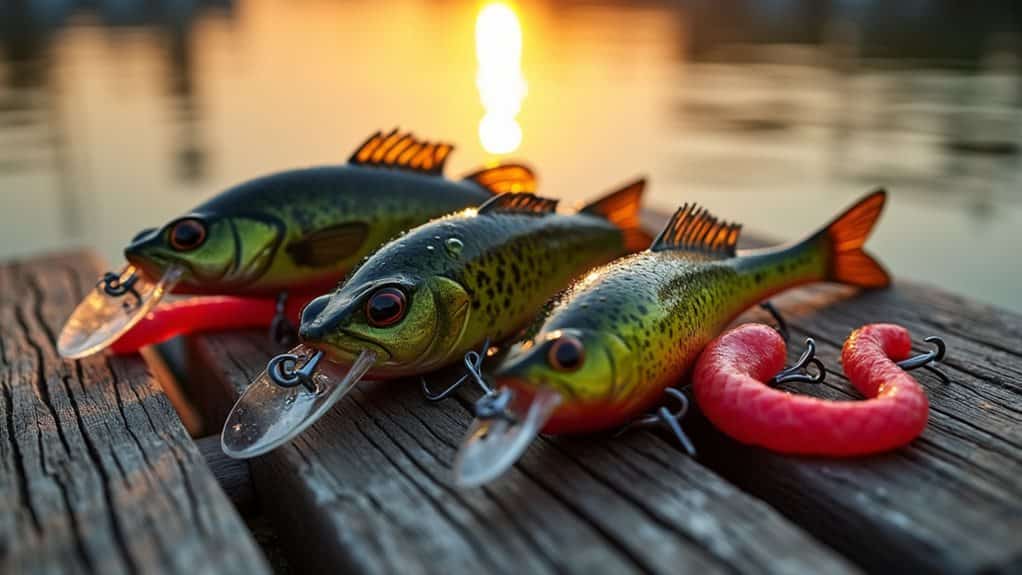
Successful bass fishing relies heavily on selecting the right lure for specific conditions, as bass behavior and feeding patterns change dramatically throughout the year.
You’ll want to match your lures to the season and water temperature, using slower presentations with jigs in cold water and faster-moving baits like spinnerbaits when it’s warm.
During moderate temperatures, try versatile options like crankbaits and jerkbaits.
Advanced Hook Setting and Retrieval Methods
While selecting the right lure sets the stage for a successful catch, controlling proper hook setting and retrieval techniques will dramatically improve your success rate on the water.
Focus on removing slack before setting the hook, and use a cross-body motion instead of an overhead yank for better advantage.
You’ll want to maintain consistent pressure throughout the retrieval, allowing the fish to fully load the rod before setting.
Tournament-Ready Strategies and Tips
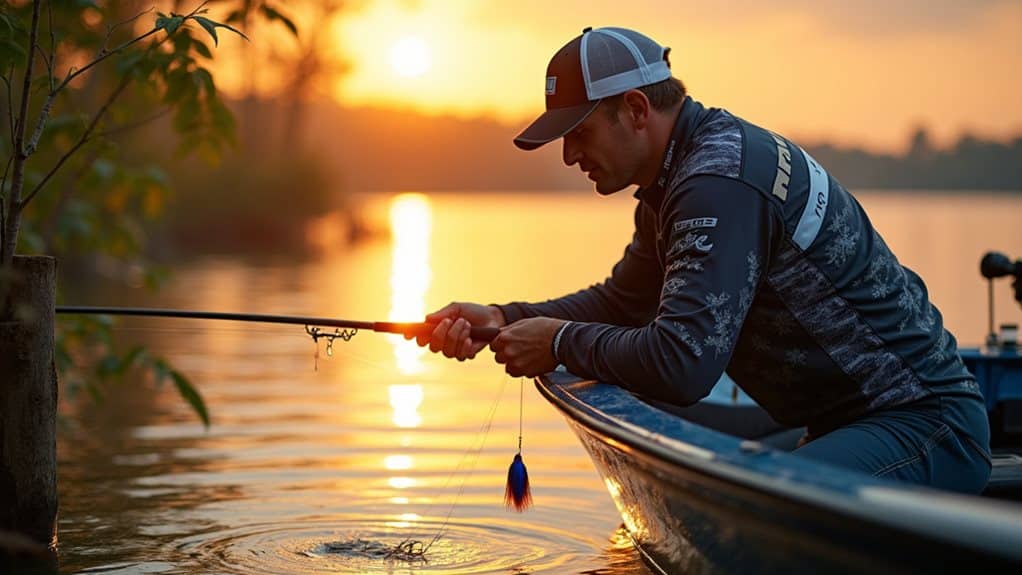
Tournament bass fishing requires extensive preparation and strategic planning to gain a competitive edge.
To succeed, you’ll need to research the lake thoroughly, practice with your team, and maintain adaptable strategies.
Focus on varying depths and lure profiles while communicating effectively with your partner.
Don’t forget to mark productive spots with GPS and stay confident in your chosen techniques and locations.
Final Note
You’re now equipped with pro-level bass fishing knowledge that’ll change your approach on the water. By understanding seasonal patterns, selecting the right gear, and excelling in key techniques, you’ll greatly improve your catch rate. Remember, successful bass fishing isn’t just about having the right tools – it’s about reading the environment, adapting to conditions, and applying these strategies consistently. Take these tips to the lake, and you’ll be fishing like a pro.


