
You’ll catch shad for bait easily by using a 6-7 foot light action rod with 4-8 pound test line, targeting coastal rivers during spring spawning season when water temperatures reach 55-60°F. Focus your efforts in mid-April through late May, particularly during early morning or late afternoon hours in tidal freshwater areas. Use bright-colored shad darts or flutter spoons in chartreuse, pink, or orange, retrieving them smoothly with subtle twitches to mimic natural movement. Master these fundamentals and uncover advanced strategies that’ll maximize your success.
TLDR
- Use light action 6-7½ foot rods with 4-8 pound test line and bright colored shad darts or spoons.
- Target coastal rivers during spring spawning season when water temperatures reach 55°F to 60°F for peak activity.
- Fish early morning or late afternoon in tidal freshwater areas where shad naturally congregate.
- Employ smooth retrieval with subtle twitches to mimic natural gliding motion that triggers strikes.
- Clean caught shad immediately and cut into appropriate pieces, retaining blood and bone for effective catfish bait.
Essential Gear and Tackle for Shad Fishing
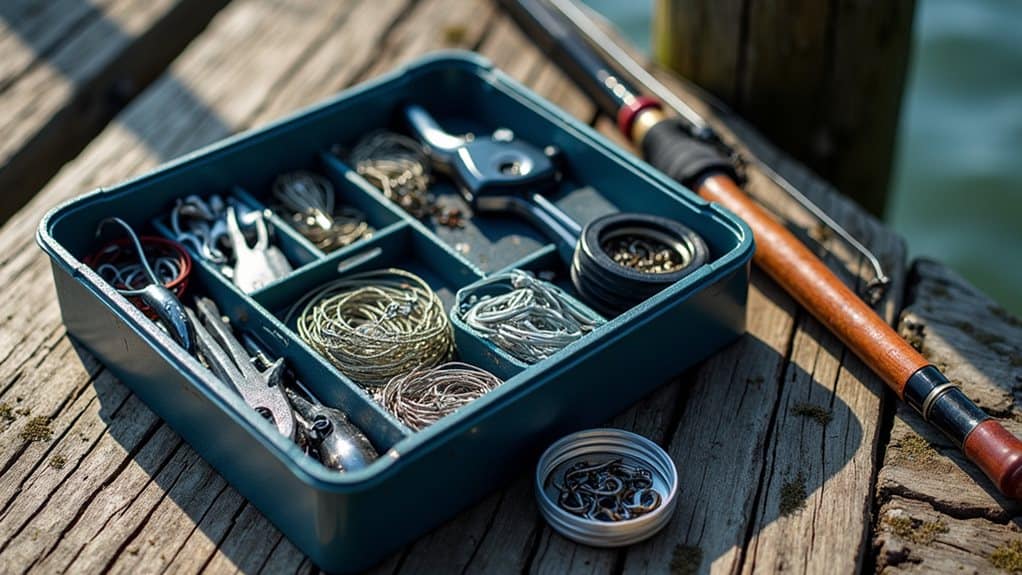
When you’re targeting shad for bait, having the right gear can make the difference between a successful outing and an empty cooler.
You’ll need a light action rod, typically 6- to 7½-feet long, paired with a spinning reel that holds 4- to 8-pound test line. An ideal combo would include a plusinno fishing rod and reel to ensure quality and performance while fishing.
Essential lures include shad darts and spoons in bright colors like chartreuse. Look for a rod with a soft tip that helps detect the subtle strikes shad are known for while maintaining enough backbone in the lower section to turn fish effectively.
Prime Locations and Habitat Where Shad Congregate
Successful shad fishing hinges on understanding where these migratory fish naturally gather throughout their complex life cycle. You’ll find them in coastal rivers during spring spawning season, particularly in tidal freshwater areas. Additionally, sea kayaking can provide a unique vantage point for locating shad in these habitats. Summer feeding grounds like the Bay of Fundy offer excellent opportunities, while lower river sections provide consistent action where juveniles congregate before their ocean migration. These areas are especially productive since shad are plankton feeders that concentrate where their primary food sources are abundant.
Proven Techniques for Attracting and Hooking Shad
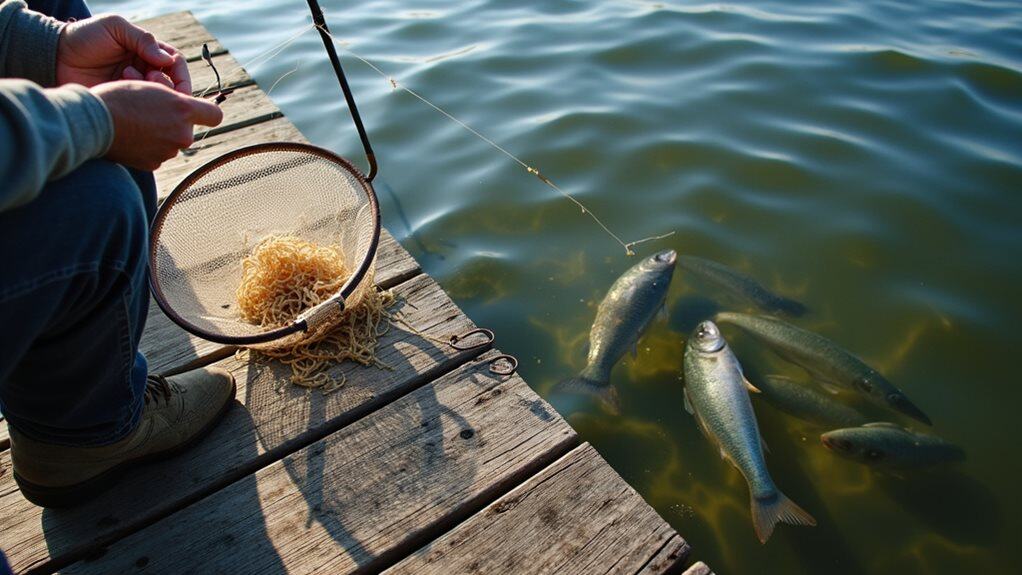
Three fundamental approaches will dramatically improve your shad-catching success: selecting the right lures, perfecting proper presentation techniques, and understanding the behavioral triggers that prompt these fish to strike.
You’ll want flutter spoons, shad darts, and jigs in bright colors like pink, orange, and chartreuse.
Retrieve smoothly to mimic their natural gliding motion, adding subtle twitches every few seconds. Additionally, using a fish finder can help locate schools of shad, enhancing your chances of a successful catch.
Optimal Timing and Seasonal Patterns for Shad Runs
Understanding the precise timing of shad runs can mean the difference between a cooler full of fresh bait and an empty-handed trip to the river.
Target water temperatures between 55°F and 60°F from mid-April through late May for peak activity.
Plan your trips during early morning or late afternoon hours, and avoid fishing after cold fronts when shad activity markedly decreases. Incorporating structured swimming training can enhance your endurance for those long fishing trips.
Preparing and Using Fresh-Caught Shad as Catfish Bait
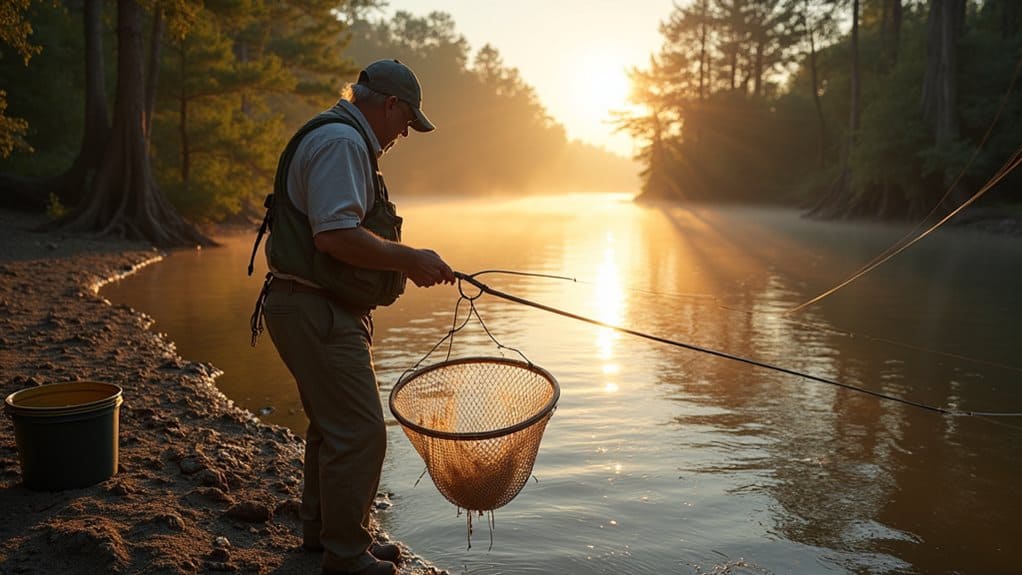
Once you’ve timed your shad run perfectly and collected a fresh batch of these silver fish, proper preparation becomes the key to converting them into irresistible catfish bait.
Clean them immediately, removing slime and scales to improve longevity.
Cut into appropriately sized pieces using a sharp fillet knife, retaining blood and bone for stronger scent release that attracts catfish effectively.
Final Note
You’ve now got the complete blueprint for catching shad efficiently. Remember, success depends on matching your gear to the conditions, targeting the right locations during peak runs, and using proven techniques like sabiki rigs or cast nets. Fresh shad will dramatically improve your catfish success, so don’t overlook proper preparation and storage. Practice these methods consistently, and you’ll soon have a reliable supply of premium bait that’ll make other anglers envious of your catches.


