
Your fishing line’s lifespan depends on the type and how you care for it. Monofilament lasts 1–3 years, so replace it yearly, especially with heavy use. Fluorocarbon holds up for 2–3 years but degrades faster in sunlight. Braided line can last up to 10 years if you check for frays and store it properly. UV exposure, abrasion, and poor storage shorten any line’s life. Keep your line cool, dry, and shielded from sun and chemicals—your gear will perform better, and you’ll avoid unexpected breaks when it matters most. Smart habits now mean stronger results later.
TLDR
- Monofilament lasts 1–3 years but should be replaced yearly for optimal strength and performance.
- Fluorocarbon lasts 2–3 years, longer if shielded from UV exposure and stored properly.
- Braided line can last up to 10 years but should be inspected every few years for fraying.
- UV rays, heat, abrasion, and chemicals are major factors that degrade fishing line over time.
- Store line in cool, dry, dark places and rinse gear after use to maximize lifespan.
How Long Do Fishing Lines Last by Type?
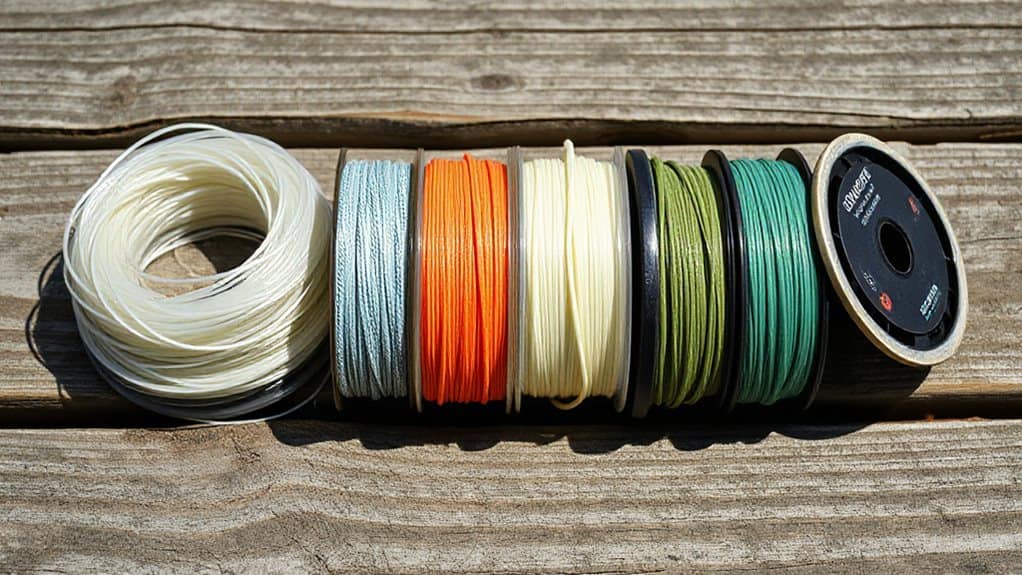
Choosing the right fishing line isn’t just about strength or invisibility in the water—it’s also about knowing how long each type will last under real-world conditions.
Monofilament lasts 1–3 years, but replace it yearly for best results.
Fluorocarbon holds up 2–3 years, even longer with care.
Braided line can last 10 years—inspect every few years and change only if frayed.
All fishing lines degrade over time, even in storage, due to environmental factors like heat and UV exposure, with UV sensitivity being a major contributor to material breakdown. Spool fill and how you store your reel also affect line life, so avoid overfilling and keep a proper gap on the spool to reduce stress and abrasion.
What Damages Fishing Line the Most?
While you’re out on the water reeling in your next big catch, it’s easy to forget that your fishing line is taking a serious beating from more than just the fish.
Abrasion from rocks, sand, and teeth wears it down, while UV rays, chemicals like sunscreen or fuel, and poor storage weaken its strength.
Sharp rod guides, tangles, and constant stretching create weak spots—so check your gear regularly to stay ready.
Also, proper spooling—maintaining consistent tension while filling the reel—helps prevent twists and prolong line life.
When to Replace Your Line (By Material)
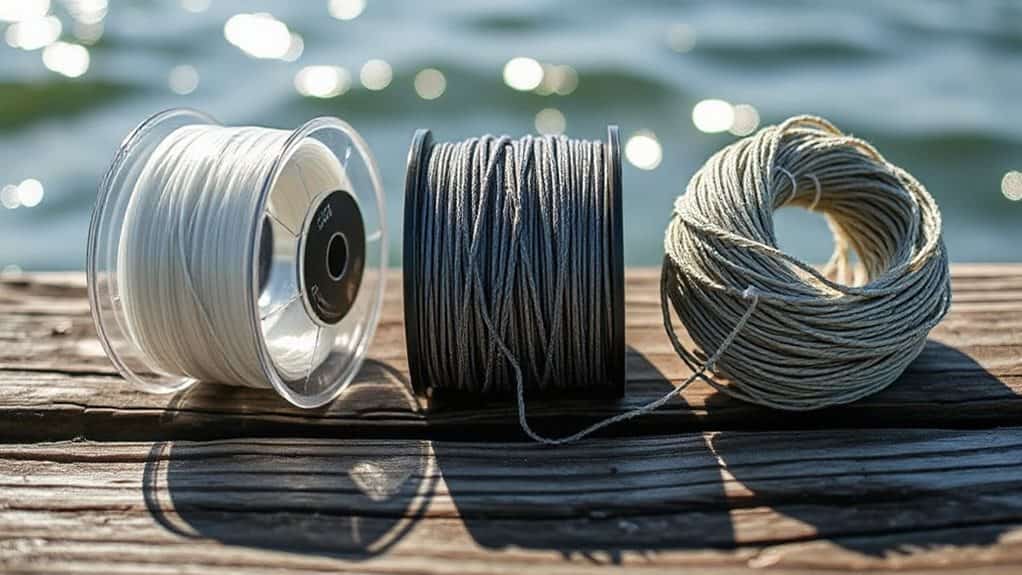
Your fishing line takes a beating from the moment it leaves the spool—whether it’s scraping over rocks, baking in the sun, or coiling under pressure.
Replace monofilament yearly, or every 6–12 months if you fish hard.
Fluorocarbon lasts 2–3 years, but swap it annually if often sun-exposed.
Braid? Change every 3–5 years, or sooner if frayed—inspect it often.
Use a heavier test or switch to fluorocarbon leaders when fishing heavy cover to reduce visibility and abrasion.
Signs Your Fishing Line Is Failing Now
Keep an eye out for visible wear, because once your fishing line starts showing signs of damage, its strength drops fast.
Feel for fraying, especially near the lure or first 10 feet.
Check for discoloration, brittleness, or fuzzy textures—these mean it’s weakening.
If casting suffers or knots fail, replace it now.
Don’t risk losing fish—fresh line keeps you free on the water.
Also, routinely rinse and inspect your gear after saltwater use to prevent corrosion and wear, which can weaken line and rod components.
How to Store Fishing Line for Maximum Life
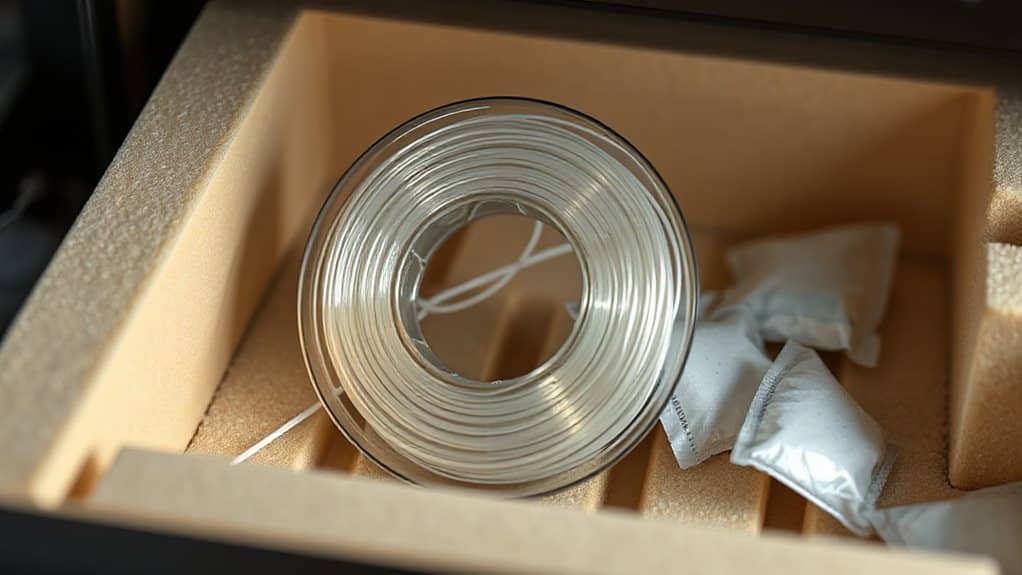
Keep your fishing line in a cool, dry place—like a basement or closet—away from temperature swings and moisture that can weaken it over time.
Always store it out of direct sunlight, since UV rays damage monofilament and fluorocarbon even when they’re not in use.
Use sealed containers with silica gel packs to stay dry, and you’ll keep your line fresh and strong for years.
Consider keeping a portable fish finder nearby to monitor conditions and avoid fishing in areas that could abrade or stress your line, such as shallow waters with heavy structure.
Optimal Storage Conditions
While fishing line might seem durable, how you store it plays a critical role in how long it lasts and performs.
Keep it dry in airtight containers to prevent mold, especially after saltwater use.
Store at room temperature—avoid hot garages or freezing sheds.
Loosen tension on mono and fluoro spools, and use conditioner to maintain flexibility.
Your line will stay strong, supple, and ready for excursion.
Avoid Sunlight Exposure
You’ve taken care to store your fishing line in a cool, dry place—great start—but there’s another silent killer you need to watch for: sunlight.
UV rays break down monofilament fast, weaken fluorocarbon over time, and even affect braid with prolonged exposure.
Keep spools shaded, avoid hot decks or car interiors, and opt for UV-resistant lines when possible.
Simple steps like these preserve strength, flexibility, and performance—so you stay ready for the next big catch, without surprise line failure.
Keep Lines Dry
Often overlooked, moisture is one of the quickest ways to compromise your fishing line’s strength and lifespan. Store your line in a cool, dry place to prevent weakening and rot.
Use sealed containers with silica gel packs to absorb humidity, especially in damp areas. Avoid wet storage—moisture sneaks in, degrading performance.
Keep lines dry, and they’ll stay strong, flexible, and ready for action.
On-Water Habits That Extend Line Life
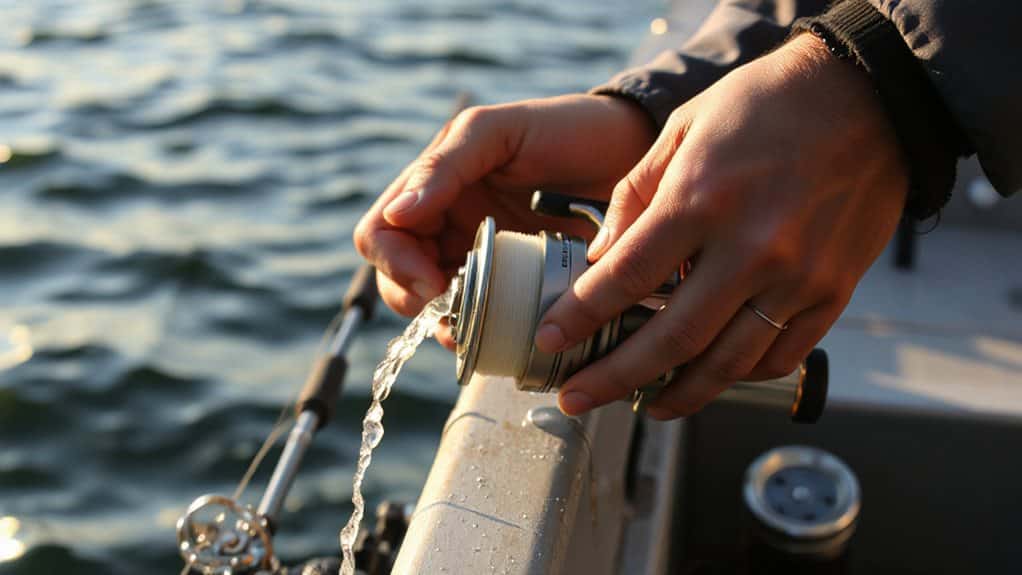
After every fishing trip, rinse your gear with fresh water—especially after saltwater use—to prevent corrosive damage and extend your line’s life.
Keep your line out of direct sun while on the water, since UV rays weaken it over time, and make it a habit to check for nicks or abrasions regularly.
These simple on-water habits add up, helping you avoid surprises when a big fish starts running.
Rinse After Every Use
Always rinse your fishing line, reel, and rod after each use—especially when fishing in saltwater, where salt buildup can quickly lead to corrosion if left unchecked.
Hose everything down right away, then wipe with a soft cloth. Use mild soap if needed, and let all gear air dry completely before storing.
This simple habit keeps lines slick, prevents grime buildup, and extends gear life—so you’re always ready for your next free-spirited escapade on the water.
Avoid Direct Sun Exposure
While you’re reeling in your next big catch, it’s easy to forget that the sun beating down on your gear is quietly taking its toll—especially on your fishing line. Keep spools shaded, use reel covers, and store lines in tackle boxes to block UV rays.
Monofilament weakens fast in sunlight, fluorocarbon lasts longer but still degrades, and braid resists best—yet all benefit from smart sun protection.
Check For Abrasion Regularly
You’ll often find that regular, quick checks for abrasion can save your line—and your catch—before disaster strikes.
Scan your line often, especially after snagging structure or dragging across rocks.
Monofilament and fluorocarbon resist wear better than braid, which fails faster on rough surfaces.
Even subtle fraying means weakness, so trim or respool as needed.
Stay proactive, stay free on the water.
Final Note
You now know how to keep your fishing line in top shape, no matter the type. By storing it properly, checking for wear, and replacing it when needed, you’ll guarantee stronger performance and fewer surprises on the water. Pay attention to sun exposure, knots, and abrasions—they add up faster than you think. With these simple habits, you’ll save time, money, and frustration, all while reeling in more fish.


