
You’ll find night monkeys with huge rod‑filled eyes, silent paws, and sharp hearing that let them sift fruit and insects in dim canopy light, while flying squirrels glide on a stretchy patagium, using night‑vision eyes and precise balance to judge distances. Leopards and owls dominate with low‑light vision, rotating ears, and silent, padded limbs that strike swiftly. Hedgehogs, raccoons, and foxes rely on rod‑dense eyes, swiveling ears, and keen noses for nocturnal foraging. Frogs, reptiles, pangolins, and sloths regulate insects, create micro‑habitats, and use camouflage or sticky tongues to survive, and you’ll discover even more details if you keep exploring.
TLDR
- Night‑active mammals like night monkeys, flying squirrels, leopards, raccoons, foxes, and hedgehogs rely on large rod‑rich eyes, keen hearing, and scent to locate food in low light.
- Specialized adaptations such as silent padded paws, swiveling ears, and tapetum lucidum enhance stealth and detection for nocturnal hunting and foraging.
- Flying squirrels and night monkeys use enhanced vision and balance to navigate and glide through the canopy, dispersing seeds and aiding forest regeneration.
- Predators such as leopards and owls combine low‑light vision with acute auditory cues and swift strikes to dominate nighttime prey.
- Nocturnal amphibians, reptiles, pangolins, and sloths regulate insect populations, create micro‑habitats, and maintain humid forest patches, supporting overall ecosystem balance.
How Do Night Monkeys Adapt to Forest Darkness?
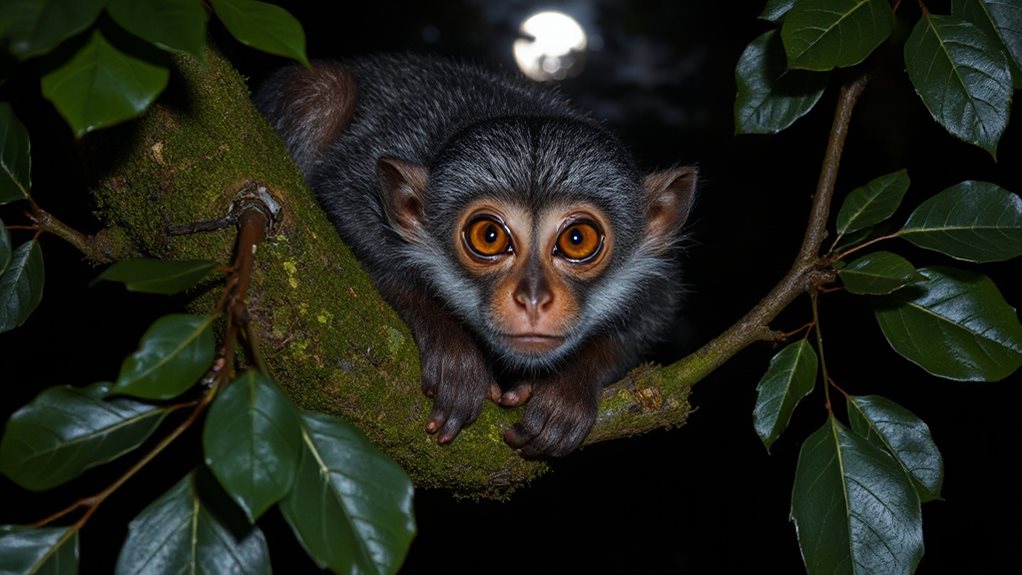
Because the forest is dim after sunset, night monkeys rely on a suite of visual adaptations that let them see where most other primates cannot. You’ll notice their huge, round eyes packed with rod cells, low‑light retinas, and massive sockets that capture faint glimmers. Their hearing and scent sharpen, letting you locate insects and fruit, while silent leaping and precise memory guide you through canopy gaps, all without alerting predators. Their diet is primarily frugivorous, with fruit consumption aiding seed dispersal and forest regeneration. Many nocturnal animals also depend on corrosion-resistant materials to withstand harsh environments and ensure durable equipment for long-term study.
What Enables Flying Squirrels to Glide at Night?
You’ll notice the patagium membrane stretches from wrist to ankle, creating a wing‑like surface that catches air, while your night‑vision eyes and keen sense of balance let you judge distances and adjust posture in the dark.
By subtly shifting your body and flexing joints, you control lift and drag, keeping the glide smooth and efficient.
This combination of aerodynamic anatomy and sensory precision lets you glide long distances even under a moonlit canopy.
For extra protection of sensitive joints during long glides, many gliding mammals benefit from extra cushioning to reduce impact on hard landings.
Patagium Membrane Stretch
How does a flying squirrel turn a simple stretch of skin into a night‑time glider? You feel the fur‑covered patagium spanning from neck to hindlimbs, its flexible surface billowing and stiffening as diverse muscles contract. Nerve signals let you adjust edge hairs, shaping mini‑vortices and lift. A secondary flap directs airflow, while genetic pathways repurpose limb development, granting you controlled, graceful glides across the canopy.
Night Vision and Balance
The patagium that you’ve already felt stretching across your limbs now works hand‑in‑hand with a suite of sensory tools that let you stay on course after darkness falls.
Your huge, light‑gathering eyes capture faint glimmers, giving depth perception for precise landings, while the tail steadies you like a rudder.
Light weight and keen low‑light senses keep you balanced, allowing silent, agile glides across the cool night canopy.
How Do Leopards and Owls Dominate Nocturnal Hunting?
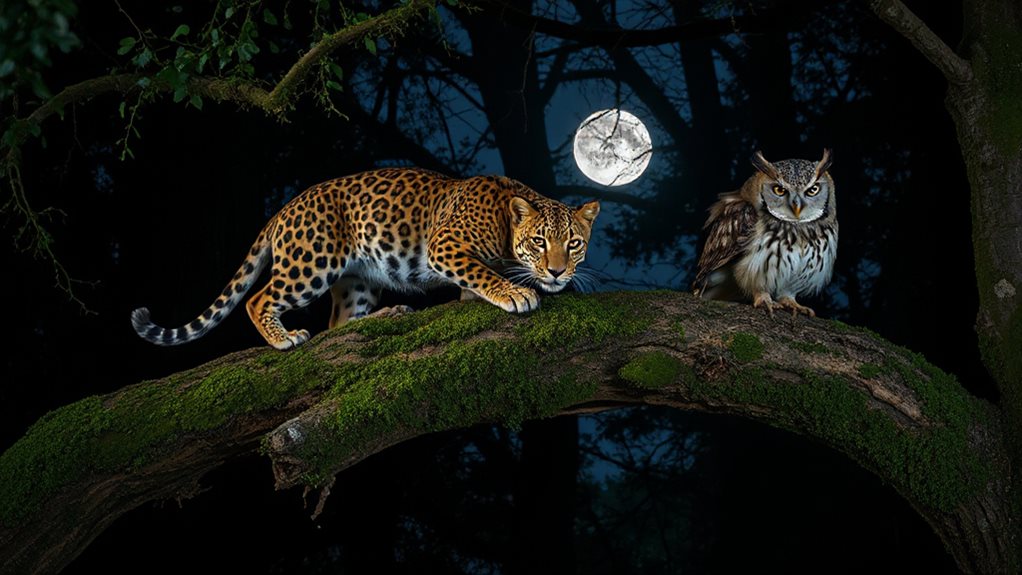
Ever wonder why leopards and owls seem to own the night in forest habitats? You’ll notice leopards rely on superior low‑light vision, silent padded paws, and 180‑degree rotating ears that locate rustling prey, while their spotted coats blend into dappled shadows for perfect ambushes.
Owls exploit acute hearing, swiveling ears like radar, and razor‑sharp talons that strike swiftly, turning darkness into a hunting advantage.
Signalers often use three short whistle blasts or reflective flashes to communicate distress over distances.
What Adaptations Let Hedgehogs, Raccoons, and Foxes Thrive?
Why do hedgehogs, raccoons, and foxes all seem to own the night in forest habitats? You’ll notice their eyes packed with rods and a tapetum lucidum that reflects light, giving them sharp, black‑and‑white vision. Their ears swivel, picking up faint rustles, while powerful noses locate hidden prey. Dexterous paws, silent fur, and agile bodies let them hunt, climb, and forage without daylight competition.
How Do Night‑time Frogs and Reptiles Shape Forests?
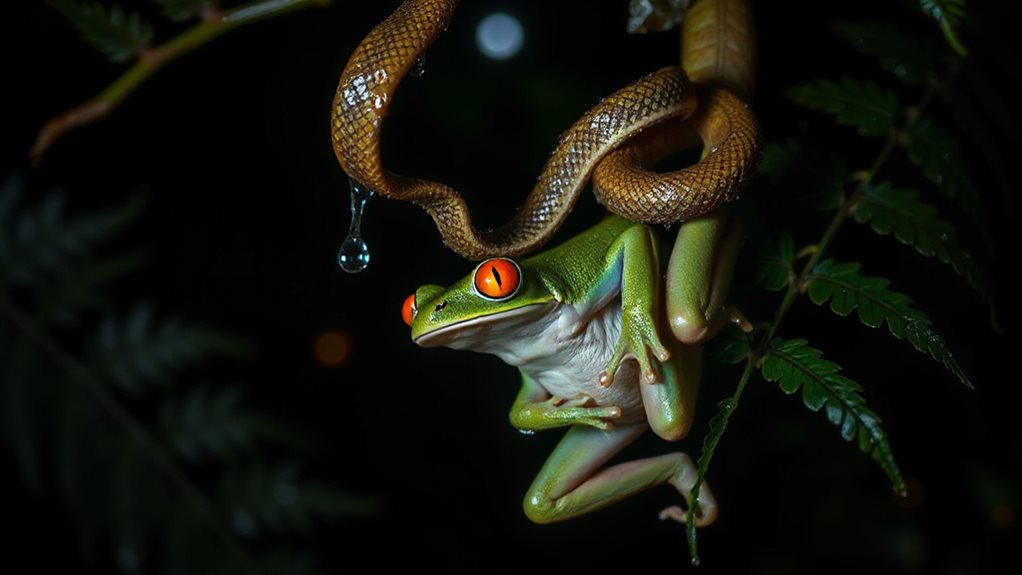
You’ll notice that night‑time frogs and reptiles keep insect numbers in check, hunting larvae and adults that would otherwise explode in abundance.
Their burrowing and perch‑making habits also carve out micro‑habitats, providing shelter for seedlings, insects, and even other small vertebrates.
Many species are also most active on softer or even surfaces that reduce energy costs and help them forage efficiently for prey like aquatic larvae and ground‑dwelling insects, a behavior linked to low‑impact outdoor activities.
Insect Population Regulation
How do night‑time frogs and reptiles keep forest insects in check? You’ll find that frogs gulp insects each night, curbing outbreaks that could defoliate trees, while lizards and snakes hunt the same prey, adding another layer of control.
Their predation stabilizes food webs, protects vegetation, and supports birds that rely on insects, ensuring balanced ecosystems.
Niche Habitat Creation
Night‑time frogs and reptiles are more than predators; they actively sculpt the forest’s microhabitats, turning damp understory and cool stream edges into thriving niches.
You’ll see tadpoles grazing algae, clearing sediment, and letting sunlight fuel primary producers, while salamanders curb detritivore overrun, preserving leaf litter for soil nutrients.
Their moisture‑loving presence maintains humid, shaded patches, letting other species flourish in a balanced, resilient ecosystem.
Why Do Pangolins and Sloths Use Nighttime for Food and Safety?
Because forests become cooler and quieter after sunset, pangolins and sloths both find nighttime ideal for feeding while staying safe. You’ll notice pangolins use long sticky tongues to devour termites, their scales shielding them from predators, while sloths browse tender leaves, their camouflaged fur blending with moonlit foliage. Night reduces competition, conserves energy, and keeps diurnal hunters at bay, letting you appreciate their efficient, low‑risk foraging strategies.
Final Note
By now you’ve seen how night‑time forest dwellers use keen senses, specialized limbs, and clever behaviors to thrive in darkness. Their adaptations—whether silent flight, acute hearing, or camouflage—let them hunt, forage, and avoid predators when the world is dim. Understanding these strategies helps you appreciate the delicate balance of nocturnal ecosystems and the importance of preserving the habitats that support such extraordinary species.


