
You’ll find smallmouth bass spawning most actively when water temperatures reach and stabilize between 55-60°F, with peak activity occurring around 60°F on sunny days. Pre-spawn behavior begins as waters warm into the mid-40s°F, with bass moving from winter areas to shallower zones. They’ll spawn at depths ranging from 3-20 feet, depending on water clarity and conditions. Understanding these temperature patterns and their effects on spawning behavior can greatly improve your fishing success.
TLDR
- Smallmouth bass primarily spawn when water temperatures reach 55-60°F, with peak spawning activity occurring at 60°F.
- Pre-spawn activity begins in the mid-40s°F as bass move from winter areas to shallower spawning zones.
- Optimal spawning conditions occur between 58-70°F, with most activity concentrated around 60-65°F during stable weather.
- Full moon phases intensify spawning activity when water temperatures are within the 58-70°F range.
- Water clarity influences spawning depth, with bass spawning between 3-20 feet depending on temperature and visibility conditions.
The Perfect Temperature Range for Smallmouth Bass Spawning
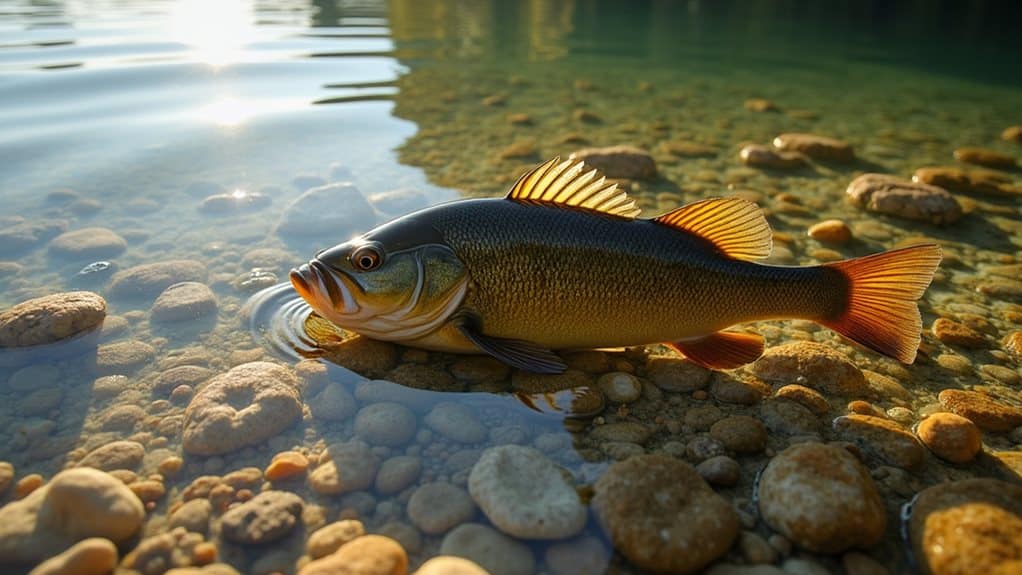
Three key temperature markers define successful smallmouth bass spawning, with the sweet spot falling between 55 and 60 degrees Fahrenheit.
During the prespawn period, smallmouth bass move from deeper wintering areas to staging locations near spawning flats. In Florida, lakes like Lake Okeechobee provide ideal conditions for bass as water temperatures rise.
You’ll notice increased activity as waters warm to this range, and once temperatures stabilize, spawning begins in earnest.
When the water hits 60 degrees, you’ll see peak spawning action, particularly on sunny days when waters warm consistently.
Pre-Spawn Temperature Triggers and Bass Behavior
When water temperatures climb into the mid-40s, smallmouth bass begin their pre-spawn ritual, marking an essential shift from their winter lethargy. During this time, understanding local fishing conditions can significantly enhance your chances of success. You’ll notice these fish moving from deeper wintering areas toward shallower changing zones, often congregating near mid-river boulders and current seams. During this time, anglers find success using suspending jerkbaits with extended pauses of up to a minute. As temperatures approach the mid-50s, they’ll become more aggressive, actively feeding on crayfish and other prey while establishing territories.
How Water Temperature Affects Spawning Depth
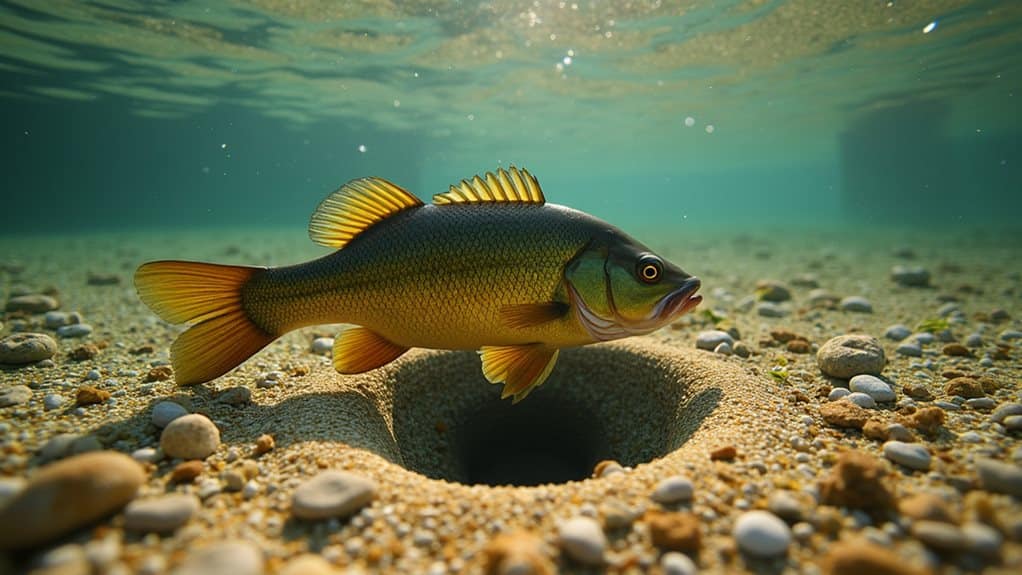
Smallmouth bass spawning depth directly correlates with water temperature, creating a fascinating interplay between these two critical factors.
When water temps reach 58-70°F, you’ll find these fish spawning anywhere from 3 to 20 feet deep. In clearer waters, they’ll typically spawn deeper, while murky conditions push them to shallower areas.
Larger bass generally prefer deeper spawning sites for added protection. This behavior is similar to the way hunters must understand animal behavior to enhance their hunting strategies.
Moon Phases and Temperature: Key Spawning Indicators
Understanding the intricate relationship between moon phases and water temperature can considerably improve your success in targeting spawning smallmouth bass.
You’ll find that full moon phases trigger intensive spawning activity when water temperatures reach 58-70°F, with ideal conditions around 60-65°F. Additionally, be aware that fishing licenses are required for legal fishing in most states, which can affect your planning during the spawning season.
Watch for these key indicators to coincide with stable weather patterns, as they’ll help you predict when smallmouth are most likely to begin their spawning cycle.
Deep vs. Shallow Water Temperature Dynamics
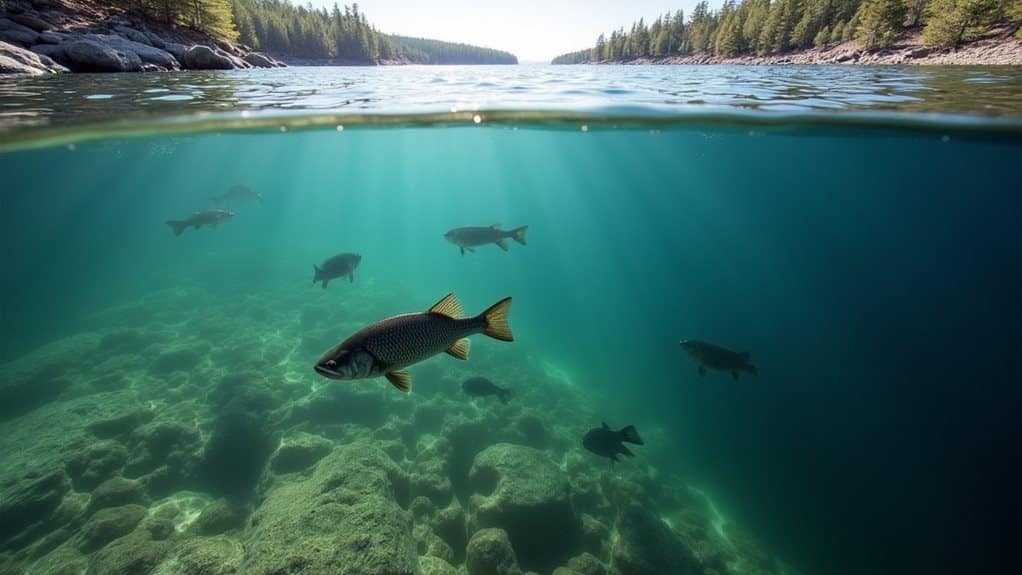
Beyond moon phase timing, the depth at which smallmouth bass spawn plays a major role in determining water temperature patterns and fishing success.
You’ll find smallmouth spawning in depths from 3-20 feet, with larger fish typically preferring deeper, clearer waters.
Water clarity’s a key factor – in murky conditions, they’ll move shallower to spawn, while clear water often draws them deeper.
Final Note
You’ll find that smallmouth bass spawn most actively when water temperatures reach 55-65°F, with peak spawning occurring around 60°F. If you’re tracking spawning patterns, remember that these temperatures typically align with late spring, though exact timing varies by region. Keep an eye on both shallow and deep water readings, as bass will adjust their spawning depth based on temperature stability and available cover.


