
While no fish is completely worm-free, some species have considerably lower parasite risks than others. You’ll find that tuna naturally develops antibodies against parasites, making it one of the safest choices. Farmed fish like Atlantic salmon and rainbow trout from controlled environments also have minimal parasite presence due to treated feed and monitored conditions. For the lowest risk, choose fish from reputable sources and properly certified as sushi-grade. There’s much more to uncover about selecting the safest fish for your table.
TLDR
- Tuna naturally develops antibodies against parasites, making it one of the safest fish species for raw consumption.
- Farmed Atlantic salmon from closed systems have minimal parasite risk due to controlled environments and treated feed.
- Farm-raised rainbow trout and gilthead seabream are safer options due to strict disease management and environmental monitoring.
- While no fish is completely worm-free, properly managed farmed fish have significantly lower parasite rates than wild-caught fish.
- Fish from aquaculture facilities using UV sterilization and mechanical filtration systems show minimal parasite presence.
Understanding Fish Parasites and Their Impact
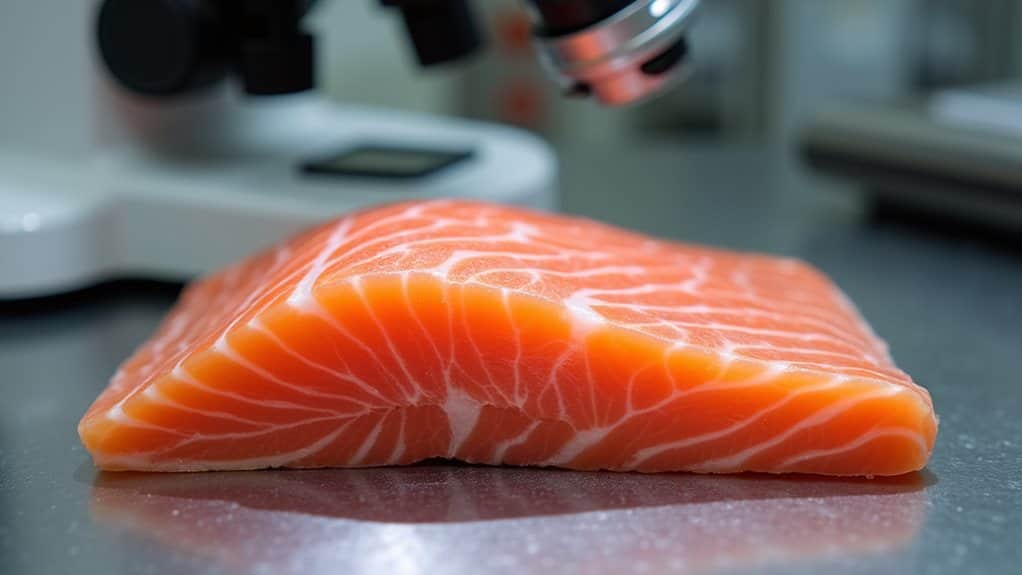
While many people believe that all fish harbor parasites, understanding the complex relationship between fish and their parasitic inhabitants is essential for both consumers and fishing enthusiasts. You’ll find various types of parasites in fish, from anisakid roundworms in marine species to tapeworms in freshwater fish, and their presence can considerably impact fish behavior, health, and survival in their ecosystems. Some parasites like Schistocephalus solidus even manipulate their fish hosts to become more visible to predators, ensuring the completion of their life cycles. Interestingly, certain fish species, such as steelhead trout, are known to thrive in diverse environments, which may influence their susceptibility to parasites.
The Truth About Worms in Wild-Caught Fish
Despite what you might think, nearly all wild-caught fish carry some form of parasitic worms during their lifetime. A study in Puget Sound found that all wild salmon tested contained parasitic worms, highlighting the widespread nature of this issue. In wild-caught salmon, you’ll find particularly high infection rates of Anisakis simplex larvae, affecting up to 75% of some Pacific species. Freshwater fish are generally considered safer to eat in terms of parasites, but caution is still advised. Bottom-feeding fish like cod and rockfish are especially prone to parasites, while even pelagic fish aren’t immune to these unwanted inhabitants.
Safest Fish Species With Lowest Parasite Risk
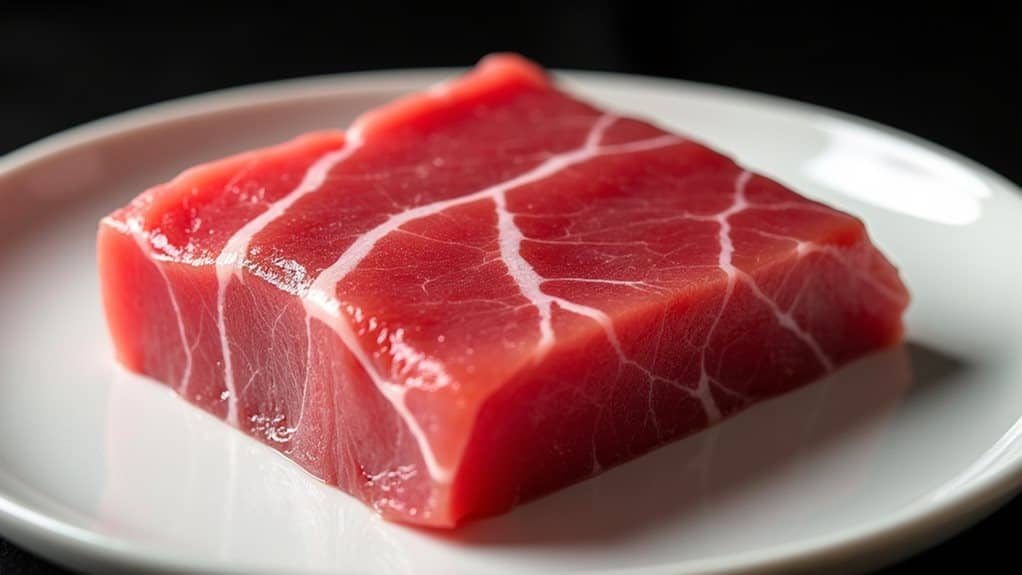
While you’ll find many fish species carry parasites, tuna stands out as one of nature’s most resistant species due to its unique physiology and feeding habits.
You can feel confident knowing that both fresh and frozen tuna typically have extremely low parasite counts, making them a safer choice for raw consumption.
If you’re looking for even more security, farmed fish like salmon offer exceptional safety since they’re raised in controlled environments with parasite-free feed and regular monitoring. Additionally, fish identification skills can help ensure you select species known for lower parasite risks.
Tuna’s Natural Parasite Resistance
Because tuna possess exceptional natural defenses against parasites, they’re considered one of the safest fish species for raw consumption.
Research shows that tuna can develop specific antibodies against parasites, and certain species like bluefin, yellowfin, and albacore have such low parasite risks that they’re often exempt from freezing requirements that apply to other fish.
Farmed Fish Safety Benefits
Modern aquaculture has revolutionized fish safety through carefully controlled farming environments, making certain farmed species remarkably free of parasites.
You’ll find that Atlantic salmon, rainbow trout, and gilthead seabream from closed recirculating systems are particularly safe choices.
When these fish are raised using heat-treated feed and filtered water, they’re virtually guaranteed to be parasite-free.
Why Tuna and Yellowtail Stand Out
Tuna and yellowtail fish stand out remarkably among seafood choices for their particularly low parasite presence. You’ll find that physicians in Hawaii regularly consume these fish raw without concern, as they’re rarely associated with helminthic parasites like tapeworms or roundworms. While they occasionally might host parasites like Anisakis simplex, the risk is significantly lower compared to other commonly consumed fish species. Additionally, fishing for these species can be a versatile activity that suits various skill levels and offers a unique experience on the water.
Farmed vs. Wild Fish: Parasite Comparison
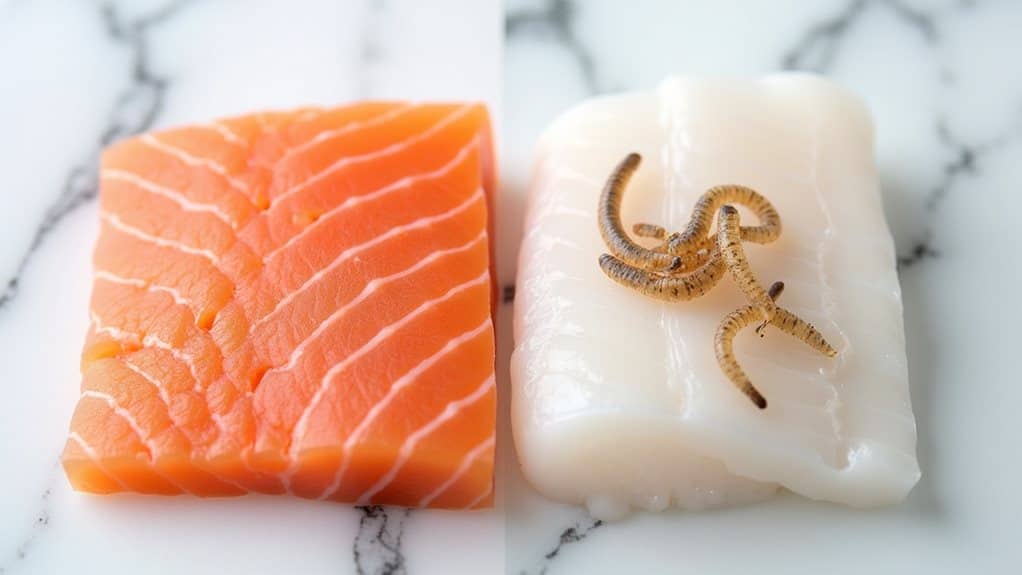
While certain fish like tuna naturally harbor fewer parasites, the difference between farmed and wild-caught fish presents an even more striking contrast in parasite prevalence.
You’ll find that farmed fish have considerably lower infection rates because they’re raised in controlled environments and fed treated pellets.
In contrast, wild fish are frequently infected with various parasites due to their natural ecosystem interactions.
Essential Safety Measures for Raw Fish Consumption
When consuming raw fish safely, you’ll need to follow several critical safety measures that greatly reduce your risk of foodborne illness.
Always purchase from reputable sources, maintain proper temperature control at or below 4°C, and make certain your fish is labeled as sushi-grade.
Don’t forget to sanitize all preparation surfaces and tools to prevent cross-contamination, and wash your hands thoroughly.
The Science Behind Freezing Fish to Kill Parasites
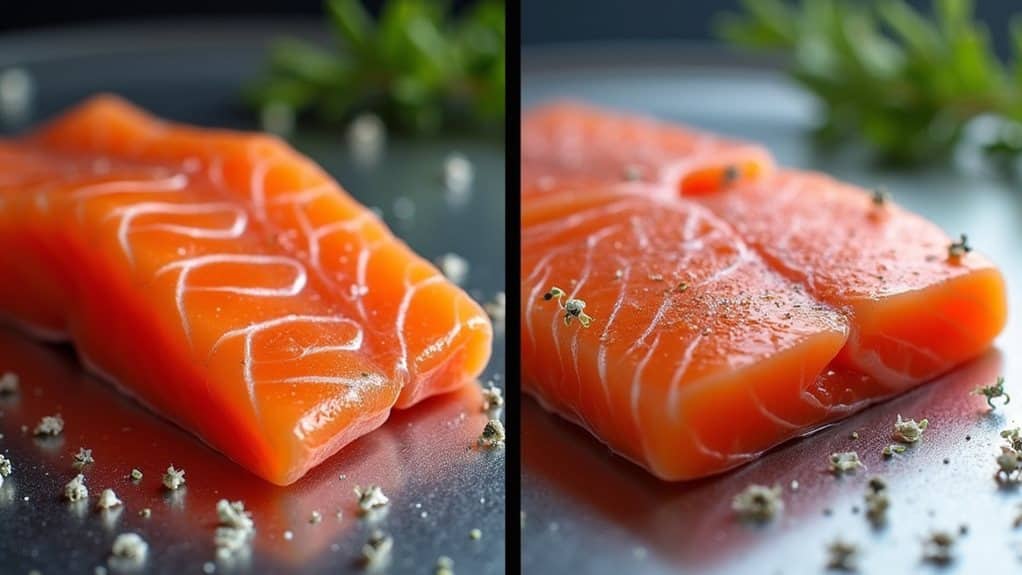
To effectively kill parasites in fish, you’ll need to maintain specific freezing temperatures and durations:
-4°F (-20°C) for 7 days or -31°F (-35°C) for 15 hours.
Commercial freezers can achieve these temperatures quickly and reliably, while most home freezers struggle to reach the deeper cold necessary for parasite elimination.
For best results in home freezing, you should set your freezer to its coldest setting, avoid overcrowding, and allow additional time beyond the minimum requirements to compensate for less powerful freezing capabilities.
Freezing Time and Temperature
Since proper freezing is essential for killing fish parasites, understanding the exact time and temperature requirements can mean the difference between safe and unsafe fish consumption.
You’ll need to freeze fish at -4°F (-20°C) for seven days, or at -31°F (-35°C) for 15 hours to effectively kill parasites.
Your home freezer likely won’t reach these temperatures, so commercial freezing is typically necessary.
Optimal Storage Conditions
The science behind freezing fish to kill parasites relies on three critical storage conditions: precise temperature control, consistent monitoring, and proper duration.
You’ll need to maintain temperatures of -4°F (-20°C) for at least seven days or -31°F (-35°C) for 15 hours to effectively eliminate parasites.
It’s essential to use recording thermometers to verify these conditions are consistently met throughout the storage period.
Commercial Vs Home Freezing
While commercial freezing facilities maintain strict temperature controls and specialized equipment, home freezers often fall short of meeting the requirements needed to effectively kill fish parasites.
Commercial facilities can reach -35°C and maintain consistent temperatures, whereas your home freezer typically can’t achieve these critical levels.
For safety, it’s best to rely on commercial freezing or thoroughly cook your fish instead.
High-Risk Fish Species to Watch Out For
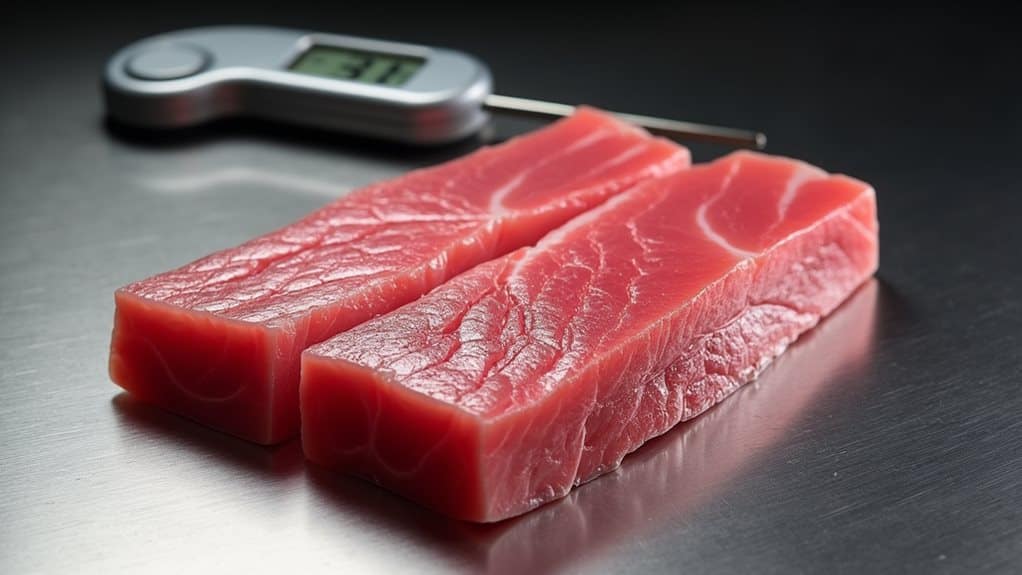
Understanding which fish species carry the highest risk of parasitic infection can help you make safer seafood choices for your family.
Common saltwater species like cod, flounder, and sea bass frequently harbor nematodes, while salmon and trout are particularly susceptible to myxosporeans.
You’ll also want to be cautious with coral reef fish, groupers, and eels, as they’re known to host various internal parasites.
Best Practices for Choosing Parasite-Free Fish
Selecting parasite-free fish requires knowledge of both modern aquaculture practices and careful attention to sourcing methods.
You’ll find the safest options in closed aquaculture systems, where water filtration and controlled conditions minimize parasite risks.
Look for well-known farmed species like Atlantic salmon and rainbow trout, which typically undergo regular testing and monitoring.
Consider fish from certified facilities that use advanced detection techniques.
The Role of Fish Farming in Parasite Prevention
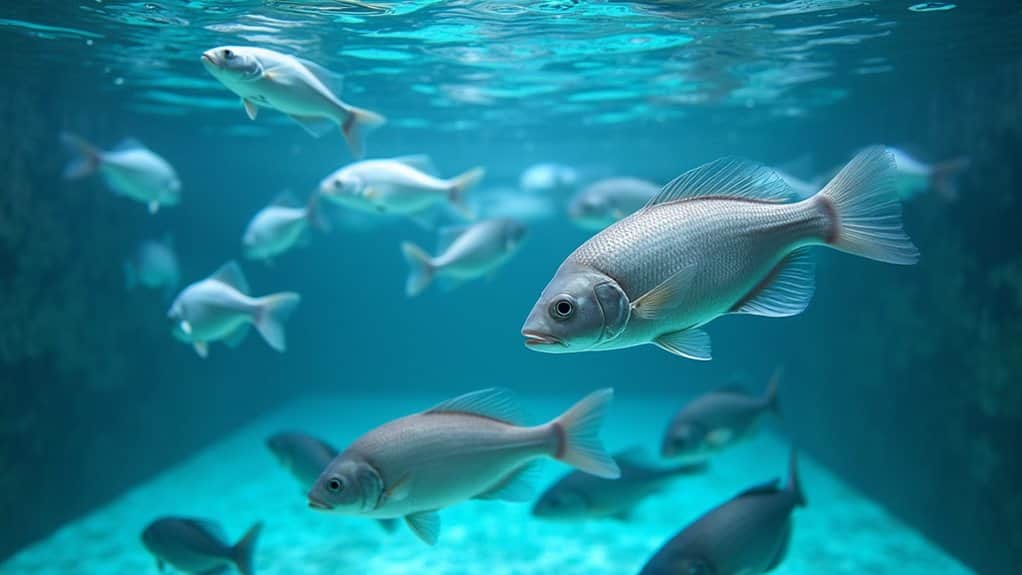
Modern fish farming offers significant advantages in parasite prevention through controlled feed programs and thorough disease management systems that you won’t typically find in wild-caught fish.
You’ll find that well-managed aquaculture facilities implement strict environmental monitoring protocols, including water quality testing and regular health screenings, to catch potential parasite issues before they become problematic.
These controlled environments, especially in closed containment systems, help guarantee that your farmed fish has been raised with minimal exposure to common parasites, making it a safer choice for consumption.
Controlled Feed Programs
Through carefully managed feed programs in fish farming, you’ll find one of the most effective methods for preventing parasitic infections in cultivated fish.
Heat-treated feed eliminates live parasites like anisakid nematodes, while strict quality control measures guarantee the feed remains pathogen-free.
When combined with proper storage conditions and certified suppliers, these programs considerably reduce the risk of worm infestations in farmed fish.
Disease Management Systems
Thorough disease management systems in fish farming facilities play an essential role in producing worm-free fish for consumers.
You’ll find modern farms using integrated approaches, including mechanical filtration to remove parasites, UV sterilization for water treatment, and strategic farm placement away from wild fish.
They’ll also implement regular equipment sanitization and biological controls like cleaner fish to guarantee your fish stays parasite-free.
Strict Environmental Monitoring
While maintaining pristine conditions in fish farms requires constant vigilance, state-of-the-art environmental monitoring systems make this task considerably more manageable.
You’ll find advanced sensor technologies continuously tracking water quality parameters, including dissolved oxygen, pH, and ammonia levels.
These systems work alongside GPS tracking and satellite monitoring to detect environmental changes quickly, helping prevent conditions that could lead to parasite infestations.
Health Implications of Fish-Borne Parasites
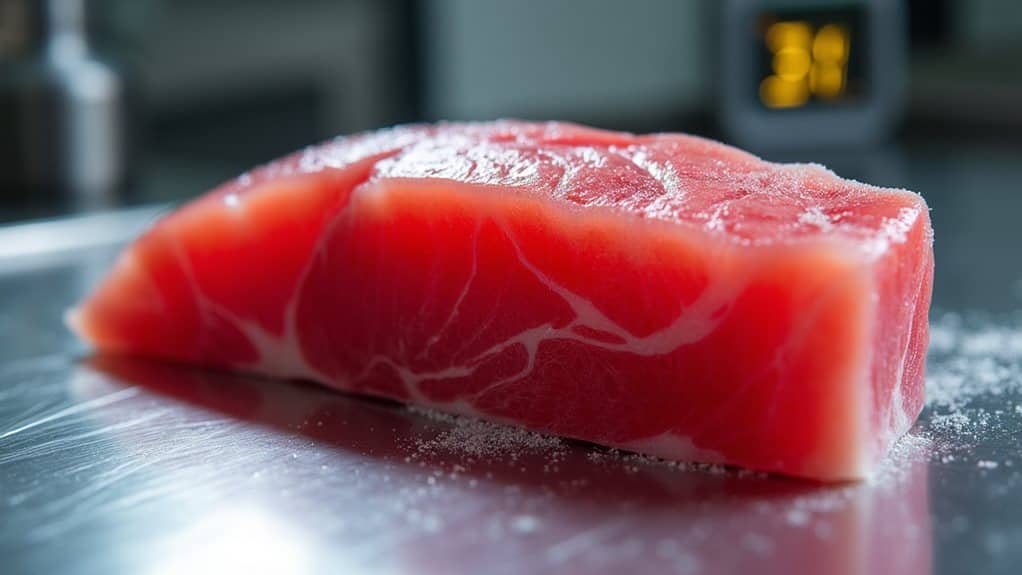
Fish-borne parasites pose significant health risks that you’ll want to understand before consuming raw or undercooked seafood.
These parasites can cause various symptoms, from gastrointestinal issues like abdominal pain and diarrhea to more serious complications such as allergic reactions and vitamin B-12 deficiencies.
In rare cases, particularly if you’re immunocompromised, these infections may develop into systemic diseases requiring medical intervention.
Key Regulations for Safe Fish Consumption
Since protecting public health remains a top priority, federal and state agencies have established thorough regulations for safe fish consumption that you’ll need to understand.
The EPA issues nationwide advisories, while states often provide local guidance.
You should consume 8-12 ounces of low-mercury fish weekly, choosing from safe options like salmon, tilapia, sardines, and pollock, especially if you’re pregnant or nursing.
Final Note
While no fish is completely guaranteed to be parasite-free, you can greatly reduce your risk by choosing farmed fish or following proper freezing and cooking guidelines. Your safest options include tuna and yellowtail, which naturally have lower parasite rates. When selecting fish, you’ll want to buy from reputable suppliers and follow FDA recommendations for preparation. Remember, proper handling and cooking techniques are your best defense against fish-borne parasites.


