
You’ll stay drier with waterproof gear because it uses sealed seams and bonded membranes, like Gore-Tex, to block water under pressure—perfect for heavy rain or wet conditions. Water-resistant items, often with just a DWR finish, handle light showers but soak through eventually. They’re lighter and more breathable, great for quick commutes or low-intensity days. Knowing what’s underneath the label helps you pick smarter, especially when the weather turns—there’s more to uncover about staying dry and comfortable outdoors.
TLDR
- Waterproof gear resists water under pressure and submersion, while water-resistant only handles light rain or brief exposure.
- Look for sealed seams and bonded membranes like Gore-Tex to confirm true waterproof construction.
- IPX7 rating means protection at 1 meter depth for 30 minutes; a key indicator of waterproof performance.
- DWR coatings bead water but aren’t fully waterproof—fabric can still wet out over time.
- Waterproof items may trap sweat; choose water-resistant for high activity and better breathability.
Waterproof vs Water-Resistant: What’s the Real Difference?
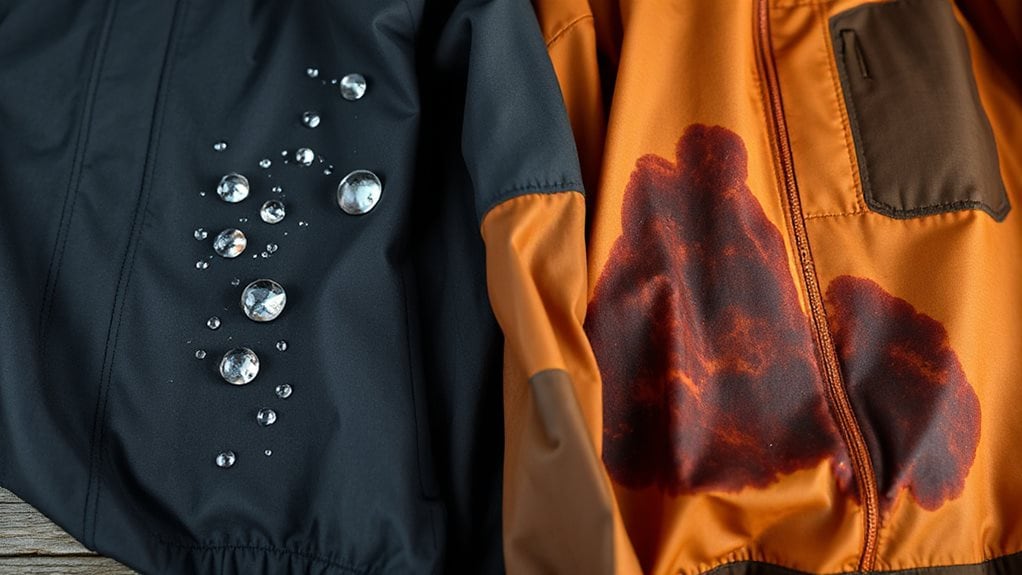
Think you know what separates waterproof from water-resistant? Water-resistant gear handles light rain or snow but isn’t built for submersion. Waterproof means full protection, even underwater. The real difference? How much water pressure a material blocks, and for how long. Choose right, stay dry, and keep moving—freedom means never worrying about the forecast. Prepping with proper insulation and drying methods helps maintain gear performance. IPX7-rated devices are tested to survive complete submersion in 1 meter of water for 30 minutes.
How to Spot Waterproof vs Water-Resistant Gear
Look for sealed seams—they’re a sure sign you’re dealing with truly waterproof gear, not just water-resistant.
If the fabric has a bonded membrane or laminate, like TZe tape, it’s built to block water under pressure.
And don’t trust a DWR (durable water repellent) finish alone; it beads water but won’t stop seepage over time.
Canvas tents offer natural water resistance and breathability, but they’re heavy and need maintenance canvas to stay durable.
Sealed Seams Indicator
While water can sneak through the tiniest openings, you’ll stay dry when your gear’s seams are properly sealed—so knowing what to look for makes all the difference.
Check for “fully seam-sealed” or “taped seams throughout” on labels; these mean all stitching is protected. If it only says “critically sealed,” lower areas aren’t covered.
No mention of sealing? It’s likely just water-resistant.
Membrane Construction Clue
When you’re trying to tell whether your gear will hold up in a downpour, one of the most reliable clues lies in its membrane construction—specifically, whether it includes a built-in waterproof membrane or relies only on surface treatments.
Look for terms like Gore-Tex, eVent, or laminated PU; these mean real waterproof protection. Coatings alone? That’s just water-resistant.
A true membrane, especially welded, makes certain you stay dry, free to push forward no matter the storm.
Durable Water Repellent Test
You’ll often find that the easiest way to tell if your gear is truly holding up against the elements is by checking how water behaves on its surface—specifically, whether it beads up and rolls off or soaks in.
Spray a little water, watch for beading. If it wets out, clean and refresh the DWR. Retest after care to confirm performance.
What Makes Gear Actually Waterproof? (Hint: It’s Not Just DWR)
Though DWR finishes play a role in shedding light rain, they’re just the first line of defense—true waterproofing happens beneath the surface, where specialized membranes, coatings, and construction techniques work together to keep you dry.
You’ll stay dry thanks to ePTFE or PU membranes, sealed seams, and layered fabrics that block liquid water while letting vapor escape, ensuring reliable protection when you’re pushing through tough weather.
Many outdoor shower enclosures use slatted wooden beams or simple walls to add privacy and protection from wind and spray.
When to Choose Water-Resistant Over Waterproof
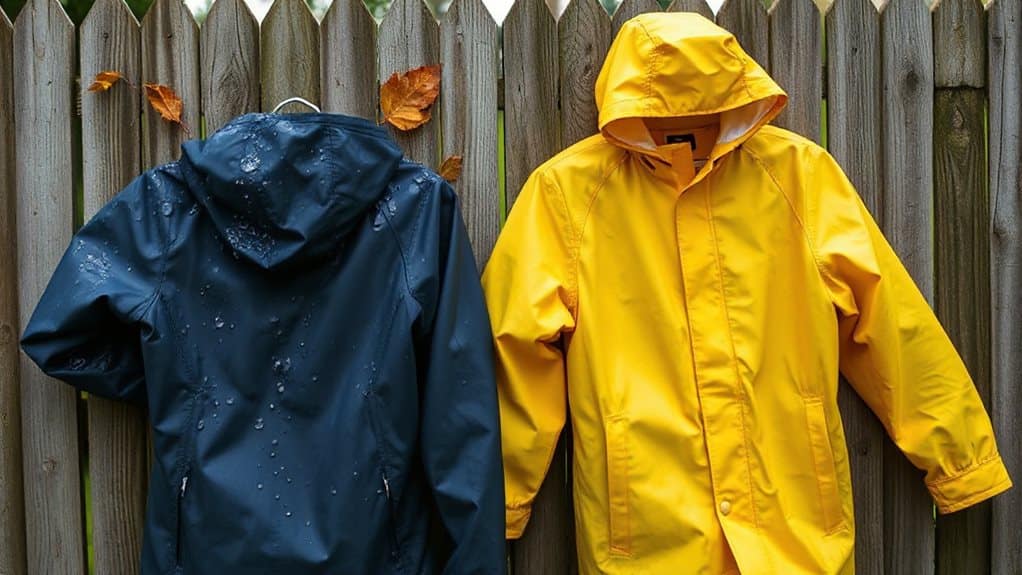
Waterproof gear keeps you dry in downpours, but it’s not always the best choice—sometimes, water-resistant is the smarter pick. You’ll save money, enjoy more style options, and stay comfortable during light rain or short commutes.
When showers are brief or activity is low, water-resistant jackets shine—especially with proper DWR care. They’re perfect for layering, too, giving you freedom to adapt without overheating or overspending. Wool also helps retain warmth even when wet, making it a smart base or mid layer for damp conditions wool retains warmth.
The Breathability Trade-Off in Waterproof Gear
You’re counting on your waterproof jacket to keep rain out, but it can also trap sweat inside, leaving you damp from the inside out.
Breathable membranes let vapor escape through tiny pores or chemical diffusion, though they work best when it’s cool and you’re not pushing too hard. If you’re working hard uphill or in humid weather, even the best gear struggles—so consider venting options and fabric tech that match your activity level.
Consider pairing waterproof outer layers with sustainable apparel made from breathable, eco-friendly fabrics to reduce odor and environmental impact.
Breathability Versus Waterproofing Balance
Staying dry on the outside often means risking moisture buildup on the inside—this is the core challenge when balancing breathability and waterproofing in outdoor gear.
You need membranes that block rain but let sweat escape. Look for 15,000+ g/m²/24h breathability, especially if you’re active.
DWR coatings help by shedding water fast, while proper fabric choice keeps you free to move, stay dry, and perform.
How Membranes Manage Moisture Transfer
While staying dry from the outside is essential, what really matters is how well your gear handles the moisture you generate from within—this is where membranes step in to manage moisture transfer.
Non-porous membranes use hydrophilic groups to move vapor through chemical diffusion, while microporous ones rely on tiny channels.
Both respond to humidity gradients, letting vapor escape freely, so you stay comfortable, dry, and unburdened by sweat buildup—no matter the excursion.
Activity Level Determines Comfort
When you’re pushing hard on a trail run or carving down a snowy slope, your body generates a lot of heat and sweat—so choosing the right gear becomes critical.
Waterproof jackets trap moisture inside, making you clammy, while stiffer fabrics limit your stride. For high activity, lighter water-resistant gear breathes better, keeping you comfortable, dry from sweat, and free to move without overheating or restriction—ideal when agility and airflow matter most.
Choose the Right Gear for the Weather
If you’re heading out into unpredictable weather, picking between waterproof and water-resistant gear makes all the difference in staying dry and comfortable.
For heavy rain or snow, choose waterproof—its sealed seams and high hydrostatic rating block moisture completely. If you’re facing light drizzle or splashes, water-resistant works well, offering breathability and freedom.
Match your gear to the forecast, and you’ll move freely, stay drier, and enjoy your time outside without limits.
Final Note
You now know the difference: waterproof gear keeps water out under pressure, while water-resistant items resist light moisture. Don’t rely on DWR alone—it beads water but doesn’t guarantee protection. Choose waterproof for heavy rain, water-resistant for drizzle or sweaty hikes. Remember, waterproof often means less breathability, so balance protection with comfort. Pick the right gear for your conditions, and you’ll stay drier, lighter, and more comfortable every time you head outside.


