
Plan your meals and pack reusables like water bottles, utensils, and containers to cut down on waste before you even leave. Use designated bins at camp to sort trash, recycling, and compost properly. Stick to on-site rules, avoid single-use plastics, and keep food secure from wildlife. Bring biodegradable soap and refillable supplies to stay eco-friendly. When in doubt, pack it out—your choices make a real difference for nature, and there’s more you can do to camp smarter.
TLDR
- Plan meals ahead and use checklists to avoid excess packaging and impulse buys.
- Bring reusable containers, utensils, and water bottles to cut down on single-use waste.
- Choose bulk foods and minimally packaged items to reduce trash while camping.
- Sort waste properly using labeled bins for recycling, compost, and trash at the site.
- Pack out all non-recyclable waste and follow Leave No Trace principles to protect nature.
Think Waste-Free Before You Leave
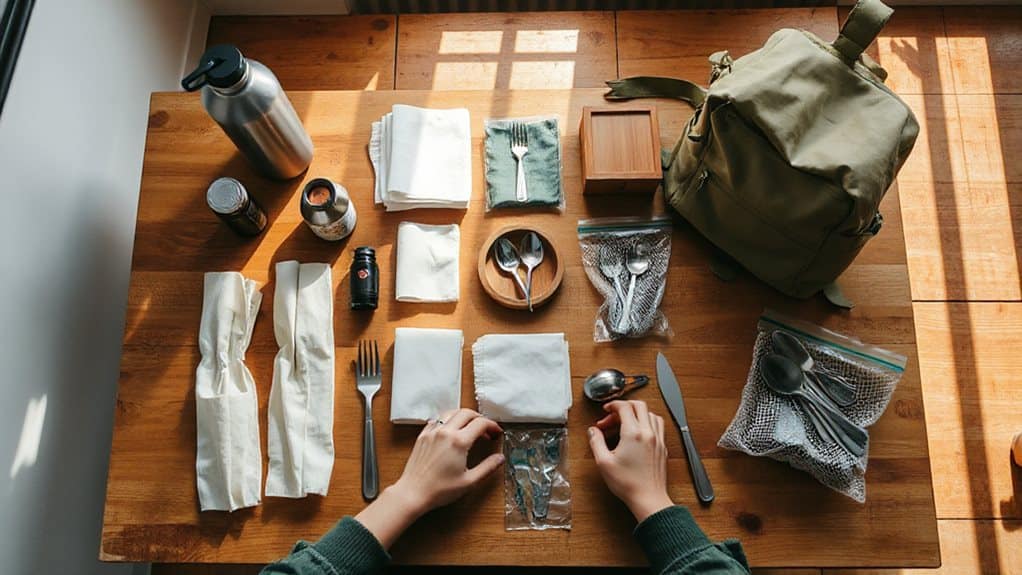
Before you even pack your tent or load up the car, the most effective step you can take to reduce waste while camping starts with thoughtful preparation at home.
Plan meals, create checklists, and buy minimally packaged goods. Bring reusable bottles, mugs, and containers. These simple choices cut down on packaging waste, prevent impulse buys, and give you more freedom to enjoy nature without generating trash. Use reusable containers and utensils whenever possible to minimize disposable waste and leave no trace.
Recommend buying in bulk to further reduce the amount of packaging brought into the campground.
Pack Reusables to Cut Camping Waste
You’re already thinking ahead by planning meals and minimizing packaging at home—now take that momentum and put it straight into what you pack for the trip. Bring reusable utensils, plates, and cups made from eco-friendly materials; they’re durable, easy to clean, and cut down on waste.
Each item you reuse means less trash at camp, lower carbon emissions, and less plastic in landfills. You’re not just packing smart—you’re protecting the wild places you love to discover, one meal at a time. Consider also bringing a lightweight reusable water bottle to reduce single-use plastic on the trail.
Use On-Site Bins the Right Way
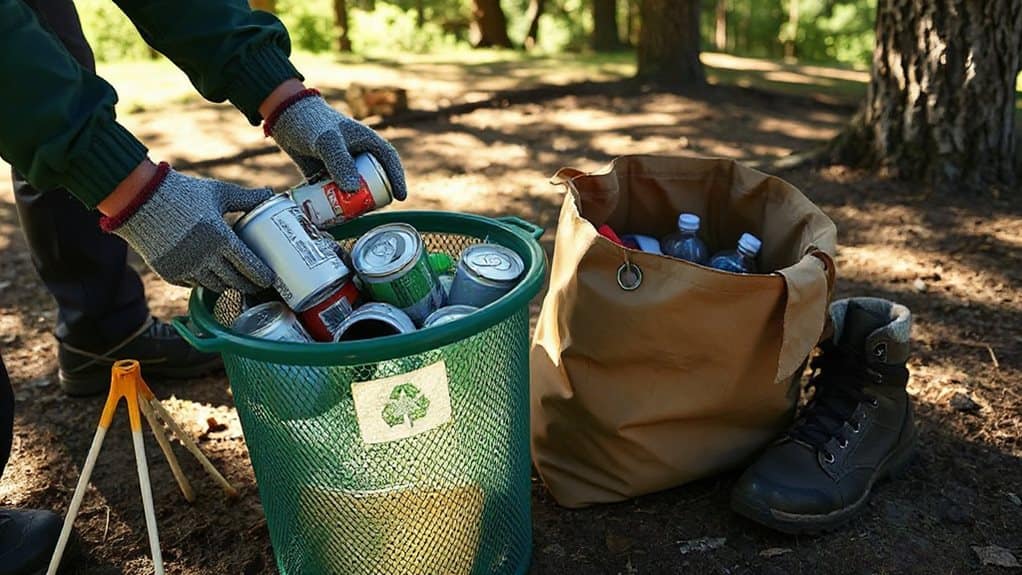
When you’re settling into your campsite, knowing how to use on-site bins properly makes a big difference in keeping nature clean and wildlife safe.
Place waste in designated, animal-proof bins away from tents. Sort recyclables, compost, and trash using clear labels. Keep bins closed, avoid overflow, and follow site rules.
When in doubt, pack it out—your actions protect the wild spaces you love. Camping on durable surfaces helps minimize your impact and preserve the area for others.
Recycle Right at Campground Stations
You’ll find color-coded bins with clear, bilingual signs and helpful icons at recycling stations, making it easy to sort as you go.
Always check the labels and posters nearby—they show exactly which materials go where, like paper or plastic.
Sorting correctly keeps contamination low and helps the campground stay green.
Bring a reusable bag to collect recyclables at your site and reduce single-use waste before you reach the bins for easier transport to the station (reducing contamination risk).
Know Your Bin Types
While enjoying the great outdoors, keeping campsite waste organized starts with knowing exactly where each item belongs—because tossing things into the nearest bin might seem easy, but it often leads to contamination, wasted resources, and even wildlife encounters.
Use general bins for food wrappers and scraps, recycle plastics, cans, and cardboard in designated stations, compost food waste and yard trimmings, dump liquid waste at certified sites, and take hazardous items to special facilities.
Sort With Clear Labels
Always start by looking for clearly labeled recycling stations—your first step toward sorting right at campgrounds.
Use color-coded bins and easy-to-read signs to quickly separate recyclables from trash.
Large labels, icons, and bilingual signs help prevent mistakes, like food in recycling.
Clear instructions tell you what’s accepted, reducing confusion and contamination—keeping more waste out of landfills and giving you peace of mind on your outdoor excursion.
Compost Only in Designated Areas
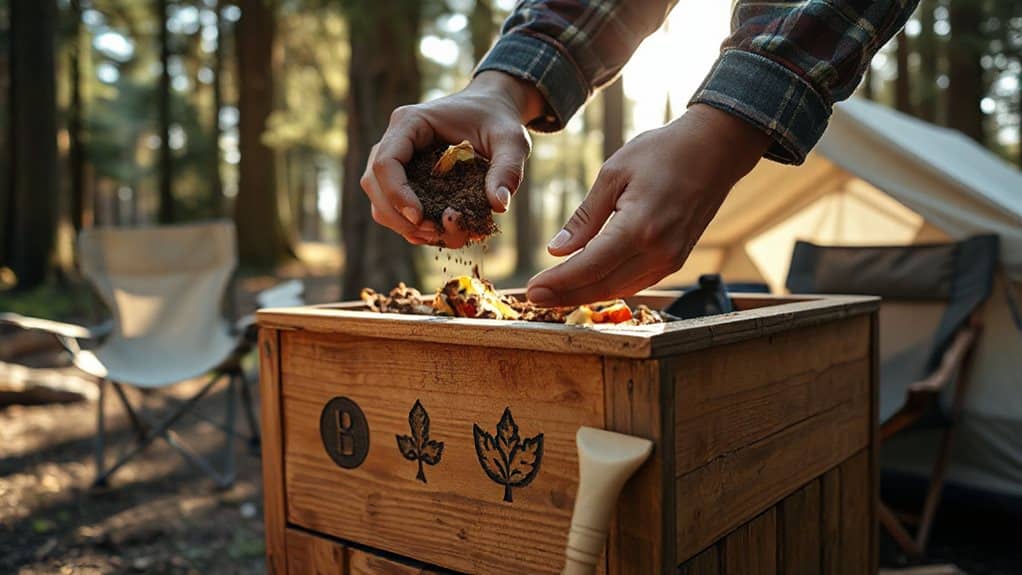
When composting at camp, sticking to designated areas isn’t just a rule—it’s a key step in protecting the environment.
You’ll prevent water contamination and nutrient runoff by composting only where allowed. Keep operations 100 feet from streams, 50 feet from wells, and use covered structures.
Follow Leave No Trace: don’t compost off-site, and always use approved, labeled areas to stay compliant and preserve nature. Remember to camp at designated sites whenever possible to minimize impact on plants and wildlife.
Ditch Single-Use Plastics for Good
You can cut down on waste by bringing reusable essentials like stainless steel containers and bamboo utensils instead of reaching for plastic.
Swap single-use bottles and bags for durable, plastic-free options like KeepCups and cotton food wraps, which are easy to pack and kinder to the planet.
These small switches add up, helping you camp cleanly without leaving a trail of trash.
Bring Reusable Essentials
A well-packed camping trip starts with smart choices—like swapping out single-use plastics for reusable essentials that last trip after trip. Bring durable utensils, shatter-proof plates, and mess kits to cut waste.
Use refillable bottles, food containers, and biodegradable soap. Pack a washable cutting board, reusable towels, and a drying rack. These simple swaps save space, reduce trash, and keep nature pristine—perfect for campers who value freedom and function.
Choose Plastic-Free Options
Ditching single-use plastics starts with the gear you rely on most—your tent, sleeping setup, and personal essentials—so skip the harmful materials and go plastic-free from the ground up.
Choose PVC-free tents made from recycled nylon or organic cotton, use biodegradable hygiene products, and opt for sleeping bags with recycled or organic insulation.
Swap plastic stakes for aluminum, and pack bar soap to avoid plastic bottles—simple swaps that keep nature wild and free.
Follow Rules and Share Waste Tips
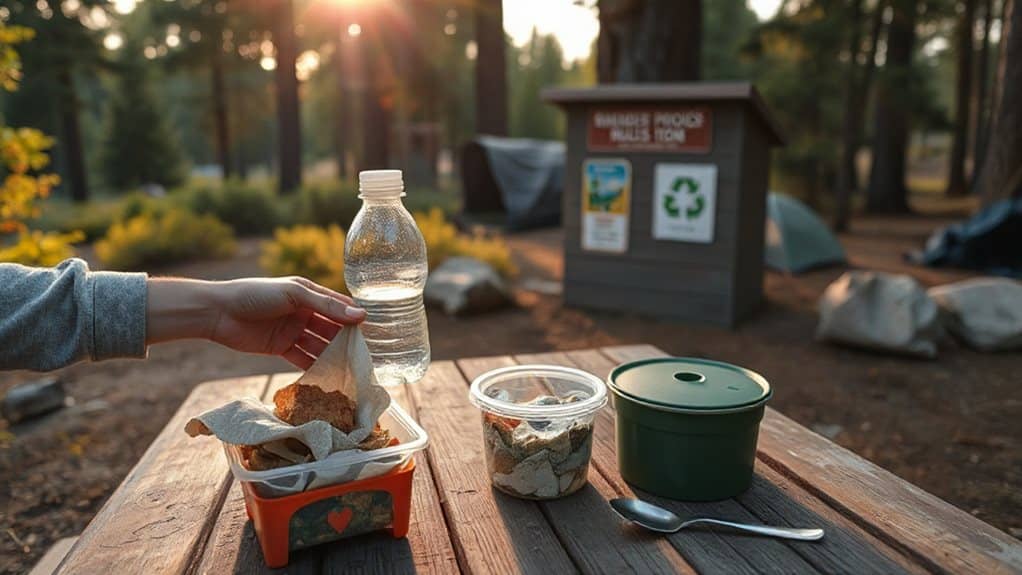
While enjoying the great outdoors, staying informed and proactive about waste rules not only keeps you compliant but also protects the environment for future campers.
Check local regulations, use proper bins, and pack out waste as needed.
Share tips with fellow campers, label clearly, and follow dump station rules.
Small actions make a big difference.
Final Note
You’ve got this! By planning ahead, using reusables, and ditching single-use plastics, you’ll cut waste without sacrificing comfort. Always use bins, recycle correctly, and compost only where allowed. Following campground rules protects nature for everyone. Share these simple tips with your crew—small changes make a big difference. Happy camping, and thanks for keeping the outdoors clean!


