
You catch big bass with frog lures by targeting thick vegetation like lily pads, hydrilla, and matted cover where trophy fish hide. Use a heavy-action rod, 50–65 lb braid, and a high-speed reel to power through slop and set hooks hard. Choose hollow-body frogs with weedless design, and tweak skirts or hooks to reduce snags. Work the lure with a walk-the-dog or popping retrieve, then pause briefly after a blowup before setting up sharply. Keep tension and steer fish quickly from cover. If a bass misses, recast immediately—there’s more to uncover.
TLDR
- Target heavy vegetation like lily pads and thick mats with at least a foot of water beneath to find ambush-ready bass.
- Use hollow-body walking frogs on matted cover and popping frogs in open pockets or near reed lines.
- Rig with 50–65 lb braid, a heavy-action rod, and a high-speed reel for power, sensitivity, and hook-setting strength.
- Employ a walk-the-dog retrieve with quick wrist pops, varying speed based on cover density and strike timing.
- After a bass strikes, pause 1–3 seconds before setting hard upward and maintaining constant tension to avoid slack.
Find the Best Spots for Frog Fishing
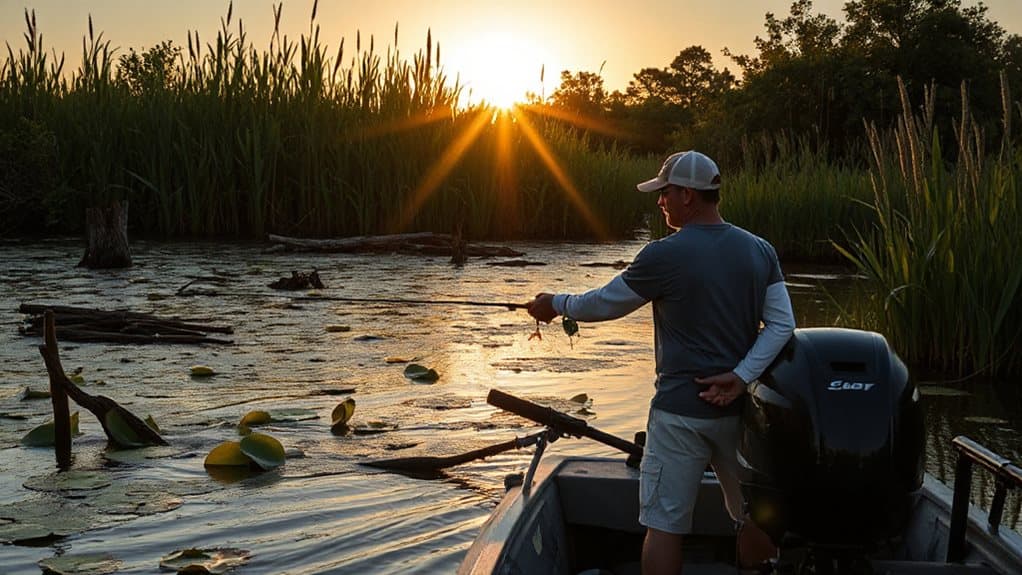
When targeting big bass with frog lures, knowing where to cast can make all the difference.
Focus on heavy vegetation like lily pads, hydrilla, or milfoil—especially where there’s at least a foot of water underneath.
Target edges, open holes, or breaking mats, and don’t skip cattails or scum lines.
Pair cover with wood or rocks to find ambush zones, and hit shifts from open water to thick grass for top results.
Frogs excel in hard-to-reach spots where other baits fail, so cast into the “scariest” cover like thick mats and laydowns where heavy vegetation hides trophy bass.
Use a strong braided line and proper hook setup so you can pull bass through thick cover without losing them.
Choose the Right Lure for Frog Fishing
Picking the right frog lure starts with matching the style to the situation, and getting it right means fewer snags and more explosive strikes.
Use walking frogs for steady side-to-side action over thick mats, popping frogs in open pockets, and skipping models under docks.
Hollow bodies glide weedless, while double hooks improve hook-ups.
Choose buoyant, durable lures with lifelike details to stand up to big bass and heavy cover.
Pair frog fishing with shallow water targeting under-10-foot grass lines, docks, and rocky shorelines for best results.
Use Heavy Gear for Slop Fishing
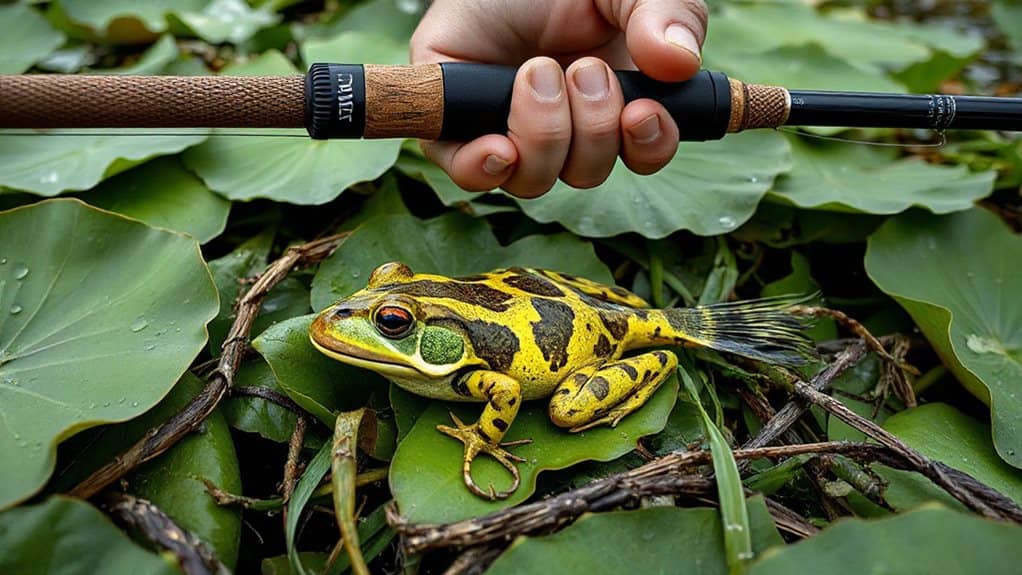
If you’re serious about pulling big bass from thick slop, you’ll need heavy-duty gear that can handle the grind.
Use a long, heavy-action rod to drive hooks through dense cover, pair it with 50–65 lb braid for strength and sensitivity, and choose a high-speed reel with a smooth drag.
This setup gives you power, control, and the freedom to pull hard without losing fish.
For improved hook-setting and quicker tip recovery in heavy cover, consider a fast-action rod with a stiff backbone and top-third flex for optimal performance with frog lures and other single-hook baits (fast-action rods).
Master Walk-the-Dog for Frog Fishing
You’ve got the heavy gear in hand to punch through thick slop, and now it’s time to put that rig to work with one of the most effective surface actions for big bass—walk-the-dog.
Use short, quick wrist pops while reeling in slack to create a zigzag motion. Keep your rod at a medium height, twitch the tip, and maintain rhythm. Adjust speed based on cover and water clarity—fast in open water, slow in thick mats.
Let the frog walk steadily, and stay ready; many strikes happen mid-retrieve. Pair this with a 7-foot medium rod for the best balance of casting distance and control when fishing heavy cover 7-foot medium rod.
Pop the Frog in Reeds for Reaction Strikes
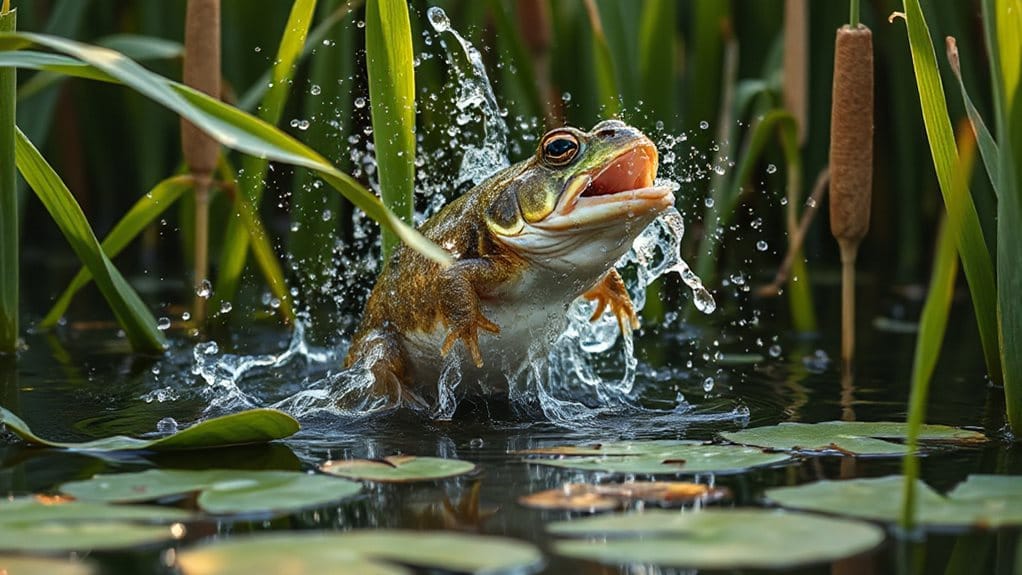
When bass are tucked deep in reed lines, lying in wait for an easy meal, a well-placed pop of the frog can trigger explosive reaction strikes you won’t get with any other retrieve.
Use heavy baitcasting gear, 30lb braid, and a fast-action rod to pop sharply, then reel fast.
Aim for holes and edges, vary your speed, and recast quickly after misses to stay in control and keep bass reacting.
Also remember that in warmer months bass often move into shallow cover at dawn and dusk, making night and low-light pops especially productive.
Set the Hook Hard After a Blowup
When that frog gets slammed, don’t hesitate—set the hook hard and immediately, using a strong, fast upward sweep of your rod.
Keep your line tight before the strike so all that power transfers directly to the hook, driving it home through thick mouth tissue.
Waiting even a second can mean the difference between a solid hookup and a missed fish, especially after an explosive topwater blowup.
Hook Immediately On Explosion
Don’t set the hook the instant you see the explosion—wait a beat. Let the bass fully engulf the frog, giving it 1–3 seconds to commit. Setting too soon risks misses or shallow hooks.
In open water, watch the frog vanish, then drive up hard. Around cover, feel for solid weight before reacting. A delayed, powerful upward motion guarantees those stout hooks penetrate cleanly, keeping hard-fought bass from escaping into the depths where they belong.
Use Strong Line Tension
You just waited for that explosive strike, gave the bass a split-second to commit, and now it’s time to take control—set the hook hard and drive those double hooks home.
Keep cranking immediately, maintaining strong line tension to steer the fish from thick cover. Use 65-pound braid, tighten your drag, and never give slack—every inch counts when you’re pulling a trophy bass to freedom.
Avoid Delayed Strike Response
Though the thunderous explosion of a bass inhaling your frog might tempt you to react instantly, waiting even a split second too long can mean the difference between landing a giant and watching it vanish in a splash.
Set the hook hard the moment the blowup happens—don’t count, don’t hesitate. That explosive strike is your only signal; delay, and the bass spits the lure. Stay sharp, stay ready, and trust the strike.
What to Do After a Missed Strike?
You just missed a strike—don’t panic, just reel back fast and get that frog out of there.
Cast right back to the same spot immediately, because that bass is likely still keyed in and ready to hit again.
Stay patient, keep your presentation sharp, and be ready for a solid follow-up strike.
Immediate Recast Strategy
Strike, and miss—don’t hesitate. Reel back fast, keeping the frog in play. Bass often stay near cover, ready to strike again.
Cast right back to the exact spot—use frog paths or blow holes for accuracy. Pitch 2 feet ahead with a backup bait. Let it sit, add subtle twitches.
Stay stealthy, cover angles, and stay free to adapt—success follows persistence.
Strike Zone Patience
Often, the difference between a blank day and a trophy bite comes down to what you do after the blow-up. Let your frog sit still—bass often strike when it pauses.
Stay patient, keep the lure in play, and vary your retrieve. They’re likely watching, waiting. After a miss, don’t rip it away; give them time. Strike zone patience pays off.
Stop Short Strikes With Skirt & Hook Tweaks
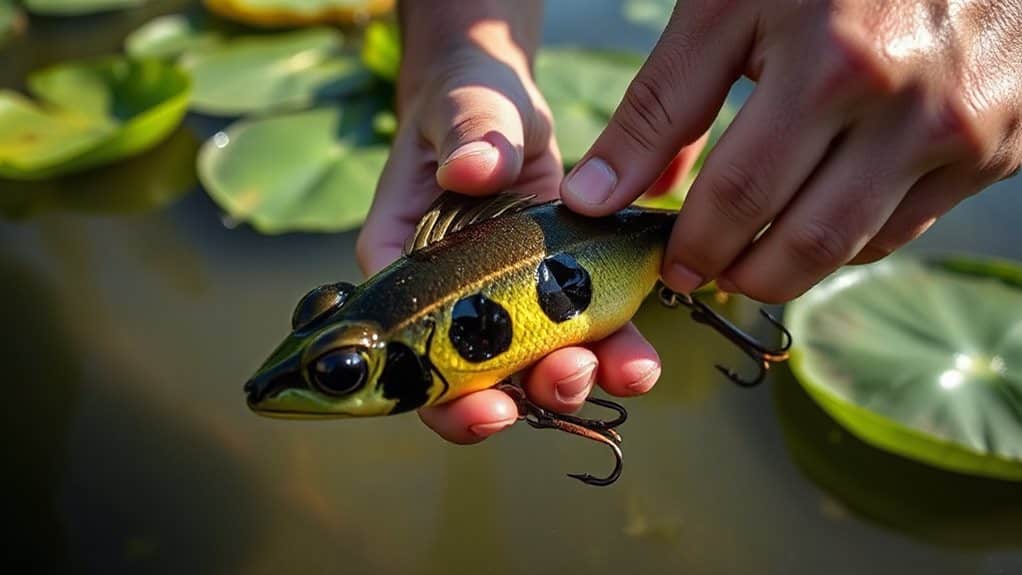
Fine-tuning your frog lure’s skirt and hook setup can make all the difference when bass swipe short instead of swallowing the bait.
Trim skirt material and use stiffer silicone to prevent fouling, while shorter legs reduce drag. Upgrade to 4/0–5/0 wide-gap hooks, go single instead of double, and position them parallel or doubled in the rear to enhance hookups and stop short strikes dead in their tracks.
Final Note
You’ve got the tools and tactics now—use them wisely. Target thick cover, pick the right frog, and pair it with heavy gear for better hookups. Command walk-the-dog and popping moves to trigger strikes, then set hard the moment you see a blowup. If you miss, tweak the skirt or hook position. Stay patient, stay precise, and you’ll turn more frogs into trophies. Keep refining your approach—big bass are waiting.


