
You’re underestimating your hike because basic formulas ignore terrain, fatigue, and your fitness level. Naismith’s Rule helps but fails on rough trails, steep climbs, or with a heavy pack. Adjust for elevation gain, weather, and group pace, and add 15–50% more time for technical ground. Use GPS data and real-time apps to refine predictions, but stay flexible—conditions change. Smart planning combines proven rules with personal experience, so you stay safe and on schedule, even when surprises come your way.
TLDR
- Generic rules like “30 minutes per mile” fail because they ignore fitness, terrain, and fatigue unique to each hiker.
- Naismith’s Rule is a solid baseline but underestimates time without adjustments for breaks, pack weight, or technical trails.
- Rugged terrain, elevation gain, and weather can double hiking time—always add 15–50% buffers for off-trail or steep sections.
- Use refined methods like the Swiss Rule or Munter Method to account for ascent, terrain, and real-world delays more accurately.
- Combine GPS data, AI-powered apps, and traditional rules to adapt estimates in real time while maintaining safety margins.
Why Most Hikers Get Hiking Time Wrong
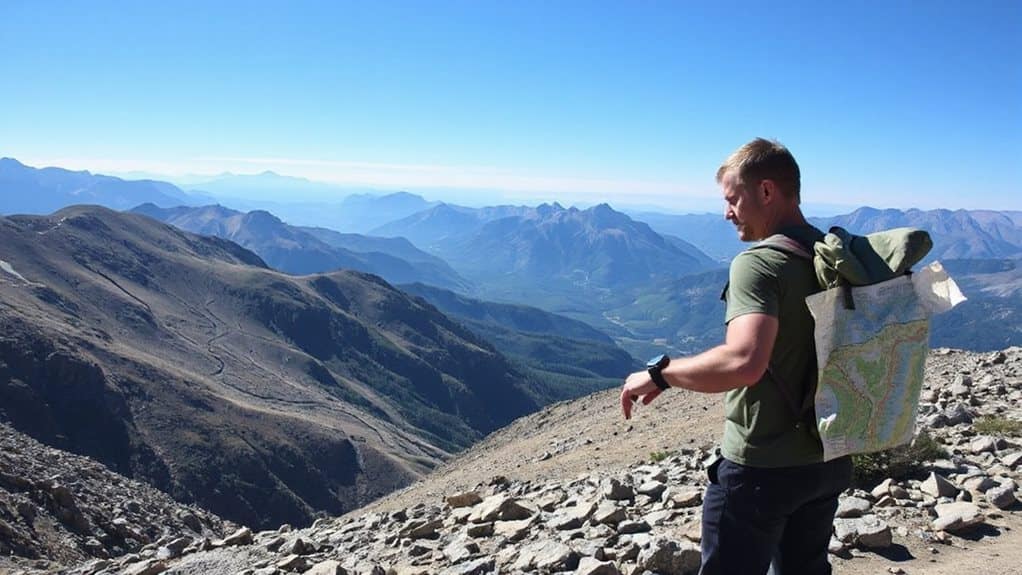
While you might think a simple rule like “30 minutes per mile” gives a reliable estimate, most hikers end up miscalculating their hiking time because standard methods don’t account for the real complexities of trail travel.
You’re unique—your fitness, pace, and fatigue matter. Generic models ignore your personal speed patterns, terrain challenges, and how tired you get over time, leading to inaccurate predictions that can disrupt your journey. A new deep learning model called HikingTTE improves accuracy by learning individual walking patterns and adjusting for terrain and fatigue, with studies showing it reduces errors by over 12 percentage points compared to traditional methods reduced MAPE by 12.95 percentage points. Compass-based map skills like triangulation and orienting a map can also help you plan more realistic routes.
Naismith’s Rule: How It Works and Where It Falls Short
You can estimate your hiking time using Naismith’s Rule by adding 1 hour for every 3 miles and 1 hour for every 2,000 feet of climb, which works well on moderate terrain.
But keep in mind, it doesn’t account for breaks, heavy packs, or tough weather—so your actual time might be longer. This rule gives you a solid starting point, especially if you’re reasonably fit and sticking to standard trails.
Consider also how a heavy pack will slow your pace and require more frequent rests.
Naismith’s Core Principles
Imagine yourself planning a hike through rolling hills and steady climbs—Naismith’s Rule gives you a reliable starting point for estimating how long it’ll take.
You’ll allow 1 hour per 3 miles, plus 1 hour per 2,000 feet of ascent.
It assumes a 5 km/h pace on flat ground, adding 10 minutes per 100 m climbed.
Simple, effective, and built for freedom on the trail.
Limitations In Practice
Naismith’s Rule gives you a solid foundation for estimating hiking time, especially on moderate trails with steady climbs and well-marked paths.
But real hikes aren’t always so predictable. Rocky sections add 15 minutes, bush-bashing doubles your time, and poor weather or heavy packs slow you down. Fitness, group size, breaks, and route-finding issues aren’t factored in—so adjust your estimates to stay safe and keep your freedom on the trail.
Swiss Rule vs. Munter: Which Hiking Time Method Wins?
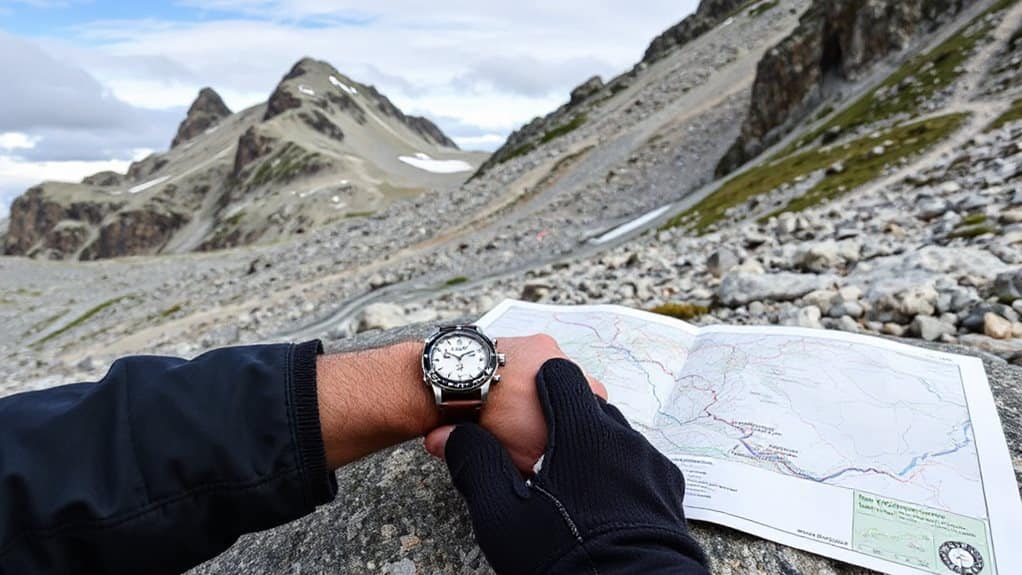
When it comes to predicting how long a mountain hike will take, two Swiss-born methods— the Swiss Rule and the Munter Method—step forward as more refined alternatives to the classic Naismith’s Rule.
You’ll find the Swiss Rule more precise, using complex math to blend distance and climb smoothly. But Munter’s approach gives you flexibility—track units, adjust for terrain, and include breaks, making it ideal for real-world tours where control and adaptability matter most. Planning water resupply and minimizing carried weight can also improve timing accuracy on longer hikes by reducing rest and fatigue from heavy consumables, especially important when a trek requires carrying several days of food and water consumables weight.
How Fitness Affects Your Hiking Time Estimate
Push yourself uphill with a heavy pack, and you’ll quickly realize fitness isn’t just helpful—it’s a key factor in how fast and efficiently you cover trail miles.
Your fitness level directly shapes your pace, especially on steep or technical terrain.
Elite hikers cut time by 25%, while average walkers may need 10% more.
Pack weight, elevation, and trail conditions amplify these differences, so train specifically, build endurance, and adjust estimates based on your real-world ability—not averages.
Nature exposure also enhances recovery and mood, which can improve overall hiking performance by reducing fatigue and boosting motivation improved mood.
How Terrain and Elevation Break Simple Time Formulas
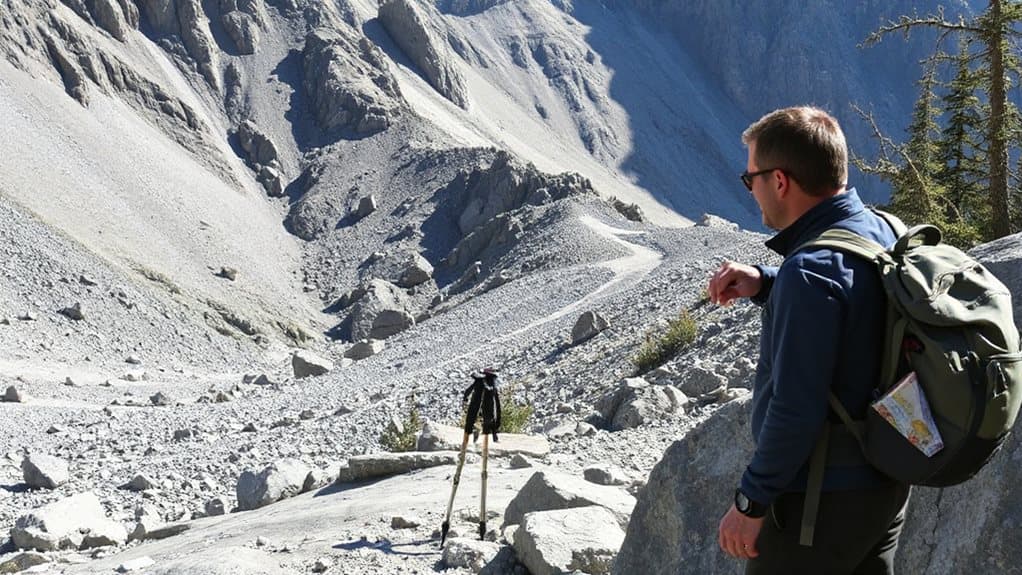
You might think your hiking time depends just on distance, but elevation gains can add hidden minutes—like 30 extra per 1,000 feet climbed—that quickly pile up.
Rough or steep terrain slows your pace too, making flat-land estimates unreliable on rocky or uneven trails.
That’s why simple formulas often fall short, especially when slopes vary or the ground gets tricky underfoot.
Also remember to factor in longer breaks and extra clothing layers for warmth when hiking in cold conditions, since hypothermia risk increases in exposed, high-elevation environments and proper layering is essential for safety and comfort (layered clothing).
Elevation Adds Hidden Time
Though flat mileage gives you a starting point, it’s the elevation gain that quietly adds the most time and effort to your hike—often more than you realize.
Every 1,000 feet of climbing can equal an extra mile, especially above 7,000 feet where thin air slows you down. Steep, uneven climbs, heat, and trail conditions multiply the challenge, turning short hikes into long efforts.
Terrain Alters Pace Significantly
When you’re planning a hike, it’s easy to assume that distance and elevation tell the whole story, but the type of ground you’ll actually be walking on plays an equally critical role in how long the trek will take. Paved paths let you move fast, while roots, rocks, or steep slopes slow you down—sometimes drastically.
Off-trail terrain can cut your pace by over half, and loose stones demand focus, not speed. Even downhill sections aren’t always quicker; if they’re steep or technical, you’ll move slower than you’d think.
Your freedom to roam depends on respecting terrain’s real impact—don’t let simple formulas fool you.
Why Fatigue and Breaks Ruin Traditional Estimates
While traditional hiking time estimates focus on distance and elevation, they often fall short because they ignore the real-world effects of fatigue and breaks—two factors that consistently slow you down as the day goes on.
You’ll naturally lose 10–20% of your pace late in the day, especially with a heavy pack or rough terrain. Short breaks add up, and long ones eat time. Without planning for fatigue and rest, you’ll misjudge your finish—sometimes by hours.
GPS, Pedometers, and Apps: Which Gives the Best Time Estimate?
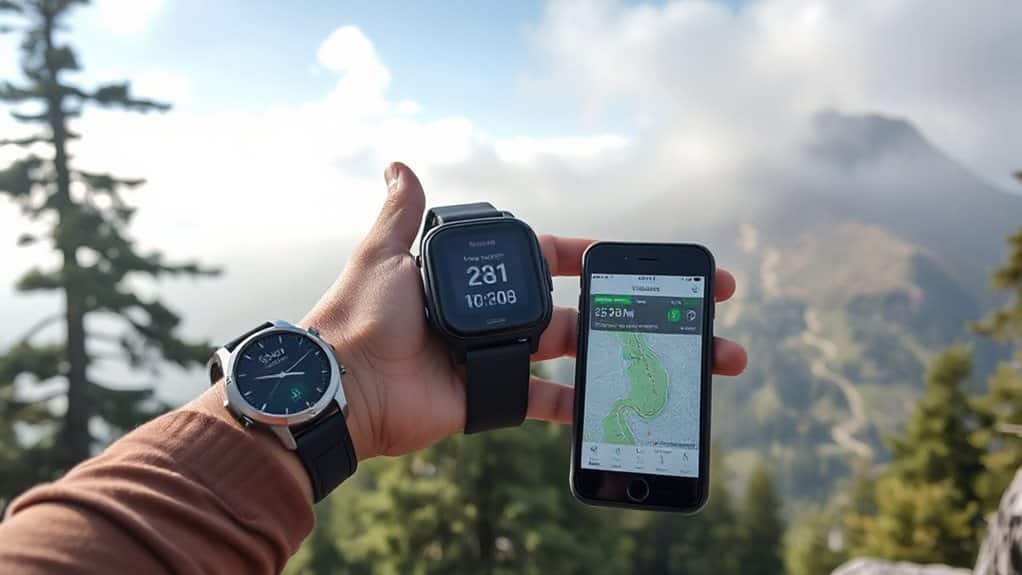
You’ve seen how fatigue and breaks throw off standard hiking time estimates, making even well-planned trips run late.
For accuracy, rely on GPS with calibration—it handles terrain and switchbacks better than pedometers. Apps like Hiking Club use smart models, adjusting for your pace, elevation, and fitness.
While pedometers work on flat paths, they falter on trails. Trust GPS-backed apps for real-time, precise time estimates.
Can AI Really Predict Your Hiking Time? (And Should You Trust It?)
You might be surprised how accurately AI can guess your hiking time, using your GPS data and terrain details instead of old rules like Naismith’s. It learns your pace from the first part of the trail and adjusts for fatigue and steep slopes, giving a smarter estimate as you go.
While it’s not perfect, combining real-time observations with experience helps you stay on track and hike safer.
How Ai Predicts Hiking Time
Envision this: you’re halfway up a winding trail, legs starting to tire, and you wonder how much longer it’ll take to reach the summit. AI predicts your time by analyzing your GPS data, terrain, and fatigue, learning your pace as you go.
It uses smart models like LSTM and attention to weigh key trail segments, adjusting for slope and effort, so you get accurate, real-time estimates customized to you.
Real-Time Data Vs. Rules Of Thumb
While AI can refine your hiking time predictions by learning your pace and adjusting for terrain in real time, it’s worth comparing these modern methods to the long-standing rules of thumb that many hikers still rely on.
Real-time GPS data from platforms like Komoot or Garmin offers personalized perspectives, yet often underestimates effort, especially on rugged trails.
Traditional rules—like Naismith’s or Tobler’s—provide conservative, safety-first estimates, though they lack personalization.
Combining both approaches, such as using a weighted average of Book Time, Naismith, and Tobler, delivers more reliable planning.
Smart hikers use real-world data to fine-tune these rules, balancing accuracy with safety for greater freedom on the trail.
Trust And Safety In Predictions
When it comes to predicting how long a hike will really take, AI has made impressive strides—especially with models like HikingTTE that blend advanced algorithms with real-world data to deliver more accurate estimates than traditional rules alone.
You can trust these predictions because they adapt to terrain, fatigue, and your pace, while flagging risks like weather or exhaustion—helping you stay safe, make smarter choices, and keep moving freely on your own terms.
Unpredictable Elements That Break Every Hiking Time Estimate
You can count on your map and compass, but nature doesn’t always play by the rules—weather, terrain, altitude, fitness, and gear all throw curveballs that derail even the most carefully calculated hiking times. Sudden storms, loose scree, or thin air can slow you fast.
Your pack weight, group size, or fatigue add minutes too. Adjust in real time, stay flexible, and build in buffer—because unpredictability is the only guarantee out there.
How to Adjust Your Hiking Time Estimate for Real Conditions
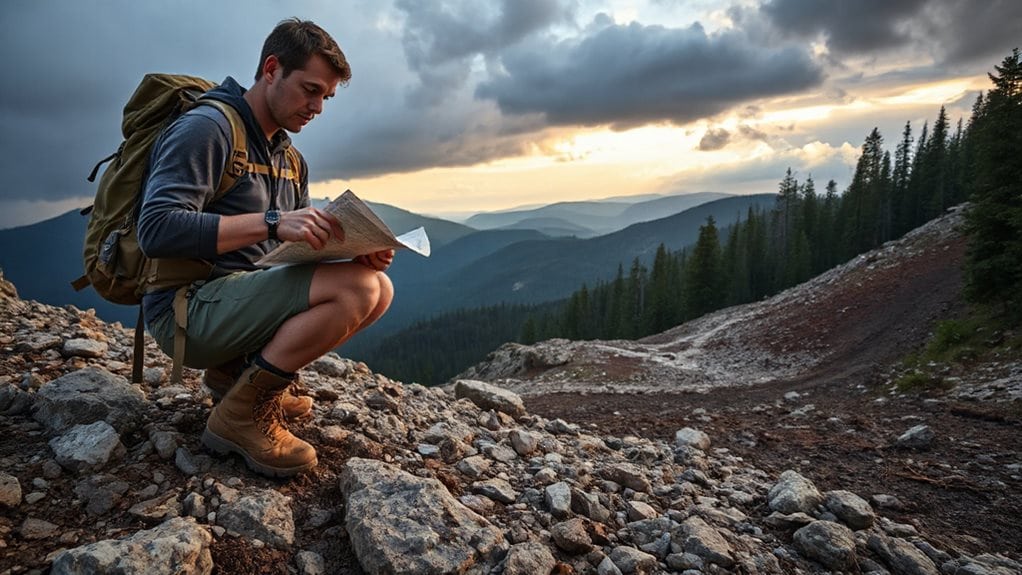
If you’ve ever found your hike taking longer than planned, it’s likely because the trail didn’t match the ideal conditions most time estimates assume.
Adjust your pace for rocky, snowy, or off-trail terrain—add 15–50%. Factor in elevation gain, weather, and pack weight. Use microspikes? That’s slower. Heavy pack? Add time. Know your fitness, check forecasts, and respect real conditions to stay safe, free, and on schedule.
Final Note
You now know the tools to estimate hiking time more accurately, from Naismith’s Rule to modern apps. But remember, your fitness, terrain, and weather always matter. Don’t rely on formulas alone—adjust for real conditions, pace, and breaks. Trust data, but stay flexible. With practice, you’ll fine-tune your judgment, hike smarter, and stay safer on every trail.


