
You build confidence every time you climb a tree, balance on a log, or find your way along a rocky path. Outdoor play challenges your body and mind, helping you trust your decisions, manage risks, and adapt to new situations. Facing small fears, solving problems, and creating with natural materials enhance your strength, creativity, and emotional control. Each success, even a stumble, teaches you you’re capable. Keep going to see how these everyday explorations shape lasting resilience and self-belief.
TLDR
- Facing manageable risks like climbing or jumping helps children build trust in their decisions and abilities.
- Unstructured play in nature fosters resilience by allowing kids to overcome challenges independently.
- Hands-on activities with natural materials strengthen motor skills and confidence through real-world problem-solving.
- Leading their own games outdoors promotes leadership, negotiation, and emotional regulation.
- Repeated outdoor successes and setbacks build long-term self-efficacy and adaptability in children.
How Outdoor Play Builds Kids’ Confidence (Backed by Research)
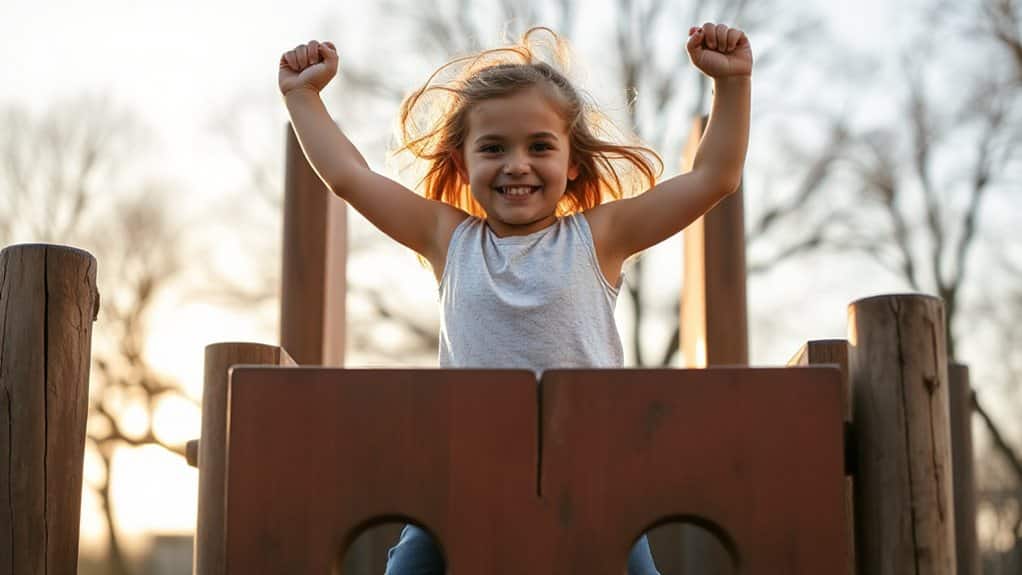
While you mightn’t immediately connect climbing a tree or building a stick fort with long-term personal growth, these everyday outdoor moments actually play a key role in building your child’s confidence.
You let them make choices, solve problems, and test their limits freely. They learn to trust their bodies, handle risks, and adapt—all while gaining real skills, independence, and resilience that last well into adulthood.
Physical challenges like climbing, digging, and navigating uneven terrain help children develop risk assessment and awareness of their capabilities, directly boosting self-assurance.
Outdoor play also supports cardiovascular and muscular health, contributing to overall wellbeing through activities that improve cardiovascular endurance and strength.
Why Taking Risks Helps Children Trust Themselves
When your child climbs higher than usual on the playground or hesitates before jumping off a low wall, they’re not just testing their limits—they’re building trust in themselves. Taking risks helps them learn to manage fear, recognize their abilities, and gain confidence through real experience.
Each small challenge conquered strengthens self-reliance, resilience, and judgment—skills that last a lifetime. Camping on durable surfaces and practicing Leave No Trace principles can reinforce these lessons while protecting nature.
How Natural Playgrounds Challenge and Grow Kids
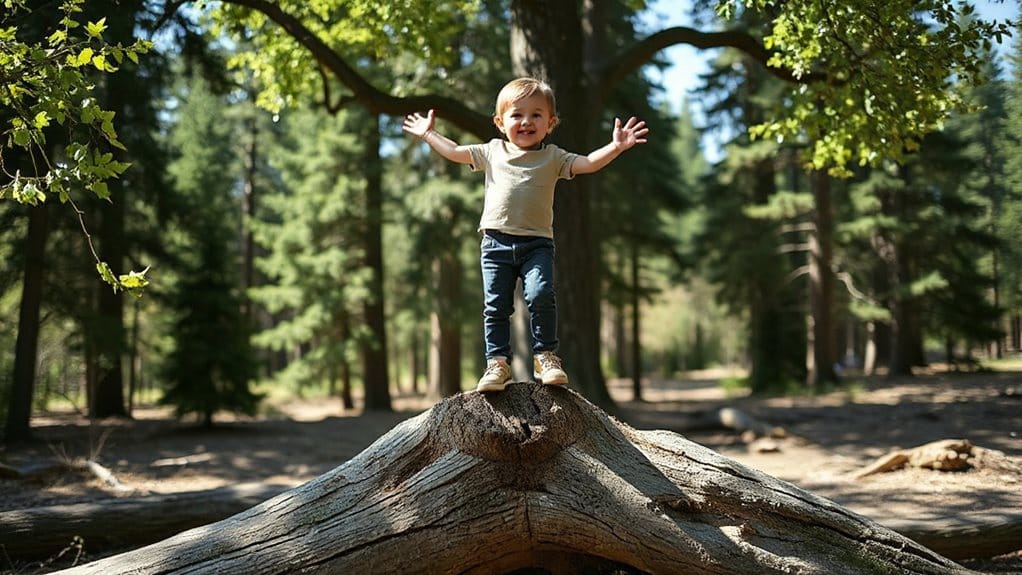
You build resilience every time you tackle unstructured play in a natural playground, where there’s no set path or rulebook to follow.
Climbing a log, balancing on a beam, or building a fort from sticks pushes you to solve problems and trust your decisions.
These real, physical challenges don’t just test your body—they grow your confidence with every try, success, or even stumble.
A few simple precautions like bringing a first-aid kit can help keep play safe and let kids focus on learning and growing.
Unstructured Play Builds Resilience
Because unstructured play lets you face small risks and setbacks on your own, it quietly builds the mental and emotional strength needed to handle bigger challenges later in life.
You learn to adapt, regulate emotions, and solve problems independently. Over time, this cultivates resilience, reduces anxiety, and supports long-term mental health—giving you the inner tools to thrive, no matter what comes your way.
Natural Challenges Boost Confidence
While natural playgrounds may look less structured than their plastic-and-metal counterparts, they’re actually carefully designed to challenge you in just the right ways.
Climbing trees, balancing on logs, and crossing streams build your strength, coordination, and confidence.
Each success teaches you to trust your abilities, take smart risks, and tackle tougher obstacles—growing your resilience, focus, and self-belief through real, hands-on experience.
Why Sticks, Logs, and Rocks Help Kids Grow
You’re building more than just forts when you play with sticks, logs, and rocks—these loose parts enhance strength, balance, and coordination through real, hands-on effort.
They also spark creativity and problem-solving, because no two pieces work the same way twice, pushing you to adapt and try new strategies.
Taking on small risks outdoors, like balancing on a wobbly log, helps you grow resilience and confidence, one challenge at a time.
Children who spend time outdoors also tend to have increased resistance to stress, which supports their emotional growth and ability to face new challenges.
Natural Materials, Big Benefits
Step outside, and you’ll likely find kids turning sticks into wands, stacking rocks into towers, or balancing across fallen logs—simple materials that spark big developmental gains.
You enhance motor skills, problem-solving, and emotional regulation when children play freely with natural elements.
These unstructured experiences build confidence, cultivate creativity, and strengthen social bonds, all while connecting kids to nature in meaningful, sustainable ways.
Loose Parts, Strong Skills
Dig into any patch of outdoor play, and you’ll likely find children turning simple materials like sticks, logs, and rocks into something extraordinary—bridges, forts, or even imaginary worlds.
You spark creativity and problem-solving when you let them freely investigate. Loose parts have no rules, so you encourage independence, collaboration, and critical thinking.
You also build confidence, motor skills, and emotional resilience—all through open-ended, hands-on play that respects their freedom to choose, create, and grow.
Risk, Resilience, Growth
When children play freely with sticks, logs, and rocks, they’re not just building forts or balancing on uneven surfaces—they’re learning to assess risks, manage uncertainty, and grow from small setbacks.
You let them climb, jump, and find their way through challenges, and they build resilience, confidence, and emotional control.
These experiences teach coping, enhance self-efficacy, and support mental well-being—all through simple, unstructured outdoor play.
How Climbing and Swinging Build Physical and Emotional Strength
Scaling a climbing wall or soaring on a swing does more than bring a rush of wind to a child’s face—it builds real physical strength and emotional resilience from the ground up. You engage core, arms, and legs, enhancing coordination and bone density.
Swinging sharpens balance and spatial awareness. Each climb teaches confidence, control, and problem-solving, helping you grow stronger, steadier, and more self-assured through active, joyful movement. A good plan and the right gear also help keep outdoor play safe for families and children, including a checklist for essentials like a first aid kit and navigation tools.
Let Kids Lead: The Power of Unstructured Outdoor Play
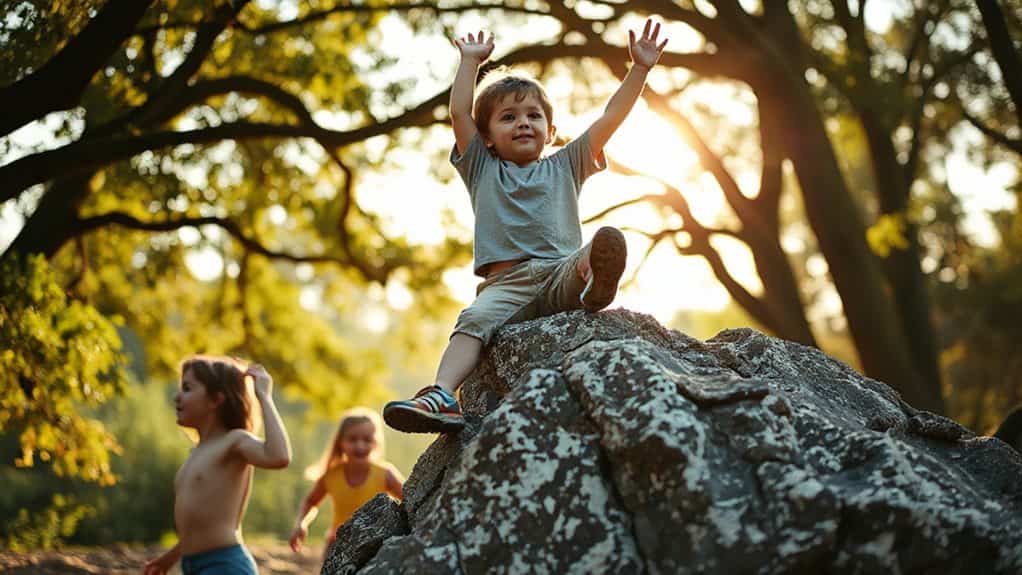
You know what happens when you step back and let your child lead during outdoor play? They start making their own choices, like turning sticks into tools or building forts from fallen branches, which builds problem-solving skills and independence.
Let Kids Lead
Step into the world of unstructured outdoor play, and you’ll quickly see kids taking charge—making decisions, solving problems, and testing their limits on their own terms.
You investigate freely, climb high, balance carefully, and invent games with friends, using sticks, leaves, or trails as prompts. With adults nearby but not in control, you learn to negotiate, lead, and adapt—building real confidence through your own findings and choices.
Unstructured Play Benefits
When kids take the lead in outdoor play, they’re not just having fun—they’re building the skills that shape confident, capable adults.
You let them investigate freely, and they enhance cognition, creativity, and focus.
Unstructured play sharpens problem-solving, social skills, and emotional resilience.
It supports physical health, academic growth, and self-regulation—naturally, actively, and on their own terms.
How Outdoor Play Helps Kids Solve Problems Alone
Amid towering trees, sprawling parks, and backyard gardens, children quietly build a powerful skill: solving problems on their own. You investigate nature scavenger hunts, figure out where to plant seeds, or adjust your game rules when things change.
There’s no script—just you, your choices, and real consequences. You learn to adapt, test ideas, and trust your decisions in open, flexible spaces.
How Adventurous Play Helps Kids Manage Big Emotions
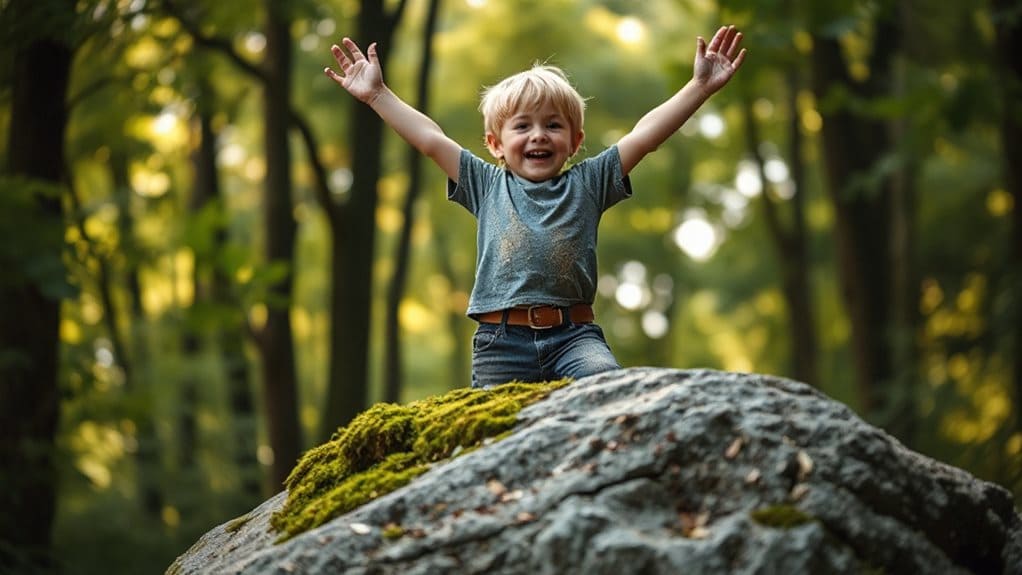
Even though it might seem counterintuitive, letting yourself face a little fear during adventurous play—like climbing a wobbly log or swinging high on a rope—actually helps you handle big emotions better.
You learn to manage excitement and fear at once, building coping skills, emotional control, and confidence.
Over time, you’ll feel more capable, calm, and ready to face uncertainty—no matter the challenge.
Why Outdoor Play Builds Kinder, More Connected Kids
You’ll often find that kids who play outdoors regularly grow kinder and more connected to those around them, and it’s not just about having fun in the fresh air.
You see, nature play enhances empathy, teamwork, and communication while reducing bullying. It strengthens peer bonds, cultivates inclusion, and builds emotional awareness—skills that stick with them.
Green spaces, in fact, support prosocial behaviors and lasting social development.
How Outdoor Play Shapes Resilient, Confident Kids for Life
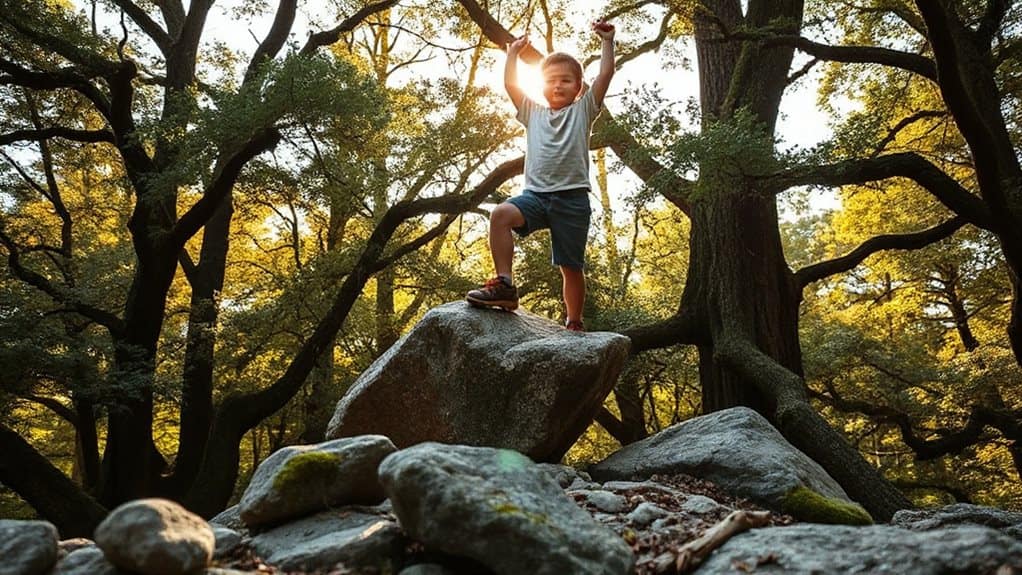
When kids spend time playing outside, they’re not just building friendships and learning kindness—they’re also gaining the inner strength and self-assurance that shape resilient, confident adults.
You let them climb, investigate, and make choices, and they learn to trust themselves.
Facing manageable risks outdoors builds independence, emotional regulation, and problem-solving skills—foundations for lifelong resilience and confidence in an ever-changing world.
Final Note
You build confidence every time you climb higher, balance on a log, or investigate a new trail. Outdoor play pushes you to take smart risks, solve problems, and manage emotions—all while strengthening your body and mind. Nature’s unpredictable challenges teach resilience, focus, and cooperation in ways structured activities often can’t. By engaging with the natural world, you’re not just playing; you’re growing into a more capable, confident version of yourself, ready to face life’s next challenge with calm and courage.


