
You’ll need a 7’6” to 8-foot heavy-power rod and a low-profile baitcasting reel spooled with 75–80 pound braid, plus a steel or heavy fluorocarbon leader. Target shallow flats near deep drop-offs, especially around weed edges and structural breaks. Use bucktails, topwater lures, or suspending swimbaits, varying your retrieve with pauses, bursts, and twitches. Fish at dawn in spring and fall when muskies are most active, and always handle them gently with a rubber net. You’re closer to mastering the hunt than you think.
TLDR
- Use a 7’6” to 8-foot heavy-power rod with a baitcasting reel spooled with 75–80 lb braid and a steel or fluorocarbon leader.
- Target shallow flats near drop-offs and weed edges, especially during dawn or in fall when muskies actively feed.
- Employ topwater lures at daybreak and switch to bucktails or suspending lures with erratic retrieves in low light or stained water.
- Vary retrieve speed with pauses, bursts, and twitches, and use figure-8 motions near the boat to trigger reaction strikes.
- Handle fish with rubber nets, keep them in water, limit air exposure, and revive upright before release for conservation.
Best Gear for Catching Tiger Muskie
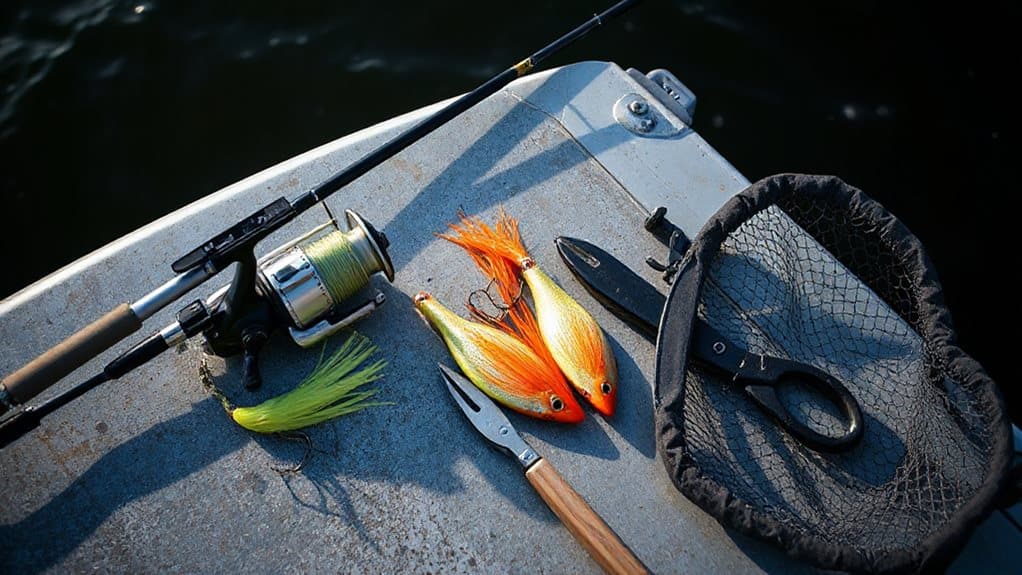
Gear up right, and you’ll stand a much better chance when a trophy tiger muskie decides to strike.
Use a 7’6” to 8-foot heavy power baitcasting rod, like the St. Croix Musky X, paired with a low-profile reel such as the Shimano Tranx. KastKing offers affordable baitcasting reels with high-quality bearings that many anglers find a good value for practice or backup reels.
Spool with 75–80 pound braid, add a steel leader, and keep long pliers and a net handy for safe, quick releases.
The Magnus swimbait is built to withstand brutal strikes, making it a reliable choice when targeting aggressive fish, and its replaceable soft tail ensures long-term durability and performance.
Top Lures That Trigger Tiger Muskie Strikes
When the surface explodes under a thunderous strike at dawn, it’s often a topwater lure that drew that furious reaction from a tiger muskie. You’ll want to cast Big Makk or Whopper Ploppers in Radioactive or Disco Shad, then retrieve steadily—these create the splash and vibration that trigger strikes.
Topwater’s your go-to for early mornings when muskies hunt near the surface, and with steady handle turns, you’ll maximize action and enhance your odds. Studies show tiger muskie activity increases when water temperatures exceed 60°F, making topwater presentations especially effective.
Retrieval Strategies for Maximum Tiger Muskie Action
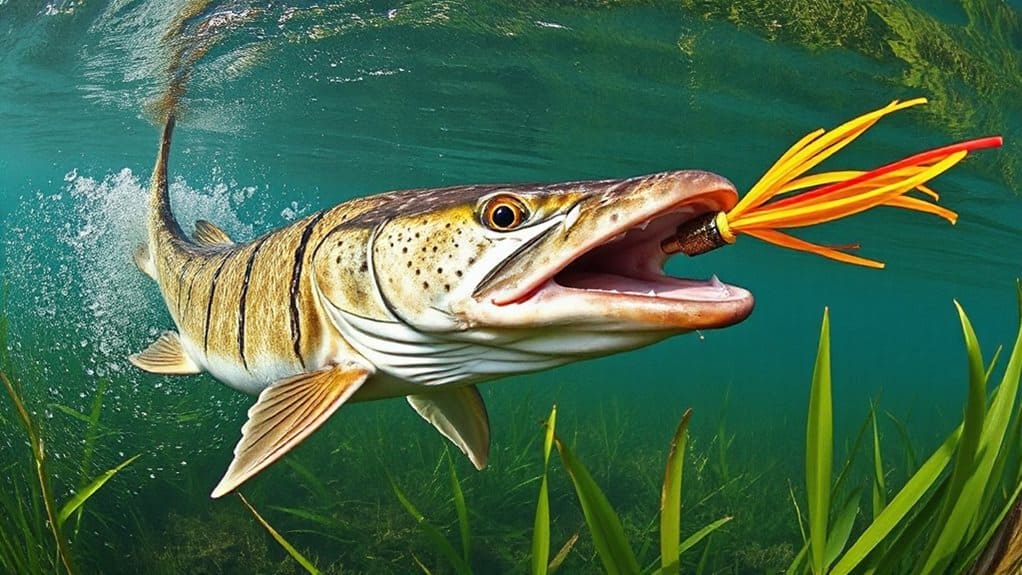
Vary your retrieve to match the mood of the muskie and the clarity of the water, because subtle changes in speed, pause length, and lure action often make the difference between a follow and a full commitment.
Use extended pauses in clear water, let lures fall to the bottom, then slowly move forward and stop.
Try fast retrieves post-spawn, or vertical jigging deep.
Move silently and slowly to avoid spooking fish and to improve hookup rates with a stealthy approach move silently.
Prime Spots to Find Tiger Muskie in Any Lake
You’ll often find tiger muskie lurking on shallow flats near deep water, especially where there’s a quick drop-off within striking distance.
Focus on weed beds and structural edges—these spots give them cover and easy access to prey.
And don’t overlook cooler waters at higher elevations, since these areas hold more oxygen and stay within their preferred temperature range longer.
Look for current seams where fast water meets slow water to find feeding fish and energy-saving holding spots like current breaks.
Shallow Flats Near Deep Water
Right on the edge of a shallow flat where the bottom suddenly drops into deeper water, you’ve found one of the most reliable spots to target tiger muskie in nearly any lake.
You’ll want to focus on shifts—sharp drop-offs, ledges, or submerged points—where fish can ambush prey. These areas, especially near windblown shores, give you the best shot at catching active, schooling muskie.
Weed Beds And Structural Edges
When you’re scanning a lake for tiger muskie, one of the most consistent patterns to focus on is the combination of weed beds and structural edges—these are the zones where ambush meets opportunity.
Target 8- to 12-foot cabbage edges, especially where weeds meet drop-offs. Use electronics to find fringe weeds on slow tapers, and mark 12-foot contours to locate outside edges fast—prime real estate for active, feeding fish.
Cooler Waters At Higher Elevations
Cool, deep water often holds the key to locating tiger muskie when summer heat pushes temperatures into stressful ranges.
You’ll find them near the thermocline, especially in high-elevation lakes where water stays cooler. Target reservoirs above 7,000 feet—like Colorado’s Gross Reservoir—where they thrive.
These deep, clear lakes, often low in weeds, give you the best shot at landing a trophy tiger muskie.
Best Seasons to Target Tiger Muskie
You’ll want to hit the water in fall when cooling temperatures spark a feeding frenzy, especially as muskies chase baitfish into shallow bars and points.
Spring’s changeover period also offers solid action, right after ice-out when fish move toward warming edges but before spawning shuts down the bite.
Focus on these windows—particularly when temps sit between 60–70°F—and you’ll catch more tiger muskies.
Recreational fishing also supports conservation efforts through license fees and other funding that help protect fish habitat.
Fall Feeding Frenzy
Often, fall turns into prime time for landing trophy tiger muskies, and for good reason—cooling water temperatures in the mid- to lower-60s signal a shift in their feeding behavior.
You’ll find them chasing bait in shallow weeds, near rock piles, or along points as daylight fades. Use slow retrieves with suspending lures or bucktails, and don’t skip topwaters at dawn.
Spring Transition Period
As the ice gives way and water temperatures begin their steady climb, tiger muskies enter a critical window of activity known as the spring changeover period—your best chance to target aggressive fish gearing up for or recovering from spawning.
Focus on warming shallows, weed edges, and shift zones where fish stage or recover. Troll suspended lures over flats or near mid-depth wood; it covers more water and finds scattered fish fast.
Strike-Triggering Tactics for Big Tiger Muskie
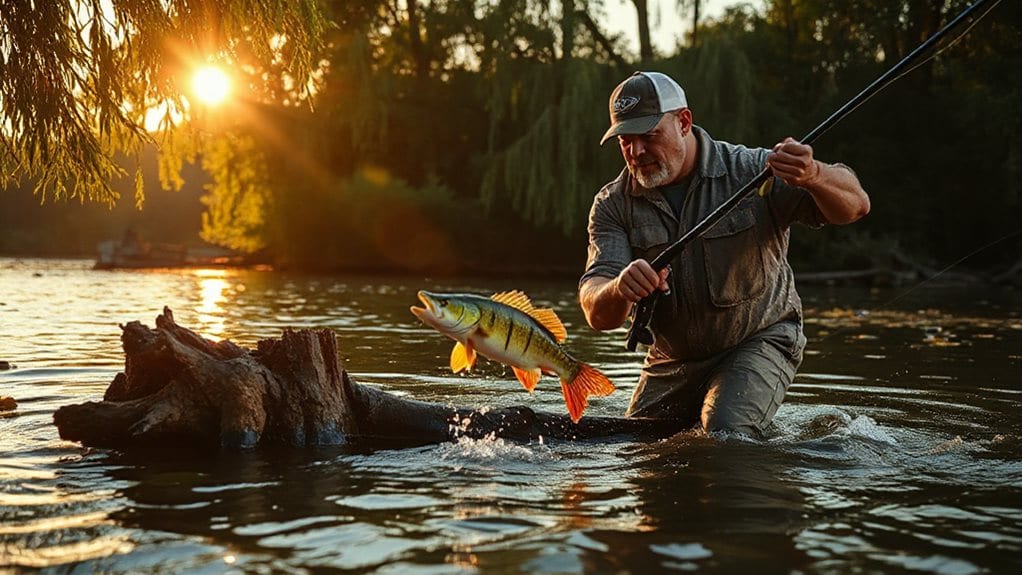
When a big tiger muskie starts shadowing your lure, don’t just keep reeling—mix up your retrieve to trigger that final, explosive strike.
Try a sudden speed burst, then slow it down, or add erratic twitches. Use figure 8s near the boat, pause crankbaits, or dead stick soft plastics.
Flash blades, vary pulls, and work angles—keep them guessing and stay free in your approach.
Safe Handling and Release of Tiger Muskie
While landing a tiger muskie is thrilling, handling it the right way guarantees both its survival and future fishing opportunities.
Use rubber nets to protect its slime coat, and keep it in water as much as possible. Grip behind the gill plate with your thumb in the groove, never in the gills. Remove hooks with long pliers or cutters—cut deeply embedded ones. Limit air exposure to under 30 seconds. Hold it upright in the current until it revives, then let it swim free.
First-Trip Tips for Tiger Muskie Anglers
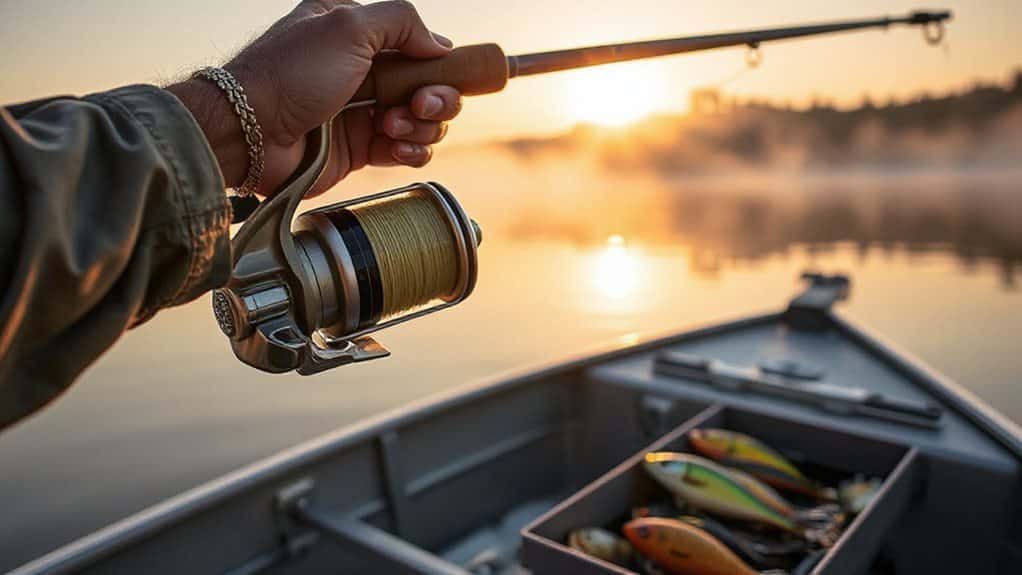
You’ve landed your first tiger muskie and handled it with care—now it’s time to build the skills that’ll help you do it again, and more often.
Use a 7.5–9.5 ft heavy-power rod, 80–120 lb fluorocarbon leader, and bucktail spinners or 5–8 in lures. Cast far, vary retrieve speed, and try figure-eights near the boat.
Why Tiger Muskie Are the Ultimate Challenge
Though they don’t reproduce in the wild, tiger muskies command respect as one of the most demanding freshwater predators to target—thanks to their sharp instincts, explosive growth, and preference for staying just out of reach.
You’ll need patience, precise gear, and timing. They’re solitary, elusive, and feed selectively, often lurking at depths of 2–9 meters, ambushing prey along weed edges—making every catch a hard-earned victory.
Final Note
You now have the tools, tactics, and timing to pursue tiger muskie with confidence. Focus on prime spots during peak seasons, use proven lures with aggressive retrieves, and always handle fish carefully for safe release. It’s a tough hunt, but persistence pays. Stay patient, stay prepared, and respect the species—you’ll not only improve your odds, but also help conserve these incredible predators for future anglers.


