
Spinnerbaits are versatile bass lures featuring rotating metal blades attached to a wire frame with a skirted hook, creating vibration and flash that fish detect through their lateral lines. You’ll cast them near cover like docks or submerged vegetation, then retrieve with steady or variable speeds depending on water clarity and temperature. Choose Colorado blades for murky water and strong vibration, willow blades for clear conditions and high flash, or Indiana blades for balanced performance. The sections below explain blade selection, seasonal adjustments, and troubleshooting techniques to maximize your success.
TLDR
- Spinnerbaits feature rotating blades on a wire frame that create vibration and flash to mimic baitfish and attract predators.
- Colorado blades provide strong vibration for murky water; willow blades offer high flash for clear water conditions.
- Use steady retrieves in clear water and variable speed retrieves with pauses to mimic erratic baitfish in stained water.
- Match spinnerbait size to local forage and use bright colors in murky water, natural patterns in clear water.
- Adjust retrieve speed seasonally: slow crawling for winter, progressively faster through spring and summer as bass metabolism increases.
Understanding Spinnerbait Design and Construction
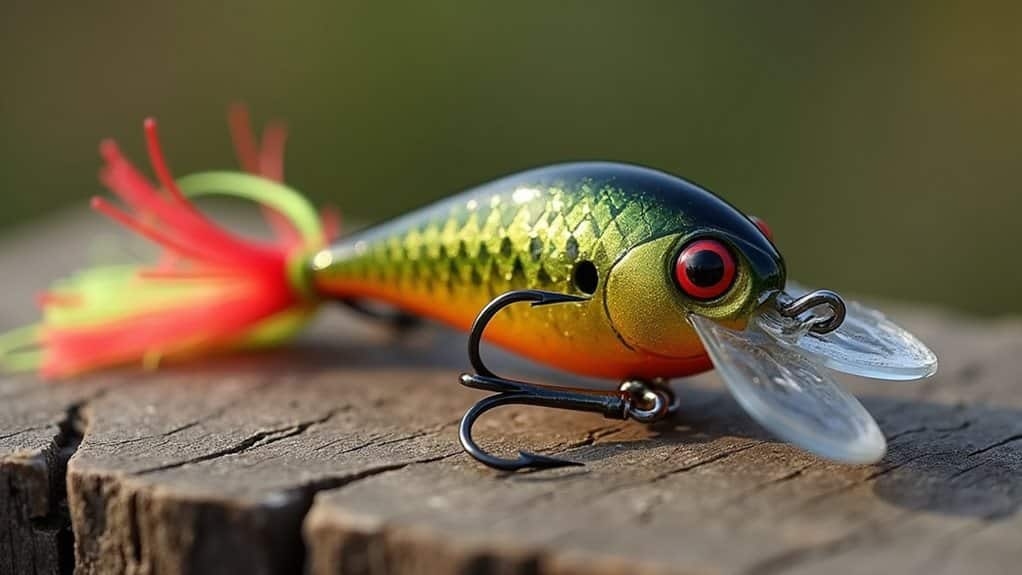
Before you can effectively fish with a spinnerbait, you’ll need to understand how its components work together to create the lure’s distinctive action.
The wire assembly forms the frame, connecting a weighted lead head and hook to an upper arm where beads, clevises, and swivels secure rotating blades.
A skirt covers the hook, adding visual appeal and movement that attracts fish.
The blade style selection determines the lure’s vibration and flash patterns, with different blade configurations producing varying levels of water displacement and visual attraction depending on your fishing conditions. The skirt and blades can be complemented by rattle components to further entice bass by adding noise and vibration.
Types of Spinner Blades and Their Functions
Understanding the three main blade types—Colorado, willow, and Indiana—is essential because each produces distinct vibration patterns and flash characteristics that trigger bass in different conditions.
You’ll find that Colorado blades create maximum vibration with their round, cupped design, willow blades generate high flash with minimal drag for fast retrieves, and Indiana blades offer a balanced combination of both attributes.
Matching the right blade to your water clarity, cover type, and retrieval speed will dramatically improve your catch rates. Willow blades work best in ultra-clear water conditions where their high flash presentation won’t spook wary bass that might be spooked by excessive vibration.
Also consider using spinner baits in conjunction with a reliable water temperature readout to increase seasonal success.
Colorado Blade Characteristics
Among the various blade styles available for spinnerbaits, the Colorado blade stands out with its wider, rounded, and deeply cupped shape that fundamentally changes how a lure interacts with the water.
This design maximizes water displacement, creating strong vibrations fish detect through their lateral lines. You’ll notice slower rotational speeds compared to other blades, producing a pronounced thumping sound that attracts predators from considerable distances.
Willow Blade Performance
Where Colorado blades sacrifice speed for vibration, willow blades flip that equation entirely, offering anglers an elongated, leaf-shaped design that slices through water with minimal resistance.
You’ll generate maximum flash with minimal vibration, making willows ideal for clear water conditions where bass rely heavily on visual cues.
Their slender profile cuts through vegetation effortlessly, allowing faster retrieves without excessive drag or weed buildup.
Indiana Blade Versatility
Sitting comfortably between Colorado and Willow blade extremes, the Indiana blade delivers a teardrop-shaped compromise that’ll handle more fishing situations than either of its specialized counterparts.
You’ll get balanced flash and vibration at a 30-degree spin angle, making it perfect for stained water conditions or when you’re uncertain which sensory trigger fish prefer.
It’s your reliable all-purpose choice for versatile bass fishing.
How Spinnerbaits Attract Fish Through Multiple Senses
While many anglers focus solely on the visual appeal of fishing lures, spinnerbaits work their magic by stimulating multiple senses simultaneously, making them one of the most versatile baits in your tackle box.
The rotating blades create vibrations that predatory fish detect through their lateral lines, while the metallic flash mimics baitfish scales.
This combination triggers strikes even in murky water where visibility is limited.
They are especially effective when retrieved over drop-offs and varied bottom structures, as these features often concentrate feeding fish.
Choosing the Right Spinnerbait Size and Color
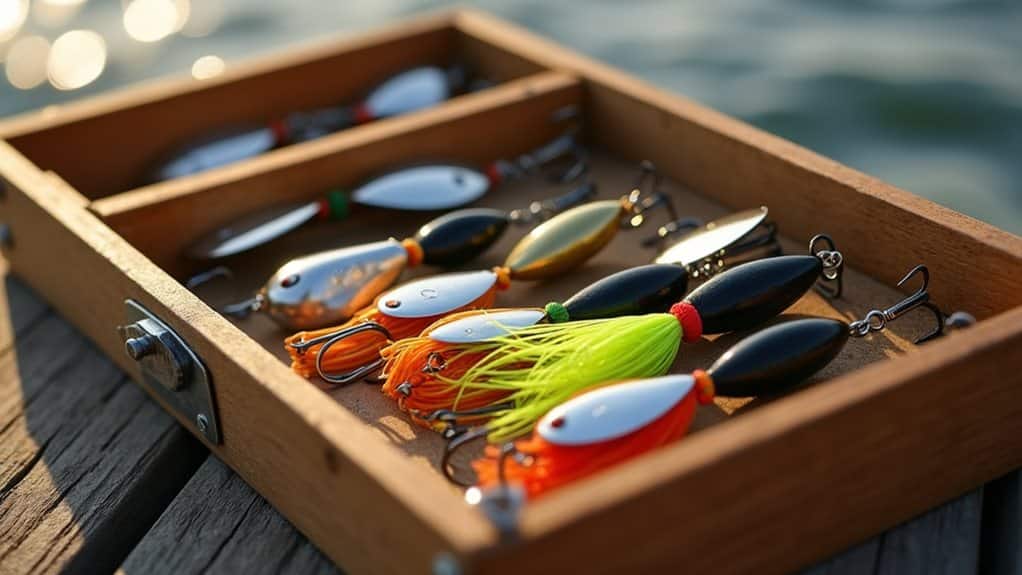
Selecting the right spinnerbait involves matching both size and color to your specific fishing conditions, and understanding these fundamental choices will dramatically improve your success on the water.
Match spinnerbait size to local forage and water depth—heavier weights for deeper zones. For color selection, choose bright hues like chartreuse in murky water, while natural patterns like white or shad imitations work best in clear conditions. Consider using spinnerbaits with rod holders when fishing from a sit-on-top kayak for added convenience.
Best Water Conditions and Locations for Spinnerbait Fishing
Understanding the water conditions and locations where spinnerbaits shine will help you catch more bass consistently throughout the year.
You’ll find spinnerbaits excel in stained to murky water, particularly when temperatures range between 50°F to 75°F.
Target shorelines with submerged cover, shift zones, and areas near docks.
Overcast, windy days enhance spinnerbait effectiveness by increasing bass aggression and making blade flash more visible through surface disturbance.
Retrieval Techniques That Trigger Strikes
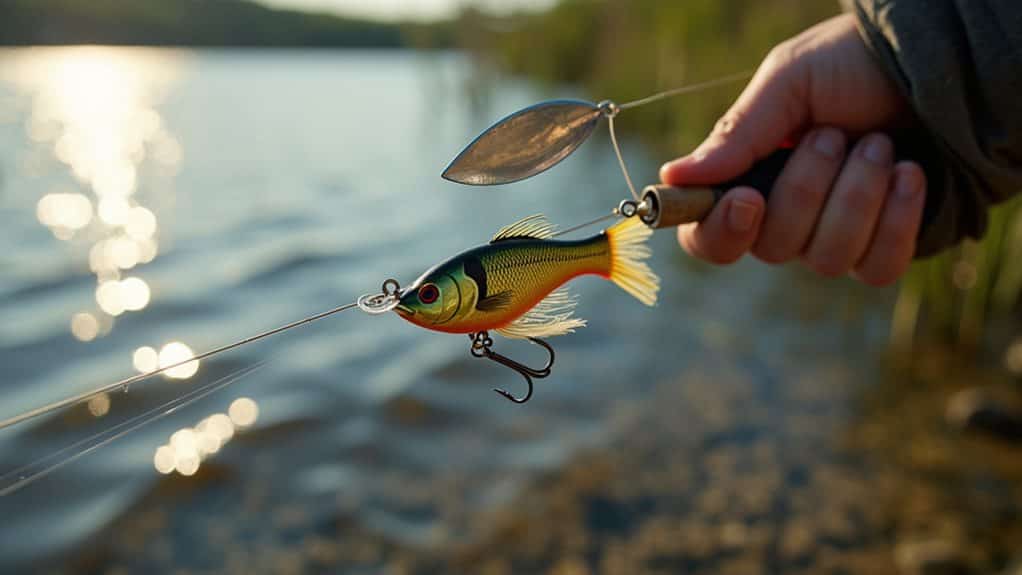
Your retrieval technique can make the difference between a curious bass and a committed strike, so understanding how to vary your speed and adjust for depth is essential. Spinnerbaits respond well to both steady, moderate retrieves and sudden changes in pace, with each approach triggering different predatory instincts in bass depending on water conditions and structure.
Whether you’re bumping bottom cover, lifting the bait to the surface, or mixing quick bursts with strategic pauses, matching your retrieval to where fish are holding will markedly increase your success rate.
Steady vs. Variable Speed
Mastering the art of spinnerbait retrieval begins with understanding two fundamental approaches: the steady retrieve and the variable speed retrieve.
A smooth, consistent retrieve works best in clear water, maintaining constant blade rotation for steady flash and vibration. Variable speed retrieves, alternating between fast bursts and pauses, prove particularly effective in stained water, mimicking erratic baitfish movement to trigger strikes from inactive fish.
Depth and Structure Adjustments
Where your spinnerbait travels through the water column matters just as much as how fast you retrieve it. Count down the lure after it hits the water to reach specific depths where fish are holding.
For surface feeding bass, keep your rod tip high and retrieve quickly. When targeting bottom-oriented fish, let the spinnerbait sink completely, then slow roll it along the substrate, bumping structure deliberately.
Matching Blade Types to Water Clarity and Cover
When you’re selecting spinnerbait blades, water clarity should be your first consideration because it directly affects how bass detect and strike your lure.
Colorado blades excel in muddy water, producing strong vibrations for lateral line detection.
Willow leaf blades work best in clear conditions, offering flash with minimal vibration.
Indiana blades balance both qualities, making them ideal for moderately stained water where visibility remains limited.
Troubleshooting Common Spinnerbait Performance Issues
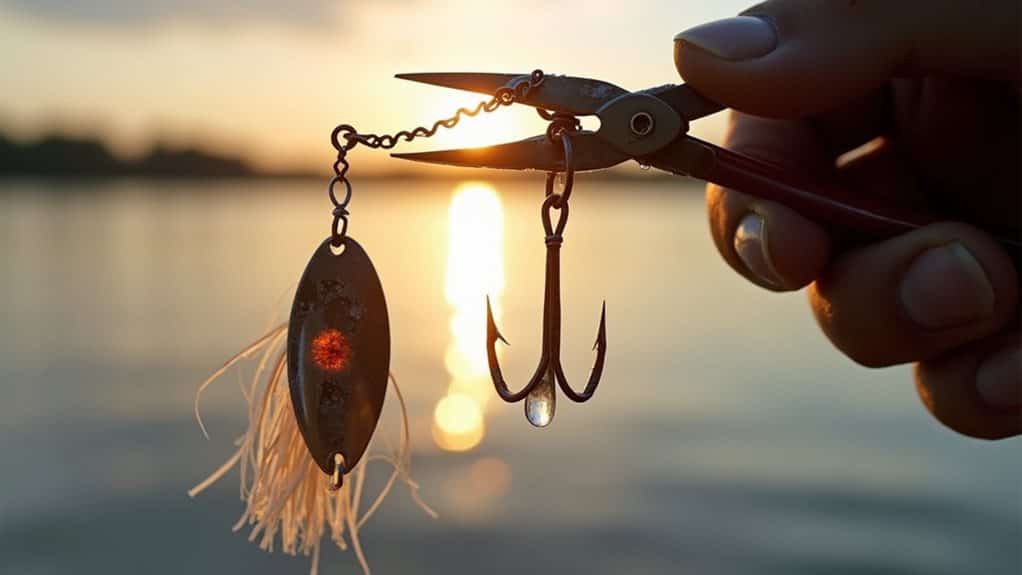
Your spinnerbait selection means little if the lure doesn’t perform correctly once it hits the water.
Blade wobble often stems from bent wire frames or poor balance, while thick skirts create drag that causes tilt during retrieval.
Downsize blades if high-speed retrieves feel sluggish, and inspect wire frames regularly for bends.
Match your reel’s gear ratio to maintain steady cadence for consistent blade spin.
Seasonal Strategies for Year-Round Success
Although many anglers reserve their spinnerbaits for warmer months, these versatile lures produce strikes throughout the entire calendar year with proper adjustments to presentation.
You’ll need to modify your retrieve speed based on water temperature—crawling the bait slowly during winter when bass are lethargic, then progressively increasing speed through spring and summer as metabolism rises. Blade selection matters too, with double Colorado configurations excelling in cold water while willow blades suit summer’s clarity.
Final Note
You’ve now got the knowledge to fish spinnerbaits effectively in various conditions, from selecting the right blade configuration and color to matching your retrieve speed with water clarity and cover. Remember, confidence in your lure choice matters—spinnerbaits work because they trigger multiple feeding responses simultaneously. Don’t hesitate to experiment with different techniques until you find what works in your local waters. Get out there and start catching fish.


