
To drill fiberglass without cracking, you’ll need carbide-tipped bits designed for composite materials and a variable speed drill. Start by cleaning the surface with solvent, then apply masking tape over your marked drilling location to prevent splintering. Create a small pilot hole first, maintaining slow to moderate speeds with consistent, gentle pressure throughout the process. This careful approach prevents damage while ensuring clean holes. The following techniques will help you achieve professional-quality results every time.
TLDR
- Use tungsten carbide or high-speed steel bits specifically designed for composite materials like fiberglass.
- Apply masking tape over the drilling area to prevent surface splintering and cracking during penetration.
- Start with a small pilot hole and gradually increase bit sizes rather than drilling full diameter immediately.
- Maintain slow to moderate drill speeds with consistent, gentle pressure throughout the drilling process.
- Secure the workpiece firmly with clamps and create a small indent to prevent bit wandering.
Essential Tools and Safety Equipment for Fiberglass Drilling
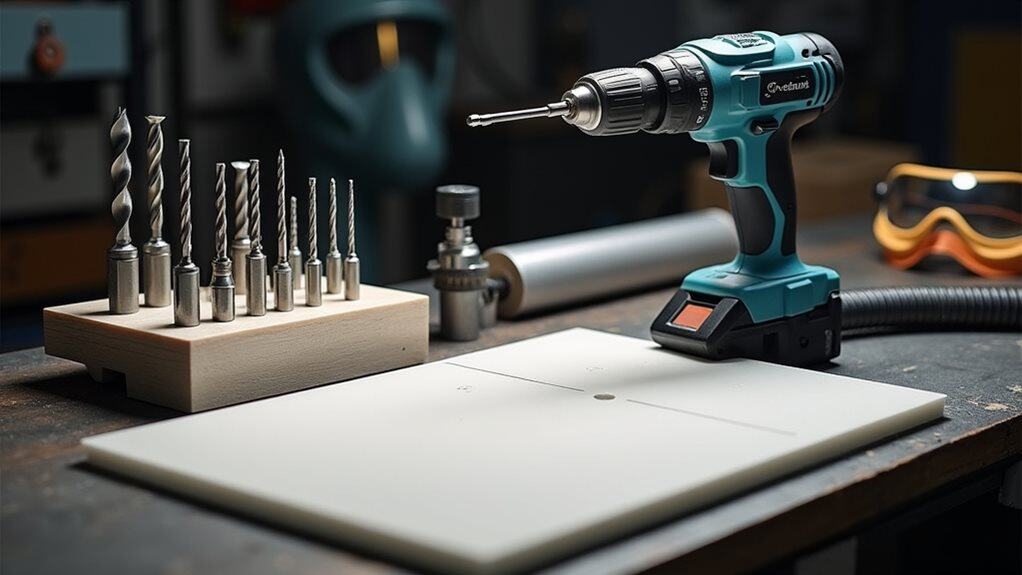
The success of any fiberglass drilling project hinges on having the right tools and protective equipment before you begin.
You’ll need a variable speed drill with carbide-tipped bits designed for composite materials, plus safety glasses meeting ANSI Z87.1 standards. Additionally, ensure your drill operates effectively by using the proper power source for the task at hand.
Don’t forget cut-resistant gloves, a dust mask for respiratory protection, and clamps to secure your workpiece firmly. Always verify that your drill bit is properly secured in the chuck and tightened until you hear a click to prevent dangerous slippage during operation.
Surface Preparation and Marking Techniques
Before you make the first cut into your fiberglass surface, proper preparation and precise marking will make the difference between a professional-looking result and a costly mistake.
Clean the surface with solvent to remove wax or silicone, then measure carefully and mark your drilling location. Apply masking tape over the drilling area to prevent splintering and provide additional marking stability. Additionally, ensure you clean the surface thoroughly to avoid any contaminants that could affect the drilling process.
Create a small indent using a scribe to prevent bit wandering.
Proper Drilling Methods to Prevent Damage
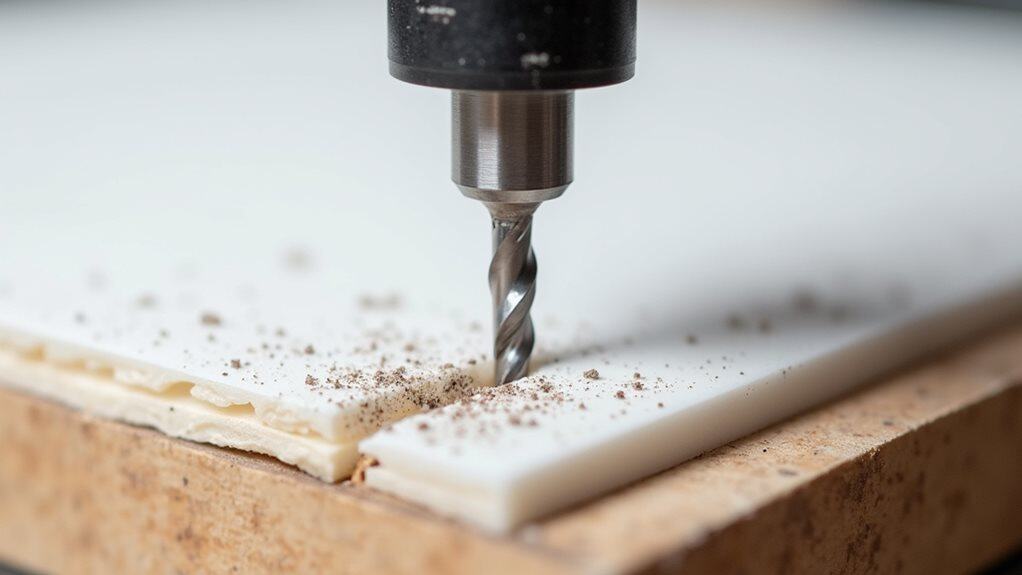
Once you’ve prepared your fiberglass surface and marked your drilling location, selecting the right drilling technique becomes your next priority for achieving clean, damage-free holes.
Use tungsten carbide or high-speed steel bits specifically designed for fiberglass. Start with a small pilot hole, then gradually increase bit sizes.
Maintain slow to moderate speeds while applying consistent, gentle pressure throughout the process. Additionally, ensuring proper surface preparation is crucial to prevent cracking during drilling.
Waterproofing and Sealing Drilled Holes
After completing your drilling work, proper waterproofing becomes essential to prevent moisture intrusion that can lead to delamination, rot, and structural weakness in your fiberglass.
First, inject non-thickened epoxy into the hole to fill surface pores.
Then apply thickened epoxy mixed with Cabosil for a solid fill that creates a strong, waterproof seal. Additionally, ensuring that your RV is equipped with a reliable surge protector will help safeguard its electrical system from potential damage during your travels.
Maintenance and Repair of Drilled Areas
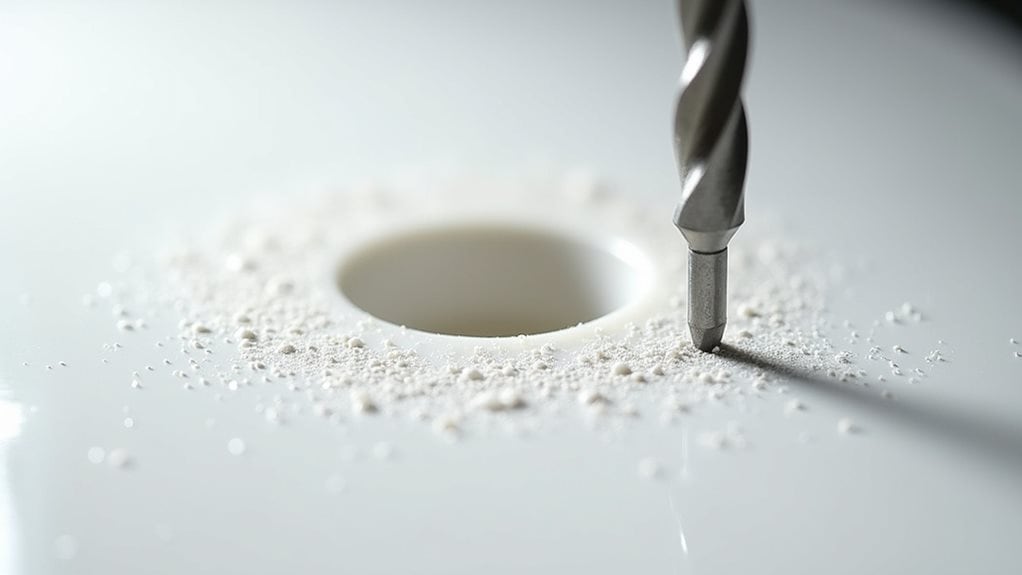
Even the most carefully drilled holes in fiberglass can develop problems over time, requiring prompt attention to prevent minor issues from becoming major structural concerns.
You’ll need to inspect drilled areas regularly, marking any damage with contrasting markers.
Remove loose material, sand the surface smooth, and apply catalyzed resin mixed with chopped fiberglass for effective repairs.
Final Note
You’ve now got the knowledge to drill fiberglass confidently without causing cracks or damage. Remember to use sharp bits, maintain steady pressure, and keep your drilling speed moderate. Don’t forget to back your work with support material and seal those holes properly afterward. With the right tools and techniques, you’ll achieve clean, professional results every time. Take your time, follow these steps, and you’ll excel at fiberglass drilling successfully.


