
Topwater fishing involves using lures that float and move across the water’s surface to create explosive strikes from bass and other predatory fish. You’ll need a 6.5-7 foot baitcasting rod with 15lb test line, and lures like poppers, walkers, and frogs that mimic local baitfish. For best results, fish during low-light periods at sunrise and sunset when water temperatures exceed 60°F, focusing on areas with vegetation and structure. Understanding seasonal patterns and weather conditions will help you excel at this exciting technique.
TLDR
- Topwater fishing involves using floating lures on the water’s surface to attract and catch bass through visual strikes.
- Best times are during low-light periods at sunrise and sunset, with water temperatures above 60°F for optimal results.
- Essential gear includes a 6.5-7 foot baitcasting rod, 15lb test line, and specialized lures like poppers, walkers, and frogs.
- Success depends on targeting areas with vegetation, structures, and shallow waters up to 10 feet deep near feeding zones.
- Understanding seasonal patterns and weather conditions helps choose appropriate lures and techniques throughout the year.
Understanding the Basics of Topwater Fishing
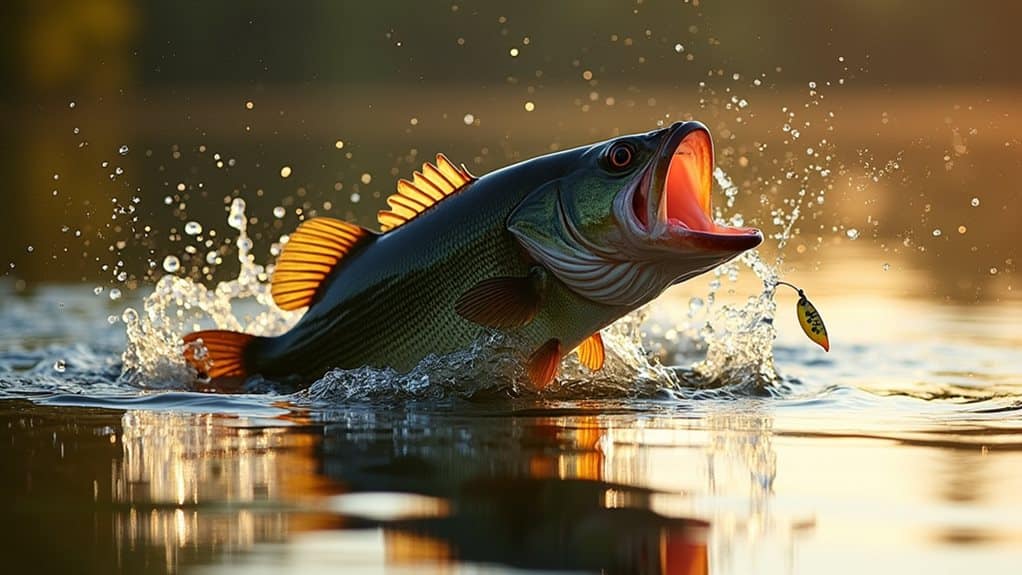
When you’re looking to excel at topwater fishing, understanding the foundational elements can make the difference between a successful outing and a frustrating experience.
You’ll need a 6.5 to 7-foot baitcasting rod paired with 15lb test line, and it’s worth investing in premium hooks like Gamakatsu. While this method offers exciting surface strikes, many anglers find it has a lower hook-up ratio compared to other techniques. Securing a fishing license is advisable, even if you plan to only catch and release.
For best results, choose lures with white bellies for bright conditions, and pay careful attention to your rigging setup.
Essential Topwater Lures and Their Uses
When you’re picking your topwater lures, you’ll want to understand the key differences between poppers, walkers, prop baits, wake baits, and frogs, as each serves a unique purpose in your bass fishing arsenal. Additionally, fishing conditions such as wind speed and temperature can also affect the effectiveness of each lure type.
Your choice of lure should match both the fishing conditions and the behavior of your target bass, with factors like water clarity, vegetation, and season playing vital roles in your selection. Whether you’re working a Rebel Pop-R across a calm morning surface or walking a Heddon Spook through choppy afternoon waters, knowing when and how to use each lure type will greatly improve your topwater fishing success. For optimal performance with walking baits and larger topwaters, a setup with a medium heavy rod and 40-pound braid is recommended.
Popular Lure Types Explained
The world of topwater fishing lures offers an extensive array of options, each designed to create specific surface disturbances and attract different species.
You’ll find poppers like the Rebel Pop-R for creating splash, prop baits such as the Berkley Choppo for surface commotion, and walking baits like the Zara Spook for clear water conditions.
For vegetation-heavy areas, you can’t go wrong with crawler and frog lures.
When To Use What
Selecting the right topwater lure can mean the difference between a successful day on the water and hours of frustration.
Use poppers and chuggers during calm mornings or evenings, while buzzbaits excel in murky conditions.
When you’re fishing around vegetation, opt for weedless frogs or soft plastics.
For schooling bass, you’ll want walking baits, and in choppy waters, double-prop lures work best.
Best Times and Conditions for Surface Action
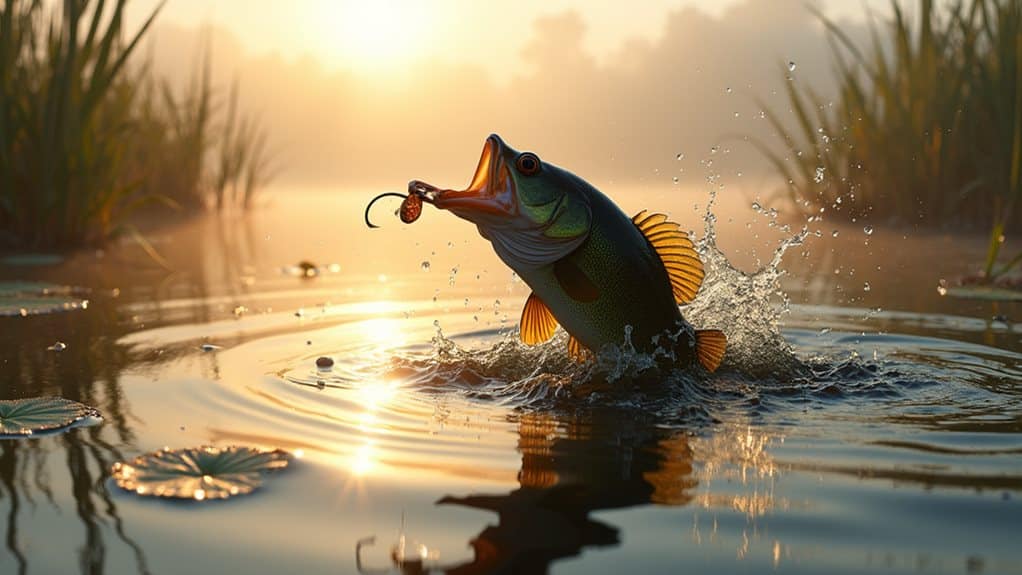
Successful topwater fishing relies heavily on understanding the ideal times and conditions that bring bass to the surface.
You’ll find the best action during low-light periods at sunrise and sunset, or on overcast days when water temperatures exceed 60°F.
Look for areas with vegetation, floating debris, or submerged structures, and adjust your retrieval speed based on water temperature to maximize your chances of success. Additionally, fishing in locations like Boston Harbor Islands can provide a unique blend of adventure and tranquility, especially during peak season.
Prime Locations to Cast Your Topwater Lures
Finding prime locations for topwater fishing requires understanding how bass and other predatory fish relate to their environment.
You’ll want to focus on shallow water up to 10 feet deep, especially areas with vegetation, structural features like points and humps, and spots near creek mouths.
In lakes and reservoirs, target docks, brush piles, and creek channels, where bass often ambush prey from below. Additionally, consider fishing at Lake Kissimmee, known for its healthy water quality and rich vegetation, which contribute to a superior bass population.
Mastering Topwater Fishing Techniques

While many anglers dream of watching a bass explode on their topwater lure, honing the techniques requires patience, practice, and a thorough comprehension of how to work your bait effectively.
You’ll want to match your lure’s size and color to local baitfish, master the “walking the dog” technique for cone-shaped lures, and vary your retrieve speed based on fish behavior.
When strikes occur, don’t set the hook too early.
Required Gear and Equipment Setup
When you’re setting up for topwater fishing, you’ll need a balanced rod setup that typically includes a 7-foot, medium-heavy rod paired with a 7:1 gear ratio reel for ideal control and casting ability.
Your choice of line is equally essential, with 30-pound braided line being the standard choice due to its zero stretch and superior hook-up ratio.
While you can tie your braided line directly to your lure, consider using a monofilament leader in clear water conditions to reduce line visibility and increase your chances of success.
Essential Rod Setup Components
A properly equipped rod setup forms the backbone of successful topwater fishing.
You’ll need a graphite rod between 6′ and 8′ with medium to medium-heavy action and a soft tip for ideal hook retention.
Pair this with a high-speed reel featuring a 7.1 to 9.1 gear ratio, smooth drag system, and adequate line capacity.
Don’t forget essential accessories like hook keepers and pliers.
Choosing Your Topwater Line
Selecting the right fishing line stands as one of the most critical decisions for successful topwater fishing.
You’ll want to focus primarily on monofilament or braided lines since they float, unlike fluorocarbon. Braid offers zero stretch for solid hooksets and excels in heavy cover, while mono provides more stretch to prevent hook tears.
For maximum versatility, consider using a braid mainline with a mono leader.
Common Fish Species That Strike Topwater
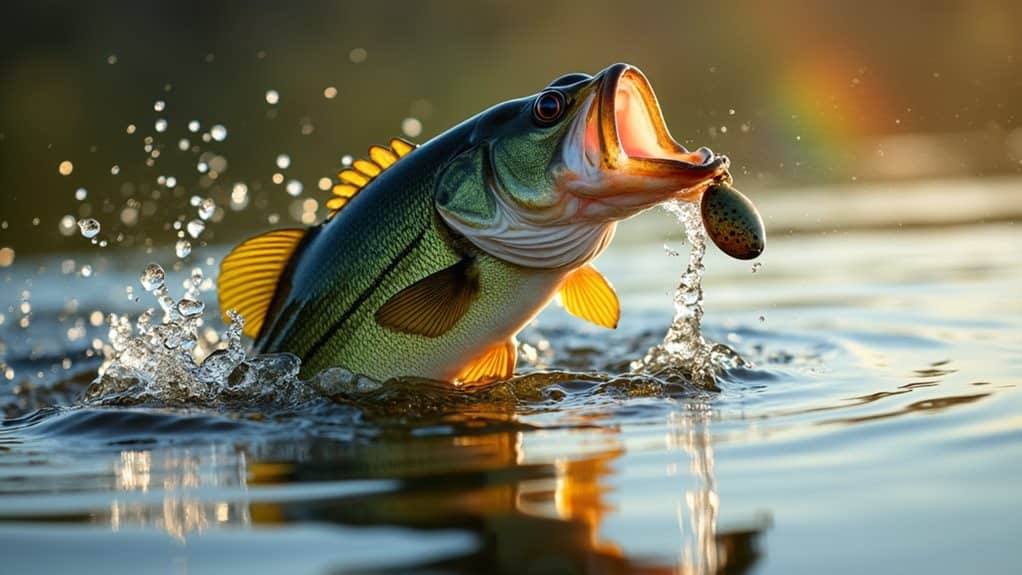
Several popular gamefish species make topwater fishing an exciting and productive technique for anglers.
You’ll find that bass are particularly receptive to topwater lures, especially during summer months. Northern pike are known for their aggressive surface strikes, while saltwater species like redfish will readily hit topwater baits.
Even trout and zander can be enticed to strike surface lures under the right conditions.
Tips for Reading Water Surface Activity
Reading the water’s surface is your first step to successful topwater fishing, as ripples, swirls, and “nervous water” often signal where predatory fish are actively feeding on baitfish.
You’ll want to pay close attention to areas where baitfish are breaking the surface or creating distinctive V-shaped wakes, which typically indicate they’re trying to escape larger fish.
Productive feeding zones can be identified by watching for birds diving into the water, clusters of small fish jumping, or sections where the water appears to be “boiling” with activity.
Surface Ripples and Movement
Understanding surface ripples and movement can change your topwater fishing success from mere chance to calculated strategy.
Look for distinct patterns like circular ripples, narrow bands, or splashes that indicate fish activity beneath. You’ll spot these disturbances when fish are feeding near the surface or chasing prey.
Watch especially for “pushes” and wakes, as they’re reliable signs of active fish movement.
Baitfish Activity Patterns
Spotting the telltale signs of baitfish activity can change your topwater fishing from frustrating to phenomenal.
Watch for surface disturbances during dawn and dusk, when baitfish are most active near structures like fallen trees and docks.
You’ll find concentrations of baitfish in changeover zones where shallow flats meet deeper water.
Target these areas with lures that match the local baitfish’s size and color.
Identifying Feeding Zones
To become a skilled topwater angler, you’ll need to excel in the art of identifying prime feeding zones where predatory fish are most likely to strike.
Look for areas where shallow flats meet deeper water, like points and channel edges.
During low-light conditions, focus on changeover zones near structures, docks, and vegetation, where fish often ambush their prey, especially during dawn and dusk.
Weather Patterns and Their Impact on Topwater Success
Weather patterns play an essential role in determining your success with topwater fishing, as they directly influence bass behavior and feeding patterns.
You’ll find your best results during low-pressure systems and light rain, when bass are more active near the surface.
During high-pressure conditions, you’ll want to switch to finesse techniques, as bass typically move deeper and become less responsive to topwater presentations.
Seasonal Strategies for Topwater Fishing
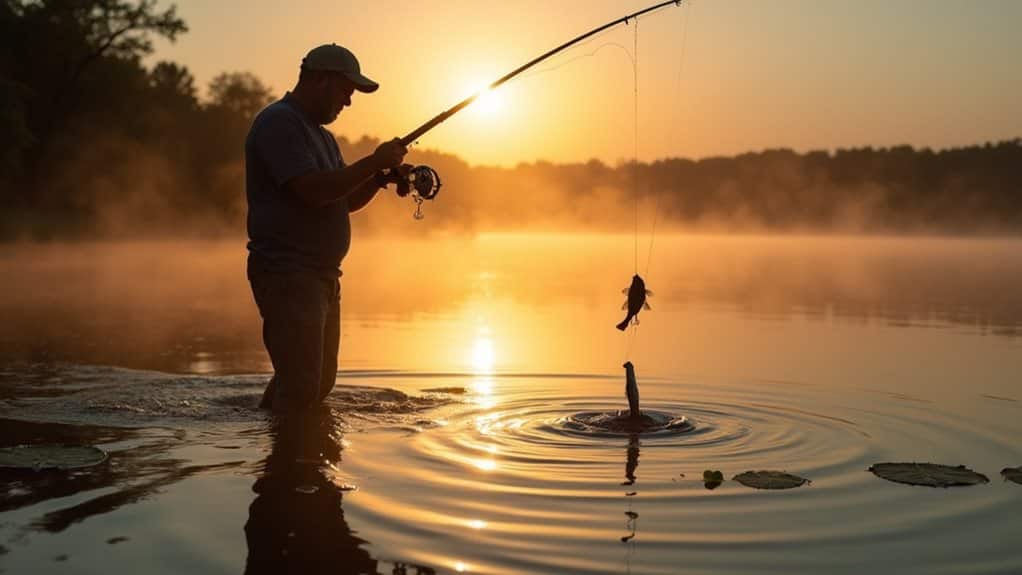
Understanding seasonal patterns can dramatically improve your topwater fishing success throughout the year.
During spring, you’ll find success with floating minnows when water temperatures reach 60°F, while summer offers prime topwater action throughout the day.
In fall, bass feed aggressively, making surface lures highly effective, and even winter can produce strikes during warmer spells, especially near southern-exposed shorelines.
Final Note
Now you’re equipped with everything you need to start your topwater fishing journey. From selecting the right lures to understanding prime conditions and honing essential techniques, you’ve got the foundation for success. Remember that practice makes perfect, and don’t get discouraged if you miss a few strikes at first. With patience and persistence, you’ll soon experience the thrill of watching a fish explode on your surface lure.


