
To catch gizzard shad like a pro, you’ll need a state fishing license, a cast net with 1/2″ mesh for the ideal balance of catch size and sink rate, and sonar technology to pinpoint schools near thermoclines, tributary mouths, and shallow protected bays. Target pre-dawn or nighttime hours when dense schools gather, practice your net-throwing technique until it spreads into a full circle, and handle shad with wet hands to preserve their protective slime coating. Command these fundamentals to uncover the advanced techniques that separate weekend anglers from true professionals.
TLDR
- Use a cast net with 1/2″ mesh for optimal balance between catching adult shad and quick sinking in shallow water.
- Deploy fish finders with CHIRP sonar and side imaging to locate dense schools appearing as arches or white clouds.
- Target shallow bays, tributary mouths, and thermocline depths during pre-dawn, night, or summer afternoons for highest concentrations.
- Practice cast net throws to achieve full circular spread and ensure adequate lead weight for fast deployment.
- Handle shad with wet hands only and store in ice brine immediately to preserve quality for bait use.
Understanding Gizzard Shad Behavior and Habitat Preferences
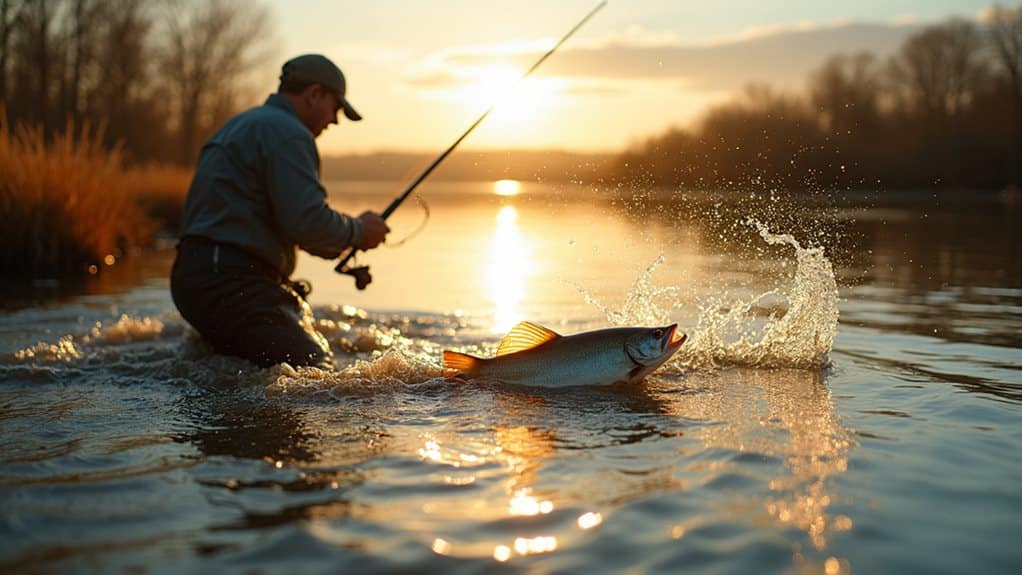
Understanding where gizzard shad position themselves throughout the year forms the foundation for catching them consistently.
Juveniles stay in the upper five feet, feeding on plankton, while adults move toward the bottom, sometimes reaching 50-foot depths. During summer, they’ll concentrate near the thermocline where oxygen and temperature conditions are ideal. At night, they seek shallow, weedy areas for protection. Gizzard shad typically grow to 10–16 inches in length, with exceptional individuals reaching approximately 20 inches and weighing up to 3.5 pounds. Using a quality fish finder can help locate schools and structure where gizzard shad congregate.
Essential Regulations and Permit Requirements Before You Start
Before you cast your first net or drop a line for gizzard shad, you’ll need to secure the proper fishing license for your state. Requirements apply to both residents and non-residents, though some states offer free or discounted licenses for disabled veterans and legally blind individuals.
Always carry your license while fishing, and verify local regulations regarding capture methods, bag limits, and restricted areas before heading out. In New Jersey, gizzard shad can be targeted using bowfishing when licensed, providing an alternative method to traditional angling. Many states also offer the ability to purchase licenses online through state sites to make compliance easier.
Choosing the Right Cast Net for Maximum Coverage
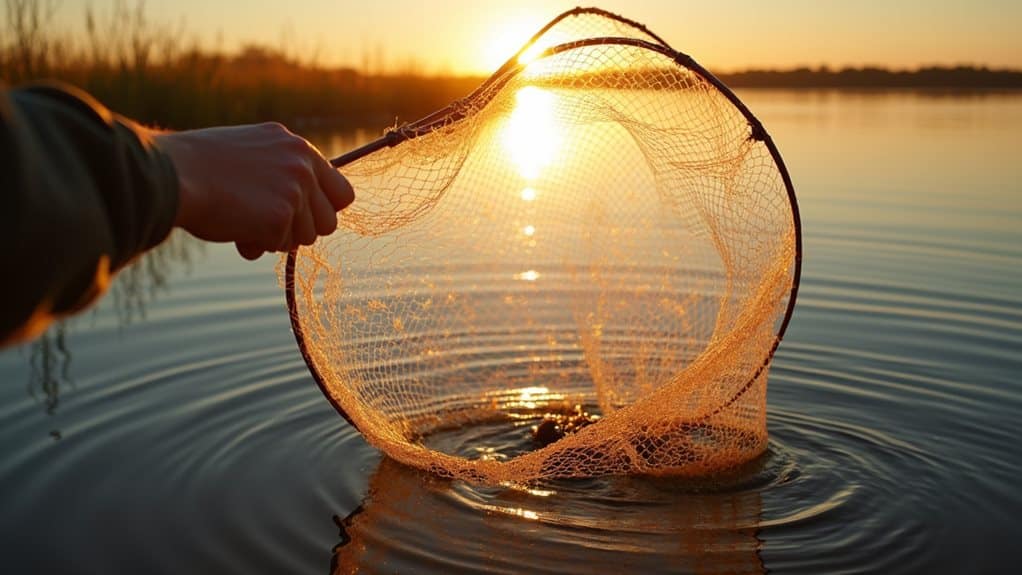
When you’re ready to invest in a cast net for gizzard shad, your first major decision centers on mesh size, which directly determines what size fish you’ll catch and how quickly your net will sink.
Ideal mesh sizes range from 3/8″ to 5/8″ bar measure. Half-inch mesh balances exclusion of smaller “button” shad with adequate sink rate, making it the minimum recommended size for most year-round conditions. High-visibility floats and durable waterproof design help ensure your gear lasts through wet kayak trips and rough handling.
Additional Equipment to Boost Your Success Rate
While lures and nets are essential for catching gizzard shad, you’ll markedly improve your success rate by investing in a few pieces of modern technology and support equipment.
A quality fish finder with sonar capability allows you to locate shad schools quickly, saving hours of blind casting and helping you position your nets in the most productive areas.
Additionally, if you’re planning to keep your catch alive for bait, a portable aeration system is vital for maintaining healthy shad during transport, as these fish are particularly sensitive to low oxygen levels.
Consider using a portable fish finder with CHIRP technology to get clearer sonar returns and more accurate fish detection.
Sonar and Fish Finders
Sonar and fish finders have revolutionized the way anglers locate gizzard shad, turning what was once a time-consuming search into a precise, efficient operation.
You’ll spot schools as arch-like shapes or white specks on side imaging, while 2D sonar reveals their depth. Combine these views using split-screen displays, adjusting sensitivity to balance detail with clutter reduction, especially in shallow water where shad commonly gather.
Aeration Systems for Transport
Locating gizzard shad with technology is only half the battle—you’ll need to keep them alive once you’ve caught them, and that’s where proper aeration systems become indispensable.
Diffused aeration systems use air compressors and diffusers to release fine bubbles, maximizing oxygen transfer in your baitwell. Alternatively, surface aerators agitate water to increase oxygen exchange, while venturi aerators efficiently mix air with water through flow dynamics.
Prime Locations Where Gizzard Shad Congregate
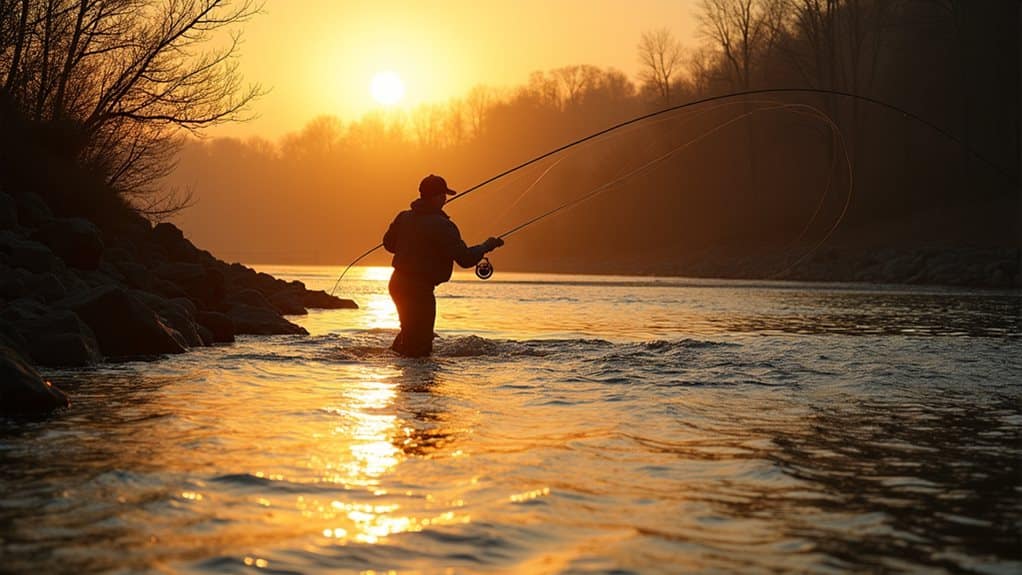
Across the diverse waterways of North America, gizzard shad display predictable congregation patterns that can help anglers locate these important forage fish. You’ll find them in medium to large rivers, lakes, and reservoirs with well-developed pools.
During spring spawning season, they migrate to upper estuary floodplains and shallow areas. Adults typically occupy deeper water, feeding near the bottom in stable, oxygen-rich environments.
Best Times of Day and Seasonal Patterns for Catching Shad
Understanding when gizzard shad are most active can dramatically improve your success in catching these prized baitfish.
Target pre-dawn and nighttime hours, particularly during winter when they school densely.
Summer afternoons offer productive windows as shad move into coves and creeks.
Fall provides excellent opportunities before cold fronts push them deeper.
Spring spawning migrations bring shad into very shallow waters from April through June.
Mastering the Cast Net Technique in Shallow Waters
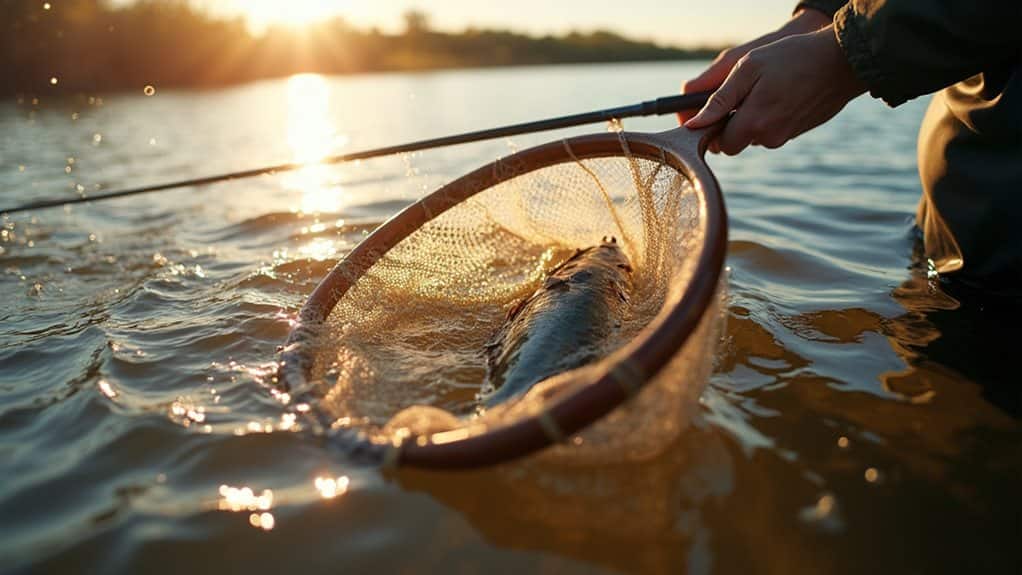
You’ve learned when gizzard shad are most active, but now it’s time to refine where and how you cast your net in shallow water. Success depends on two critical skills: identifying prime casting spots where shad gather, and perfecting your throwing technique to maximize your catch with every throw.
These fundamentals, when mastered together, evolve casual bait fishing into a consistently productive operation that keeps your livewell stocked throughout the day.
Identifying Prime Casting Spots
When you’re ready to deploy your cast net for gizzard shad, success hinges on reading the water and recognizing the telltale signs of concentrated schools.
Target shallow, protected bays and inlets during spring spawning season, watching for surface activity like jumping fish or nervous water.
Look for muddy bottoms near tributary mouths, wind-blown shores where plankton accumulates, and shift zones between silty and clearer water for peak results.
Perfecting Your Net Throw
After you’ve pinpointed where the gizzard shad are congregating, your ability to execute a clean, effective cast net throw becomes the difference between a full bait well and an empty one.
Choose a heavier net with adequate lead weight to sink quickly, trapping fast-moving shad before they escape.
Practice your throwing motion in open areas, ensuring the net spreads into a perfect circle and sinks completely before retrieving.
Jigging Methods With Crappie Jigs and Grubs
Jigging with crappie jigs and grubs offers an effective and versatile approach to targeting gizzard shad, particularly when these baitfish suspend in mid-water columns or relate to structure.
You’ll want to use a light-action rod with 6-pound test line, allowing your jig to sink before starting a varied retrieve pattern with moderate cranks, pauses, and occasional twitches that imitate injured prey and trigger strikes from shad.
Selecting Effective Lures and Color Combinations
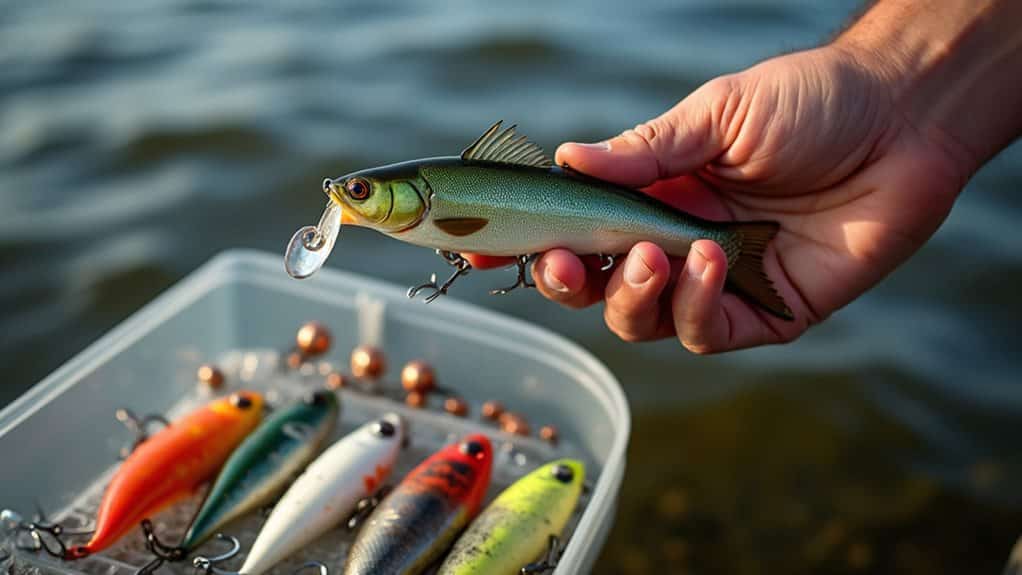
When you’re selecting lures to catch gizzard shad, your primary goal is matching the natural silver and chrome colors that replicate their reflective scales, though you’ll need to adjust your color choices based on water clarity—adding chartreuse accents in murky conditions or sticking with subtle natural patterns in clear water.
The retrieve speed and action you choose will markedly impact your success, as gizzard shad exhibit specific swimming patterns that predators recognize, so you’ll want to incorporate straight retrieves with occasional pauses or quick twitches to mimic their movement.
Size matters considerably as well, since matching your lure to the local shad population’s dimensions (typically 2 to 4 inches) triggers the “feeding tunnel vision” that makes predatory fish strike instinctively.
Match Natural Shad Colors
Understanding the natural coloration of gizzard shad is essential for selecting lures that’ll trigger strikes from predatory fish.
Focus on silver bodies with bluish-green backs and white bellies to mimic their authentic appearance. You’ll want to replicate the distinctive purple-blue spot behind the gill cover, along with subtle horizontal dark streaks on the sides. Choose lures with dusky, translucent fins rather than bright yellow ones for realistic presentation.
Adjust for Water Clarity
While matching natural shad colors provides your foundation, water clarity determines which specific hues and finishes will actually get noticed by predatory fish.
In stained water, switch to bright chartreuse or high-contrast combinations with reflective components to penetrate the murk. Clearer conditions favor subtle, natural patterns.
Add rattles or choose lures with exaggerated swimming actions when visibility drops, helping bass locate your bait through vibration.
Retrieve Speed and Action
Dialing in your retrieve speed makes the difference between a lure that gets ignored and one that triggers aggressive strikes from bass hunting gizzard shad.
Moderate to fast retrieves typically provoke bites, especially with lipless crankbaits during feeding frenzies.
Incorporate twitches and pauses to simulate injured shad, increasing your strike chances.
Adjust your speed based on current strength to keep lures positioned at fish depth.
Using Sonar and Live Scope to Locate Schools
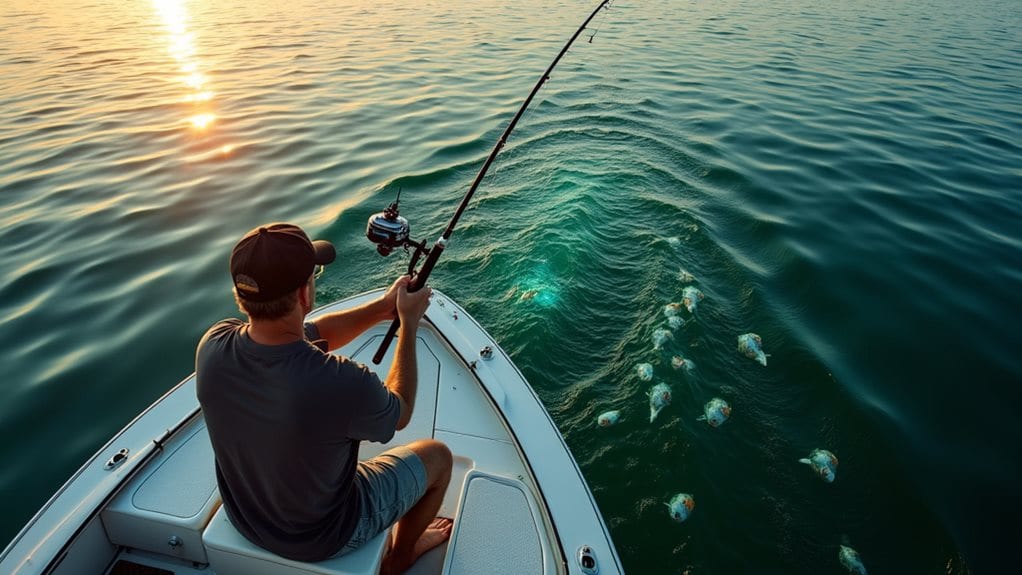
Modern sonar technology has revolutionized the way anglers locate gizzard shad, converting what was once a time-consuming search into a precise, efficient process.
You’ll spot schools as dense clusters on 2D sonar or distinct clouds on side imaging. Live Scope takes it further, showing real-time movement and behavior.
Combining these technologies dramatically increases your accuracy in pinpointing productive schools.
Proper Handling to Keep Your Catch Alive and Healthy
Once you’ve successfully located and netted your gizzard shad, the real challenge begins—keeping them alive and healthy enough to serve as effective bait.
Handle them with wet hands only, as dry skin strips their protective slime coating. Minimize air exposure, avoid squeezing, and transfer them gently using knotless nets.
Immediately place shad in well-aerated, temperature-matched water to prevent shock and mortality.
Storage Solutions for Short-Term and Long-Term Use
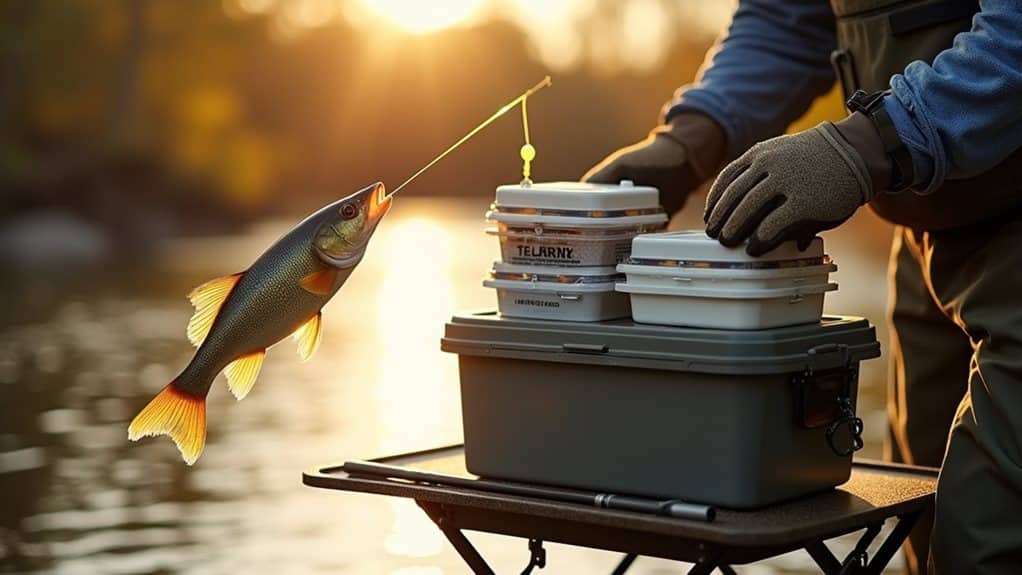
Preserving gizzard shad properly makes the difference between having premium bait ready when you need it and watching your catch deteriorate into unusable mush.
For short-term storage, place shad in ziplock bags filled one-third full, then surround them with ice in a quality cooler.
For long-term preservation, cool shad quickly in ice brine, pat them dry, vacuum seal in labeled bags, and store in a deep freeze.
Final Note
You’ve now got the knowledge to catch gizzard shad efficiently, from understanding their behavior to selecting the right equipment and locations. Remember to check local regulations before heading out, use your cast net strategically in areas where shad school, and handle your catch carefully to maintain their liveliness. With proper storage techniques and the right tools, you’ll consistently secure quality baitfish for your fishing outings. Now it’s time to put these strategies into practice.


