
First, make sure the area’s safe—check for hazards like falling rocks or unstable ground. Stop serious bleeding by applying firm pressure with a clean cloth. Check if the person responds by shouting their name and gently tapping their shoulder. Look head to toe for life-threatening issues, then prevent shock by keeping them warm and lying down. Stabilize injuries before moving, and remember, staying calm and prepared makes all the difference when every minute counts. There’s more to honing these skills than meets the eye.
TLDR
- Ensure scene safety by checking for hazards like falling rocks or unstable terrain before approaching the injured person.
- Control severe bleeding immediately by applying direct pressure with a clean cloth or gauze and maintaining it for 5–10 minutes.
- Assess responsiveness using the shout-tap-shout method, checking for movement, breathing, or verbal response within 10 seconds.
- Perform a head-to-toe check to identify life-threatening conditions such as airway obstruction, chest injuries, or major fractures.
- Prevent shock by keeping the person warm, lying flat, and elevating legs unless contraindicated by injury or breathing difficulty.
Make Sure the Area Is Safe

Before you rush in to help, take a moment to size up the scene—your safety comes first.
Check for hazards like falling rocks, unstable ground, or weather changes.
Make sure the area’s secure, wear gloves, and set up a safe zone.
Keep escape routes clear, and only move the person if they’re in immediate danger.
Stay alert, stay safe.
Your ability to respond effectively depends on your own safety and preparedness, so consider your training level and kit readiness when assessing the situation. Also consider wearing a full-body fall-restraint device when working around elevated areas to reduce the risk of falls and enhance hunter safety.
Stop Serious Bleeding Right Away
Stop the bleeding fast by pressing down hard with a clean cloth or gauze right on the wound.
Use the heel of your hand or your palm, and keep steady pressure for at least 5–10 minutes—don’t peek, just hold.
If you can, raise the injured area above the heart to help slow the blood flow.
Carry a well-stocked first aid kit and replenish used supplies promptly to ensure you have what you need.
Direct Pressure First
Press down hard—your immediate action can save a life when serious bleeding occurs.
Use your palm, heel of hand, or fingers directly on the wound, locking your elbows and leaning in with body weight.
Keep pressure steady for at least 5 minutes. Don’t peek—add more gauze if soaked.
Raise the injury if possible, and only stop if help arrives, you’re relieved, or it’s unsafe.
Use Clean Materials
You’ve already applied firm pressure with your hand—now it’s time to cover the wound with clean materials to keep the bleeding under control and protect against infection.
Use sterile gauze or bandages first, but if they’re not available, grab a clean cloth, towel, or even a T-shirt. Paper towels work in a pinch. Just don’t delay—clean is best, but stopping the bleed comes first.
Check If the Person Is Responsive
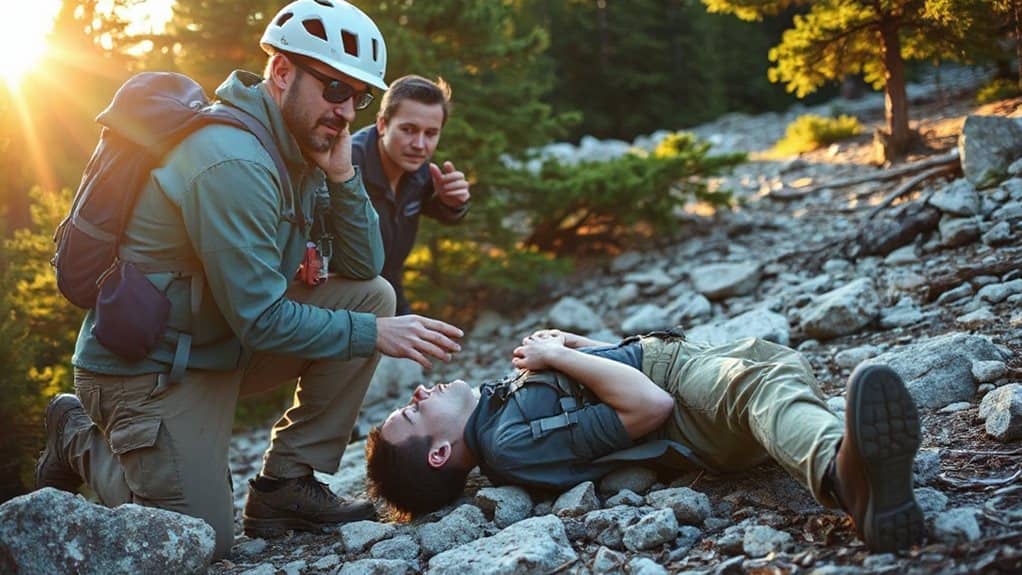
Check if the person is responsive right away by shouting their name and gently tapping their shoulder—this shout-tap-shake method helps you assess quickly, in under 10 seconds.
If they don’t answer, move, or make a sound, they may be unresponsive, and you’ll need to act fast.
Stay calm, note their level of response, and be ready to move into the ABCDE survey if needed.
In cold environments, also look for signs of hypothermia risk and protect the person from further heat loss while you continue assessment.
Check Responsiveness Immediately
Start by quickly evaluating whether the person is responsive—this simple step guides every decision that follows.
Look for movement, moaning, or breathing, then ask their name and where they are.
If no response, check for pain reaction.
Note alertness, orientation, and breathing.
Confirm airway, breathing, and pulse.
Record findings clearly, including time, for seamless care during evacuation.
Use Shout Tap Shake
When seconds count, getting a response fast can set the right course for care—use the shout-tap-shout method to quickly gauge whether someone is conscious. Shout clearly, “Are you okay?” then firmly tap their shoulder.
If there’s no answer in 10 seconds, assume they’re unresponsive. Skip head shaking, especially if injury’s suspected.
This simple, reliable check guides your next steps—call for help, check breathing, and stay ready to act.
Look for Life-Threats Head to Toe
Run your eyes from head to toe—your first job is spotting anything that could threaten life, fast. Check airway, breathing, and circulation. Look for severe bleeding, abnormal chest rise, or spinal deformities.
Inspect the scalp, ears, and mouth. Palpate the neck and ribs. Assess CSM in limbs. Feel for tenderness, swelling, or instability.
Stay calm, stay thorough—your quick, clear actions could save a life out here. Practice basic first aid regularly to keep your skills sharp and effective.
Prevent and Treat Shock
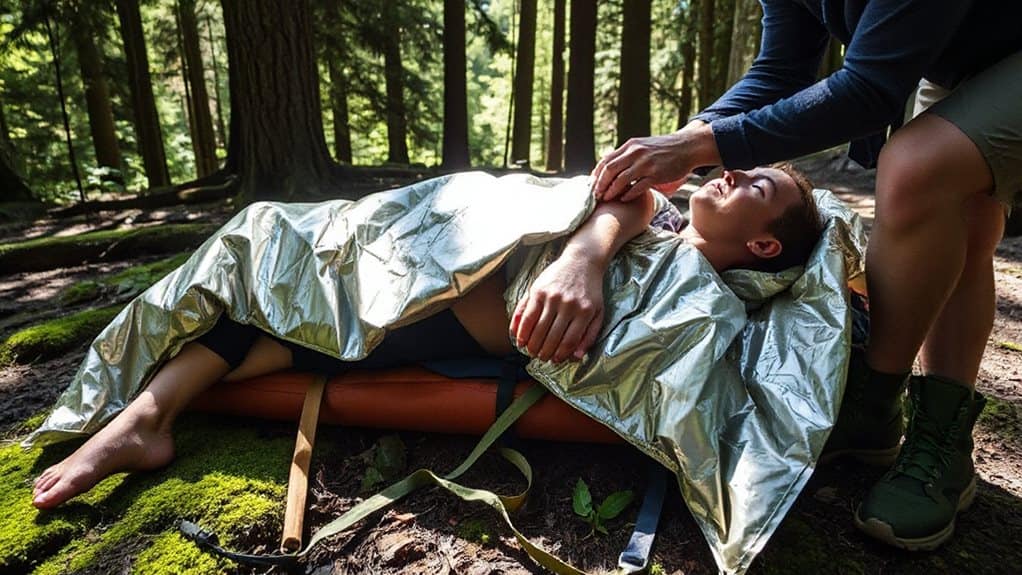
Even if the injury seems under control, shock can still set in quickly—so don’t wait for obvious signs.
Keep the person calm, warm, and lying down.
Raise their legs unless it causes pain or worsens breathing.
Offer sips of water only if they’re alert and not nauseous.
Monitor breathing, pulse, and skin color closely, and get them to advanced care fast—every minute counts.
Ensure proper ventilation if using portable heaters in enclosed shelters to avoid carbon monoxide buildup and related complications, especially with propane heaters.
Stabilize Injuries Before Moving
If you need to move someone after an injury, take a moment first to stabilize the affected area—rushing can turn a minor issue into something much worse.
Use RICE (rest, ice, compression, elevation) for sprains, or HI-RICE with hydration and ibuprofen.
Immobilize fractures with padded splints, and always support joints above and below the injury.
For spine concerns, keep the head and body aligned, minimizing movement.
Final Note
You’ve done great just by learning these steps. Now, if an emergency happens, you’ll know how to stay calm, keep yourself safe, and help others effectively. Remember: check the scene, stop bleeding, look for serious injuries, and treat for shock. You don’t need to be a doctor—just act quickly and wisely. Every second counts, and your actions can truly make a difference. Stay prepared, stay aware.


